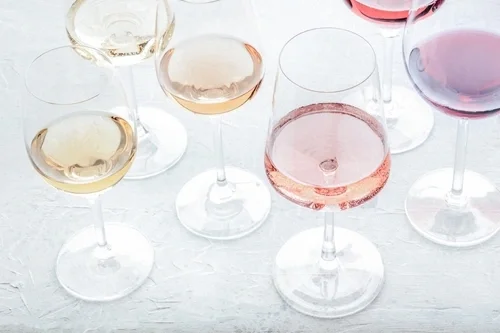
Inspired by Terry Theise’s recent feature on the evolution of the palate over a lifetime of wine-drinking, Harry Eyres charts his own changing tastes in wine.
The old Latin saying De gustibus non est disputandum is perhaps particularly inappropriate to these pages. If taken too literally, it would negate the entire raison d’être of a publication that is mainly devoted to the discussion of taste and tastes. On the other hand, it does have a certain logic. My mind goes back to a violent argument at boarding school between two friends, one of whom preferred dogs and the other cats. The logic seems to be that tastes are not just subjective but also fixed, not subject to revision. This does not take into consideration the possibility that tastes may alter over time—a dog lover may become a cat lover (this happened with my mother) and vice versa, or a pin-striped Bordeaux aficionado may be seduced by the voluptuous charms of Burgundy and start dressing like the 7th Marquess of Bath.
This was the theme discussed at length in Terry Theise’s feature in the last issue, in which various experts and contributors to these pages were asked if, and if so how, their palates had changed over time. With the excuse that I was not one of those canvassed, I intend to explore that question now. I am no longer a regular participant in tasting panels, so I have nothing especially “invested” in my palate. I imagine it might be somewhat awkward for a taster noted for expertise in, say, Champagne, to announce that they nowadays prefer Prosecco. My approach will not even attempt to be scientific but will be more intuitive and phenomenological.
Constant tastes v changing tastes
I would say that, in certain respects, my “palate” has definitely changed, and in other respects it hasn’t. One constant, which may seem a little random, is cru Beaujolais. I loved cru Beaujolais from quite an early age (my guess is 17 or so), maybe partly because we drank it quite often at home on informal occasions, and I love it still. I hope I love it with more discernment and understanding, which is hard to separate from the greater refinement of the wine growing and winemaking at the best properties. All the same, I knew from quite an early age that the best cru Beaujolais was “Burgundian,” and the prejudice against the Gamay grape questionable.
Related
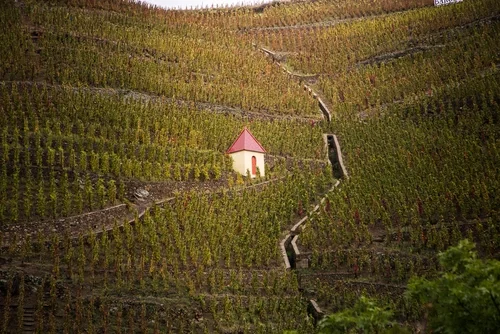
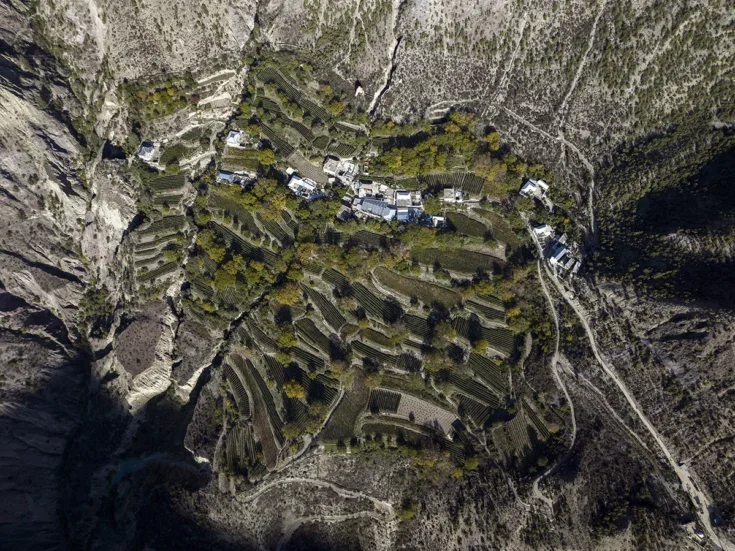

Together with many others, I fell for David Hohnen’s Cloudy Bay Sauvignon Blanc when it first appeared. This supercharged New World version of Sauvignon Blanc—or more precisely of Sancerre or Pouilly-Fumé—made its Old World models seem a little tame. Oz Clarke wasn’t the only wine expert who proclaimed that Cloudy Bay was probably the world’s best Sauvignon Blanc. Around ten years ago, I attended a revelatory tasting of Sancerres from Vincent Pinard and Lucien Crochet that made me realize that Sancerre at its most satisfying was more about terroir than cépage. I now tend to look askance at the more extreme, gooseberry and passion-fruit expressions of Sauvignon Blanc. Again, this change is hard to separate from what I would term a development of understanding rather than just taste.
Has my taste for the “classics,” especially red Bordeaux, changed over time? I remember my father, a big fan of Left Bank Bordeaux, telling me when he reached 80 or so that he had become less keen on the more austere Cabernet Sauvignon-dominated crus and more attracted to certain Right Bank wines, with their greater generosity of flavor. In my case, I would put it slightly differently: I find I am no longer inclined to give the benefit of the doubt to the kind of old-school Médoc that you might characterize as “club claret,” where austerity is just another name for lack of fruit. But I still love Bordeaux, from both banks, and have developed a special soft spot for certain crus bourgeois from St-Estèphe. Some great experts are on record as saying their taste has come to favor subtlety over power; I must say, with red wines at least, I seem to have become a sucker for youthful vigor—with red wines. But here comes the rub.
One undeniable change in my palate, also reflected in wine-buying habits, is a growing preference for white wines over reds. It’s not that I’ve fallen out of love with red wine exactly, but rather that there seem to be fewer occasions when the wine that calls to be opened is a serious red. Of course, I’m writing this column on another of those swelteringly hot days of an English summer that hasn’t felt very English at all. White wines have the rather prosaic advantage of lasting longer in the fridge. But I believe this change goes deeper than that.
Content from our partners
I’ve become especially interested in, and appreciative of, the way white wines age. It’s a less dramatic process than with reds, no doubt because there are fewer tannins and anthocyanins to resolve. The aging of white wines is more gradual and graceful, as I suppose one might hope one’s own aging might be. The other evening, some good old friends and I shared some bottles over an Indian takeaway. They were all white, and none was less than ten years old. The 2009 Graacher Domprobst Kabinett from Willi Schaefer was no longer green-glinting in color but was still apple-fresh. I opened a bottle of 1990 Kitterlé Grand Cru Pinot Gris from Schlumberger, which had moved with me at least three times, with trepidation. The cork, a little dry and gray at the top, came out in one go. At first, the bottle gave off a whiff of mushrooms… and not young mushrooms. But then the wine opened up, matching its gorgeous deep gold with a sumptuous bouquet of marmalade, cinnamon, cloves. But that’s all too literal. This was a wine to transport you to what George Herbert called “the land of spices” and to give you that sense of what he said so simply but profoundly in the two words that follow: “something understood.”