


The tireless, extraordinarily detailed work of fine-wine producers such as Château Figeac is at the forefront of a new science of fine wine, says Andrew Wood, and one of the key themes of his new book, Noble Nine: The Science and Story of the World’s Favourite Wines.
A new science of wine is taking shape. Driven from the ground up, it draws not on abstract theory but on two distinct sources of knowledge. The first is the lived experience of winegrowers and winemakers, and their continual experimentation as they test the combinations that make up terroir. The second is experimental science: curious minds harnessing technology to track the progress of grapes and wine down to the molecular level.
This is what I wanted to explore when I began writing Noble Nine: The Science and Story of the World’s Favourite Wines. I decided to take my own scientific research on understanding wine and grape quality and use it to explain why wines taste as they do. Through it, I have sought to communicate the value of science, story, and history in determining wine quality, and through them propose the necessary conditions that will allow them to continue to exist.
My first step was history and our perceptions of it. It is not enough to just determine exactly what happened, it is also important to understand how people see the myths, stories legends, and retellings of what happened.
Related
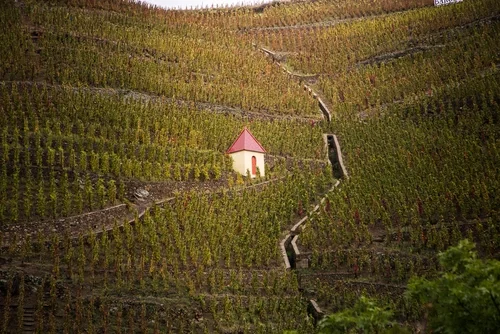
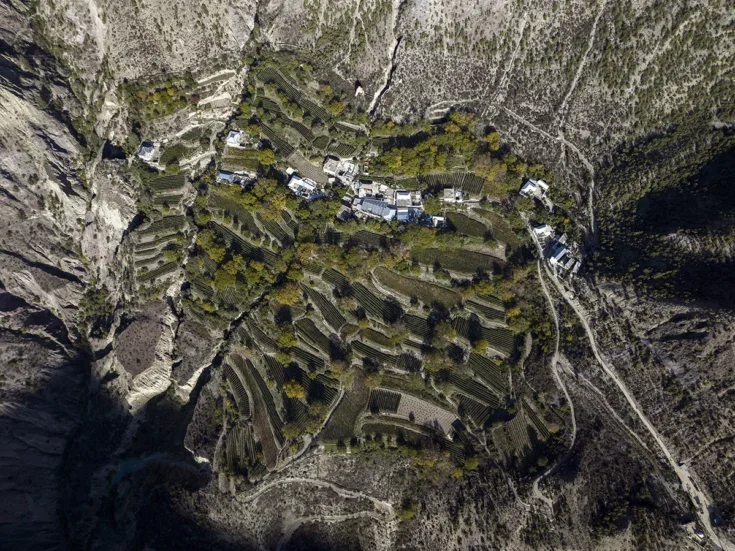
This folklore is so important because wine is steeped in history that influences our present opinions and views. A winery’s reputation is built over decades, shaped by geography, culture, commerce, and the people who decide which wines deserve to be celebrated. Bordeaux’s classifications are an obvious example. Both the 1855 and rolling St-Emilion classifications have helped establish a hierarchy of wines that continues to influence how we buy, sell, and think about quality.
Yet reputation and quality are not quite the same thing. History can tell us why a wine became famous in the past. It cannot, on its own, explain what makes the wine distinctive, or how its quality might be improved in the present.
A glorious summer morning at Figeac
As part of the book, I interviewed some of the best grape growers and winemakers in the world. They are some of the most amazing people I have ever met, and they work tirelessly to drive quality forwards. I was reminded of this most vividly at Château Figeac, where I spent a glorious summer morning with Blandine de Brier Manoncourt and Frédéric Faye. As the sun shone down from blue skies above the rolling vines that surround the gorgeous limestone walls of the château, we investigated the winemaking process from start to finish, discussing the qualities of their estate and the extraordinary detail with which they study their vineyards, matching their terroir to their wines in a continual search for improvement.
Content from our partners
When I think of the endless pursuit of perfection in wine, a striking detail from Figeac always sticks out in my mind. As we stood looking out over the rows of vines that spread from the cellar door, I noticed a small section of vineyard that had been left fallow. I asked Blandine why they had not yet planted it. She replied that, after many hard years of work, the soil deserved a rest to recover. There was no rush to replant, she explained. While the vineyard was resting, she was taking the opportunity to learn everything she could about the site, using that information to consider exactly what to plant there next. The decision would depend on all the details they’d studied: the soil, the microclimate, and the practicalities of the site.
It was a small example of a much larger philosophy which is pervasive across the best wineries globally. Wineries like Figeac do not treat their vineyard as a uniform area of land to be managed by a fixed set of rules. They pay attention to differences, question their established practices, and change their methods only when there is a good reason to do so.
At Figeac, this pursuit of knowledge has its own history. Blandine’s father, Thierry Manoncourt, helped establish a culture of questioning why things were done in a particular way, and whether they could be done better. That habit continues today. The estate’s approach combines careful observation with modern tools, while remaining willing to retain an existing method when an experiment offers no improvement.
A recent example is the introduction of the use of horses, which now work at least a third of the Figeac vineyard in any given year. Horses compact the ground less, can make the narrow turns at the end of the vines that tractors cannot, and are more ecologically friendly too. Their use reflects a commitment to continual improvement, with a scientific basis for decision-making. The question is not whether a technique is modern or traditional. It is whether it is right for the site.
This approach extends into the winery. Grapes are sorted by density and optically. Individual plots are vinified separately. Maceration and tank time are adjusted according to what each plot needs. The aim is not simply to process the grapes efficiently, but to use science to understand their differences and, once each has been measured and tasted, give each plot the best chance to express itself.
Science is useful because it helps us move beyond intuition alone when we consider the factors that influence a wine’s flavor. We know that temperature influences the rate at which grapes develop and combines with light and water availability to determine the flavors in the final grape. Temperature, pruning style, and water availability also influence when grapes reach different stages of maturity, and therefore the decisions that growers face at harvest.
But wine flavor is not the product of a single compound or a simple equation. It emerges from interactions between the grape’s biology, its environment, the decisions made in the vineyard, and the transformations that take place in the winery. Understanding individual parts can help us understand the whole, even if the whole remains more complicated than any one explanation.
Tradition v curiosity
This is an important distinction in a wine world where past accolades so often drive sales. Tradition matters, but it should not become an excuse to stop asking questions. Nor should science be reduced to a collection of gadgets or technical language. Its value lies in helping people make better decisions about the future of their wines.
There is also a wider reason to communicate this scientific work. Wine gives us a way into complex topics. We may not think of ourselves as interested in plant physiology, chemistry, or climate science, but we care about what is in our glass and why it tastes the way it does. These two are essentially synonymous, and wine offers a way to make those ideas tangible to everyone. Science communication does not mean replacing poetry with data or pretending that a scientific explanation makes a wine worth more. It instead means giving drinkers a fuller understanding of what they are enjoying, and of the people whose experience and expertise helped create it.
Standing in Figeac’s winery, looking out through the glass towards the vines, I was struck by the relationship between the extraordinary complexity of the place and the effort to understand it. The winery, the technology, and the accumulated knowledge all serve something that remains fundamentally biological: a collection of living vines responding to soil, weather, and care.
Wine carries its history in the bottle. But it is not simply a relic of the past. Every vintage is a new encounter between a place, a season, and the people who work with it. Science helps us understand that encounter. History helps us understand why it matters. And the more we learn about the living system that produces wine, the more remarkable it becomes.
Noble Nine: The Science and Story of the World’s Favourite Wines by Andrew Wood is published in the UK on November 5, 2026, by Granta (£18.99).


