


We began celebrating in Angers, at L’École Supérieure des Agricultures, where Philippe Porché, president of Fan de Chenin, welcomed 250 delegates to the third Chenin Blanc International Celebration in July 2025. Homage was rendered to Evelyne de Pontbriand, late president of Savennières, who played a key role in establishing the first Chenin celebration. South Africa then hosted the second celebration in 2022.
Over four days we traveled along and across the Loire. Jet-lagged presenters renewed longstanding friendships, hauling luggage onto busses and trains in a spirit of good cheer. Over the course of the celebration, we tasted an array of styles—from fines bulles, to aged moelleux—the wines offering up quince and kumquat, pineapple confit, melon, and notes of bitterness; our attention began to focus as much on texture and touch as taste.
Chenin Blanc is found in 29 countries, the vast majority planted in South Africa, France, the United States, Argentina, and Australia. Some 60% of the world’s Chenin is found in the southern hemisphere. South Africa is the leading producer, where it makes up 19% of the country’s vineyard plantings. The Oxford Companion to Wine proposes Chenin Blanc as perhaps the world’s most versatile grape variety. Jancis Robinson MW calls Chenin a double agent; Ken Forrester, South African winemaker, likens the grape to a chameleon. Fifteenth-century writer François Rabelais had great affection for Chenin, or Pineau in local parlance. The wines of Vouvray he compared to tasting taffeta.
Chenin and climate change
Proceedings opened with a sobering presentation chaired by Michelle Bouffard, French-Canadian sommelier and founder of Tasting Climate Change, which addressed cultivating responsible viticulture. Étienne Neething, a South African scientist based at L’École Supérieure des Agricultures, noted that new baseline conditions, extreme weather events, early-onset spring frosts, and decreasing yields are challenging the viability of production. The year 2022 saw excessive drought; 2024, excessive heat. Wet regions will become wetter and dry areas drier. Geisenheim University research suggests that the amount of moisture the atmosphere requires—atmospheric “thirst”—is increasing; temperatures are fueling evaporative rates, exacerbating drought and wildfires.
Related
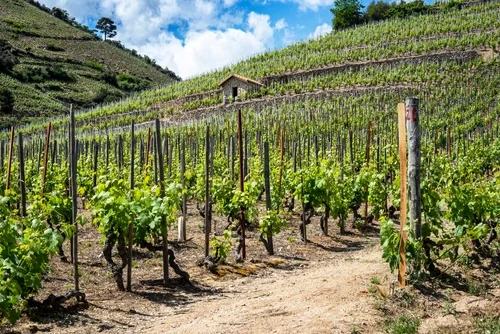
Research on Chenin suggests that the vine can adapt and survive in challenging conditions. New plantings are under way in India and Ethiopia. Growing conditions in South Africa are 5.4–7.2°F (3–4°C) warmer, and two to three times drier, than the Loire, showing the grape’s versatility. A study of 300 genotypes in the Loire alone identified a range of flowering and veraison dates, offering hope that careful selection can help improve tolerance to heat or drought. But nursery declarations in France indicate that only a tiny proportion of the available genetic pool is in use. One single clone accounts for 50% of vineyard plantings, and four clones are planted across 90% of new vineyards. Allowing a variety of genotypes to react differently with the environment would mitigate risk. The first planting in the Loire of a South African genotype from the Old Vine Project came in 2023, with the hope that ongoing research will benefit the Chenin industry.
Rosa Kruger, founder of the Old Vine Project, shared her experience of South African viticulture. Over the next 10 to 12 years, temperatures will increase by 2.7–3.6°F (1.5–2°C). On the west coast of South Africa, this will make viticulture almost unsustainable. Whether or not growers irrigate, they must find ways to preserve water in the soil. There will be less rain; it will come down in floods. Most old vines are dry-farmed. Old vines have survived because of their effective dense root systems. Water reserves are stored in the roots and the wood structure, mostly after harvest. Annual cover crops offer access to nutrients in the soil. Mulch stores moisture, avoids weeds, and stops erosion on slopes. By using fewer synthetic products, pesticides or fertilizers, growers build soil health.

Growers must establish new methods of buffering vines against heatwaves. Wind is also an enormous challenge, taking water off the vines within hours. It is essential to provide indirect light through the canopy in gobelet or sprawl planting. Planting with the direction of the sun ensures sunlight over the canopy at midday to avoid direct sunlight on the vines.
Content from our partners

Geographical Information Systems offer growers planting new sites multiple images of solar radiation, north-to-south aspect, the direction of water flow, altitude, and direct sunlight; these offer an idea of cooler and warmer parts of the vineyard. Plots are planted according to soil-mapping rather than in square blocks. Keyline design allows growers to work with the contours, catching all the water to flow into a dam so they don’t have to pump. Soils in South Africa are older than those in Europe, with more acidity. Erosion is a problem if water is not properly managed; planting against the slopes allows growers to harvest rainwater, stop erosion, and preserve the water table.
A freshness is evident in old vines; even if the grapes register lower acidity, they retain the perception of freshness. South Africa has a total planting of 86,000ha (212,510 acres), of which 5,000ha (12,355 acres) are old vines, 35 years or older, 30% of the older vines dry-farmed. South Africa’s experience of heat, drought, and wind shows the vine’s capacity to adapt. Chenin grows in any kind of climate and any kind of soil: shale, sand, clay, granite, sandstone, alluvial, on slopes and on valley floors. The vines can live for up to 90 years or more. The oldest vines in South Africa are all planted at high density on old riverbeds.
Soil signatures and the senses
Andrew Jefford chaired an extraordinary session with Gabriel Lepousez of L’Institut Pasteur, Sam Schrock of L’Institut Français de la Vigne et du Vin, Philippe Porché, and Sean Mathyse, head winemaker at Ken Forrester, Stellenbosch. Their insights on soil signatures and geosensory tasting opened a conversation beyond anything I have encountered in wine education.
Sam Schrock’s research on terroir mapping involves manually digging at 1ha (2.5-acre) intervals to establish soil type, color, and texture (sandy, clay, silty, rocky), creating zones. Deeper soil pits offer more data, soil samples for each horizon, from darker organic matter, to silt/sandy soil, to bedrock, to establish physical and chemical composition. Geology maps are studied to evaluate waterflow and orientation; interviews with growers offer empirical evidence of how the soils influence their wines. The different zones, termed terroir units, are based on geology, soil type, and topography. Bedrocks are examined—limestone/chalk, the shale at Anjou, sandstone, and granite—each with different mineral and chemical composition. The feldspar content in granite, for example, will lead to lower acidity in the wine. Soil types include soils developed in chalky limestone, high in calcium carbonate in the Loire, where soluble calcium tends to be washed away leaving silex and clay.
Research results across the Loire can be studied on E-Terroir (eterroir-techniloire.com), offering data on site surface, depth, texture, water drainage, and water-holding capacity. The research considers vigor potential, precocity from soil, independent of rootstock, clones, and weather. The site maps lieux-dits, allowing the creation of sub-labels within appellations, establishing single and single-soil vineyards.
Gabriel Lepousez’s neuroscience centers on sensory perception and memory. Wine communicates with our brains through colors, aromas, textures, and tastes. Detectors in the nose and mouth offer an indirect link to geology and to terroir, from the rock to soil, from vine to mouth. Lepousez debunked certain myths: The mineral content of soil is not faithfully reflected in grapes and wine, and yet the term “mineral” remains a key part of the tasting lexicon. Minerality could include the absence of fruity/sweet flavors and the presence of salinity, acidity, or mouthfeel (angles, sharpness). Considering soil signatures, we should ask which part of the brain has been affected.
Chenin, with high levels of phenolic compounds, foregrounds texture and touch. Mouthfeel involves three separate dimensions. First, surface textures, the granularity of tannins. Second, structure and consistency, which speak to weight, fluidity, viscosity, elasticity. Finally, geometry: How does the wine take up position in the mouth? Does it stay in the center or does it spread?
Soil signatures show the nuances of the Chenin grape in Saumur, which has a richness of terroirs across black and white Anjou, schist and limestone. On limestone, rocks contain calcium that can be released in the soil. Importantly, the influence of calcium present in the cellar is a limiting factor affecting the concentration of calcium in the wine, even from a limestone soil. More important still, we have a high level of calcium already present in our saliva, so for us to detect calcium, the wine needs to exceed that level.
With grapes that are from nitrogen-deficient sandy and granite soils, however, a yeast-nutritional stress changes the trajectory of fermentation, producing succinic acid, which presents as umami, with a decrease in fruity esters; the soil signature can end up with notes of salinity.
Lepousez emphasized the importance of tasting wines in comparison with each other. When tasting, he asked us to observe the salivation in our mouths, to identify the area of the tongue. Umami flavors tend to be detected at the front of the tongue, while acidity causes the sides of the tongue to salivate. The speakers recognized the colossally complicated nature of the subject and the need to use broad generalizations.
Sean Mathyse talked of his terroirs at Ken Forrester Wines, noting how granite weathers in different forms. In Stellenbosch, at the coast, it weathers to sand, the wines showing more fruit and aromatic characters. In Swartland, it weathers less and offers a more mineral contribution, the roots going deep into the dry soil, taking up what they need and offering more mouthfeel, structure, and palate weight in the resulting wines.
On the fundamental, if still generally underestimated, importance of texture and touch, Lepousez returned to the Latin root, acere (to be sour), from which we have acidic, acerbic, sharp, involving touch as well as taste. I had an impression of the limits of what language can convey. All areas of the brain were fully engaged, and this essay fails to do justice to the excitement generated by this conversation throughout.
Global Chenin Observatory
Ideas of gastronomy were never far from the discussions. Michelin-starred chef Pascal Favre d’Anne demonstrated food pairing, bringing sweetness, smoky tones, citrus, and pink pepper—ideas of delicacy carried back from a recent trip to Asia. It was a kind of choreography, everything in balance—from texture, to acidity—and every ingredient in conversation with the wines.
On the third day, we transferred to Vouvray, where vineyards spread out, Gerald Asher says, “like ribs in a fan of the chalky tufa that blankets Touraine and breaks into valleys and clefts that open to each other and to the Loire.” At Château de Valmer in Chançay, we were welcomed into a troglodyte chapel built into the tuffeau in 1524 and situated along one of the pilgrim routes of the Camino de Santiago. Emerging from the caves, Jean de Saint Venant, a fifth-generation winemaker, poured his wines, and we tasted, our gaze drawn across terraces stretching back five centuries to fruit trees espaliered across the kitchen garden.

At Fontevraud Abbey, near Chinon, Vins de Loire launched the Global Chenin Observatory, an online repository in French and English (observatoire-cepages.com) as the abbey bells pealed out overhead. Fontevraud was once the largest monastic settlement in Europe, founded in 1101 by Robert of Arbrissel as the mother-house of the new Order of Fontevraud. A tour of the abbey carried us across 11 centuries, where men and women lived in separate quarters under the governance of a series of abbesses, many of royal blood. We tasted under the cloisters, where the order continued its work until the last Abbess of Fontevraud was expelled in 1792, following the Revolution. For a period, the monastery served as a prison. Restoration work on the church and Romanesque kitchens began early in the 20th century; the abbey is now a UNESCO World Heritage site. We paused before the tombs that once held the remains of Henry II, Eleanor of Aquitaine, and Richard the Lionheart.
At Domaine Hôtel-Noble in Vernou-sur-Brenne, an all-female panel traversed the grape’s identity profiles. Of Vouvray wine, Asher said the appeal lay “in its sweet-tart character, dry enough to be refreshing, gentle enough to be universally flattering.” Sarah Hwang of Huet spoke of the fruits and colors of the grape inviting us into a space of intuitive feelings. Christine Marsiglio MW of Wine Folly spoke of the smell of wax crayon that you find in no other grape variety. As the wines kept flowing, we studied the Chenin aroma wheel developed in 2005, counting off quince, yellow apple, pear, chamomile, honey, diacetyl buttery notes, wet wool, and lanolin.
Dr Hélène Nieuwoudt of Stellenbosch University presented Chenin aroma wheels developed in South Africa. The fieldwork included specific sensory memories, the smells of local bushes, the smells encountered walking through sugar-cane fields said to cut off all other perception. Like wines of terroir, these could come from nowhere else. The research resulted in three aroma wheels, translated into the Shona, isiZulu, and isiXhosa languages. These wheels have remained in the memory, innovating and expanding Chenin’s expressions of terroir in its own words, its own language.


