There is so much that is admirable in the desire to preserve old vines. But are claims for their superiority scientifically robust? Are they always worth the extra effort?
Old-vine wines are so much better,” remarks Jancis Robinson MW in conversation with Paul Draper on the opening day of the Old Vine Conference in Napa. While I fully sympathize with the widely felt sentiment surrounding old vines and the earnest wish of many to nurture them through their dotage, I am not among the die-hard old-vine brigade who would preserve them at any cost. I feel they must do a good job, if not a better one than young vines, of expressing terroir in order to merit the extra work they entail.
The OVC promised a packed schedule of seminars throughout a week in Napa and Sonoma in November 2025, including visits to numerous old vineyards, looping in Contra Costa on the less glamorous side of San Francisco Bay and Lodi in California’s Central Valley. I was curious to hear the views of the 39 “wine luminaries” from ten countries who would sit on panels at the conference shedding light on the attributes of old vines and why we should preserve them.
As might always have been expected, the itinerary would include much tasting of Californian old-vine Zinfandel. I accepted the invitation with slight trepidation. When I last visited Napa and Sonoma in the late 1990s, I was bowled over by old-vine Zin with 18% ABV—and not in a good way.
Related


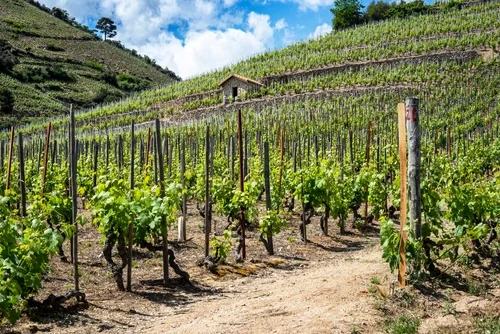
So, how to marshal a deluge of factual information, marketing discussions, old-vine stories, home truths, and tasting impressions—not only from California and my more familiar stomping ground of Burgundy but also other hotspots of old vines that I have recently visited? These include Bairrada in coastal Portugal, where I walked in the old vineyards of the Baga Friends, and Bierzo, where the Consejo Regulador claims to have the highest concentration of centenary vines in the world. The most logical approach was a simple SWOT analysis, to consider the question, Should we care about old vines? And no, the visual appeal of gnarly old vines is not enough. Never have I seen so many photographs taken than on this trip, but their beauty is mere distraction. This is farming, not gardening.
We’ll get to the SWOT, but first, at what point does a vine become old? Some of my favorite wine on this trip to California came from vines around 30–35 years old, which I consider on the youthful side. There are a bewildering number of old-vine associations with no consensus on the qualifying age, and any region can set its own parameters. The Association of Zinfandel Advocates and Producers (ZAP) states that “old vines are generally understood to be more than 50 years old and produce less than 3 tons per acre.” Lodi specifies 50 for an old vine and 100 for an ancient vine. Vineyards registered with the Historic Vineyard Society of California must have an original planting date at least 50 years earlier, with at least one third of the vineyard traceable to that date. South Africa’s Old Vine Project certifies vines over 35 years, while the Old Vine Register established by Jancis Robinson and colleagues, “to do our bit to keep old vines in the ground,” has plumped for 35 years for its 8,100 entries.
In Burgundy, if vine age is mentioned, it’s most often youngsters up for discussion within the context of expressing the terroir. After Domaine Mugneret-Gibourg replanted grand cru Ruchottes-Chambertin, it declassified the wine to premier cru for 20 years. Similarly, Comte Georges de Vogüe’s 25-year-old Musigny vines graduated to grand cru only in 2023, though the wine from 17-year-old vines, still bottled as premier cru, is very close in tasting profile to the main cuvée. In fact, I often find good wines from even younger vines. Gilles Lafouge’s unusual 2015 planting of Chardonnay in Auxey-Duresses Les Duresses already shows premier cru quality. I’m merely saying, don’t dismiss the potential for high quality from young vines in good terroir, especially when the vine material may be better.
Content from our partners


In South Africa, the Wine Industry Information Systems (SAWIS) has records of vineyard plantings dating back to 1900, but this comprehensive database is quite unusual. Accurately dating old vineyards can be hit and miss. There are no official records in the US of planting; and during Prohibition, illegal planting flourished to make wine for home consumption.
There is now, however, a scientific way of dating vines. At the 2025 OVC, José Ignacio Gracia López presented new research from CRDO Campo de Borja’s Garnachas Históricas project, conducted by the universities of Navarra and Zaragoza, to calculate the age of bush-vine, dry-farmed Garnacha in Campo de Borja. Four years of research revealed an annual growth rate of 0.6in (1.55cm). But only the method, not the result, is transferable, so the process would take equally long elsewhere.
Cracking on to explore the virtues of old vines, López also presented scientific research to support Robinson’s statement on the link with quality. “In comparison with young vines, old vines have more powerful phenolic structure and a greater number (40) of aromatic precursors linked to soil, which give more diversity of flavours and aromas that are closer to black fruit than red. They are more intense, more varied, and more reflective of terroir.”
On the same panel, young Andrea Farinetti, at the helm of Giacomo Borgogno & Figli in Barolo, presented data to support the benefits of old-vine Nebbiolo in terms of the stability and freshness of the wines it produces in hotter summers. In 2020, Vigna Liste, planted in 1946, produced fruit with a pH 0.09 lower, and total acidity 0.2g/l higher, than Fossati, planted in 1998— despite the higher elevation and somewhat cooler aspect of Fossati. Farinetti adds, “The old vines also have a better quality of tannins, while the young vines were more rustic and dry.”
During my short foray into winemaking in Burgundy, I used rows of old vines planted in the 1950s within Vincent Boyer-Martenot’s larger and younger parcel of Meursault Narvaux. We were curious how the old vines might differ. In 2017, the old vines produced a deeper, richer cuvée, albeit with acidity lower than from the younger vines, but both showed terroir typicité. In 2018, I made Volnay from 25–30-year-old vines in Chevret, which produced a red-fruit, floral, rather silky wine from this warm vintage, while the old vines planted in the 1950s had more body, tannin, black fruit, and alcohol. In this vintage, I preferred the wine from the younger vines.
Burgundy has its share of old vines, and in their support I will mention the 1930s vines in Chablis Vaucoupin, one of my favorite premiers crus there. In 2023, the wines have great freshness, energy, and sapidity—even those from the hottest spots. The wines are highly consistent—irrespective of vintage, producer, and pH. But is this due more to the old vines or the terroir?
Olivier Giroux, who has vineyards in newly minted premier cru Les Mûres, in Pouilly-Loche, points out that old vines are not intrinsically better; they are simply more likely to be found in the best terroirs, since farmers planted their best land first. True, though the finer terroirs may often be the first to be replanted, too. Vaucoupin probably survived because it wasn’t worth replacing vines in this lesser-known premier cru. Old vines remain where farmers were too frugal to replant. “My father was too mean to buy clones. He didn’t think they were worth the money,” says François Servin, who makes a Cuvée Massale from 1960s vines in Les Pargues, which he feels produce a more intense, spicier perfume than the younger vines.
The value of old vines can, of course, be something beyond that found in the glass. During my visits to producers in California, the historic importance of old vines was palpable. Zinfandel is considered California’s “heritage” variety. Brought from Europe to a Long Island nursery in 1829, then transported to the West Coast during the gold rush of the 1840s, Zinfandel was the ideal, high-cropping grape variety to provide miners with a substantial beverage. Easy to grow as a head-pruned vine, requiring no posts or wires, it became the most widely planted variety in northern California during the first wine boom of the 1880s. Most of these vineyards were destroyed by phylloxera, but many survive from the replanting that began in the early 20th century, and many an old vineyard has an engaging story.
I think it’s fair to say that California has a short viticultural history, so vine age assumes more significance as part of its cultural identity than it does for Burgundians, where a thousand years are carried more lightly. It’s an emotional but entirely valid reason for caring about and preserving old vines.

Sustainability, quality, and variability
Moving to something more practical, sustainability may be the greatest strength of old vines where water is a scarce resource, not least in parts of California where many old bush vines of Zinfandel (and co-planted varieties) are dry-farmed. In Lodi, many old vineyards are also own-rooted, made possible by the sandy loam soil. In Bechthold Vineyard, planted in 1886, the water table is 50ft (15m) down, but Turley winemaker Tegan Passalacqua is convinced the old vines of Cinsault tap into it; even so, they are furrow-watered from a canal after harvest.
We also visited Marian’s Vineyard in Lodi, predominantly a Zinfandel vineyard, planted in 1901, which has below-surface drip irrigation. It’s farmed by Bruce Fry, who explains he can use “sustainable drip irrigation” for these old bush vines, which equates to 1,233 cubic meters (325,724 US gallons) an acre in a hot, dry year, while twice that volume is necessary for one of his younger neighboring parcels trained on a high cordon. “A vineyard raised on drip irrigation will have much shallower roots—18in [45cm] versus 30ft [9m]—so it requires far more irrigation,” observes Nathan Haberkern, assistant winemaker at St Amant, which sources fruit from Mohr-Fry Ranches.
At Rauser Vineyard (Cinsault planted in 1909), Klinker Brick winemaker Joseph Smith tells me, “Because the roots of young, irrigated vineyards stay on the surface, the vines quite swiftly become less productive. Farmers want to produce 8 tons per acre. When this drops below 4 tons, the vines are not economically feasible, so they rip them out at around 25 years.” I’m told that run-of-the-mill Lodi grapes sell for $500–700 a ton, while $1,500–1,800 per ton can be made from old vineyards, meaning some old vineyards are more economically viable than younger ones. Hence Tegan Passalacqua remarks that Bechthold Vineyard yields a sustainable crop of 3–5 tons per acre. To put Lodi’s old-vineyard wines into context with other California wines mentioned in this article, they retail for $26–32.
In Sonoma Valley, walking in Bedrock Vineyard, planted in 1888, Morgan Twain-Peterson MW also highlights the sustainability of old vineyards. In Bedrock, the density of bush vines is 681 per acre. This requires much less water than younger vineyards, which are typically planted to a high-density VSP (vertical shoot positioning) system copied from Europe. The latter, he argues, is not suitable in California, where there is often no rainfall from March to October. These old-vine vineyards were planted at 8 x 8ft (2.5 x 2.5m) in order to use a pair of horses. The umbrella-like canopy of the bush, some 6–7ft (1.8–2m) tall, shades the fruit, making the system very useful in warmer, drier summers.
Cinsault is a minority variety in Napa and Somoma, where Zinfandel steals the limelight, the supporting cast including Mataro (Mourvèdre), Syrah, Tempranillo, a sprinkling of Bordeaux varieties, and Carignan (spelled Carignane there). “Old-vine Carignan is one of our secrets in California,” says Peterson, “but it takes 80 years to get good.” I tasted some good examples of old-vine Carignan from 2023, not only from Bedrock Wine Co but also from Ridge Buchignani Ranch in the Alexander Valley and Trentadue Estate Carriage House Carignane.
Varietal curiosities aside, it is the diversity of plant material within a field blend that is of most interest. As Peterson notes, “1888 Carignan is very dark in color, with low pH and a lot of spice and acidity to add to a blend.” Many producers of old “mixed black” vineyards argue they self-regulate, unlike younger vineyards, a claim to which Paul Draper alluded in his conversation with Jancis Robinson. This seems to include crop levels and resistance to drought, as well as better-balanced fruit. Occasionally, there is a white vine, usually Mission, in a mixed black vineyard, and its acidity is no bad thing in hotter summers.

In Bierzo, Mencía vineyards were historically co-planted with Palomino. Old Mencía bush vines yield concentrated fruit, but sugars quickly soar, while acidity plummets. At 13.5% ABV, Mencía can reach a pH of 3.7, so Palomino’s acidity is important to restore the balance. Generations of growers across the Iberian peninsula recognized the usefulness of white varieties in a red vineyard, though sometimes even the most experienced wine producers, new to a region, need some convincing. Álvaro Palacios candidly admits that when he arrived in Bierzo from Priorat in 1998, to establish Descendientes de J Palacios with his nephew Ricardo Pérez, he was skeptical and left Palomino out. But by 2006, he had fully embraced it for the freshness and nuance it brings.
While we are thinking about balance in the wine, let’s consider overall quality. How much can we attribute to age per se? Or is it the diversity of genetic material that is more responsible—not only different varieties, but the multifarious DNA of the same variety in an old vineyard? Undoubtedly, old vineyards are a crucial repository of vine material. Over the past 20 years, numerous projects have been established around the world—from Plaimont in the south of France, to Catena in Argentina—to isolate and preserve material from old vineyards with which to repopulate dying vineyards and plant new ones.
Burgundy has the ATVB (Association Technique Viticole de Bourgogne), together with the private association founded in 2008 by Aubert de Villaine and Denis Feltzmann to safeguard Burgundy’s diversity of vines. California has the Heritage Vineyard—a 0.76-acre (0.3ha) plot planted with seven different vines from 63 different Zinfandel vineyards within the UC Davis Oakville research station. But only after years of painstaking scientific study of the vines and the wines they produce will it become clear whether the quality of a selected vine comes from DNA or from location (terroir).
Here we come to a weakness of some old vineyards: Not all of them are planted with the best material. The choice of clones in Burgundy 40 to 50 years ago was limited. After these, better generations of Dijon Pinot Noir clones emerged (667, 777, and 828), and these were then supplanted in the early 2000s by the ATVB finer bundles. Elsewhere, however, vineyards from Ontario to Hemel-en-Aarde are still limited by clones developed last century: the 114 and 115. There’s something to be said for mutation, but will this material, and such a limited genetic pool, evolve into the finest-quality old vineyards of the future?
It’s just too simplistic to say that all old vines are good and/or better than young vines. Many old vines have viruses. In Chablis, Domaine Dampt is pulling out Côte de Léchet vines planted in 1973 that are infected with esca. “Clones from the ’70s and ’80s are not doing well,” remarks Vincent Dampt. “There was a big expansion at the time and too much demand. The plant material from the nurseries was not good.”
And if it’s not the scion that’s the problem, it can be the rootstock. The 149.61 (161-49C) has long been favored in Burgundy for its resistance to limestone, but those vines struggle in the drier summers and are being replaced with others on more drought-resistant rootstock. Many Burgundian producers prefer to replant a failing old vineyard than let it stagger on. Time is ticking for old vineyards, all the way up to grands crus.
While reviewing the 2024 vintage in Burgundy, I spoke with producers whose old vines struggled in 2023 and took longer to bounce back than did the youngsters. And some of the oldest vineyards were the worst affected by mildew in 2024. Jean Lupatelli, cellar master at Domaine Comte Georges de Vogüé, remarks, “Working with old vines offers more security against excesses in very hot or cold vintages.” But in the wet and cloudy 2024, it was the old vines in Musigny and Amoureuses that were worst affected, yielding just 8–10 hl/ha.
At the 2025 OVC, Andrea Farinetti vouched for the healthiness of his old vineyards in Barolo, pointing out that they suffer less than young vines from flavescence dorée, and in 2022 the old vineyards had lower mortality. Frankly, one can find as many examples for as against old vines in terms of virus, health, and resilience to climatic extremes.
The same might be said about economic viability. Referring back to my earlier positive comments about higher prices for fruit from old vines in Lodi, consumer demand has diminished, unfortunately, and stocks of wine are high across California. I am told some very large wine producers broke contracts with Lodi growers in 2025—not only for fruit that didn’t meet minimum sugar levels, which was tricky in 2025. In Lodi, when prices fall to $200 a ton, it’s more viable to replant with avocados, nuts, or trees. And it’s not just Lodi growers who are struggling to sell fruit. In Sonoma, it was shocking to see old vineyards of Zinfandel, even Pinot and Chardonnay, still hanging a full crop in November. The economics are worse for old vineyards, due to the higher cost of management.
There’s no denying that for many old vineyards, economic viability is their greatest weakness and the strongest threat to their survival. In Bairrada, the tiny 0.5ha (1-acre) parcels of old vines have been abandoned by families who traditionally sold grapes they didn’t make into wine for home consumption. These days, no one is interested in maintaining the vines, requiring back-breaking manual work, for a measly 50 euro cents per kilogram. Filipa Pato and Luis Gomes at Giz are on a mission to save old vines. It seems that the fate of these old Baga vines rests with a group of passionate producers—most of the Baga Friends have parcels that predate the 1937 register. They are intent on changing consumer perception of Baga as rustic wine from overcropped vines; while a low crop is often an issue for old vineyards, for Baga the opposite is true. It’s a high-yielding variety, and even 100-year-old vines need restraining through strict vineyard management to deliver quality fruit and wine.
Back to Napa and Sonoma, where I enquired about prices for old-vine fruit. It seems old-vine Zinfandel fetches €2,600 a ton versus €9,000–13,000 for Napa Cabernet Sauvignon. I am told a bottle of old-vine Zinfandel has a ceiling of around $75 retail, while Napa Cabernet Sauvignon can sell for considerably more. So, it’s incumbent upon high-profile producers to pay a fair price to growers for old-vine Zinfandel if these vineyards are to survive. A chat with a few such producers revealed top-dollar prices—as much as $4,000 a ton for iconic Zinfandel vineyards. So, there’s still hope for old vines that continue to crop well.
Even in Burgundy’s Côte de Nuits, however, where high prices for grand cru wine can support low yields, there is a tipping point. Hence Charles Van Canneyt pulled out the low-yielding old vines in Clos St-Denis after he bought Domaine des Chézeaux in 2021. This is typical. At Grivot, the family is uprooting Combe d’Orveaux: “It’s 95, and too old now,” says Mathilde Grivot. Some Beaumont and Echézeaux will follow suit. Burgundians are pragmatic; they may feel a twinge of sadness but don’t hang on to old vineyards out of sentiment. They are farmers and will replant systematically to have a well-functioning vineyard with young, medium, and old vines, rather than handing down a domaine requiring wholesale replanting by one generation. I think their long view comes from their depth of viticultural history, where 50 or even 100 years is a relatively short time. But more significant is the primacy they place on terroir. Healthy old vines are the icing on the cake—but what is icing without cake?
Costly and heroic endeavors
There are places in the world where managing old vineyards is a great deal more demanding, and more expensive, than on the gentle incline of the Côte d’Or. And none more so, perhaps, than Bierzo, where Corullón’s precipitous slopes range in altitude from 2,300 to 3,300ft (700–1,000m). While Santiago Ysart of Cantariña was out walking his dog, he discovered an abandoned east-northeast-facing parcel perched on a 60% slope; nobody else wanted it, not even Álvaro Palacios, who recently passed on an old Corullón vineyard to Raúl Pérez. The A Freita paraje (lieu-dit) cost Ysart more to fence than to buy. At 2,300–3,000ft (700–900m), Luna Beberide’s paraje A Serra is another example of viticulture on the edge. Only the costly and heroic endeavors of Corullón’s producers make it possible for us to appreciate this extraordinary terroir.
I visited some of the old-vine vineyards with Álvaro Palacios. The wines beautifully express the diversity of Corullón’s terroir (the crisp and chiffon Moncerbal may be my favorite)—but they come at a price (especially La Faraona) that lesser-known producers cannot command. I wonder how they manage.
In fact, many don’t. For some producers, the economic and practical challenges of old vines in demanding terroirs require compromise. Far from any town in Alto-Bierzo’s remote Arganza, and at altitudes around 2,300ft (700m), young Gregory Pérez has created a small fiefdom by painstakingly assembling parcels of abandoned vines planted in the 1940s, each less than half an acre (0.2ha) in size. Distance and poor roads make it prohibitively expensive to entice the workers necessary to tend them manually. He has therefore uprooted some old vines that are too low-yielding to be sustainable and replanted on VSP, which he can work by machine. “Terroir is more important than old vines,” he argues—and I wouldn’t dispute it.

In Bairrada, Luis Patrão (at Vadio) shares Luis Gomes’s passion for the biodiversity of old vines but not for the old bush vines themselves, which he found too productive for good quality. While retaining the best half-acre (0.2ha) as an old-vine repository, since 2005 he has been replacing (largely with a massal selection from Luis Pato) all 27 parcels of old vines across 25 acres (10ha) in Val Dom Pedro, where he is the sole grower-producer. He finds cordon is more effective for yield control, and the VSP can be worked by tractor. The wines are good and reflect this terroir, which is dotted with limestone quarries.
Clearly there can be drawbacks to old vines. And without wishing to be a party pooper, there is another: The wines don’t always taste better. When I dared to venture this opinion at the 2025 OVC, it was met with sharp intakes of breath.
It may seem heretical in some company, but not all of us like the more concentrated, richer fruit, higher sugar, and lower acidity toward which old vines tend. “The concentration is good, but the balance is not the best, and usually we use whole-bunch,” says Pablo Chevrot about his old Maranges vines planted in 1952 and 1956. Mathilde Grivot finds the old vines of Nuits-St-Georges Boudots “too rich and boring. Maybe more sophisticated, but less fresh. It’s good to blend the 105-year-old vines with the new. When they are 25 years old, we may replant the rest. Our job is a question of balance, and Pinot Noir should have translucency.”
At Domaine Ponsot in Morey-St-Denis, winemaker Alexander Able also achieves balance with the addition of fruit from younger vines. “We have 75% of old vines (Aligoté) in Monts Luisants planted in 1911, which give the fatness, while the younger vines planted in 2006 provide freshness.”
It’s more straightforward to correct the balance in old white vines by picking earlier than it is for reds, where phenolic maturity is more crucial. In California, producers are picking old-vine Zinfandel earlier than in the ’90s, for lower sugar and more acidity, so the ABV is typically 14.5–15% rather than 18%. But harvest too early, and they will not achieve phenolic ripeness. It’s a tricky balance when the season is relatively short and hot. Bob Biale pinpoints the sweet spot for Zinfandel at 14–14.8%: “Zinfandel needs a certain viscosity to be pleasurable, because of the high acidity.” This is still quite a high alcohol level, but winemaker David Natali does a great job mitigating it by finessing the tannins and using minimal new oak, so Robert Biale wines are fluid and elegant. But I found many other old-vine Zinfandels overly alcoholic for my palate, and this is exacerbated by too much extraction and new oak.
Reaching phenolic maturity is also a challenge for Baga, which is a late-ripening variety. The various Baga Friends produce the full gamut of wine styles—from high-alcohol, concentrated wines, to straight, slim, and fresh. Filipa Pato’s Nossa Calcário illustrates the potential to make finely textured wines at 12.5% from old vines, while Dirk Niepoort produces the most balletic old-vine Baga—a style that resonates with me.
In Bierzo, during a morning of tasting kindly organized for me by the Consejo Regulador at its striking HQ in Cacabelos, I was not surprised to find many a beefy, dark-fruited wine at 14–14.8% ABV. There is no lack of matter in old-vine Mencía. Even so, six or seven producers are now paving the way to such lightness and refinement—none more so than Veronica Ortega and César Márquez for his own label and Castro Ventosa.
What about the opportunities of old vines? One can learn from old vineyards when establishing new. In California, this includes reviving field blends of low-density bush vines, as Ridge is doing alongside the old vines at Whitton Ranch Vineyard in Sonoma’s Alexander Valley. While in South Africa, viticultural consultant Rosa Kruger was inspired by the successful close planting of old vineyards there to devise her hydroponic contour design, which captures rainwater for irrigation and minimizes erosion “to create the old vines of the future,” as she puts it. She spoke passionately at the 2025 OVC about the importance of caring not only for old vines but also for the laborers who look after them—not just as a social responsibility but to preserve and transmit the understanding of old-vine management.
The OVC panel focused on sustainability discussed the marketing potential of old vines to reach a younger audience, whom they felt might pay more for wine made with a sustainable approach aligning more closely with their values. Panelists saw an opportunity to follow the success of the natural-wine movement in targeting this sector. Tegan Passalacqua implored everyone at the conference (400 attending in person, 700 following remotely) “to write something that appeals to the younger generations [and] to open a bottle of Zinfandel for someone under 30 in the next week and tell them about it.” Happy to oblige.
All the drawbacks to old vineyards are potential threats, and not all of them will survive. Many, of course, have already disappeared. We think of the 1976 Judgment of Paris as a game-changer for Napa, but Bob Biale remarks, “It came with a sacrifice. Many ripped out Zinfandel, planted Cabernet Sauvignon, took the cash, and ran. Great genetic material was lost.” Nowadays, Cabernet Sauvignon has become synonymous with Napa, but in the 1970s, 40% of its vineyard was planted to Zinfandel. Only 3% of old-vine Zinfandel remains. In Napa, Biale kept the Zinfandel in Aldo’s Vineyard, a 10-acre (4ha) parcel now surrounded by housing. He held out in the face of escalating offers from property developers. Land in Napa changes hands for between $350,000 and $1 million an acre—and Biale has been offered the latter.
It’s a different sort of housing, and industry, that is encroaching upon the old vineyards of Contra Costa County, where there’s pressure to provide affordable housing across the bay from San Francisco. We paused at Evagelho Vineyard, planted in 1890 on banks of beach sand 40ft (12m) high. Now it is an island of old vines sheltering beneath the cables of Pacific Gas and Electric, surrounded by industrial development where, 40 years ago, vines, almond trees, and apricots grew.
Close by on the delta we stopped for a tasting of various Contra Costa producers in the JJ vineyard. This 14-acre (34ha) Carignan vineyard, planted in 1880 on a sand dune in the tidal marshes, was under threat from a restoration project. It seems this vineyard is highly valued for its history (and the sand dune itself by First Nations people), since such was the public outcry that it had an 11th-hour reprieve. Three Wine Co produces wine from it, and a super-fruity 2025 tank sample was attractive.
In terms of survival, historic resonance or a good story are among the greatest strengths of an old vineyard. My California favorite is Bob Biale’s bootleg black chicken tale. Back in 1942, when fruit was selling for a unsustainable $12 a ton, Aldo Biale, a teenage farmer, began making and selling wine without a licence. Customers ordering over a party line asked for two dozen eggs and a “black chicken”—a code name designed to fox the authorities and nosy parkers. The 1999 was the first legal vintage of Black Chicken Zinfandel. Most of the fruit still comes from the estate vineyard around the winery in Oak Knoll District.
So, should we care about old vines? Nobody disputes their value as a repository of genetic material, even if not all old vineyards are required for this or are suitable. Clearly, the sustainability of old vines is highly valuable where water is scarce. Maybe all other qualities lie in the eye of the beholder, but they certainly include plentiful reasons to care about old vines. And if we value the virtues of old vines and the opportunities they offer, we should protect them from the threats. Initiatives such as the Century Club of 40 producers with old vines—established by Karma Kruse, president of the Sonoma County Winegrowers “to help shepherd these vines into the next generation”—provide support on a regional level.
On an international level, it would help if wine regions came together to establish a global certification scheme to communicate the age of old vines to the consumer. South Africa led the way in 2016 with its Certified Heritage Vineyard Seal, a neck sticker specifying the planting date of the vineyard. Projects such as Campo de Borja’s Garnachas Históricas should help ensure old-vine preservation, now with the opportunity to verify the age of old vineyards scientifically and to certify them.
The OVC is an excellent forum in which to extol the strengths and opportunities of old vines and expose the threats. But the cause is best served if we also acknowledge that old vines can have weaknesses and that not all should survive. As a wine critic, I assess quality and sense of place. Old vines are no guarantee of good wine. It is terroir that provides the potential for fine wine, but good vine material, conscientious farming, and skillful winemaking all contribute to fulfilling that potential. Pin a producer down to what makes fine wine, and the answer is likely to be similar to Bob Biale’s: “If you hold me to it, terroir, then farming. You waste the opportunity if you don’t farm well.”
To return to my opening point, do old vines represent the terroir better than younger vines? Once a vine reaches 20 years or so, I think not. It’s worth remembering that the 1973 SLV was made from three-year-old vines. It depends on the variety, of course, but concentration and matter in very old-vine wine can even obscure terroir.
Because the OVC took place this year in California in collaboration with ZAP, it is appropriate to home in on red varieties with a reputation for robust wines. It takes careful husbandry and skillful winemaking to produce refined wine from these varieties, particularly where the vine is old, but the finest examples from old-vine Mencía and Baga show the potential to produce ever lighter wines with intensity, lucidity, and fluidity.
Many wine drinkers’ palates have changed in favor of lighter wines, and producers with ancient vines must keep up. I feel that the future for these old vines lies in adapting to the market and creating wines with ever more translucency to their terroir.