


Marc Millon reviews Italianity: The Culture of Italian Wine by Andrea Lonardi MW and Jessica Dupuy.
At a masterclass wine tasting in Verona at the start of Vinitaly 2026 for the book launch of Italianity: The Culture of Italian Wine, coauthors Jessica Dupuy and Andrea Lonardi MW offered to an audience of informed Italian wine experts and enthusiasts (me included) two wines that were served blind, both made from the same single grape variety. Lonardi asked a simple question: Which of the two is Italian? Almost without hesitation, everyone in the room correctly identified the wine that had been “made in Italy.” The first was a St-Emilion grand cru, the second a Merlot from Bolgheri. Here, transplanted to the Tuscan seaboard, Merlot, a grape that is widely cultivated around the world, takes on a character that is unmistakably Italian.
“The goal of this book,” explained Lonardi, “is to define what makes Italian wines Italian, a shared identity and culture that exists, naturally with regional variations, from the north, across the center, to the south and islands.” “This is not just a wine book,” added Dupuy. “It is a book that reveals the culture, the soul, and the identity of Italy itself.”
These are bold ambitions and confident claims, but this is a bold and confidently written book that, like the best Italian wine, has a vibrant, nervous, and invigorating energy pulsing through it. It is a very personal book that could only be written from an insider’s point of view, and Lonardi, one of only four Italian Masters of Wine, has immense experience across the wine industry, from north to south, as an agronomist, winemaker, and wine marketer. The unique in-depth insider’s view is brilliantly filtered and overlaid by the sensitive and trenchant observations of Dupuy, a wine and food writer from Texas, who we sense through the writing of this book has taken her own transformative journey as she has come to understand the true meaning of Italianity—what being Italian means.
Related


The book is arranged as a series of short essays on a range of topics from the two authors’ alternating and completely different voices. Lonardi is measured, deeply knowledgeable, almost professorial at times; he writes just as he talks, and one senses that this is someone who has traveled the world, seen it all, and found deep-down that there really is no place like home. In a sense, Italianity is Lonardi’s deeply personal love letter to his own country and its wines. It is a love letter that is deeply informed and knowledgeable, and he brings great insights not just into Italian wine but also culture, history, and people. Dupuy, by contrast, invites us to see Italy through her own New World eyes—sometimes, yes, a little rose-tinted, but always deeply and sharply observant. Her voice is fresh and excited, eager to learn, to understand, perhaps to be accepted, and she has a keen journalist’s ability to record and write in precise detail, making us feel like we are sitting alongside her in a stone farmhouse in Sicily, in front of a crackling olive-and-eucalyptus-wood fire, or sharing a tumbler of honest everyday Dolcetto and a plate of plin bathed in sweet butter and sage.
The subtitle of this book is The Culture of Italian Wine. Lonardi is keen to stress that this is not a technical guide to Italy’s wine regions. “It is something more personal—an exploration of culture through stories, essays, and moments gathered over a lifetime in wine. It is written for those who love Italian wine and want to understand not just what is in the glass but the spirit behind it. Every sip carries with it history, ritual, and the communal heartbeat of Italian life. This book is a testament to that world.”
Lonardi relates how he came from a family of farmers in the Valpolicella that had dairy cows, cherry orchards, and vines. The vineyard was tended by his uncle, and the wine sold for bulk-wine production. He was the first in his family to go to university, studying viticulture and enology and eventually gaining bachelor’s and master’s degrees. His first job in wine was in sales with Gruppo Italiano Vini’s importing arm in the US. Based in New York, he felt out of his comfort zone and was struggling to hit his sales targets. Fortunately, he met a seasoned salesman colleague from Modena named Maurizio Bertacchini, who said he’d help and to meet the next day. “Dress nice,” he added.
Content from our partners

Lonardi relates, “What followed was a day that I’ll never forget. At each stop, we drank espresso, shared pasta and Parmesan, met sommeliers and chefs, talked about fashion and football, and flipped through the Gazzetta dello Sport. We laughed. We connected. We didn’t open a single sample bottle—but by the end of the day, I’d sold more wine than I had all month. That day, I learned something essential: selling wine wasn’t just about hitting numbers or knowing the product. It was about sharing a way of life. That day, I began to understand the deeper meaning of being Italian—not just where I was from, but what I carried with me.”
In trying to define Italian wine, culture, and identity, it is worth remembering that Italy as a nation was only unified in 1861. When unification was finally complete in 1870, Italian statesman Massimo d’Azeglio famously declared, “Fatta l’Italia, bisogna fare gli italiani”—“Italy has been made, now we must make the Italians”—highlighting the challenge of creating a single nation out of such a disparate collection of peoples, each with their own histories, cultures, languages, foods, and of course wines. This remains largely true today, and it is one reason why Italian wine can seem so bewildering and incomprehensible to many. Italy, for example, has more native grape varieties than any other country, many remaining tied to a particular region or tiny locality. How, then, to make any sense of it at all?
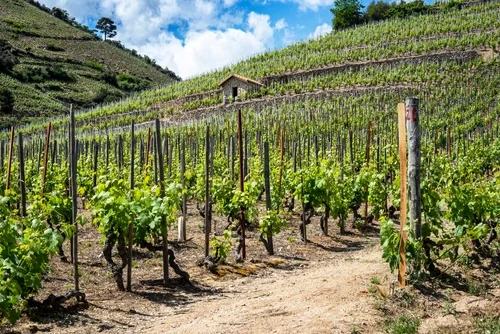
Lonardi writes convincingly about the “Red Spine of Italianity”—an inherent nature and identity of Italian red wine especially that can be traced down the country from north to south and even across to Sicily. This backbone follows mainly the mountain massifs—in the north, across the Alps and Dolomites and their foothills, then down the Apennines along the full length of the country, even crossing the Strait of Messina to Sicily’s Etna. This unites in the north grape varieties such as the noble Nebbiolo, with the alpine varieties that extend across the shoulders of the country, including Schiava from Alto Adige, Corvina from Veneto, and Schioppettino from Friuli Venezia Giulia. Central Italy is the realm of Sangiovese in all its variety, at once aristocratic and deeply rooted in tradition and terroir. A great leap (perhaps too great a leap for me) takes us to Sicily and the slopes of Etna, where ancient, gnarled Nerello Mascalese rises out of the black soil of Europe’s most active volcano.

Italian wine, culture, and life
Lonardi’s writing is precise, succinct, and always directly to the essence. Nebbiolo is a symphony led by the great Italian conductor Riccardo Muti. “It demands not domination but understanding—a maestro who can read the vineyard like a score, who knows each parcel, each note of soil and sun, and brings them into equilibrium. When Nebbiolo finds its harmony, there is nothing more profound.” Writing about Valpolicella, he explains the new style of wine he was trying to create during his time at Bertani: “clarity of place, precision of flavour, harmony between fruit, acidity, and texture. This wisdom is infused into the Red Spine of Italianity—it is a thread of elegance, freshness, and tension that runs through our great red wines from north to south. Valpolicella Classico and Superiore are its northern expression, but the same current flows through the Schiava of Alto Adige, the ethereal Nebbiolo of Valtellina, the smoky Nerello Mascalese of Etna, and the floral Frappato of southeastern Sicily.”
Dupuy, meanwhile, adds to Lonardi’s trenchant, concise and precise essays on grapes, winemakers, and wines with her own stories that complement Lonardi’s and explore any number of topics, adding an affectionate human dimension to the story. She is an accomplished wine writer in her own right, and her essays about wine producers teach not just about Italian wine but also about Italian culture and life. We meet winemaker Enzo Brezza, of Giacomo Brezza e Figli, a renowned producer of Barolo, who says, “When I was younger, [Dolcetto] was the first wine poured with the antipasti. Families would gather at the table before the modern pause for aperitivo became popular, and this is what they would drink.” Indeed, long before Barolo and Barbaresco conquered the world, Dolcetto was the elemental wine of the region, placed on tables in large unlabeled bottles to accompany traditional foods such as vitello tonnato, carne cruda, bagna cauda, or tajarin. Concludes Dupuy, “In a world that so often chases the extraordinary, Dolcetto reminds us of the power in the everyday. It does not compete with grandeur. It honours the tangible—the meal, the table, the hour. And in so doing, it holds a place that prestige alone can never reach.”
For those of us who visit Verona often, Dupuy writes with great affection about a place dear to our hearts, the Antica Bottega del Vino. This ancient institution—now run in partnership with the Storiche Famiglie, an association of the historic producers of Valpolicella and Amarone—has more than 22,000 bottles on its shelves. Dupuy is equally comfortable writing about those iconic foods that are central to the enjoyment of wine in Italy and to the people who make these great traditional dishes. From Le Langhe, we meet Gemma Boeri, whose hands are “brawny and weathered, the hands of a woman well into her 70s who knows how to knead with the tenderness of memory and the force of conviction.” She shares with us the secret recipe for Antica Bottega del Vino’s most iconic dish, risotto all’Amarone. Dupuy takes us to visit the famous Fontodi wine estate in Chianti Classico in search of great wine, yes, and also of a vanishing breed, the white Chianina cattle, still bred here by the Manetti family and essential for genuine bistecca alla Fiorentina, a massive porterhouse steak grilled simply over wood embers, seasoned with just salt and a drizzle of Tuscan olive oil.
Italianity is a brilliantly conceived and written book. It is a veritable feast for lovers of Italian wine and Italy. And yet it leaves me wanting more. I can’t understand, for example, why Lonardi, a northerner with an open mind and a worldly view, has chosen to overlook the south of Italy, the Mezzogiorno that extends from below Rome to the heel and toe of the Italian boot. This is the rich source today of some of the greatest and most exciting wines in the country, with historic, cultural, and human stories that are as ancient as they are modern. How is one of Italy’s greatest red grape varieties, Aglianico, not included in Lonardi’s “Red Spine of Italianity”? I want to read his thoughts on Taurasi, considered “the Barolo of the south,” and on Aglianico’s most volcanic expression from deepest, impoverished Basilicata, Aglianico del Vulture. What about the power, glory, and magnificence of Montepulciano, the great grape of the Adriatic, which in Abruzzo, in the hands of maestri like Valentini, Masciarelli, or Emidio Pepe, can result in some of Italy’s greatest red wines? Elegant and complex Fiano di Avellino and structured and textured Greco di Tufo are covered in Dupuy’s essay “Chasing Ghostlight in Campania,” but she is admittedly chasing, and I don’t sense the same affection as found in other stories.
But perhaps that is the point. This book is a personal love story, and it makes no claim to comprehensiveness. Italy has an infinity of wines that link culture, history, and identity, and they are all valid and worthy. This is Lonardi’s and Dupuy’s selection, and it is all the better for being so intimate. Italianity is a capolavoro that achieves its lofty aim: to reveal the culture, soul, and identity of Italy through stories of its wines and its people. Bravissimi to them both for creating a very special book that all fans of Italian wine and Italy will love and enjoy.
Italianity: The Culture of Italian Wine
Andrea Lonardi MW and Jessica Dupuy
Published by Direct to Press, Austin, Texas, USA; distributed in the UK by Académie du Vin Library; 400 pages; $49.95 / £40


