


In the first of a series of columns examining wine throughout time, historian Kathleen Burk tells the tale of John June Lewis, the first African American commercial winemaker in the USA.
The state of Virginia has the honor of having been the home of the first African American commercial winemaker in the United States, one making wine for sale and not just for his family. John June Lewis (1894–1974) was the son of Armistead Burwell, a former slave-owner, and of Anna Lewis, a Black woman living in the Burwell household. According to Lewis’s son, his father was born in the “big house.” The Burwells were an old and distinguished Virginian family; their ownership of the Woburn Plantation and Manor House and the nearby Burwell Cemetery in Clarksville, Mecklenburg County, went back to 1799. Men in the family fought in both the Revolutionary and Civil Wars, and the Burwells were considered as one of the First Families in Virginia.1 (Mecklenburg County is today one of the major wine-producing areas of Virginia.) Lewis seems to have been close to his father, who taught him about growing vines and making wine.
John June Lewis went to Europe as a soldier during World War I. The French government determined that each soldier ought to have three quarters of a liter of red wine a day to maintain his wellbeing; red wine was “thought more masculine and more likely than white to put fire into soldiers’ blood and breathe courage into their hearts.”2 Much of the wine came from the Languedoc, and its quality ranged from mediocre to poor. This did not deter French soldiers, and Lewis and other American soldiers must have drunk it as well. He remained in 1919 as a member of the American Army of Occupation in the Rhineland. Here he drank what was probably better wine than he had drunk in France, and he grew to love it. Virginia’s state prohibition had arrived in 1916,3 four years before prohibition became the law of the US, so Lewis knew that wine would disappear from his life upon his return to Virginia. Meanwhile, in Germany he developed a deep interest in producing wine that would be good enough to give pleasure to those who drank it.
When he returned from France, Lewis worked in Burwell’s sawmill. On the death of his father at the age of 79, he inherited 193 acres (78ha) in the Ivy Hill area near Clarksville. After the end of Prohibition in 1933, he immediately planted 10 acres (4ha) of wine grapes. Sources refer to hybrids, possibly including Catawba and Norton grapes, and the native American grape Concord. In any case, given the Virginia climate, any grape variety could be challenging to grow successfully; much of the soil is made up of red clay (not necessarily unfortunate if it is mixed with, for example, gravelly loam to provide internal drainage), the climate can be very humid, and Virginia is subject to heavy storms, both of which invite rot and mildew to take up residence.
Related
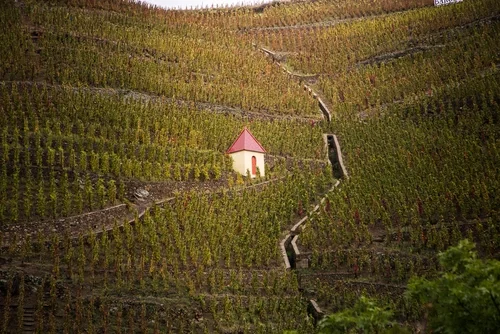
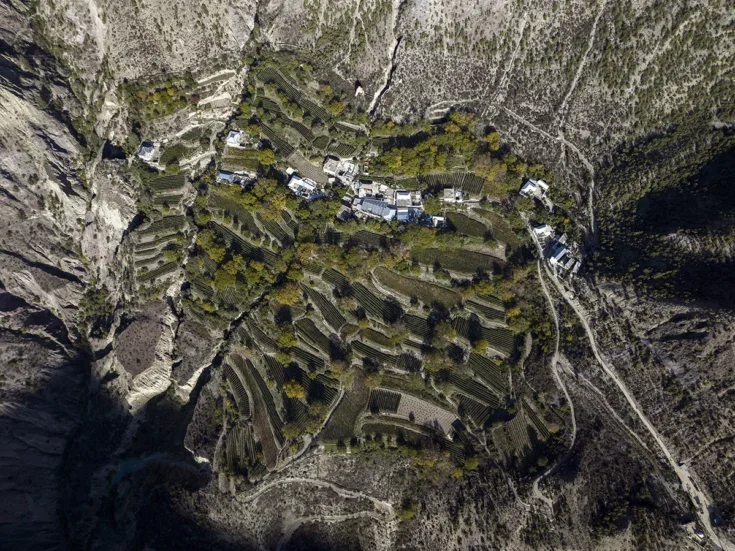

Neither the United States Department of Agriculture nor banks would lend to Black farmers, and so Lewis had to finance himself, as well as do most of the work. He dug holes in the ground and planted and grafted the vines. He also built a winery with a storage capacity of 5,000 gallons, cutting down trees on his farm and pulling rocks in a two-horse wagon. Once they were picked—possibly by himself alone but probably helped by some members of his family—he put the grapes in barrels, climbed into them one at a time, and stomped on the grapes to release the juice. He then fermented it, using yeast cultures from California, and bottled the resulting wine. One source says Lewis concentrated on light reds “for farm tables,”4 while he also made sweet white wines.
Independence and resilience
Lewis opened Woburn Winery in 1940, after he had allowed the grapevines to mature for seven years; if grapes are to be used for wine, the minimum wait is three years, so in the circumstances he was generous.5 He decided that the name of the wine would be the Virginia-Carolina Brand, while his wines were called Raisin and Virginia Red Grape. At first, the bottles of wine were sold only to family, friends, and locals, but eventually it was also distributed to churches and speakeasies in Washington, DC. What is particularly notable about Lewis as a winemaker is that, as late as the 1970s, his was the only Virginia winery to make wine solely from its own grapes.
Not surprisingly, Lewis had to surmount several barriers. First of all was racism. As noted above, no African American farmers received loans; nor were they allowed to be members of trade associations. There were also the rot, mildew, and numerous other diseases that threatened the grapes, the results of which could destroy a whole year’s crop. His wines initially received tepid comments in wine trade publications, referred to as having “rustic vigor,”6 though that may have been what they deserved. Yet the Virginia-Carolina Brand was listed in the 1960 issue of Wines & Vines Annual Directory as producing table and dessert wines,7 implying that he was by then accepted as an established wine producer. Nowadays, he would be referred to as an artisan winemaker and, if his wine was good enough, celebrated as such.
Content from our partners

Lewis died in 1974, and his son, John June “Duckie” Lewis Jr, took over the running of the winery. It is probable that he did not have much experience in making wine, and financial difficulties soon arose. Woburn Winery was then closed by Lewis Jr, who sold what was left of the winemaking equipment in 2008.
A growing legacy
John June Lewis was the first Black commercial winemaker, but things have developed since then. In 1997, Iris Rideau became the first Black female winery owner in the US (Rideau Vineyards in Solvang, Santa Ynez Valley, California).8 By 2024, 70 wineries were owned by Black women. Also in 1997, Mac McDonald released his first vintage of Pinot Noir in his Vision Cellars in Sonoma County; he had been mentored by Chuck Wagner of Caymus Vineyards, where he spent 15 years learning viticulture and winemaking. In 2003, he founded the African American Vintners Association.9 This is still thriving and provides a network to exchange information and generally for winemakers to help each other. As noted above, Lewis had been forbidden to join a trade association because he was Black. Rideau sold Rideau Vineyards in 2016, at least partly because she wanted to write her autobiography. McDonald shut Vision Cellars in 2025 because he was tired and just wanted to take care of his half-acre garden; he also wanted to “go out while I’m at the top of my game.” No member of his family wanted to take it over, and instead of selling it, he shut it down.10
Nevertheless, by October 2025, 151 wineries were owned by African Americans in the US. The majority, 81, were in California; 70 were outside the state. It is rather sad that only six of them are in Virginia. Yet in the face of the climatic challenges associated with growing grapes there, it is not too surprising. Thirteen of the wineries are in Texas, which has its own legal, weather, and insect challenges.11 But regardless of where they are, these 151 wineries—all dating from after Lewis’s death in 1974—stand as something of a tribute to him, the pioneer of Black commercial winemaking in the United States.
NOTES
1. Monique Bell, “Thriving on the Vine: The Growth of Black Entrepreneurs in the American Wine Industry,” Journal of Business Diversity, Vol. 23:4 (2023), p.80.
2. Rod Phillips, French Wine: A History (University of California Press, Oakland; 2016), p.198.
3. Thomas Pinney, A History of Wine in America II: From Prohibition to the Present (University of California Press, Berkeley; 2005), p.188.
4. Beverly Crandon, “Wine with Me”; beverlycrandon.com/post/how-john-june-lewis-bottled-freedom-after-wwii[it was actually after WWI].
5. Lewis owned another 183 acres, so in order to live, he must have farmed at least some of his other land.
6. Urban Connoisseurs, “The History of Black Winemakers”; urbanconnoisseurs.com/history-of-black-winemakers
7. Crandon, “Wine with Me.”
8. Dorothy J Gaiter and John Brecher, “Iris Rideau: A Pioneer Gets Her Due ‘Because People Want to Know Now’”; grapecollective.com/iris-rideau-a-pioneer-gets-her-due-because-people-want-to-know-now; en.wikipedia.org/wiki/Iris_Rideau
9. MaryAnn Worobiec, “Mac McDonald Takes a Bow,” Wine Spectator, June 18, 2025; winespectator.com/articles/winemaker-mac-mcdonald-takes-a-bow
10. Ibid.
11. Kanale Travels, “A Guide to 150+ Black-Owned Wineries in the US and Abroad”; kanaletravels.com/guide-to-150-black-owned-wineries-in-us-and-abroad There are 85 Black-owned wineries in the rest of the world, 67 of them in South Africa.


