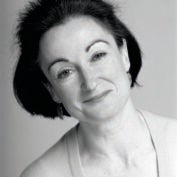
As a medical doctor, an influential old-vine evangelist, and the head of Argentina’s leading family wine business, Dr Laura Catena is a woman of many talents with an instinct for collaboration and a real gift for connecting with people, says Margaret Rand.
There’s a terrible temptation when writing about Laura Catena, and there’s going to have to be a forfeit for saying it. She wears many hats.
No! Don’t say that. Start again.
“Anything you do well can train you for doing something else well.” That’s better. That’s Laura herself, and no mention whatever of headgear.
Related

We did talk about headgear, and her signature berets, but honestly only for a moment. The rest of the time we talked about serious things, like how on Earth can anyone be a practicing doctor in California while running a winery in Argentina? And was she the obvious heir to Catena? And if so, why did she become a doctor? And look, there’s this twinge in my back…
No, not that. Honestly.
The thing is, Laura is very, very good at connecting with people. She does her own social media, even if (she says) her pictures aren’t so good; after she presented the 2026 WSET awards in London, she responded to every single person who tagged her in their social media posts. The morning before we met, she’d spent time making an Instagram post about something, even though she had a million other things to do. For her, that is more important than answering hundreds of emails that somebody else can answer. And when she took over the running of Catena, her father—who had run it top-down and hierarchically, with a small group of people reporting to him—announced that they would now move to Laura’s American-inspired team concept.
Content from our partners
“There is some truth to that,” she says now, “but I also believe that a chain of command is very important, as in a hospital. The boss gives the message. You can’t get creative about medicine; you can question, but you must follow. I am very collaborative, but I have a chain of command.
“What is our purpose? Making Argentine wine, and making the best in the world. It’s the same objective as my father. We haven’t achieved that yet, and we won’t have done until there’s an Argentine section in every wine collection in the world. Even if the quality is there, the perception isn’t yet.”
Laura combines complete openness and warmth—“I am anti-Machiavelli; I am 100% honest, with no Machiavelli in me”—with rigor. And when you’re running a company in a country that has had 1,000% inflation, rigor is one of the things you need. That and perhaps a second career.
Medicine, in fact, came first. She started medical school in 1988 because she wanted to pursue her interest in science and because she likes doing hard things and because she wanted to help people—she still does want to help people, and she still does like doing hard things. The military government in Argentina had fallen, but during the years of the junta, when Laura’s uncle was kidnapped (her father negotiated his release), the Catenas had moved to California. Laura went to high school in Berkeley and then to Harvard to read biology (where she graduated magna cum laude) and then to medical school at Stanford. It was while she was practicing as a doctor that she became more involved in the wine company from 1995, largely because she spoke better English than anyone else in the family and was in California so could be in charge of exports. Gradually, wine took over from medicine, culminating in her official appointment as head of the company in 2012.
But that is to simplify rather a tangled history. We need a bit more background.
Laura Catena: Ambition, determination, and the family profession
Laura Catena’s great-grandfather Nicola was the one who left Italy. “He was an adventurous guy,” says Laura; “possibly the first adventurer in the family.” He was the fifth son, and in 1898, when he was 18, he left the Marche where his family farmed what all farmers there farm; his son Domingo expanded the vineyards in the new country while Domingo’s wife, María Angélica Zapata, was a teacher and ran her local school. Their son, Laura’s father Nicolás, studied in the US and became an economist, brought his knowledge to the business, founded a university, and had three children: Laura, Adrianna, and Ernesto.
Domingo had started making good wine, sold in Buenos Aires’s top restaurants, but he sold it in bulk. It was Nicolás who moved the company to another level and established Catena as a brand. His mother had wanted him to become an academic and not make wine, but then his mother died in a car accident, and he had to stay to help his father. Later, he did study—economics, at Columbia, because not only did he want to make wine, but he also wanted to help the Argentine economy. He took his family to the US with him; Laura was just two years old.
They later returned to Argentina, but in the 1980s they left Argentina again when things became too hot under the junta; and that is why Laura, staying on to finish her studies in California after the rest of them went back, became a doctor so far from home. And that was when her father tasted California wine, watched the fallout from the Judgment of Paris in 1976, realized that French wine could be challenged—it was not invincible—and that following the path of Chile toward volume was maybe not the right way.
So, there’s the context: a family with an awareness of the problems of their country and both a will to act and a belief that they individually can make a difference; and a family with a determination to make top-class wine. It’s not so much a family business, says Laura, as a family profession.
When she went to medical school, her father said, “Can you be the best?” She says, “I don’t like the idea of not wishing well to competitors, but in the end, capitalism is about the luckiest or who works hard. In the end, do I agree? Not completely, but what are the other options? How can I make the best wines? We pay growers a decent price, and we focus on our immediate community. I’m fighting the only way I know, by selling wine.”
To begin with, she was not considering a wine career. For 25 years, she specialized in emergency-room medicine, mostly because she likes being constantly on the move, and she did that until just before Covid, when she switched to being a volunteer doctor, because by that time the winery had pulled her back. Moving to volunteer work was an 80th birthday present to her father; it enabled her to spend more time at the winery.
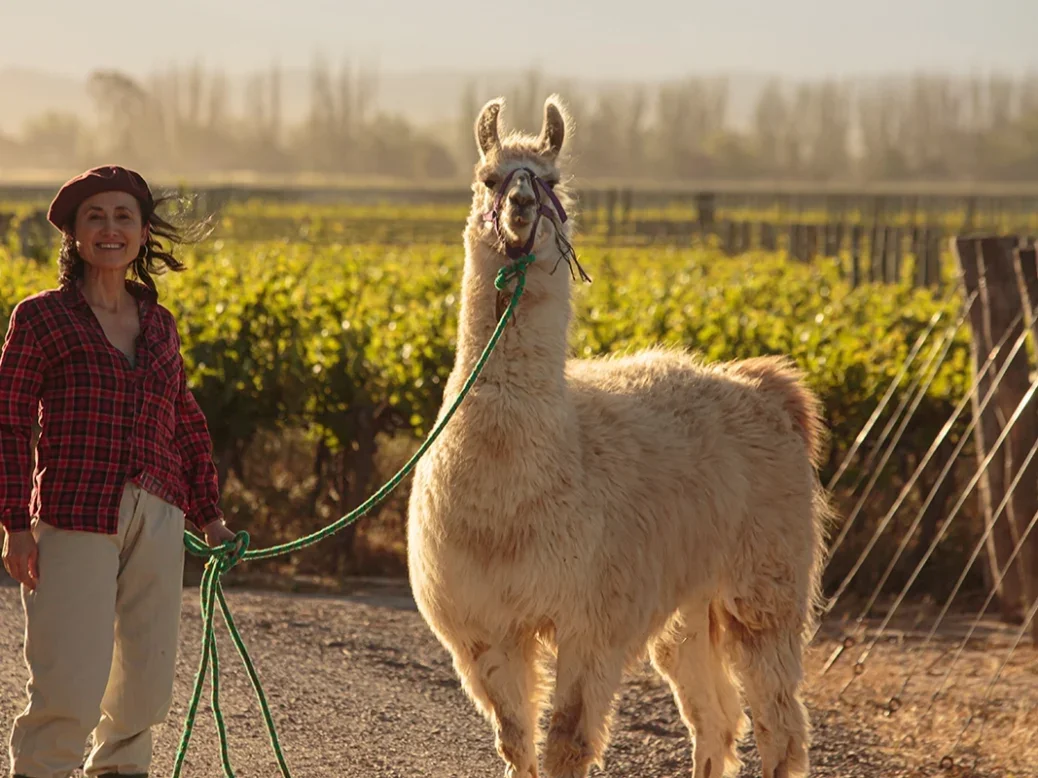
As an aside, llamas don’t come from Argentina, even double-ended ones. But do you remember the pushmi-pullyu in the Dr Dolittle films? Label one end “medicine” and the other “wine,” and there you have it: a perfect metaphor. “When I was doing both,” says Laura, “I said, Don’t ask me to choose—I can’t.”
During these years, she had met her husband Daniel (also an emergency doctor) and had three children, who shuttled back and forth between California and Argentina with her when that became part of her life. Emergency doctors, she says, work 10 or 12 days a month, and then have a week or two off. That is how working half the time for the hospital and half the time for the winery was possible: She’d go to Argentina for two weeks and then come back and do six shifts.
She used to travel to France with her father when he was going there to taste wine and talk to winemakers, because she spoke better French than he did. And then when Catena was invited to the New York Wine Experience, she went along because she spoke better English than he did. And in any case, he didn’t much like the public aspects of wine marketing. “He’s one-to-one,” she says; “he doesn’t like big speeches. I’m fearless—I can get up in front of anyone. From being an emergency doctor, I can do anything.”
That was in 1995, and Catena was the only South American winery there. “We were in the farthest corner where nobody ever went, and no one had ever heard of Argentine wine. I said, ‘It won’t work; there’s too much competition. How do you compete with France? But I will help.’” Her father then asked her to be in charge of exports. And while she says she didn’t know anything about selling, she did know about science, and she decided to help her father make the sorts of wines that could challenge the leaders.
Nobody outside Argentina, she realized, knew about high-altitude wine growing, and nobody knew about Malbec; the tendency was to treat it like Cabernet rather than more like Pinot. And so the Catena Institute of Wine was started, to study all those things that nobody else could tell them about.
She’d been working with her father for a while (the pushmi-pullyu again, the to-and-fro between Mendoza and California), but 1995 was when she formally joined. Twelve years ago, her father said, “You’re in charge.” “And he never went over me since; not once. Now I’m his boss, and if anyone asks him a question, he says, ‘Ask her.’ We mostly agree on most things. Now I only talk about the things we disagree on, so we have more disagreements. But he often has a good point, and he’s often right—probably 80% of the time he’s right if we disagree. Thank God I listen to him. We have the same philosophy. He’s very strategic; he thinks a lot.”
But why Laura? Why not Adrianna or Ernesto?
“When we were growing up, my brother went to Europe and wasn’t interested [in joining the company], and my sister is 14 years younger than me; I thought it would be her. Then I came back, and she was a historian, and I thought it would be me. My brother wanted to do his own project; he likes to be his own boss.” Adrianna, as well as giving her name to a Catena vineyard, studied at Warwick University and did her DPhil at Oxford, and she now has a wine project with Alejandro Vigil, the chief winemaker at Catena, called El Enemigo. She also devised the Four Women label for Malbec Argentino and took the idea of a medieval triptych for the Birth of Cabernet label. “Only a historian who understands the storytelling of the past could come up with these ideas,” she says. “I’m so grateful to work with her.” Alejandro Vigil is “very non-ego-driven,” Laura says. “He has the best partner and understands the vineyards and is extremely talented. And you have to make it interesting for someone like that in order to keep them. He knows Catena has priority. But Argentina is very family-oriented. Nobody moves away from the family.”
Ernesto’s project is Ernesto Catena Vineyards, subtitled “The Path of the Artist,” in Mendoza. And Adrianna and Laura also have a project together: Luca Wines, which started as a way of working with old vines from growers with small parcels, or buying a vineyard here and there; it’s named for one of her sons. The wines are made at Catena. G-Lot, from nearly 5,000ft (1,500m) up, planted in 1992, comes under the Luca label, as do Laborde (old Syrah), Sclipotti (Malbec from 1930), Valverde (old Malbec), Paganotto (old Malbec), and Adri and Lauri (planted by Adrianna and Laura with massal selections from a 1939 Malbec vineyard, sold for real estate).
“For 20 years, we tried to get people to talk about old vines, then Sarah [Abbott] and Belinda [Stone] started this movement [the Old Vine Conference] and made the world care. Would you murder a 25-year-old person? Then why murder a 25-year-old vine? What if you had to pay £1 for old vines not to be murdered?
“That DNA can never be replaced. We’re taking cuttings and preserving our old vines, but you can’t force producers to preserve theirs if they want to sell the vineyard for real estate. Who am I to tell them not to? But if anyone from the family, who can prove that they’re related, wants cuttings, we will give them.”
Preserving heritage and serving humanity
Talking to Laura Catena, what strikes me is how much time she spends talking about other people. “I really learned a lot in medicine,” says Laura. “It’s so collaborative. I work with the team here in a very collaborative way. My team knows what I’m good at, and at certain meetings they bring me in. If they want a clear message, they bring me in… My father also spends time talking to everybody—the guy cleaning barrels, everybody. He’s very approachable. He relates to people working in the vineyard because he grew up working in the vineyard. In his era, it was all men. I talk to everybody, too: I like to hear it from the horse’s mouth, not from the head of viticulture but the actual person doing the planting.” She spends a lot of time on human resources and on quality control. “It’s very easy for me; I understand it. I am the boss there. If that barrel has a scratch, I want to know about it.”
A lot of doctors, of course, have made wine; and thankfully for the wine trade, a lot of doctors drink it. “As a doctor, I’m glad that consumption is down,” says Laura. “People were drinking too much. It’s sad that some vineyards are being pulled up, but the fact that consumption is down and that people are conscious of health is the best news.” The pushmi-pullyu again. “I go around the world talking about wine and health. If I had been told this years ago… It’s crazy.” There’s some truth in the idea that drinking in moderation is more healthy than not, she says.
The service to humanity involved in making wine, she reckons, is no less than the service of being a doctor. Now she loves making wine more than doctoring; it’s the idea that you’re preserving a heritage. But you have to make money to preserve a vineyard—and get a reward for working intelligently. “I like that,” she says; “the pressure of having to support a business. In medicine, there is great satisfaction: You give antibiotics, and there goes the pneumonia [which she had, while working as an emergency doctor]—it’s fantastic. In a vineyard, you don’t know for years whether it’s in the right place.
“In a hospital, you’re making decisions on limited information. If bad things happen, you deal with it.” In business, too, she says, bad things will happen, and science helps—hence the institute, and methodical trial and error. In both fields you’re reacting to uncertainty. And “running a business is as stressful as being an emergency doctor.” For a while, she wanted to work in a homeless clinic, because she thought it would be more relaxing.
We mentioned three children. The pushmi-pullyu seems to be operating there, too. There are eight overall in the next generation, with various PhDs scattered among them if they’re old enough; but only one, Laura’s son Dante, is currently in wine: He has a low-alcohol project. “He worked in a bank and wanted a change. We wanted somebody but on an Argentine salary.”
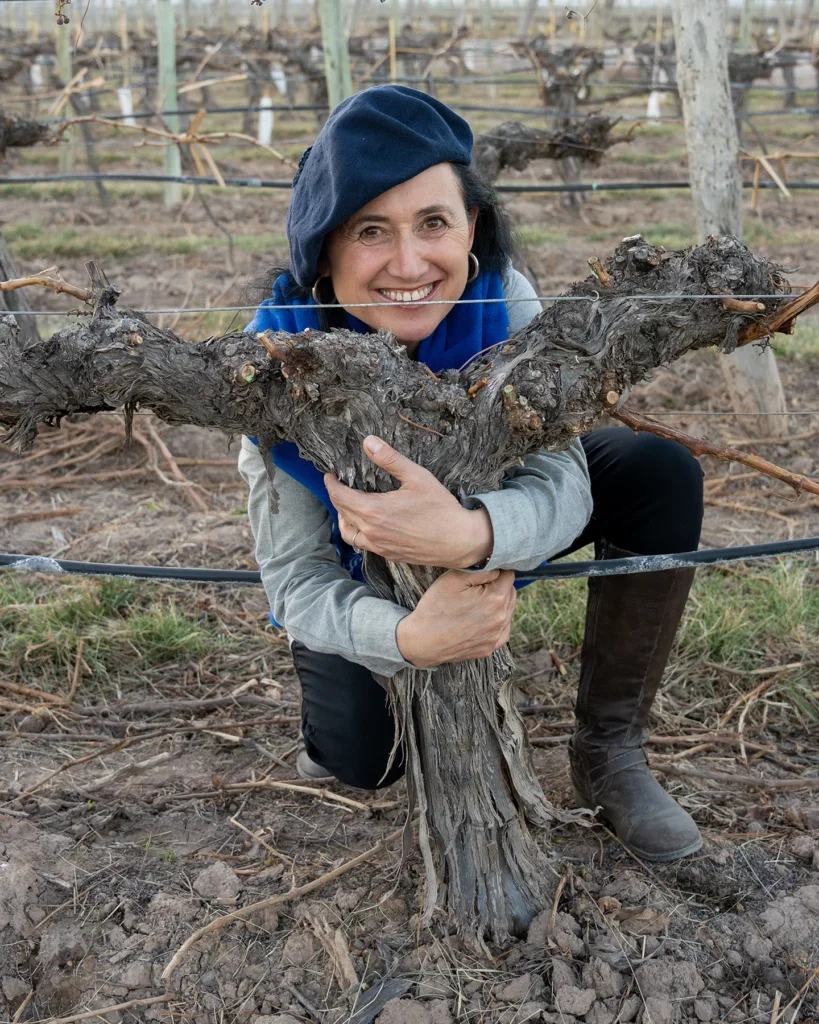
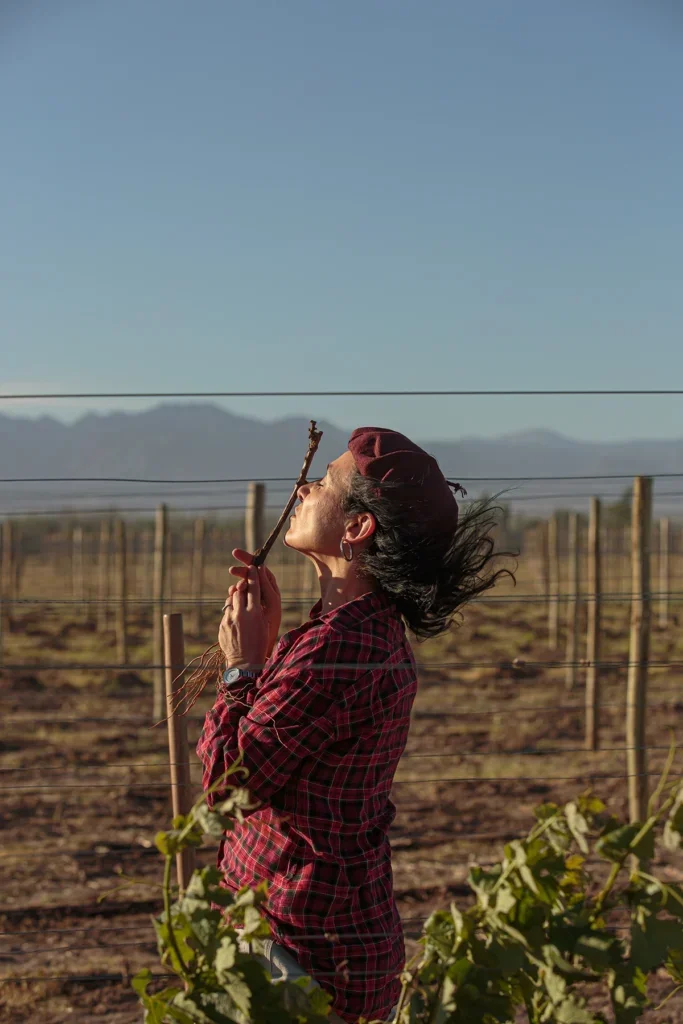
And the hats. We haven’t talked much about the hats. Laura never appears in public, as far as I can see, without a beret. She has 25 of them in different colors. “My hair is complicated,” she says, “and I have to be able to get ready in under three minutes.” She stresses the non-French origin of the berets—they’re gaucho and originally from the Basque Country. It was Christophe Salin, when he was at Lafite, who told her she should always wear one, so she did, and it became her signature. And if she needs a logo to stitch on to her berets, I can suggest one: a pushmi-pullyu.