Paul White explores the emerging styles of New Zealand Albariño.
Albariño/Alvarinho is one tough old grape!
Spanish Albariño / Portuguese Alvarinho has loved growing near the Atlantic in free-draining granite-based soils since antiquity. Born where the Minho River separates Spain’s Rías Baixas from Portugal’s Vinho Verde northern subregion, recent DNA analysis suggests it may have been domesticated directly from local wild grapes there in pre-Roman times.
Stylistically, they share Green Iberia’s proclivity for saline oystershell, minerality, laser-focused linearity, and rapier-like acidity, quintessential pairings for the locals’ passionate love for ultra-fresh seafood. Of the two regions, slightly riper Monção e Melgaço, a little inland, higher and sheltered by coastal mountains, is more delicately spiced, with floral aromas, rounder, condensed textures and alcohols bumped up to 13% from Galician 11.5-12.5% averages.
Related

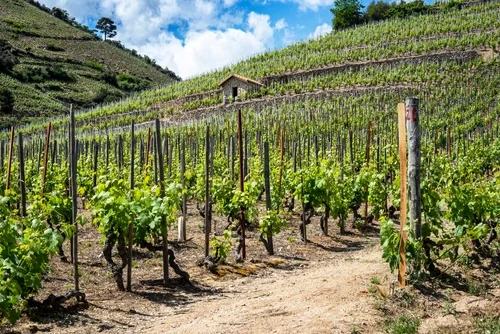
Having originated along the coldest, wettest, windiest, most hostile, western-most coastline of Europe, Albariño really only ventured out into the rest of the world in the early 21st century.
Valued for its thick-skinned robustness and high acidity, the grape has in recent decades ventured into warmer, ever drier climates in Spain’s interior (Catalonia, Castille, Somontano, Rueda, etc) and southern Portugal (Lisboa, Tejo, and Alentejo). Following latitude from 42-37°, the grape shifts into fruitier white peach through cooked apricot characters, fleshier textures, with considerably higher alcohols (13.5-14.5%), and diminished acidity—becoming more Chardonnay-like than Riesling-esque.
As this century turned, Albariño made landfall in the New World: first in hotter Lodi, California in 1998 and then in cooler Oregon in 2000. South America’s Uruguay responded in 2002, with Canada, Australia, and South Africa following in 2008—the Australians scoring an own goal by planting Savagnin, thinking it was Albariño (adding egg on their faces with braggadocio claims of its brilliant varietal superiority). Chile and New Zealand eventually answered with the real thing in 2009.
Content from our partners

Of all these forays into Albariño, New Zealand clearly has a special affinity for the grape. Mirroring Iberia’s north-south latitudes, New Zealand’s coastal regions, ranging from Marlborough’s cooler 42° to Gisborne’s hotter 37°, create progressively warmer characters, reshaped with a Kiwi twist. The key difference is the southern sun’s extraordinarily intense UV levels, which amplifies fruitiness while transforming higher sugar levels into higher alcohols. Styles are considerably fruitier, fuller, fleshier-bodied, more alcoholic and less edgy than their Iberian counterparts. Albariño’s saving grace is its natural high acidity driven by local sea breezes and wide diurnal shifts.
New Zealand Albariño was first planted in Gisborne’s hot, humid climate by Doug and Delwyn Bell in 2009, followed by Coopers Creek’s first bottlings in 2011. National production has risen steadily since, currently nearing 85ha (210 acres), and pushing a million bottles. In 2025, production was roughly divided between Gisborne (30ha [74 acres]), Hawkes Bay (20ha [49 acres]), Marlborough (15ha [37 acres]), Nelson (5ha [12 acres]) and micro-plots beyond. Although larger, volume producers in Marlborough and Hawkes Bay (Coopers Creek, Saint Clair, Forest, Waimea, Yealands, Wairau River, Esk Valley, Left Field… ) are driving export expansion around 10ha (24 acres) annually, the excitement is around the small producers especially focussed on Albariño.
Band of Brothers
Gisborne’s pioneering legacy continues via specialists, The Albariño Brothers. This collaboration between Ollie Powrie, Shaye Bird, and Ant Saunders makes three versions, drawing fruit primarily from the old Bell Vineyard for their main wine, fleshing out a second with fruit from the Newstead Lane Vineyard, and making a third, wild yeast, barrel-fermented version with fruit from Hawkes Bay’s Joseph Soler vineyard.
Powrie has experimented with micro-vinification, comparing Galician Mass Selection and Portuguese clones (635/636) from Soler Vineyard. He found “the MS produced more intensity and depth of aromas and flavor. Real X-factor … The 635, whilst delicious, was more subdued and held on to slightly more acidity.” Viticultural differences are less important. Sharing “similar harvest times and brix levels” both benefit from leaf retention around fruit “to reduce excessive sunlight exposure,” resulting in “more stone fruit purity, rather than tending to more exuberant/exotic fruits.”
The brothers’ Gisborne Albariño 2024 (13% abv) offers tons of fresh floral aromas, density, and length, cut through with tart edgy lime/lemon acidity (90/100). Unexpectedly Galician-like (two-thirds Spanish clones, remainder 635), it begs for fish. Albariño Brothers’ Bell Vineyard 2025 (13% abv, lees-aged, older-vine Spanish clones) leads with spicy floral, fresh, and dried herbal aromas. Comparatively denser, more viscous, this wine swallows up acidity (89). Their Wild Ferment 2025 (13.5% abv) shapeshifts via Hawkes Bay’s sunnier, drier climate, with full barrel fermentation, malo, and lees treatment. Earthy, yeasty, mineral characters infuse a fuller, fleshier, continuous texture, melting away via a long, tapered, perfectly balanced finish (92).

Hawkes Bay veteran vigneron Grant Edmonds of Red Metal summed up his choice of the Portuguese clone 635 to plant at Bridge Pa Triangle, “It works best in the warmer regions with longer growing seasons, needing plenty of heat to tame its natural acidity,” he says. “Its thick-skinned resistance to botrytis is a bonus.”
After tasting an impressively aging lineup of Red Metal Sur Lie Albariño from 2020-2024, the house style clearly leans toward the riper, higher alcohol (13.5-14.5%), fuller-bodied, varietal spectrum. Quite Alentejo-like, fruit characters range through fresh peach to conserved apricot characters borne within concentrated, mouth-filling textures and smartly balanced acidity. All solid 89-90/100, my favourites were the powerful 2020 (92) and cyclone Gabriel-influenced, linear, lemony, Melgaço-esque 2023 12.5% (94).
A surprise was a growing cluster of youthful “garagista” types drawing bespoke fruit from the carefully grown Two Terrace’s vineyard. Inland from Bridge Pa, it’s more elevated, organic, and cooler.
A couple are pumping out decidedly quaffable 12.5%ers. Decibel’s Giunta Albariño 2024 presents lovely Galician-like floral, spicy, green apple and pear characters, with slick viscosity and juicy acidity (89). Whereas Swift’s 2025 summer sipper is peachy/nectarine-ish, similarly textured, with sharper citrusy acidity (87).
More seriously constructed, Smith & Streth Cru Albariño 2024 14.2% (barrel- and stainless-steel fermentation, lees aging) displays a full gamut of peach characters, from fresh to baked to canned, with a deeply viscous mouthfeel and softer acidity. Another hotter, Alentejo-like style, bound to keep Chardonnay lovers happy (90).
Outlier Amoise’s Amber Albariño 2024 13.5% is true to form, as amber as it is cloudy. All stewed stonefruit and pip aromas and hard-edged, astringent skin tannins, it courageously pushes the envelope while begging for a blast from amphora to soften and integrate those thick grape skins. (84).
Moving south to the coolest of the cool, Nelson’s iconic Neudorf Estate’s pioneering owners, Judy and Tim Finn, planted Spanish and Portuguese clones (635, 636, 637) in their organic, dry-farmed, Rosie’s Block vineyard back in 2013.
Their daughter Rosie continues the winery’s faith in the grape. When I asked what originally drew her parents to plant Albariño, she said, “Dad had been looking at a few new varieties to trial and Albariño was one of them.” After tasting widely in Galicia, they decided “the wines of Rías Baixas—fresh, textural, and made for seafood—felt very ‘us’,” and they aimed “not to copy, but to interpret it through a Moutere [vineyard] lens. Dad was very aware of climate change. Albariño’s thicker skins and natural disease resistance gave [us] confidence it would handle our organic conditions and whatever comes next. It simply felt like a variety that belonged.”
That hunch continues to play out through Rosie’s Block 2025 Albariño 13%, created via wild yeast, 70% whole-bunch pressing and a blend of stainless steel and 30% neutral large barrel fermentation. Delicately floral, vinous minerally aromatics, hinting of green melon and quince, these characters carry on in the mouth through multi-layered, densely concentrated, constantly evolving textures. All told, a very classy wine (96). Neudorf has clearly honed a Lusitano star into a Kiwi thoroughbred.
So what of the future of New Zealand Albariño? According to Grant Edmonds, “Although it is still very niche, we have seen a huge increase in local consumer awareness over the last 10 years and we still see plenty of opportunity for growth.”
Albariño has both an air of disruptiveness and a groundswell going for it. After sharing a couple of bottles over dinner with older, well-informed, foodie friends in Wellington, all expressed an enthusiastic liking, and yet none had ever heard of Albariño before. Whereas the 20-30somethings I knew clearly adored the grape and avidly followed their favorite producers.

Summing up New Zealand Albariño
New Zealand is a nation of smart farmers; as expected, all the Albariños I tasted were methodically grown, thoughtfully made, and showed admirable varietal purity. Almost all New Zealand Albariños are considerably fruitier, riper, and more alcoholic than most Iberian styles, but the north/south projection of Iberian climate-driven styles onto NZ’s emergent range doesn’t apply universally.
Whereas all South Island wines show cool-climate characters, quite unexpectedly, the North Island’s sunny Hawkes Bay and hotter Gisborne produce both exceptionally edgy 12.5% wines and super-ripe 14% styles. How much depends on conscious winemaking choices driven by early vs late picking and/or playing to local consumer preferences, has yet to play out. One winemaker noted another producer had stopped making Albariño because they were too “steely” for Kiwi tastes. Another mentioned the bigger Chardonnay-like styles fly off the shelves.
Funnily enough, I’ve heard exact opposite comments from Old World traditionalists. Clearly, both styles have avid audiences throughout the world. Viva la choice.