

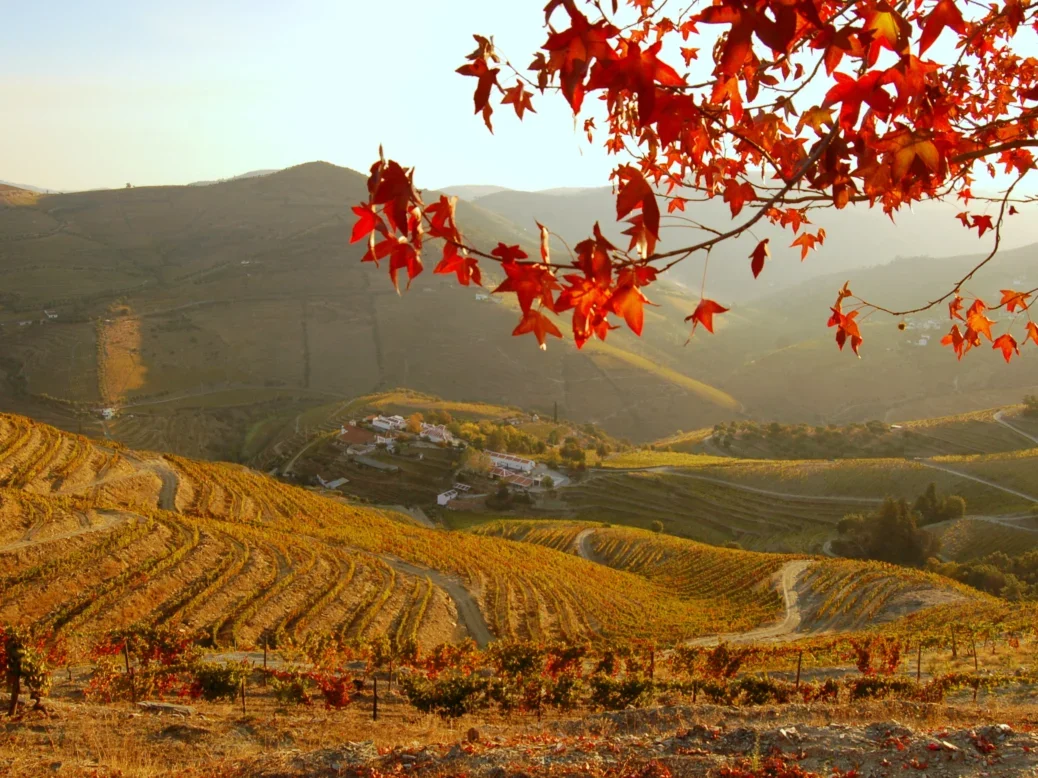
This tasting was held in London at the end of 2025 to launch Ramos Pinto’s remarkable 50-year-old Tawny Port (see my note overleaf). But most of the event was in fact devoted to Ramos Pinto’s Vintage Ports and—in the words of Jorge Rosas (the family member who directs Ramos Pinto)—“the sense of place [that is] paramount in crafting a Vintage Port.”
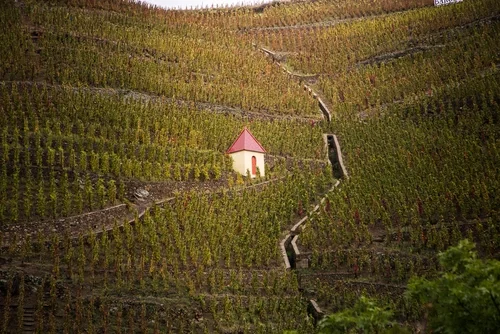
This sense of place encompasses Ramos Pinto’s two main estates in the Douro: Quinta do Bom Retiro in the Cima Corgo, and Quinta da Ervamoira in the Douro Superior. The two properties are almost yin and yang and complement each other perfectly. Bom Retiro has a continuous history that stretches back more than 200 years (prior to the foundation of Ramos Pinto in 1880), whereas Ervamoira was established in the early 1970s when José António Ramos Pinto Rosas (the father of Jorge Rosas) identified this rolling virgin territory as the perfect site for a vineyard.
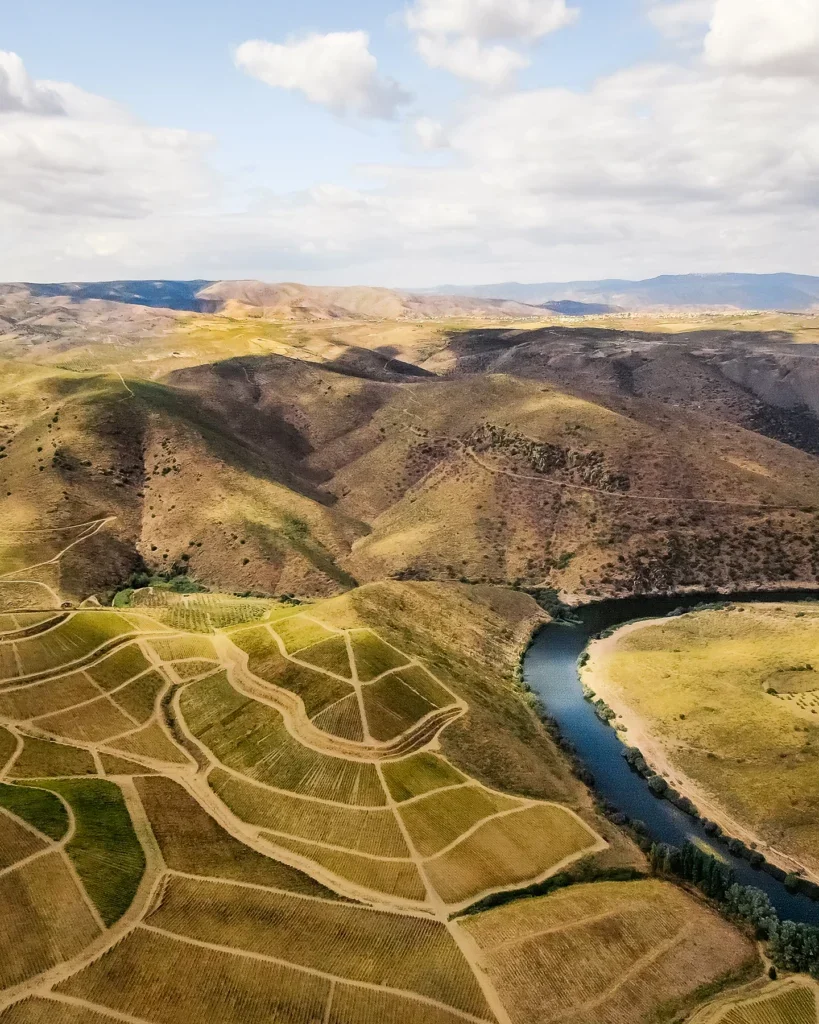
Between the two estates, there is a variation in altitude of 360–1,310ft (110–400m), Ervamoira having a more continental climate, with higher summer temperatures and lower rainfall, amounting to an average of just 12in (300mm) per annum. Ervamoira is block-planted by variety and currently has nearly 153ha (378 acres) of vineyard, just over 40% of which is Touriga Nacional. Sometimes declared separately as single-quinta Vintage Ports (SQVPs), the two estates provide a fascinating contrast—as in 2025, a promising year that is yet to be declared. Ramos Pinto is a relatively small Port house; but with more than 250ha (618 acres) of vineyard in total, the company is self-sufficient when it comes to fruit for its Ports, with no need to buy in grapes or wine from other producers.
The wines featured below were presented in five flights, comparing and contrasting wines from the two estates followed by a flight of Ramos Pinto Vintage Ports that combine both. The house still refers to the grape variety Touriga Franca by its old name Touriga Francesa, and I have respected this in my notes. I decided not to award marks to the two 2025s, which are the first wines from this vintage that I have tasted and are effectively unfinished cask samples.
Related

Tasting
2025 Quinta do Bom Retiro (cask sample)
From a challenging and rather erratic year that has nonetheless produced some excellent wines, this is a blend of Touriga Nacional and vinha velha (old-vine fruit) from three plots including centennial vines from the Vinha do Rio plot. Lovely, purple-blue hue, already with a beautiful, ripe, heady perfume showing minty ripeness on the palate. Still a bit raw, as you would expect from a Port that was just a few months old at the time tasting, but with lovely, dense, dusty-spicy tannins rising in the mouth and a long, fine-grained finish. Certainly promising.
2025 Quinta da Ervamoira (cask sample)
Content from our partners

Picking began in the Douro Superior as early as August 13, though the Touriga Nacional and Touriga Francesa were harvested in early September, after successive heatwaves. (The temperature rose above 104°F [40°C] for three and a half weeks.) This cask sample is 100% Touriga Nacional, though that doesn’t show through on the nose at this stage. (Touriga Nacional is usually very open and aromatic.) Not quite as deep or “blue” in color as the Bom Retiro, with a restrained, scented, graphite character, showing similar restraint on the palate. Nothing hot or jammy about this, despite the year; linear, with firm tannins and a soft, supple, ripe finish.
2020 Quinta da Ervamoira
From a hot year and an early harvest, hastened by rain in late August, with Touriga Francesa succumbing to the heat and ripening earlier than usual. Still deep and opaque in color, obviously rich but still internalized and sullen on the nose, with the same dusty graphite character that I picked up in the 2025 (above). Rich yet restrained; the firm, spicy tannins in the mid-palate lead to a softer, supple, silky finish, with evident ripeness and natural sweetness. | 89
1994 Quinta da Ervamoira
From a classic, widely declared year, with ripe fruit picked under ideal conditions. (Ramos Pinto also made a full declaration alongside this single-quinta Port.) Now mid-deep in hue, just starting to show its age on the rim. Open, minty aromas, with a stony character underlying; slightly casky or possibly a touch of TCA? Mentholated character on the palate, mid-weight, with soft, smooth tannins. The softer approachable style of Ervamoira is evident, but the wine is marred by that woody character. | NS
2023 Quinta do Bom Retiro
A wet winter, followed by hot, dry weather in July/August and a harvest interrupted by rain, with (in this instance) the picking of Touriga Francesa brought forward. Deep in color and on the nose, with a lovely, floral character. Integrated richness all the way through, quite dense yet mid-weight, with lovely purity of fruit and gentle, peppery tannins. Fresh and vibrant yet elegant in style. | 92
1923 Ramos Pinto (Quinta do Bom Retiro)
This is the only wine I have tasted from 1923. (1924 was widely declared.) Apparently, 1923 was “a very dry year that produced low yields but grapes of good quality.” Now a very pale tawny-amber, with a very evocative Port lodge nose: wet, peaty earth, leather chair, but with plenty of underlying scent and subtlety, including dark milk chocolate. Still sweet and balanced, delicate dried fruit, yet gloriously alive, with a thread of peppery tannin evident all the way through to the finish. Funky, yes, but quite remarkable at 102 years of age! Difficult to award a score, but I have taken persistence and longevity into account. | 94
2017 Ramos Pinto
This was the last generally declared vintage until the recent 2024s, a wine from a very dry and early harvest, with low yields. Unusually (and problematically) for Ramos Pinto, picking at Bom Retiro and Ervamoira began almost simultaneously. Deep, opaque, and still youthful in hue, with lovely, sprightly scented aromas that are redolent of an English rose garden; well structured and dense, with ripe, peppery-minty fruit backed by fine-grained tannins and a long, fresh, sappy finish. Needs more time (give it another five years in bottle), but this is sure to be a classic. | 95
2000 Ramos Pinto
After a very dry winter, the spring was wet, leading to poor flowering and low yields. Summer was variable, but a burst of heat at the start of September brought rapid advancement and some slight raisining of the grapes, “as good Port grapes should.” Still deep and dense after a quarter of a century, rich and multilayered, more expressive on the palate than on the nose, with big, ripe, fleshy fruit, broad, supple tannins, and a similarly broad finish. Only just at the start of a long life; this wine will last for decades. | 96
1982 Ramos Pinto
This was a so-called split vintage with 1983, the latter being more widely declared and gaining most of the credit at the time. Ramos Pinto declared both years. The growing season in 1982 was characterized by drought, and some raisining of the grapes produced wines with richness and depth but perhaps lacking the in-built structure of 1983. This was the first wine that Ramos Pinto made from a portion of block-planted varietal vines. Still deep at the center, with a thin, browning rim. Rich and heady, if a little soupy and ill defined on the nose. Richness and concentration evident on the palate, with a hint of dark-chocolate focus; rich, raisiny fruit, verging on pruney (but not in any way stewed), backed by ripe, supple tannins and a long, ripe, fleshy finish. Certainly one of the most impressive Ports from the 1982 vintage. | 92
Ramos Pinto 50-year-old Tawny
Ramos Pinto regularly wins awards for its 10- and 20-year-old Tawnies (which I consider benchmarks) for their carefully curated, finely tuned, delicate house style, flair, persistence, and above all, consistency. Since 1880, the company has built up a library of old wines to create these wines, so it was with great excitement that I came to taste its new 50-year-old Tawny, where the oldest wine in the blend dates back over a century to 1900. Deep mahogany-tawny, with a green tinge. Lifted, high-toned, but settled and supremely elegant on the nose: candied citrus, just a hint of spirit, with mellow, milk-chocolate richness and complexity. Wonderful intensity and richness on the palate, with smooth, savory depth piqued by orange-liqueur freshness and glorious, velvety, textural richness and length. A remarkable wine, as you would expect from this remarkable Port house. | 99


