

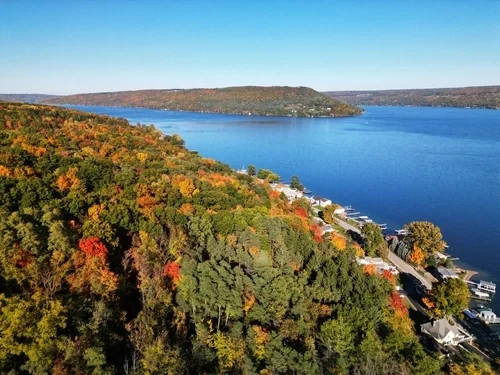
The well-traveled Franco-Danish winemaker Morten Hallgren takes Lisa Granik MW through the wines of Ravines Wine Cellars.
Sometimes you never know where you’re going to end up or how you’re going to get there. Danish-born Morten Hallgren grew up in the Côtes de Provence working on his family’s 270ha (667-acre) estate. Following advanced viticultural and enology studies in Montpellier, plus a harvest at Cos d’Estournel, his return to the estate seemed assured—until the family’s property got sold out from under them. Rather than wallow in the disappointment or waste his energies in litigation, he tucked his education and experience into his pocket and set off first to make wines in the (limestone-rich) Texas Hill Country. It was in Texas that he met his wife, Lisa, who fortuitously had a background in, and a talent for, hospitality. Then the famed Biltmore Estate lured them to North Carolina, but it wasn’t long before the Dr Konstantin Frank Winery in the Finger Lakes recruited him to head its white-winemaking program. The Hallgrens settled there for six vintages, Morten all the while exploring the diversity of the region’s many nooks and crannies.
He chose to leave Dr Konstantin Frank in 2005 to pursue his own path. Unusual for the time, the Ravines’ Rieslings were exclusively dry. Morten’s first step toward reestablishing his own family winery began with a purchase of a 17-acre (7ha) parcel on the eastern slopes of Keuka Lake. (The two ravines within this steeply sloped, well-drained vineyard help funnel cool air toward the lake.) In 2011, he purchased the White Springs Vineyard; after acquiring the adjoining winery (where he had worked as winemaker and made his own wines), he renamed the property Limestone Springs. The purchase of the 46-acre (19ha) 16 Falls Vineyard followed; Ravines now owns 130 acres (53ha) of estate vineyards. Morten also works closely with the Argetsinger family and their 28-acre (11ha) eponymous Vineyard (see more below).
Ravines today is not a single-variety winery. There are crisp and delicious still and sparkling Chardonnays, well-structured Cabernet Franc and Bordeaux blends, and elegant and restrained Pinot Noirs. But from the time Morten started Ravines, it was in Rieslings that he began to see specific qualities, “not so much in the wine but in the balance and structure,” that led him to think that with every vintage he should set aside some wines to age.
Related
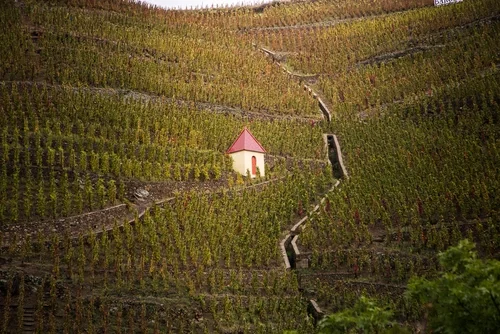
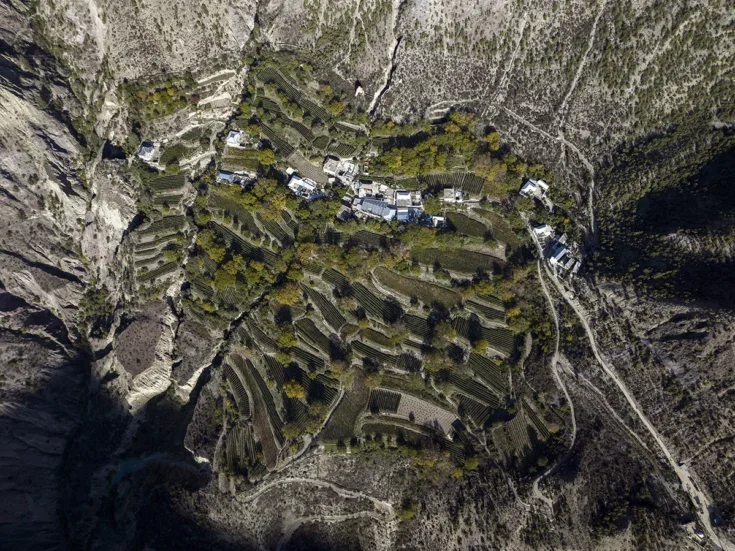

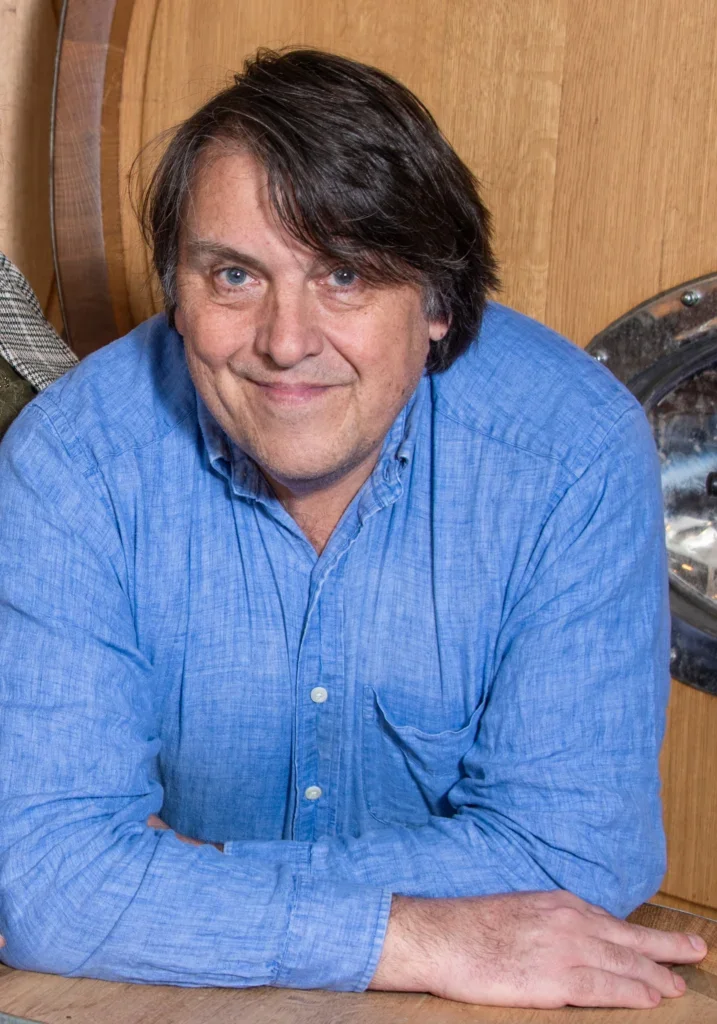
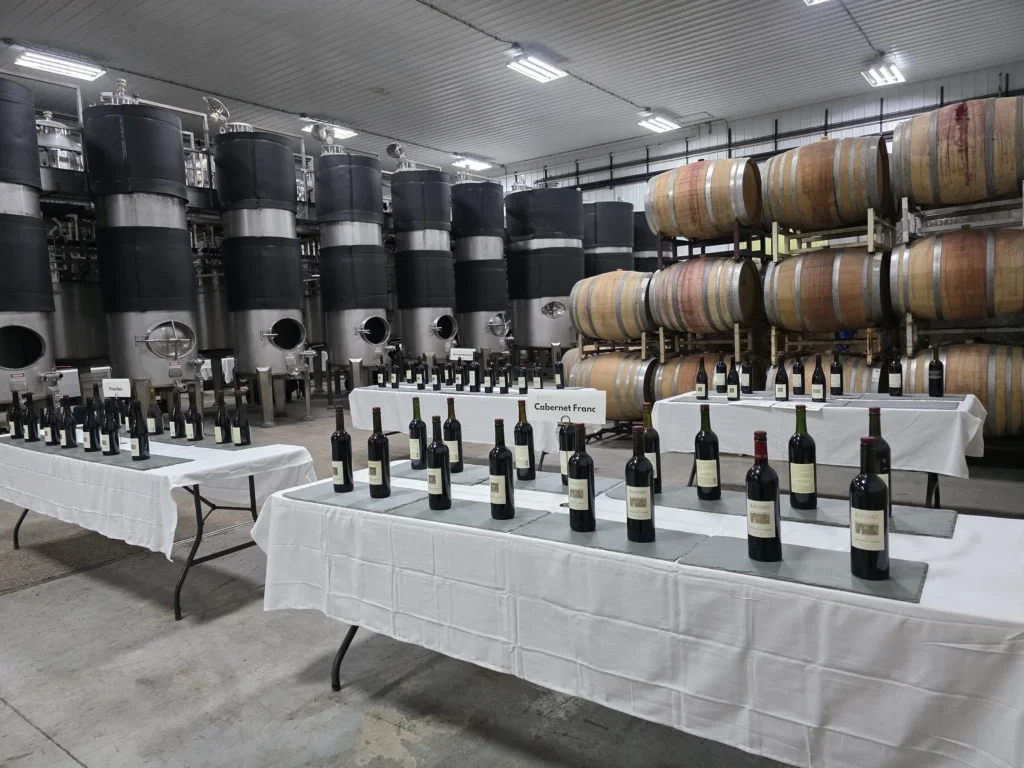
It is young Riesling with which Ravines has mostly been associated: bright, tensile, concentrated, delineated, balanced, and of course dry Rieslings, fully reflective of place and vintage. Those lucky enough to catch him in the cellar over the years were often treated to taste a few older vintages. But it was for a Ravines 20th anniversary in June 2025 that he and Lisa presented a full retrospective of each of their wines. Hallgren milled around the barrel room like a quietly proud father, not drawing attention to himself, casually engaging with those posing questions.
Dry Riesling
The Dry Riesling range of Ravines wines are sourced from three vineyard sites, all on Seneca Lake. Traveling from the main town of Geneva, at the northwestern end of the lake, the Limestone Vineyard (formerly White Springs) lies technically in the town limits, set in roughly half a mile (1km) from the shoreline. Home to their new winery and tasting room, this 59-acre (24ha) vineyard has Honeoye loam over limestone soils. Many of the vines here are a bit older; the slope is significant and enjoys an open, eastern exposure.
On the lake’s eastern side is the 16 Falls vineyard, about 20 miles (32km) further south in the town of Ovid, near the where the lake is at its deepest. This estate vineyard has acidic shalestone soils with considerable clay content. Most of this 46-acre vineyard is trained on a lyre trellis (developed by Alain Carbonneau, Morten’s viticultural professor from Montpellier). By providing a larger foliar surface area, this increases the amount of sun exposure to the vines, thereby enhancing levels of ripeness.
Content from our partners

The Argetsinger Vineyard is the jewel in the crown. Owned by the Argetsinger family, and managed by Beren and Will Argetsinger, this 4-acre (1.6ha) vineyard was planted in the 1980s on the far southeastern side of Seneca, just below the village of Burdett. Here, Cabernet Sauvignon, Merlot, Pinot Noir, Chardonnay, and Riesling vines grow high atop a steep hillside that has a 15% slope. The Howard gravel-over-limestone soils are shallow, quite rocky, and well drained. To date, this vineyard has consistently allowed Morten to produce his most focused, finessed, and delineated Rieslings.
Tasting Ravines Wine Cellars
Ravines Wine Cellars Dry Riesling
All wines are dry unless indicated otherwise, and all are spontaneously fermented with ambient yeasts.
2003
Fully mature, with a dominant petrol character. High acidity, stone fruit within, hints of lime. Long finish, fully dry, and slightly edgy. | 91
2004
A riper, more forward attack, with more fresh fruit joining a subtle, developed character. Broader and more complete across the palate, which is layered, plump, and long. Gently crisp finish. | 93
2005
Developed nose, but a bit shy. The palate, however, was concentrated, persistent, long, and complex, with notes of ripe stone fruit, lime, and caramel around a firm, stony core. Quite fine. | 94
2006
A less successful nose and palate, lacking fruit and precision. The palate was a bit tart and unforgiving. | 85
2007
Very attractive nose and initial palate impression, but less successful in the follow-through. Floral, with a high-toned perfume but rather fruit-shy. From a less successful, challenging year in the Finger Lakes. | 87
2008
A gentle, stony nose, with hints of toast. Medium-bodied, a bit tart on the attack, but firm and even across the palate and concentrated. Dominantly mineral in expression, but limey, too, with hints of white flowers. | 89
2009
A deeper straw color than all the previous wines, with an oily bouquet and aromas of wet stones. Medium-bodied, with a soft, oily attack, opening to a generous, open palate of ripe fruit, dominated by juicy lime and custard with no bitterness. Morten just couldn’t get this vintage to finish dry—there are 8–9g of residual sugar, though it is largely integrated now. | 90
2010
A ripe, juicy nose, still with considerable freshness on the nose and palate. Citrus, custard, and ripe yellow plums lead a wine with full palate coverage and hints of mineral. Finely etched. Generous, ready to drink, with a medium-length finish. | 90
2011
Medium straw in color. The decidedly developed nose has a firm, central focus. Oxidative, open, and quite evolved on the palate, less concentrated than most. Crisp, with a medium finish. | 87
2012
Pale straw color, with a slaty/stony nose, lifted with kaffir lime and curry leaves. Open and ready to drink, still fresh and juicy, with sweet flesh lifted with white flowers. Medium finish. | 89
2013
A subdued, restrained nose, but open, developed, and ripe but crisp through to the finish. Ready to drink now but seemingly lacking mid-palate concentration to sustain significant improvement over time. | 87
2014
Very developed nose, with notes of wet leaves and citrus pith. Other older wines in this flight have shown more freshness. The palate is petrolly and oily, fully mature, and shorter than most. For those who love fully developed Riesling. | 86
2015
Stony, spicy bouquet, with restrained fruit. Medium-bodied and dynamic, with a three-dimensional attack. This wine is direct, nervy, spicy, and virile, with a stony, retronasal finish. Quite long. | 92
2016
Pale, lemon/straw color. Broad, open, and medium-bodied; generous but crisp and fruity, with notes of lime, green plum, and green tea. A bit short but very good. | 90
2017
Pale straw, with a spicy, stony bouquet: varietally true, with a blackcurrant-bud edge. A bigger, riper attack than the nose suggested. Fully integrated in the mouth: juicy, even, soft, and generous, with a delicate, mineral filigree. Crisp, quiet finish. | 91
2018
Very pale straw color, still with a greenish tinge. A tight, concentrated nose presages a firm, packed, concentrated attack—practically dense. Persistent, with flavors of juicy citrus fruits, green plums and spice. Medium finish. This wine has years of development ahead. | 92
2019
Very pale lemon. A middleweight attack initially privileges minerality over fruit, yet after that, notes of wet stone, star fruit, lemon, and a tropical hint suggesting banana leaf manifest. Comparatively concentrated, with full palate coverage and a subtle integration of the fruit with the minerally core. Long finish. | 92+
2020
Pale straw, with a very tense nose, quite concentrated, and revealing little. Medium-bodied on the attack but blooming to a firm, broad, complex, and persistent varietal character. The great fruit concentration gives a halbtrocken impression, leading to a crisp, medium-length finish. This will become increasingly engaging as it develops. | 93+
Ravines Wine Cellars Dry Riesling Argetsinger Vineyard
2007
A fully developed nose, with yellow plums, lime, and petrol. Medium-bodied and open on the attack, with a soft mid-palate, a less defined structure, but finishing crisp and clean. The vintage may have been challenging, but the wine is successful. | 89
2008
Subdued nose. Medium-bodied yet broad on the attack. Persistent and complete, with a lemon/lime fruit character and a delicately crunchy impression. Dynamic, electric, and very expressive, with tension on the long finish, showing hints of green tea. | 95
2009
Lemon color, its depth showing its age. Medium-bodied and layered, with an elegant bloom. Three-dimensional and high-toned, with lemon, yellow plum, and mineral tones leading to a dry, crisp, lifted finish over a curious, sweet, stony character. Perhaps the most subtle of the flight. | 93
2010
A focused, mineral nose, but layered, flinty, and stony in its way. The attack is full, juicy, and broad; quite open and generous, persistent, and crisp, with a delicate, stony thread throughout. This is a refined, finessed wine, with lovely lime zest and blossom lift. | 94+
2011
Showing more maturity aromatically than the 2010 but seemingly tighter and less expressive. Still fresh on the palate, with a juicy, fruit-forward attack, but shorter in the mouth and on the finish. There’s good ballast on the mid-palate; it’s ripe and poised, but the finish drops off quickly. | 91
2012
An arresting nose that gives pause: focused, concentrated, complex, and layered. Medium-bodied, with a dynamic attack followed by a bloom of layered flavors: jasmine, chamomile, keffir lime, lime zest, threaded with spices that lead into a very long finish. A remarkable wine, with plenty of time left to evolve further. | 95
2014
A wine that shows the specificity and breed of Argetsinger over the “basic” dry Riesling of the same vintage; much less developed than its counterpart. Concentrated, with a more layered and three-dimensional bouquet. Lemon fruit character dances with a jasmine lift and a distinct chalky impression. Medium finish. This wine has time ahead but is à point right now. | 94+
2015
Focused, stony, and virile, the nose is layered and filigreed. A slightly more forceful, perhaps less graceful wine than the 2014, with a bigger attack of finely etched citrus, blackcurrant bud, and stone. There’s energy tightly wound within; lightly tart finish. | 92
2016
Still very pale lemon color, yet with a maturing nose showing more earth and spice. Medium-bodied and broader, a bit oily, only teasing of petrol. There’s a clear mid-palate center of gravity that adds ballast. The finish is crisp, with a hint of tartness. | 91+
2017
Another focused, mineral, delineated bouquet of wet stones and blackcurrant bud. Firm and tense in the mouth, very mineral-driven through to the finish. There’s a lift of green tea, boxwood, lime pith, and summer rain. Substantial, engaging finish. Lovely wine, again, with much substance to unfold in time. | 94
2019
A baby, reflecting a cool vintage. Both nose and palate are concentrated, tense, and packed; the wine is still relatively closed. The youthful bouquet reveals lime with mineral expression tucked within. There’s tremendous concentration on the mid-palate, with green tea, chalk, lime, stone, and more waiting to be revealed. I suppose one could enjoy it now, but given Morten’s track record on this vineyard, this wine needs time to unfold to its glory. Long finish. | 95
Ravines Wine Cellars Dry Riesling Limestone Springs (formerly White Springs)
2011
Pale lemon straw color. A focused, clearly layered “limestone,” chalky nose. The attack is firm but dynamic and evolving, with a ripe bloom of lemon custard, graham cracker and an integrated acidity leading to an even segue to the finish. Delicately scented, mature aromas waft to conclude. | 91
2014
Pale lemon color. The bouquet is delicate, tender, and subtle. The attack is gently more direct, but soft overall, fruitier, and lightly off-dry. There’s enough acidity to keep it balanced, complemented by a spicy core with blackcurrant-bud zip. Medium-long finish. | 90
2015
Still very pale in color, with a lean, barely ripe bouquet. Light-bodied but surprisingly concentrated, blooming in the mouth to become a fully three-dimensional wine, with the mineral impression complemented with notes of green apple, green pea, and parsley. Medium-long finish. | 90
2016
A refined, stony, chalky nose, lifted with aromas of jasmine and chamomile. The attack centers on the front palate and segues to a center of gravity on the mid-palate, leading to a lean finish. A more austere wine than most. Medium-long finish. | 90
2017
Bright pale lemon. Lemon dominates the nose, too, with mineral and white stone wrapped inside. Comparatively rich (4g/l RS) and delicately crispy, but very youthful, with full palate coverage. Generous overall and ready to drink, but still with great capacity to age gracefully. Medium-long finish. | 91+
2020
Pale lemon, the nose is dense and tight. Middleweight, the palate is pellucid and flinty, with ripe, juicy citrus, especially on the mid-palate. The finish is crisp and firm. A few hours of skin contact added tension and texture. Drinkable now, but better in time as it evolves. | 92
Other Highlights
2012 Cabernet Franc
Deep ruby, with a lightly herbaceous nose. Middleweight; tight and tense on the attack, but with a firmly knit core of forest berries, plums, dried herbs, and mineral on the mid-palate. Complex, engaging, and still very much alive. Satisfying finish. | 92
2013 Cabernet Franc
Deep ruby. Dark berries and plums, with dried and fresh herb aromas. Concentrated, persistent, and dynamic, with a 360-degree expression in the mouth. Refined, pure varietal character, with black tea and mineral undertones. A compete wine, gently sinewy through to completion. | 94
2017 Cabernet Franc
Deep ruby. Impressive, upright nose. Unexpectedly broad and full on the attack. Delicious right now but with a concentrated core that in time will expand to more savory, earthy characters. Delineated, well-knit finish. | 93


