This year’s tasting of the new Grosses Gewächs (grand cru) wines of the VDP got off to a jollier start than usual because it coincided with the Rheingau Wine Week festival that packed out Wiesbaden’s market square over two weekend evenings. I didn’t arrive in Wiesbaden until late, so I missed the tastings at the Barth and Schloss Johannisberg stands, but I was in just enough time to soak up the atmosphere and fight my way through to the Diefenhardt stand where a pair of wines from each of the members of the Rheingau VDP were poured for a group of us sitting on long benches.
Promised “culinary delights,” we were each handed a paper plate of a giant frankfurter and massive pretzel to help the medicine go down. Fine dining it was not, but vots wrong mit a nice pretzel?
For all the jollity, the evening in fact turned out to be a useful introduction to the so-called Sneak Preview of the VDP’s new vintage Grosses Gewächs wines that followed over the next three days. In each pair of wines there was a young and a mature vintage, and the mature vintages showed that top dry Riesling is more often than not worth the wait.
VDP stands for Verband Deutscher Prädikatsweingüter, an association of around 200 members comprising all but a handful of Germany’s great wine estates (check out www.vdp.de). In contrast to the fun of the festival, the Vorpremiere VDP Grosses Gewächs, to give the “Sneak Preview” its official name, is a serious affair, extremely well organized, in which you sit at your allocated table with a plate of bread and water and wave the number of each flight of wines, varying from four to six in each flight, which are then brought to you and poured in front of you by well-trained young staff. We, the 100-plus international wine trade and press present, are spoilt, but there’s nothing like the respectful silence of the grand rooms of the Wiesbaden Kurhaus Colonnade to focus the mind and the palate on the tasting. I noticed that a few tasters had AirPods but whether they were listening to Beethoven or the golf, they didn’t say.
Related

Protecting Grosses Gewächs
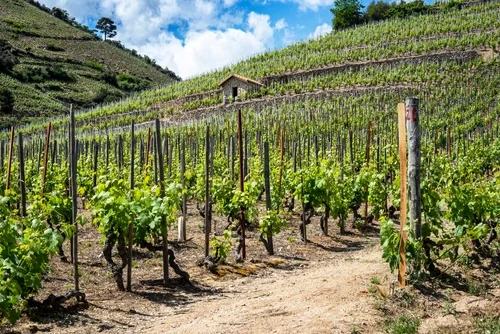
What exactly is a Grosses Gewächs? In essence, it’s the top of the tree, a grand cru from a vineyard classified on the basis of geology, soil, exposure, microclimate, water balance, and a long track record. Permitted varieties are fixed per site, yields are limited, picking is done selectively by hand, and the wines have to face two blind tastings, one young and one after bottling, before they can use the GG designation. Until now, Grosses Gewächs and the premier cru designation below it, Erstes Gewächs, were not protected terms. But this year they have become legally recognized, and the VDP has been granted a seat at the table where these terms are defined and policed, rather than a trademark it defends alone. In effect, it’s a first step towards building a credible nationwide classification.
There were 400+ new vintage GGs registered for tasting, the vast majority of them dry Rieslings (underline dry) from the German wine regions of the Ahr, Mosel-Saar-Ruwer, Mittelrhein, Rheingau, Nahe, Rheinhessen, Pfalz, Franken, Württemberg, Baden, and Sachsen/Saale-Unstrut. I note as an aside that in a recent Instagram post, German wine guru Stuart Pigott lamented the ongoing perception among UK consumers that German Riesling is necessarily sweet. In smaller numbers, Silvaner, Weisser Burgunder (Pinot Blanc), Grauer Burgunder (Pinot Gris), and Chardonnay also qualify for GG status. Germany’s sweet wines, the Prädikatsweine, dance to a different tune based on sugar levels ranging from Kabinett to Trockenbeerenauslese, occupying a parallel universe to the dry GGs, so none are shown at this tasting.
The red grands crus are dominated by Spätburgunder (Pinot Noir), plus a handful of Lemberger (Blaufränkisch). With so much to taste and a flight back before the finish, I focused on the dry Rieslings and Spätburgunder, regrettably having to miss out on undoubtedly some seriously good wines in the smaller groups. I was particularly reluctant to miss out on the Silvaners. Having attended an informal tasting of Silvaners from Franken on the Sunday evening, and some excellent wines from Theo Luckert, Max Müller, Weingut Weltner, and Rainer Sauer, among others, these producers showed what this underrated grape variety is capable of.
Content from our partners


As for the two vintages, in 2025 poor flowering led to a reduced crop and hail in local areas exacerbated the situation. Marked by varying but largely low yields in most regions, with only the Mosel bringing in an average-sized harvest, the reduced crop brought with it the benefit of concentrated wines. According to the VDP, one of the defining features was the speed of picking, with some estates picking in August, which is virtually unheard of. It was just as well for those producers who were on their toes, because rain arrived in early to mid-September depending on the region, which in some cases led to swollen grapes and rot. It’s one of the wine world‘s well-worn clichés to say that “we picked before the rains,” but in 2025 it meant something, and those who did delivered beautiful Rieslings with richness, vibrant acidity, and excellent development potential.
2024 was a good, if mixed, vintage for Germany’s reds, not least its Spätburgunder (Pinot Noir). A mild winter brought early budbreak, but April frosts resulted in the Ahr losing 50% or more of shoots and it finished 50–70% below average yields in some places. Franken lost up to 30% of its crop, while in Baden the damage got progressively worse from south to north. Warm, humid weather brought heavy fungal pressure and in the Rheingau downy mildew did more damage to the crop than the frost had. In the resulting “endless autumn,” Pinot Noir benefited from the slow, uneven ripening, but the selection of grapes still had to be rigorous to achieve delicacy and precision. According to Steffen Christmann, the VDP’s president, the 2024 Pinots have very good concentration, with density and length carried on a fine structure, with substance and finesse rather than obvious power. On the evidence of this tasting, he is not wrong.
Overall, the Nahe stood out for Riesling with good conversion rates also for Mosel, Rheinhessen, and Pfalz. For Spätburgunder, with high marks spread across Franken, Rheingau, Ahr, Baden, and Pfalz, the results showed that German Pinot Noir is no one-trick pony. In fact, the overall 94+ red conversion rate of 27% was marginally ahead of the whites, which came as a surprise. On a final cautionary note, the wines were tasted against a backdrop of this summer, which was the hottest and driest ever recorded in Germany. Given that the 2025 growing season was very warm indeed and yet still managed to deliver the precise, fresh, cool-climate character for which Germany is renowned, the VDP is rightly asking itself: “How long this character can be sustained in the light of the developments of recent years is a question that is on everyone’s mind in Wiesbaden.”
Anthony Rose’s VDP Grosses Gewächs Sneak Preview tasting notes
VDP Grosses Gewächs Sneak Preview: Riesling
VDP Grosses Gewächs Sneak Preview: Spätburgunder