

Almost ten years ago now, I was lucky enough to attend the Festival Culinaire Bernard Loiseau across two of the Constance Hotels & Resorts properties on Mauritius (see WFW 56, pp.32–35). So, when the opportunity arose to visit two of the group’s resorts in the Maldives this past November, I didn’t hesitate. The invitation was not only to experience the food and wine at Constance Moofushi and Constance Halaveli—both of which are consistently strong performers in WFW’s World’s Best Wine Lists—but also to have a look “behind the scenes,” which appealed to me all the more having worked in hotels and restaurants as a sommelier for many years.
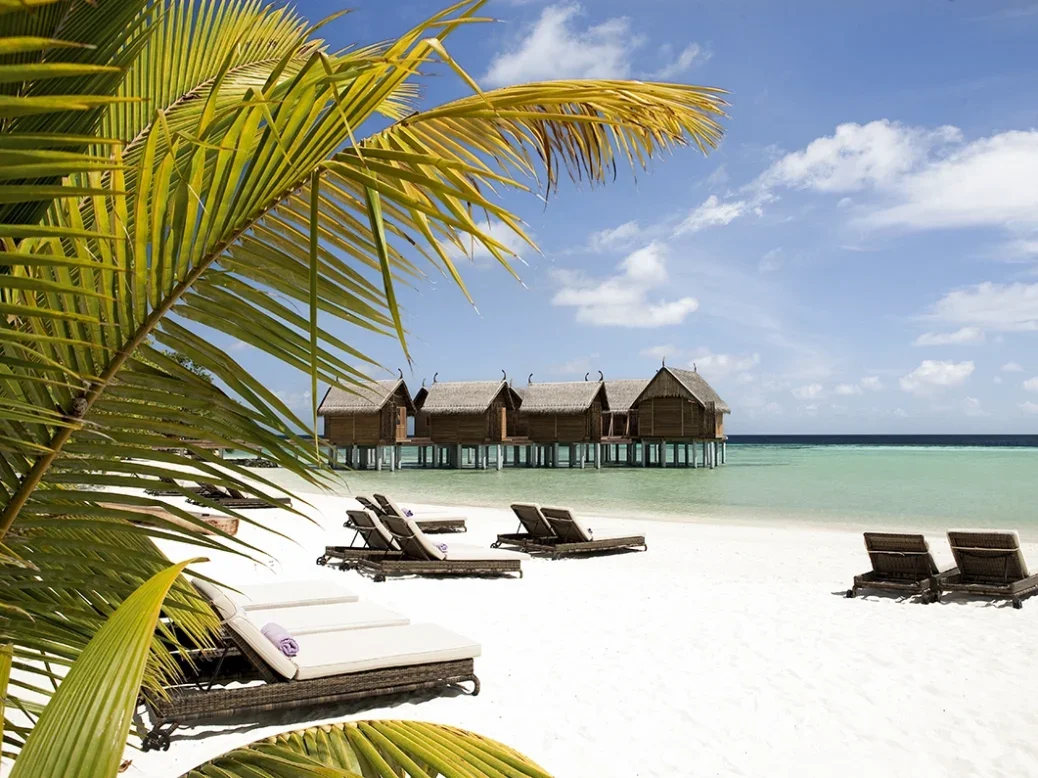
After our ten-hour flight to Malé, we were whisked away for a short hop by seaplane, landing in our first little paradise, Constance Moofushi, a luxury resort on Ari Atoll. We were welcomed by the friendly staff and had no need to check in, a typically efficient and helpful member of the Constance team having done that for us during our short stay in the Constance lounge at Malé airport while we waited for our seaplane.
Almost as soon as we arrived, we found ourselves ankle-deep in perfectly transparent aquamarine water, surrounded by brightly colored fish and baby sharks (completely harmless, we were assured), with a glass of Etna white wine in hand. This was the first of several wine-related activities conducted by the engaging and knowledgeable wine team, which organizes this shoreline tasting twice a week for guests who want to dip a toe, literally and figuratively.
Led by Madu Karunarathne, the resort’s head sommelier, and one of his five-strong team, we tasted a few wines from its extensive wine list. For this first, informal event, they carefully chose less familiar countries and grape varieties (but nothing too “weird and wonderful”) to arouse the curiosity and tickle the imagination of the participants. This was our first, but certainly not our last, indication that the team has a soft spot for Italian and South African producers, since throughout our stay we were offered fine bottles from leading lights such as Tenuta delle Terre Nere on Mount Etna and David & Nadia in the Swartland.
Related


That first wine tasting, which was open to all guests and included as part of their stay, was as educational as it was enjoyable and original. After a clear and concise introduction on how to taste wine, Madu and his colleague explained some of the key principles of food-and-wine pairing and gave a brief introduction to each of the featured wineries—all in a very accessible, relaxed way. I asked if they saw any return on this type of exercise, and Madu confirmed that many guests really do pick up the vibe, seeming much more willing to discover other new wines during the rest of their stay.
There is certainly plenty of scope for that, since the cellar extends to more than 500 different references, as many as 125 offered as part of the all-inclusive package and nearly 400 available to purchase—at fair and reasonable prices, considering not only the distance the meticulously sourced wines need to travel, always in temperature-controlled conditions, but also the high import duties and tourism taxes to which they are subject. The admirably balanced and inclusive guiding principle behind the Constance wine program is to offer not only the classic, the exclusive, and the recherché, but also the distinctive, the unfamiliar, and the spectacular value, from places and grape varieties that guests may never have heard of but to which they are introduced in an engaging but simple, easy-to-understand way.
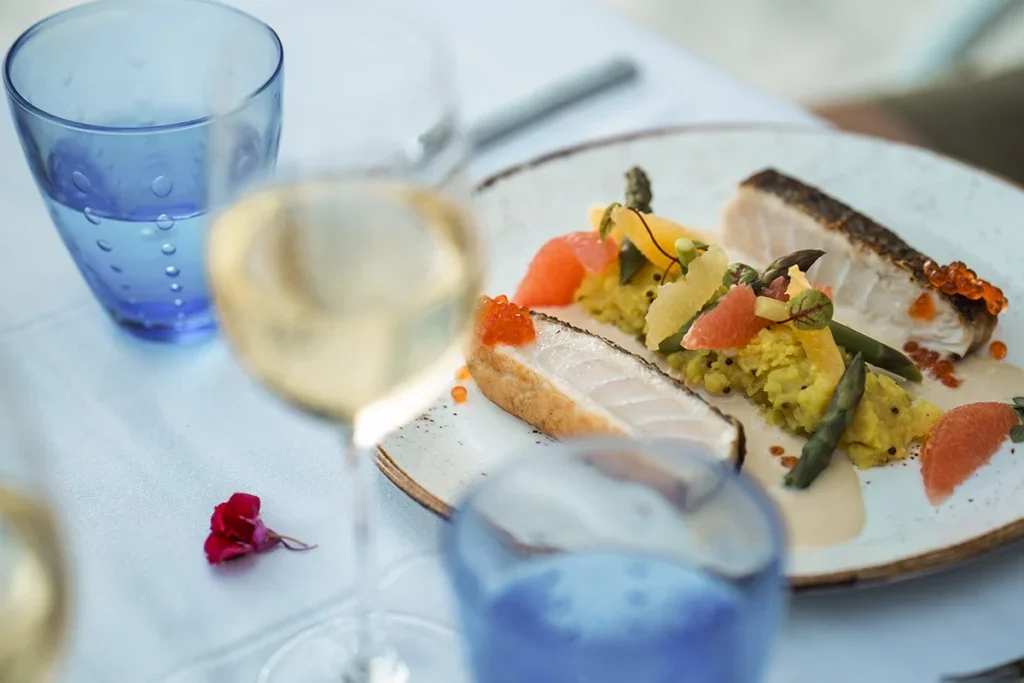
We had another excellent demonstration of this approach at our first official dinner, hosted by assistant food and beverage manager Luthinan Anurasiri and served on the beach, very close to the water’s edge, at a table embellished with fairy lights—all quite magical! The ambience, the food, and the service could not have been better, nor the wine selection wider. The range of “all-in” wines includes not only little-known gems (from the likes of Alentejo, Anjou, Aix-en-Provence, and Vouvray, and even Wairarapa and the Western Cape) but clever choices from famous names (from Anne-Claude Leflaive, Alheit, and Ata Rangi, to Massolino, Jean-Marc Roulot, and Dr Bürklin-Wolf). The rest of the selection is equally well informed and wide-ranging. Starting with Champagne, there is Delamotte, as well as sister house Salon; Bollinger Grande Année, as well as RD; Louis Roederer Collection, as well as Cristal; and Pol Roger Réserve, as well as Cuvée Sir Winston Churchill. There are growers like Gonet-Médeville, Guiborat, and Pierre Péters alongside houses such as Billecart-Salmon, Laurent-Perrier, and Taittinger. I won’t rattle off any more names, to avoid too long a litany, but the whole of the list is equally star-studded.
Content from our partners
The apparently effortless ease of the service is only made possible, of course, by a huge amount of work behind the scenes and around the clock. We were invited to attend a daily tour to check the back of the house so gained rare access to operational and storage facilities, as well as remarkable insights into the military-style undertaking to provide the resort with the vast array of supplies it requires. We were also given a fascinating glimpse of the private living quarters of the staff and saw how they, too, have fun, mingling with guests to play cricket or soccer. We didn’t attempt to compete there but did somehow find time away from the pleasures of the table to participate in some early-morning yoga and snorkeling.
Getting into the amazing marine ecosystem highlighted some of the crucial environmental issues that should concern all of the many thousands of visitors to such island resorts every year. We had an enlightening meeting with Thin Nadi Soe, a sustainability executive, who explained some of the efforts the Constance Group is making to preserve biodiversity, nurturing the flora and fauna of Ari Atoll. There are ambitious projects to repopulate the corals and to recycle almost everything that the resort uses—from leftover food, to used coffee capsules (including the laborious, painstaking work of separating out the grinds). There are also community initiatives to help the local school and the resident population. But there is no complacency, rather a ready recognition that there is a continual need to do more, as new challenges arise and existing ones—most obviously climate change and extreme weather events—become ever more serious. That sense of shared responsibility extends to the wine list, where organic and sustainable offerings are identified with the logo of the certifying organization (Agriculture Biologique, Ecocert, NZ Sustainable, and others).
Heavenly Halaveli
Halfway through our stay in the Maldives, we moved from Moofushi—rather reluctantly, it must be said, because it is an outstanding resort, and we had been pampered in every possible way, a sentiment echoed by all the guests with whom we spoke. Any misgivings were quickly allayed, however, as it was only a short trip in a speedy taxi-boat to our second Constance resort, Halaveli, in the north of Ari Atoll, and all the pleasures waiting for us there. We arrived in time for a delicious light lunch, before an in-depth visit of the whole resort, which is discreetly undergoing renovation. We were guided by a charming front-desk manager, who drove us around in a comfy buggy to see several villas, showing us the smart and stylish transformation under way—from slightly dated, to super-trendy, with new furniture, new wallpaper, and a softer, warmer color scheme.
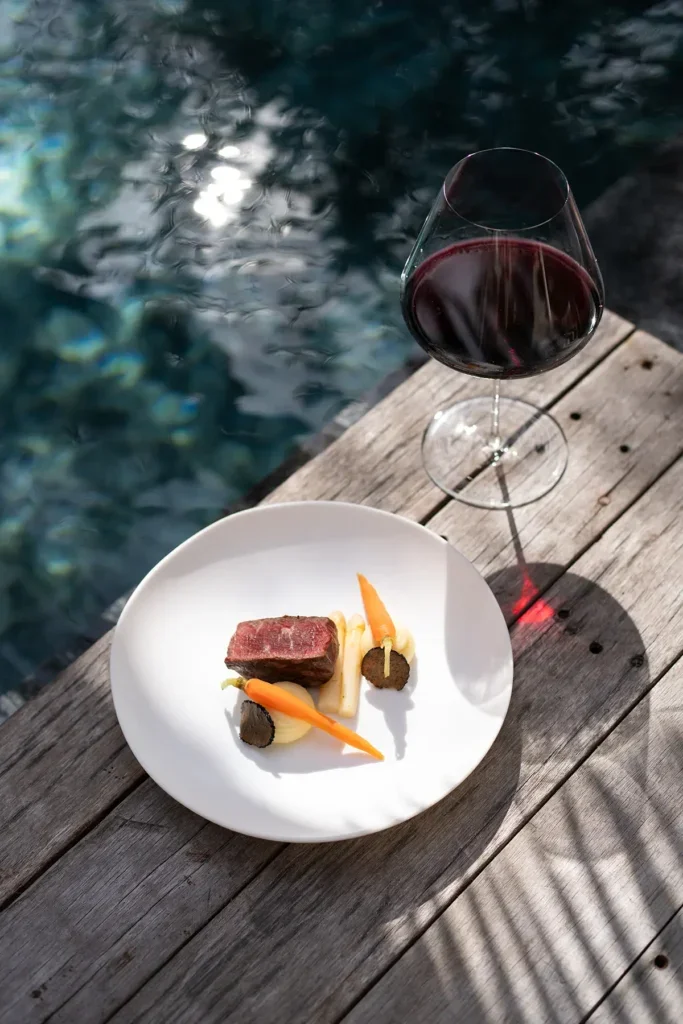
With its discreetly located villas, Halaveli feels a little more private than Moofushi, but there is plenty on offer for those looking for entertainment. We had a cocktail-making session with the head barman of the Jahaz Bar, and a cooking class with executive chef Hameed Siddiq, who turned out to speak perfect Italian. Daytime massages and yoga were the ideal preparation for more wining and dining, this time at Jing Restaurant, where we spent two wonderful evenings. The wine list here—managed by head sommelier Sreejith Menon and his four-strong team—has many of the same excellent offerings as Moofushi but is even more extensive, with some 1,600 references, making for even greater depth, breadth, and height. Again going not much further than the Champagne section, there is even greater availability of mature vintages of top cuvées: Deutz Blanc de Blancs back to 1988, Gosset Celebris to 2002, Dom Pérignon, Krug Clos du Mesnil, and Salon to 2004. The by-the-glass options are also extremely tempting—from rare Bordeaux (Château Tertre Roteboeuf) and Burgundy (Clos du Tart), all the way through to sweet treats like Château Gilette Crème de Tête, Château Yquem, Oremus Tokaji Aszú, and Klein Constantia Vin de Constance. Biodynamic and organic wines are also clearly identified, as are those that are kosher or vegan.
Another postprandial treat on the last evening of our stay was a movie under the stars (which seem to twinkle even more brightly there), with a huge screen, a bucket of ice-cold beer and white wine, and the comfiest seats you could imagine. A simple but unforgettable indulgence.
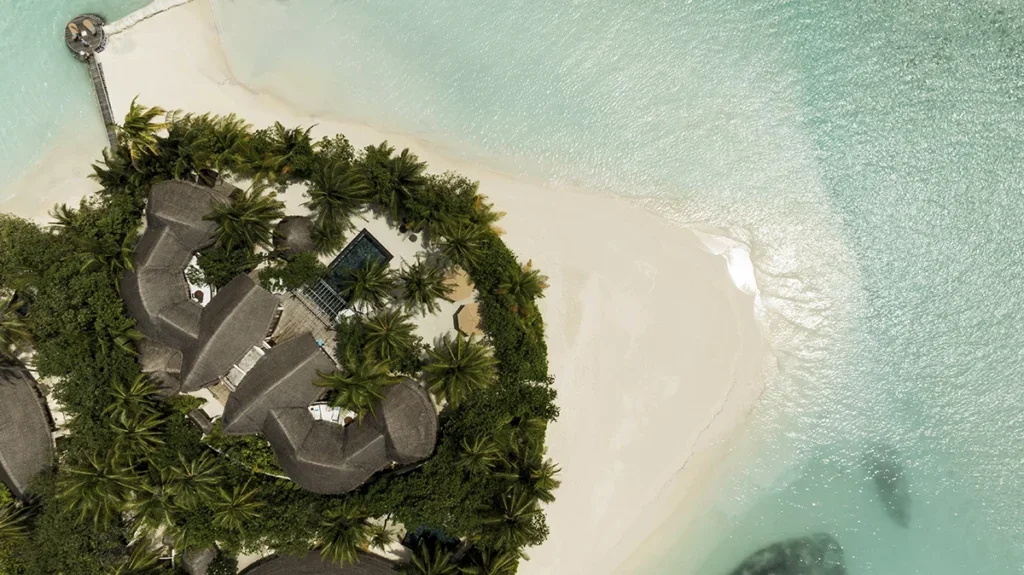
Leaving Halaveli was even more difficult than leaving Moofushi, but we were taking with us so many happy memories—not only of the two idyllic resorts in their perfect settings, but also the endless efforts of Constance and its well-motivated, well-trained professional staff to give its guests such special experiences. All those involving food and wine owe a huge amount to Jérôme Faure, Constance’s corporate sommelier, a charismatic and passionate Frenchman from the Rhône Valley who has been with the group for more than 20 years. When he joined in 2004, he was one of only two sommeliers; now he offers inspiring leadership and training to a team of more than 100 wine specialists across the group’s nine hotels and resorts around the world, most of them recruited locally. He has also masterminded the expansion of its hugely impressive wine program, which runs to some 3,500 references in total. That is based on his close working relationships with many of the world’s most desirable wine producers, some 30 of which he brings to the hotels and resorts every year for events such as the annual Paulée or the Festival Culinaire.
The resorts might appear to be in the middle of nowhere, remotely scattered around the Indian Ocean, from Madagascar, Mauritius, and the Seychelles, to the Maldives. But they feel very close to the center of the fine-wine world, thanks to Jérôme’s passion for sharing special experiences with his colleagues and guests, no matter the level of their knowledge, all of it with great charm, efficiency, and—why not?—a lot of fun along the way.


