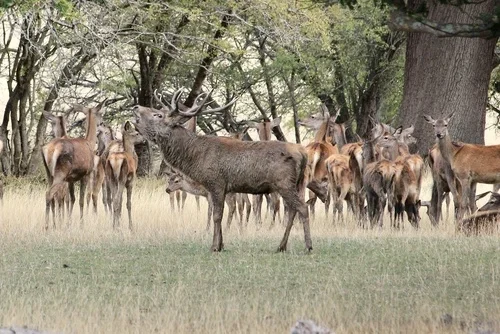
Joanna Simon looks at the history and preparation of Hirschragout, before finding the best wines to pair with the Austrian venison dish.
No thanks to the Holy Roman Emperor Frederick I, but at this time of year the Austrian hills are alive with the sound of diners enjoying Wildwochen, the wild game weeks when traditional family-run country inns, gasthäuser, celebrate the autumn hunting season with dedicated game menus and comforting traditional dishes. It’s not limited to these countryside establishments, in fact. Urban restaurants also get into the mood, some serving up the same popular dishes, such as Hirshragout, a rich, dark, red-wine braised venison stew, and Hirschgulasch, venison goulash, others offering more contemporary culinary spins.
Either way, game and particularly venison, from both red deer (Hirsch) and roe deer (Reh), is very popular during the season across the country from the Tyrolean Alps to Styria. But it wasn’t always so, or at least it wasn’t for everyone, despite hunting being a preoccupation in Alpine Austria from early medieval times.
Enter Emperor Frederick I. In 1156, he granted hunting rights in Austria exclusively to the nobility and spiritual leaders (often one and the same), at a stroke confining venison to the kitchens and tables of the aristocracy and royalty. And there it remained, a luxury of the privileged, until the second half of the 19th century when feudal hunting rights were effectively repealed. From then on anyone who owned land and had a license could hunt.
Related

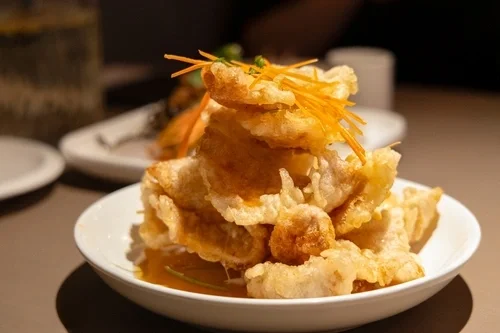
Venison gradually began to surface in restaurants and country inns, including in slow-cooked dishes with local wine, onions, root vegetables, juniper berries, and spices. Recipes for venison also started to appear in cookbooks of the period (Die Süddeutsche Küche by Katharina Prato was the most widely disseminated cookery book), but there was no eureka moment when someone created the first Hirschragout and there is no one definitive preparation for it. It was a successor to the game dishes of the early medieval courts, which were amply fortified with vinegar, wine, and spices such as clove and nutmeg to counter the pungent flavor of wild animals.
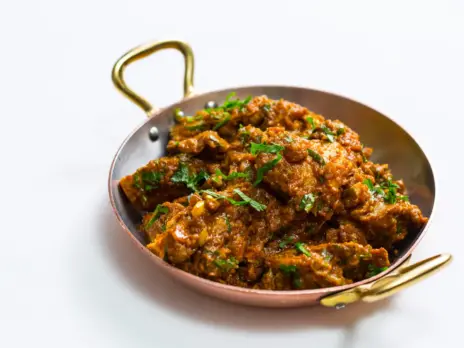
How to make Hirschragout
Over time, passed down the generations, it evolved into the dark, rich ragout of today, based on local ingredients and influenced by two culinary traditions: French cooking techniques, which were adopted by Austria’s imperial and aristocratic kitchens in the 18th and 19th centuries; and the goulash of the Austro-Hungarian Empire, which morphed into Hirschgulasch, as well as bringing paprika and sour cream into some, but not all, Hirschragout recipes. For the record, I use a little paprika (much less than in goulash) to add depth and, at the end of cooking, stir a spoonful of sour cream to add a little extra tangy richness.
In addition to diced venison, red wine, onion (cut in thin wedges or thick half-moon slices), carrot, and sometimes other root vegetables such as Hamburg parsley, juniper berries, garlic, black peppercorns, beef broth/stock, bay leaves and, often, thyme or lemon thyme (plus fat for frying and flour for thickening), a key ingredient of Hirschragout is lingonberry. This is incorporated in the cooking in the form of sweet, tart, wild lingonberry jam and is often offered with the finished dish. Lingonberries (Preiselbeeren), growing abundantly in the Austrian Alps and Bohemian Forest, are very much part of the Austrian culinary canon, both savory and sweet. Some Hirschragout recipes also include Austrian blackberry marmalade (or Konfitüre), which has a notably high fruit content (up to 70 percent—the Staud’s brand, for example), but this can be replaced, if unavailable, with extra lingonberry or cranberry.
Content from our partners
The best wines to pair with Hirschragout
When it comes to wine pairings, Hirschragout seems an obvious candidate for red wine. There’s the meat itself: dark, intensely savory, gamy, mineral (high in iron and other minerals), and dense. There’s the red wine bolstered by beef broth used to braise it, sometimes after first marinating it in red wine. And there’s the slow cooking method that favours full-bodied wines. I was interested, therefore – surprised, even – to see that the Austrian Wine Marketing Board recommends “full-bodied white wines, also those supported by oak-aging: Chardonnay/Morillon, Pinot Blanc, Pinot Gris, Neuburger and blends made from these varieties.” Folllowed by “Pinot Noir, Zweigelt or Blaufränkisch (though without a great deal of oak in the profile).”
Perhaps I didn’t try hard enough, but I didn’t find any white wines that made a really happy match. At best, they retained their integrity but sat apart from the stew; at worst they were overwhelmed. If pushed, I would prioritise texture and head for Marsanne and Roussanne blends of the northern Rhône and whites from Châteauneuf-du-Pape, Saint-Chinian, Collioure and IGP Côtes Catalanes. Or I would take onboard a skin-contact orange wine, such as a Venezia Giulia Ribolla Gialla from Gravner or Radikon or a Georgian amber wine such as Papari Valley 3 Terraces Chinuri Rkatsiteli or Tbilvino Qvevris Mtsvane.
Let’s move on to surer ground with red wines, where there are good pairings across a varied range. The Austrian choice for me is Burgenland Blaufränkisch: expressive and structured with both tannin and acidity and with dark/blue fruit, black pepper spice and mineral freshness, from producers such as Birgit Braunstein, Prieler, and Tinhof (Leithaberg DAC), Heinrich, Hans & Anita Nittnaus, Pittnauer, and Josef Umathum (northeastern Neusiedlersee), Moric (Mittelburgenland) and Wachter-Wiesler (Eisenberg DAC). The only thing I would caution against is being over-generous with the lingonberry jam if serving it with the finished dish, but that applies to other wines, too. If you do want to go heavier on the sweet fruit element, I recommend a Barossa or McLaren Vale Shiraz, such as St Hallett Old Block or d’Arenberg The Dead Arm, or a GSM such as Torbreck The Steading, all preferably with bottle age.
GSM brings me to Mourvèdre. When I was researching and writing my book Wine With Food, the affinity of Mourvèdre-based wines, especially Bandol, with venison was a discovery. Wine has come a long way in the three decades since then when it was just starting on its riper, oakier, higher alcohol trajectory. Put sweepingly, reds have increased in finesse, terroir expression, freshness and diversity of origin and grape variety, making them more versatile with food. Yet red Bandol remains one of my go-to wines with venison, including Hirschragout, from, to name three, Domaine Tempier, Mas de la Rouvière and Domaine de la Bégude.
GSM also brings us to the southern Rhône, where Gigondas in particular, with its high-elevation freshness and structure, is a notable pairing. The northern Rhône comes into the picture, too, with Syrah that is much more savory and mineral than South Australian Shiraz, and Tuscany slots in with Syrah-led wines such as Campo di Sasso Insoglio del Cinghiale, which works very well with Hirschragout, as do Sangiovese blends with Merlot, such as Tenuta Luce’s Lucente (its second wine).
With its natural acidity and structure Xinomavro, especially from Naoussa, is another option, as is Pinot Noir when chosen carefully. In Burgundy, it needs the more powerful wines: Premiers Crus from the northern Côtes de Nuits are a good starting point. In other regions, the danger is Pinot Noir that is too fruity and not firm enough. This is not the case for Spätburgunder from estates in Germany’s Ahr and Rheingau regions, nor, in the Hemel-en-Aarde Valley in the southern hemisphere, for Hamilton Russell Vineyards Pinot Noir, which sometimes seems more Burgundian than Burgundy.