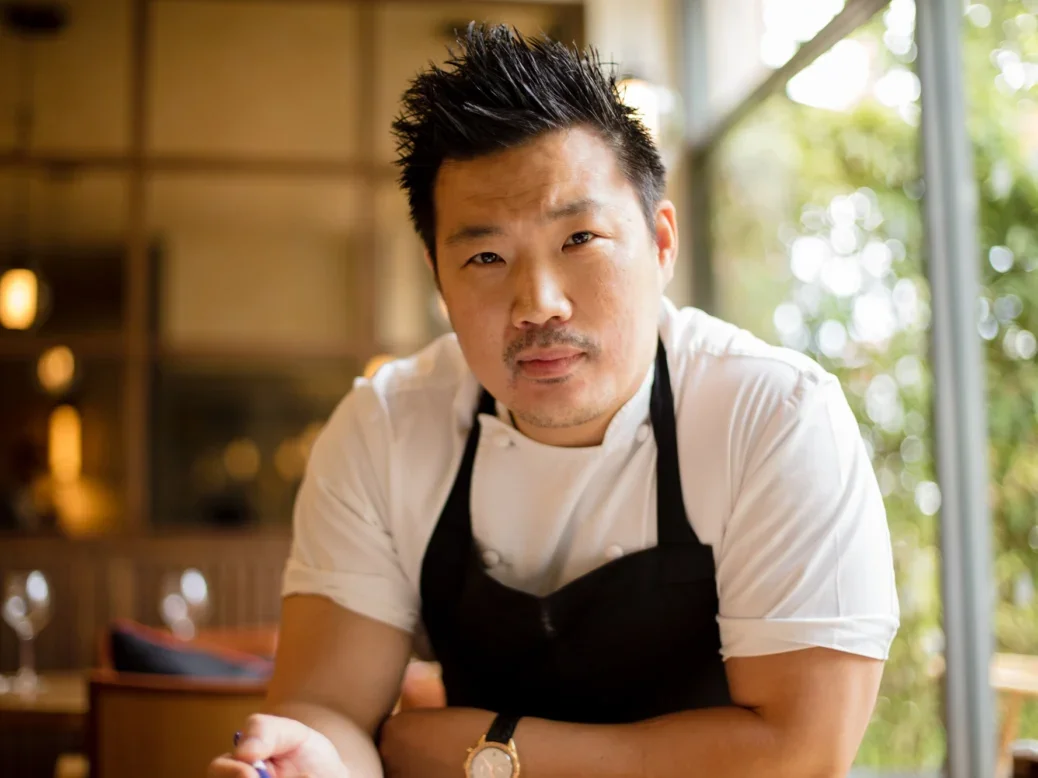
Unlike Japan—the biggest market worldwide for Grand Siècle, Laurent-Perrier’s Multi-Vintage deluxe cuvée—China is not a significant market for the Champagne house. “The Chinese don’t like fizz, they don’t like cold, and they don’t like acidity,” explained Lucie Pereyre de Nonancourt, Grand Siècle ambassador and fourth generation of this still family-owned company.
What was surprising was not so much the Chinese dislike of Champagne, but that Lucie was good-humoredly explaining it over an apéritif—the excellent 2018 Laurent-Perrier Brut—before dinner at A Wong, London’s only two-Michelin-starred Chinese restaurant. And not just any old dinner (as if) but a dinner specifically pairing three iterations of Grand Siècle and 2012 Laurent-Perrier Alexandra Rosé with Chinese food. Not classic Chinese cuisine but the boundary-stretching, creative cooking of chef Andrew Wong, much of whose inspiration comes from his deep research into ancient Chinese regional recipes and techniques, and whose dishes are notable also for the innovative combining of Chinese and British produce and ingredients.
To give just one example, Andrew’s interpretation of char siu, the iconic honey-glazed barbecued pork of Cantonese cuisine, is made from Iberico pork and served with caramelized walnut and freshly grated foie gras. The richness of the foie gras is intended to complement the sweet and smoky flavors of the pork and to bridge “the rustic Cantonese tradition with French luxury.”
I have always found Chinese food complicated to pair with wine—not impossible, but requiring a lot of thought. China’s culinary traditions recognize five flavors—sweet, sour, bitter, spicy, and salty—which can all come together in one small dish and which, crucially, must be in harmony and balance. None should dominate. The flavors (strictly speaking, aromas and tastes) should work in tandem to create depth, contrast, and complexity.
Related


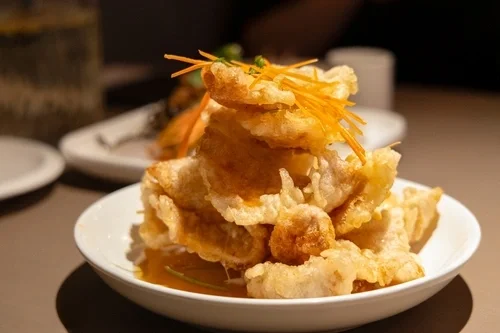
Two things in particular are worth emphasizing. First, sweet and savory are not separated in the same way as they are in the West. Char siu is an obvious example. Another is A Wong’s coconut ice cream with olive oil, Oscietra caviar, and a few drops of Pat Chun vinegar (a brand of sweetened vinegar from Hong Kong).
The second point vital to the understanding and appreciation of Chinese gastronomy is that it’s not just the flavors that must be in equilibrium. Texture, or rather textural variety, is equally important. Consider wood ear fungus—prized and used across the country for its gelatinous, springy crunch more than for any intrinsic flavor, of which there is very little.
Earlier this year, I went to a vertical tasting of Biondi Santi Brunello di Montalcino Riserva followed by lunch at which the new vintages of the Rosso (2023), Brunello (2020), and Riserva (2019) were served. It was held at the highly regarded Hunan restaurant in London. Gourmet Chinese food, with its sweet, sour, and spicy combinations, not to mention bitter and salt, seemed a surprising if not unprecedented choice for showcasing great Brunello (think of the tannins and the acidity), but I was willing it to be a hit.
Content from our partners
It was a fascinating gastronomic experience. The dishes (small plates) had been considered in the context of the wines, and they lived up to the restaurant’s reputation, but it rather confirmed my view that Chinese food isn’t easy when it comes to wine. I couldn’t say there were any perfect unions at Hunan or that, much as I enjoyed it, it’s the kind of cuisine I would choose with Brunello if I were in charge.
It hardly needs saying that Champagne is very different from Brunello Sangiovese. But are bubbles, cold temperature, higher acidity, and the near absence of tannin an advantage? Is drinking Champagne all the way through dinner ever ideal? Or perhaps I was about to be shown that I worry unduly. I soon learned that I do not. “Our cuisine is really tough to pair, not just with Champagne but with all wines. There are so many flavors, profiles, spices, textures,” said Andrew Wong, introducing the dinner and its format. And he doesn’t think you can simply say, as people often do, that dim sum really goes with Champagne. “When I ask how, they don’t know,” he says. Maybe we would find out.
But first, let’s look at the thinking behind the A Wong x Laurent-Perrier collaboration, particularly as far as the Champagne house is concerned. As so often at Laurent-Perrier, it starts with the avant-gardiste Bernard de Nonancourt, Lucie’s grandfather and pioneer of the prestige cuvée concept in the 1950s through his Multi-Vintage Grand Siècle. In an era when Champagne was much sweeter, Pinot Noir-based, single-vintage, and vinified in oak, he created a dry Champagne that was a blend of years, representing an idealized perfect “vintage,” with aromatic complexity and freshness. Moreover, he created it to be enjoyed with gastronomy. Laurent-Perrier is reinforcing its links with “the premium dining sector” in the UK under managing director Adam Guy.
Bernard de Nonancourt’s inventiveness wasn’t limited to Grand Siècle. Like Andrew Wong, he constantly pushed boundaries, breaking new ground with his non-dosage Ultra Brut and pioneering the maceration technique for both of Laurent-Perrier’s rosés. The collaboration with A Wong is based on a shared philosophy of innovation and excellence.
A gastronomic tour of China with Champagne
I used the word format above, but it’s rather pedestrian for the reality of the dinner, which was about 30 dishes forming a regional and historical tour of China presented not one after the other but in a succession of four collections of up to nine dishes each. Starting with The Banquet, it progressed through Dim Sum, Five Flavors, and Fruits, though wisely, Champagne was not served with the latter. (The full menu is detailed below, but I shall not give a blow-by-blow account of each dish, because one or two of the sharing plates eluded me.)
The banquet collection is a homage to 17th-century Qing-dynasty imperial banquets at the Forbidden City. Our Banquet’s eight dishes (the number eight represents prosperity, luck, and good fortune in Chinese culture) were inspired by the 108 the emperor would have enjoyed over three days. Arresting as all eight were, I was quite glad not to have had the emperor’s gargantuan 108. The second collection, Dim Sum—small bites literally “to touch the heart”—took us south to Hong Kong. Five Flavors celebrates exactly that, no one flavor standing out, and the Fruits collection was a good deal more than just fruit.
The dishes in each collection are not fixed in stone. Some that we had in the Dim Sum and Five Flavors collections are served on other menus in other collections (namely Fish and Snacks in the Collections of China menu). With a handful of exceptions, the dishes in each can be enjoyed in any order. The point is that each collection is a celebration of the essential five flavors and contrasting and complementary textures of Chinese cuisine.
That brings us to the Champagnes: the latest release of Laurent-Perrier Grand Siècle Iteration 27 (see also WFW 91, pp.54–55) served with the Banquet collection; Grand Siècle Iteration 24 served from magnum with the nine Dim Sum dishes; and Grand Siècle Iteration 22 and 2012 Laurent-Perrier Alexandra Rosé, both from magnum, were served with the seven dishes in the Five Flavors collection. Adam Guy revealed that it’s the most diverse pairing Laurent-Perrier has done. “Most ambitious” might be another way of putting it.
What makes him think these Champagnes work? “Laurent-Perrier has high acidity that helps cut through the food, and we’re showing complex wines that should go with the complex dishes,” was his answer. The million-dollar question was whether Laurent-Perrier had had much say in the menu. “Andrew has pretty much free rein because he wants it to be a journey for consumers. We experienced it, but it’s Andrew’s menu. And some dishes,” he added with commendable frankness, “are too hot and spicy.” In fact, talking to him later during the dinner, he felt that Andrew had toned down some of the dishes a bit.
Although mostly there was no set order to the dishes within a collection, we were advised to start with the scalded oysters with “fish fragrant” aubergine sauce, fish fragrant being a classic Sichuan seasoning of pickled chilies, garlic, ginger, scallion, and vinegar, which contains no fish but was historically used to cook fish. Here it’s used to season an eggplant reduction. We were to follow this with the palate-cleansing, light, delicately sweet and floral French beans in wasabi soy with Osmanthus-flower jelly.
The scalded oyster was a good call for the splendid Iteration 27, but the hot, spicy, sour sauce was a touch too strong, and the Osmanthus-flower jelly was a little sweet. But no major harm was done, and the relative youth and seamless purity of the 10-year-aged blend of, seemingly, disparate vintages (three fifths 2015 and one fifth each of 2013 and 2012) probably worked in its favor.
Among the most arresting of the banquet dishes was Zhou dynasty cured scallop, stuffed crab claw, which harks back to one of the earliest eras of refined Chinese cuisine. It looked like a cinnamon-colored sea urchin, with “spines” made of roasted vermicelli enclosing a sphere of crab wrapped in a prawn mousse on a layer of umami cured scallop and a bed of Chinese kale. I detected no sourness, but we were sharing, and these were small bites; otherwise, it had everything, not least textural contrast. The delicately rich sweetness (whether this was just the shellfish, I don’t know) menaced the Grand Siècle Iteration 27 without quite flooring it in the end.
With that in view, I feared for Iteration 27 with the sweetness of Yunnan sweet potato with tamarind and shrimp caramel but need not have done. The sourness of the tamarind performed its balancing-act duty, and the shrimp caramel provided an umami distraction rather than sugariness. Iteration 27 took it in its stride. It was almost as at ease with the Sichuan-style chilled “smacked” cucumber with trout roe, chili, garlic vinegar (smacked meaning crushed), which delivered a refreshing, sharp, crunchy punch. Any more vinegar or chilli oil would have been too much. Balance is what it’s all about.
Tiger salad with cumin lamb and split buttermilk, from northwestern China, was another refreshing, punchy dish but one with more complexity and intensity of spicy and salty umami flavors. It includes both raw tomato and coriander and features a buttermilk dressing recalling China’s dairy heritage from Mongol and Central Asian cuisines. The “tiger” refers to the shock to the palate of the flavors—like coming face to face with a tiger. Iteration 27 reacted accordingly but recovered itself quite well.
For the dim sum (will you, won’t you go with Champagne?), we moved on to a magnum of Grand Siècle Iteration 24 (see WFW 88, pp.54–56). Based on the tricky 2007 vintage (60%) and blended with 2006 and 2004, this has a gossamer texture and a sheen of honey across the mineral core, potpourri, balmy hay, citrus, almond, and toasted wheat notes. “Memories of Peking duck,” foie gras and smoked duck took us to Peking and to ancient China, when duck used to be smoked over cherrywood, as it is here. The wrap is filled with duck skin and foie gras, and one end is topped with caviar while the other has a slice of truffle. We were told that the first bite should be the caviar end and the second should be the truffle end. I don’t know if this was deliberate (I imagine it was), but the caviar first bite was sweeter than the truffle bite and was a little sweet for Iteration 24, but the Champagne got along famously with the truffle.
In terms of pairing, the dim sum highlight with Iteration 24 was, for me, braised abalone, shiitake mushroom, sea cucumber and abalone butter served alongside Why We Don’t Need to Eat Shark’s Fin Soup, a deeply umami recreation of the country’s traditional soup that was always served at banquets as a symbol of wealth and status. At A Wong, it’s made with a rich chicken broth and mung beans, and egg white is used for texture in place of controversial shark, which is valued for its gelatinous texture not for its taste, of which there is almost none.
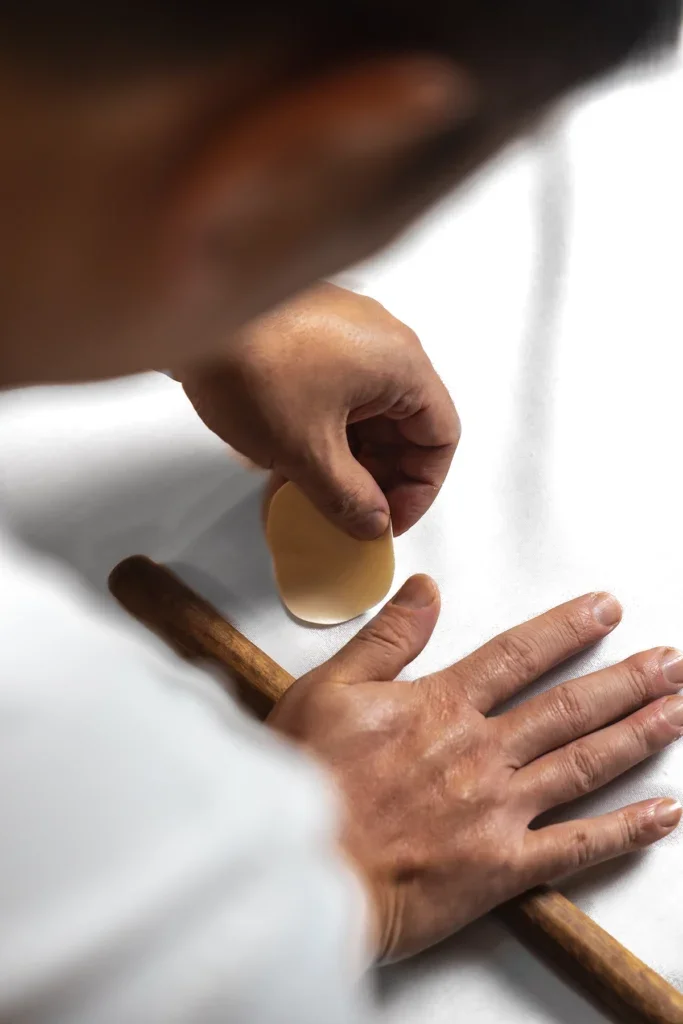
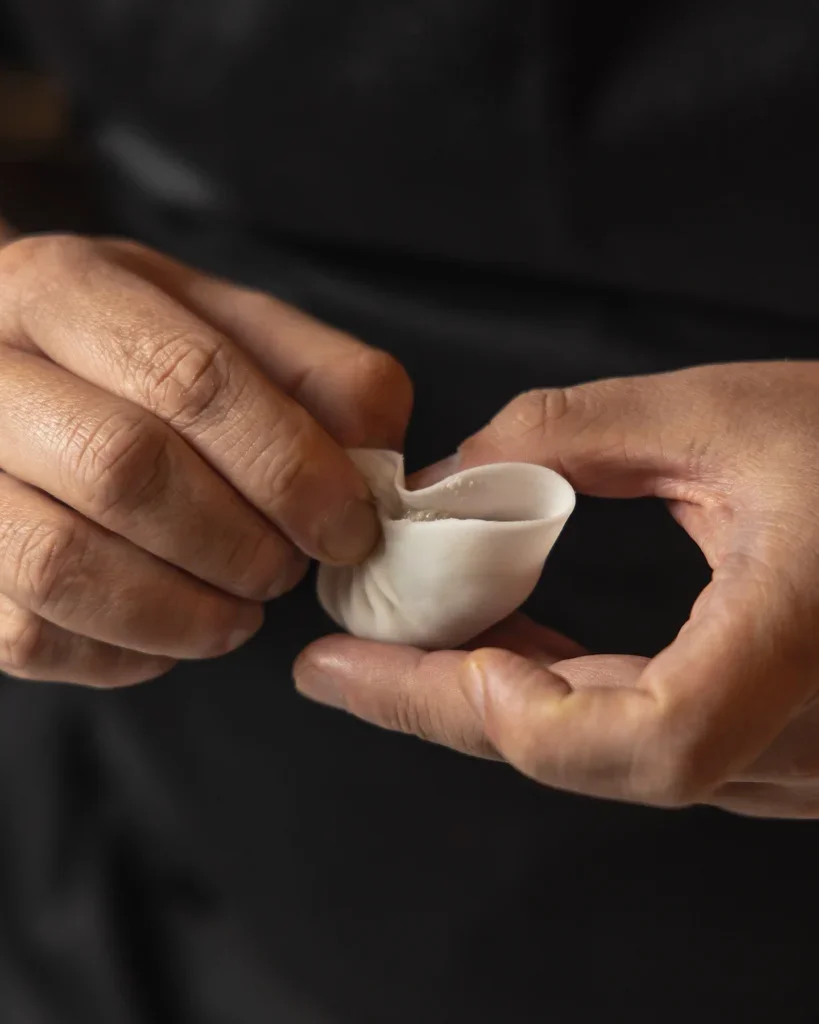
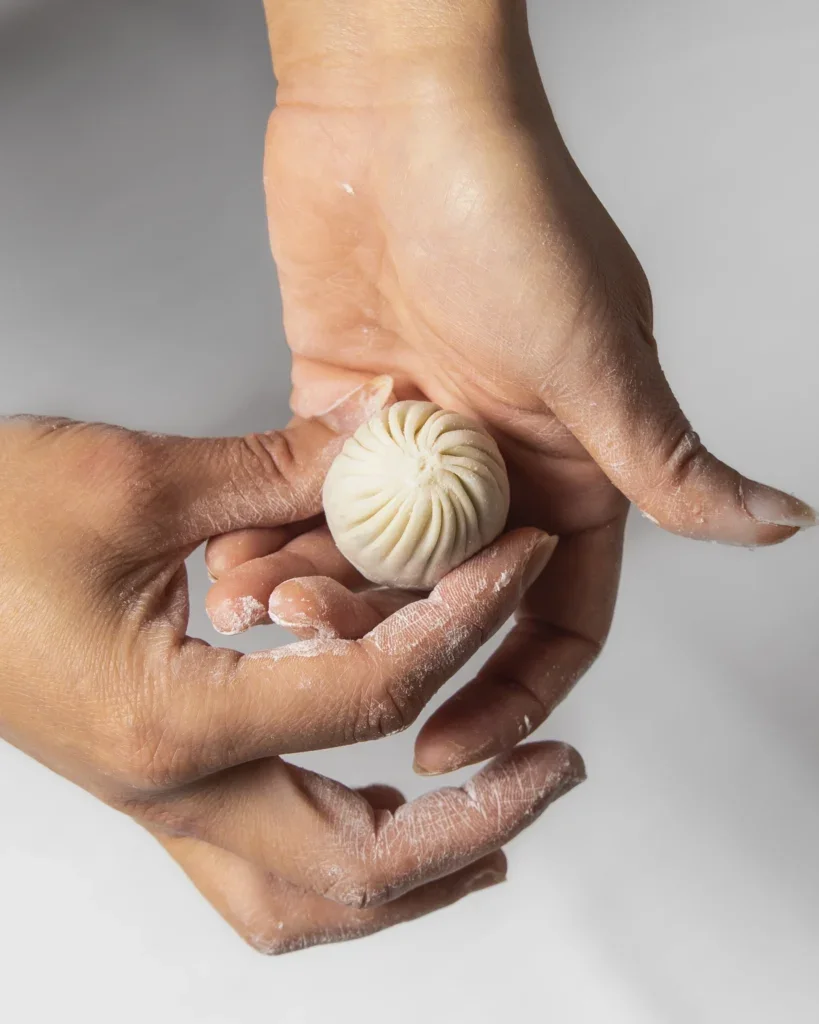
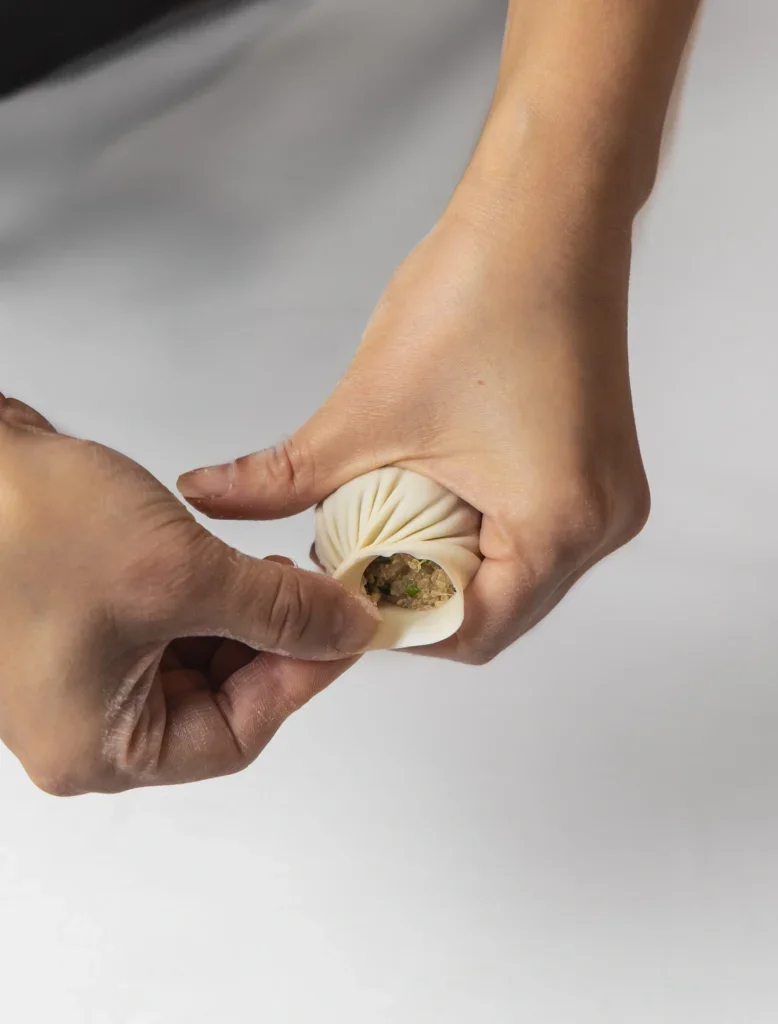
The dim sum duo of siu mai and har gao are described as the most iconic of dim sums, so must be mentioned. In addition, har gao (or har gow) is technically highly challenging to make, the wrapper traditionally pleated by hand with at least seven folds around a single whole prawn. Siu mai is the classic open-topped dumpling filled with pork and prawn, finished here with black-bean relish, pork crackling, and choi sum leaf. The two were delicious, but there was something unexpectedly hot. The ginger in the relish? The sweet chili sauce? I’m not sure, but it shocked the Champagne (as well as me).
Others to note included tangerine fish with chiu chow beef broth and caviar and raw wagyu, fermented meat paste. The fermented wagyu tartare was presented in a caviar-type tin with a spoon for scooping the beef onto thin rounds of pear set with Thai basil, before rolling them up taco-style. Tangerine fish—mikan tai from Japan—takes its name, together with a very subtle flavor, from being fed only on tangerine peel. It comes with pickled daikon and Oscietra caviar in a gentle beef broth. The Champagne was relaxed with both.
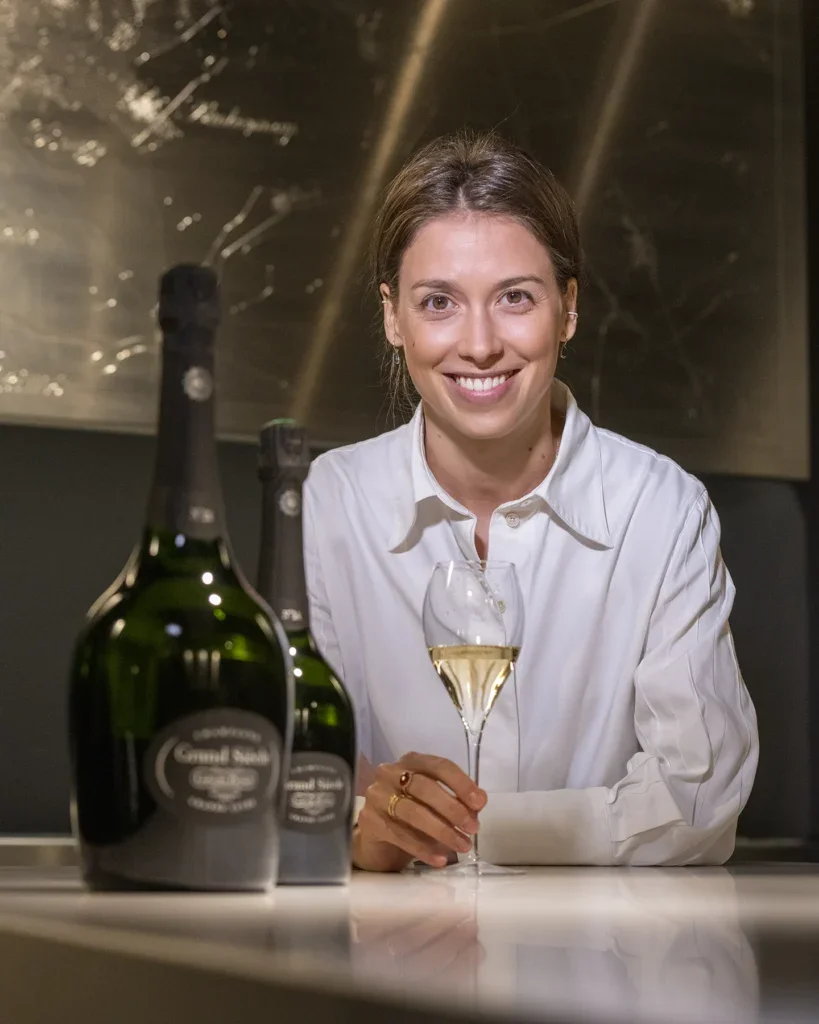
For the Five Flavors collection, we moved on to Grand Siècle Iteration 22 (a blend of 55% 2004, 30% 2002, and 15% 1999) and 2012 Alexandra Rosé. The magnum of Iteration 22 was considerably more evolved than the magnum I tasted in April last year that had been disgorged in May 2019 after 13 years on lees (see WFW 88, pp.54–56). The one poured at A Wong had been on lees for 15 years, so was probably disgorged in 2021. It still had lively acidity and minerality, but there was an oxidative crème-caramel inflection—more caramel than crème and somewhat old-school. This, though, didn’t necessarily mean it didn’t go with the food.
Iteration 22 squared up with aplomb to a sophisticated interpretation of the famous Chinese sweet-and-sour combination; sweet and sour corn-fed chicken, Thai basil, pineapple and candied walnuts deftly subdued the Champagne’s oxidative accent. The other chicken dish, soy chicken with ginger oil and Oscietra caviar wrap, couldn’t perform the same remedial trick; the ginger and scallion relish and licorice-infused soy dipping sauce pointed up the oxidation, as did, to a lesser extent, both garlic-steamed tiger prawn, mung bean noodles, superior soy and chrysanthemum tofu, lemongrass broth. But squid flower, abalone sauce and cashew nuts, spiced squid ink—an intensely umami dish, which also had the freshness of mangetout and two different kinds of crunch (roasted cashews and mangetout)—looked kindly on Iteration 22.
As for the 2012 Alexandra Rosé; this is a wine of beautiful color, red-berry intensity, youthful vibrancy, sumptuous vinosity, and super-fine tannins (see also WFW 78, pp.64–65). I wasn’t surprised at the quality but I was at how well it went with the food, though in retrospect I shouldn’t have been. It was the complexity of the dishes that the complex Vintage rosé homed in on and complemented. It wasn’t quite as good as Iteration 22 with the soy chicken, and the sweet-and-sour element of the garlic-steamed tiger prawn drew out its tannin, but for the rest it was in its element. If I had to choose just one of these Champagnes with a dinner at A Wong, Alexandra Rosé would be it. Would I choose Champagne at all? Of this caliber, yes.