


The UN decided in September not to adopt the World Health Organization’s call for “no safe levels of alcohol consumption,” while attempts by neo-prohibition forces in the US to impose draconian dietary drinking guidelines seem to have faded away—for now. Roger Morris reports from the two fronts in the war against neo-prohibition.
Is it possible that the emphatic reversal of two closely monitored threats to wine consumption, both coming to a head this past September—one in Washington, DC, and one at the United Nations (UN) in New York City—have signaled a turning of the tide and, for the time being, pushing neo-prohibition forces back out to sea?
The month began with word leaking from inside sources that the revised US dietary guidelines—a powerful benchmark in establishing American health policy and in framing public discussion—would not, as feared, recommend “no safe levels of alcohol consumption” for even moderate drinkers (see also WFW 87, pp.90–91 and WFW 88, pp104–05). Instead, it was signaled that the US Department of Health and Human Services had pulled back a preliminary government report issued in January 2025 for public comment, which linked any alcohol consumption to significant risks of decreased longevity and even premature death.
Then, on September 25, the World Health Organization (WHO) brought similar recommendations to the United Nations on alcohol use as relates to non-communicable diseases. But even before the WHO presentation, it was determined that the General Assembly would instead recommend continuation of existing measures to ameliorate the health impacts of excess consumption.
Related


Following these twin setbacks, the neo-prohibition camp vowed to continue their fight against alcohol consumption, while the response from wine-industry leaders has been largely muted. The latter have, however, indicated that they will continue to emphasize the health benefits of social gatherings that involve wine and spirits.
Immediately following the UN meeting, the Comité Européen des Entreprises Vins (CEEV) issued a statement saying, “CEEV, whose delegation shared the wine sector’s perspective at the UN Multistakeholder Forum held in New York this May, welcomes UN’s confirmation of a whole-of-society approach. This framework rightly recognizes the importance of engaging the private sector in addressing global health challenges.”
“I think we’re beginning to turn a corner in terms of the narrative, but we have a long way to go,” says Gino Colangelo, president of Colangelo & Partners, a New York-based media agency that represents dozens of wine and spirits producers and is active in pro-wine initiatives. “The soft economy and reduced discretionary income are adding to the challenges for wine companies. It’s hard to define which challenges are having the most impact on the downturn, overall.”
Content from our partners

Neo-prohibition: Roots in post-Prohibition
Although Prohibition officially ended in the United States in 1933, after a 23-year period of national abstention, groups and individuals wanting to ban or severely limit alcohol consumption didn’t just disappear. Some states and localities continued to ban or limit both wine and spirits sales and consumption—and some still do.
More recent American anti-alcohol campaigns have generally reflected four concerns: religious prohibitions on alcohol consumption, social and public safety measures, underage drinking, and, latterly, the public healthcare costs of treating alcohol-related diseases. It should be noted that the last three—issues that relate to the common good—have been recognized by the wine and spirits lobbies as legitimate concerns. But wine consumers in general have resisted targeted attacks that use dubious “scientific” studies by organizations and individuals who see social drinking as an unmitigated evil.
For example, in the US, Mothers Against Drunk Driving (MADD) originated as a legitimate campaign to lessen impaired driving and the dangers and death it causes. But even the founder of the organization said the goals of the organization in recent years have gradually morphed from its original objectives and towards trying to ban driving after any alcohol consumption.
In recent years, the wine trade and wine consumers worldwide have generally accepted the need for regulations and guidelines that reduce drunk driving and alcohol abuse, while recognizing the beneficial effects of wine and other spirits on some illnesses, especially cardiovascular disease and type 2 diabetes and, moreover, as positive agents for socialization by potentially reducing loneliness and depression (see WFW 84, p.84).
WHO on the attack
But that fragile truce between the wine industry and the neo-prohibitionists was shattered by a WHO-sponsored Lancet report and its attendant press release—a de facto declaration of war. Issued on January 4, 2025, the headline of the release read, “No level of alcohol consumption is safe for our health,” and the opening paragraphs declared:
The risks and harms associated with drinking alcohol have been systematically evaluated over the years and are well documented. The World Health Organization has now published a statement in The Lancet Public Health: When it comes to alcohol consumption, there is no safe amount that does not affect health. Alcohol is a toxic, psychoactive, and dependence-producing substance and has been classified as a Group 1 carcinogen by the International Agency for Research on Cancer decades ago—this is the highest risk group, which also includes asbestos, radiation, and tobacco.
Under a subheadline reading “Risks start from the first drop,” it continued:
To identify a “safe” level of alcohol consumption, valid scientific evidence would need to demonstrate that at and below a certain level, there is no risk of illness or injury associated with alcohol consumption. The new WHO statement clarifies: Currently available evidence cannot indicate the existence of a threshold at which the carcinogenic effects of alcohol “switch on” and start to manifest in the human body. Moreover, there are no studies that would demonstrate that the potential beneficial effects of light and moderate drinking on cardiovascular diseases and type 2 diabetes outweigh the cancer risk associated with these same levels of alcohol consumption for individual consumers.
It was now apparent within the wine trade that there could be no cooperative discussions with WHO, which wanted nothing less than total victory against any kind of alcohol consumption and would use its muscle to get it.
At the same time, the report in The Lancet Public Health rang a particular alarm in the US, where an official federal study group was preparing a mandated five-year update to existing official dietary guidelines that currently recommend no more than two alcohol drinks a day for men and one for women. There were rumors, never completely denied, that proposed new guidelines would echo the WHO’s “no safe levels.”
The response to the WHO attack, in both the US and Europe, developed along two lines. One attacked the credibility of the scientific research—much of it shaky meta-analysis studies—used to support the WHO declaration. The second response argued that there are widespread benefits of wine-centered events as positive steps toward socialization that lessens loneliness and depression—a growing danger increasingly recognized by health authorities. Former US Surgeon General Vivek Murthy warned that “Loneliness and isolation represent profound threats to our health and wellbeing,” noting that one in two adult Americans reported feeling loneliness.
The wine lobby strikes back
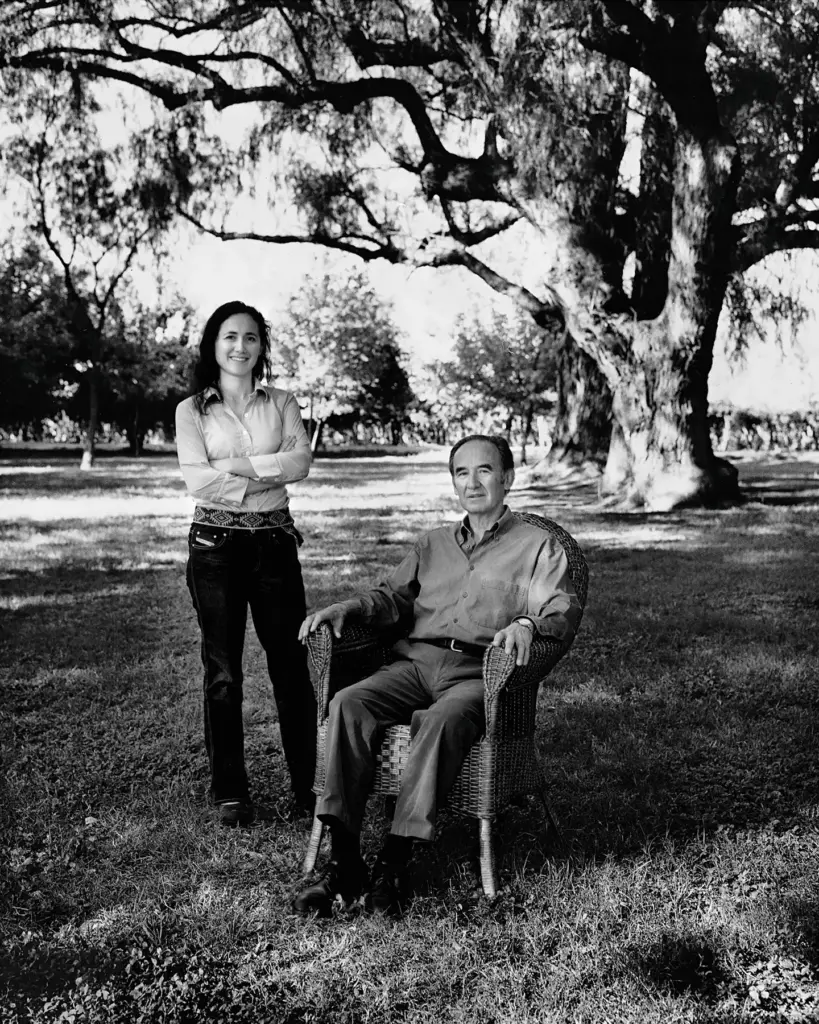
Laura Catena, an owner of Bodega Catena Zapata in Argentina, as well as a physician and researcher, emerged as a prominent wine spokesperson against neo-prohibition in the media and at industry conferences, debating the validity of the WHO studies and related ones. And in this publication (WFW 87, 2025), Dr Erik Skovenborg argued that the WHO declaration in The Lancet was a leaky document when it came to honest presentation, the validity of its scientific research, and its paucity of simple logic.
“As a matter of fact,” Skovenborg wrote, “group 1 carcinogens are not ‘the highest-risk group’ but a group of substances where there is enough evidence to conclude that they can cause cancer in humans. The list of group 1 carcinogens also includes, for example, processed meat, salted fish, wood dust, and ambient air pollution.”
The Skovenborg article then proceeded to take on the science and research issues WHO raised and convincingly rebut or erase them. In concluding, he wrote, “The WHO warning of ‘no safe level of alcohol consumption’ has an absurdity to it, and the evidence base for a significant association between light drinking (<10g alcohol per day) and risk of cancer is fraught with weak associations and methodological issues. The WHO statement is more political than medical, and that’s a disservice to sensible, moderate wine drinkers.”
In the US, a series of consumer-related activities were instituted, partly in response to abstention media campaigns such as Sober Curious, Sober October, and Dry January. One such organization, Come Together—A Community for Wine Inc, created last year by wine writer Karen MacNeil and marketing and public relations specialists Kimberly Charles and Gino Colangelo, has run several themed campaigns nationwide, including Come Over October and Share and Pair Sundays, that urge responsible wine consumption and have received strong media and industry support (see also WFW 85, pp.20–22).
In midsummer of this year, as the WHO “side meeting” at the UN was approaching—its cri de coeur for immediate worldwide action—wine groups began making their own appeals to various governmental bodies and their representatives. Among these was an open letter to UN member nations from the Académie Internationale du Vin by its president, Guillaume d’Angerville, and its chancellor, Véronique Sanders: “Wine is at the heart of this question,” they wrote in addressing the WHO attack. “Too often, it is reduced to a molecule of alcohol. Too simplistically, it is compared to a drug. But too rarely do we think about what it embodies. The International Wine Academy, whose members come from 20 different countries, wishes to alert you against the danger of reducing wine to a mere health risk, thereby forgetting its cultural, social, and human dimension.”
After detailing wine’s history and its social and cultural importance in Western society, they continued, “We are fully aware of the dangers of excess. We recognize the need to prevent addiction, protect the most vulnerable, and combat abuse. We embrace this responsibility, for it is through education that consumers learn to taste, compare, and appreciate wine with moderation—becoming ambassadors of balance. Through education, we believe we can both protect individual freedom to enjoy wine without abuse and promote responsibility and control. Wine thus expresses its truth through the transmission of knowledge, and know-how, and teaching moderation.”
The WHO’s presentation at its September meeting during the UN General Assembly, titled “Alcohol Policy as Catalyst for Sustainable Development and NCDs [non-communicable diseases] Prevention,” was co-sponsored by various organizations from ten member countries. Addressing their coming meeting’s purpose, WHO organizers had written, “In 2010, the World Health Organization developed a package of evidence-based, cost-effective interventions to effectively reduce the burden of non-communicable diseases (NCDs). However, 15 years later, implementation and enforcement of the best buys has been disappointing,” it said, continuing, “Alcohol is a major obstacle to sustainable development.”
The UN charts a course
The WHO presentation was by this time, however, largely pro forma, because the UN’s “political declaration” had already been debated during the run-up to the meeting, documented and revised four times, and awaited only formal adoption by the General Assembly. Its members issued a lengthy document titled “Political Declaration of the Fourth High-Level Meeting of the General Assembly on the Prevention and Control of Noncommunicable Diseases and the Promotion of Mental Health and Well-Being,” enumerating dozens of proposed healthcare actions. Alcohol consumption was only a minor aspect in those recommendations.
Among the key action points involving wine and spirits were:
“Consider introducing or increasing taxes on tobacco and alcohol to support health objectives, in line with national circumstances” and
“Reduce the harmful use of alcohol through accelerating the implementation of the Global Strategy to Reduce the Harmful Use of Alcohol (2010) and the Global Alcohol Action Plan 2022–2030, including by considering marketing and availability measures.”
It was hardly the ringing endorsement for which the WHO had hoped.
The day following the meeting on September 25, the CEEV issued a congratulatory press release stating:
The Comité Européen des Entreprises Vins, representing European wine companies, welcomes the Political Declaration negotiated at the United Nations’ 4th High-Level Meeting on the Prevention and Control of Noncommunicable Diseases (NCDs) and the Promotion of Mental Health and Well-Being, which is scheduled for formal adoption at the upcoming UN General Assembly in October.
CEEV believes in the importance of addressing the global challenge of NCDs through comprehensive, evidence-based, and balanced strategies that promote healthier lifestyles, social well-being, and sustainable development.
The Political Declaration reflects this approach by recognizing that the most effective path forward is to focus on reducing the harmful use of alcohol, rather than penalizing moderate and responsible consumption.

By contrast, Movendi International, which bills itself as “the largest global social movement for development through alcohol prevention,” with a stated half-million members, declared, “Movendi has tracked the negotiations from the Zero Draft through Revisions 1 to 4. Earlier drafts had included several alcohol-policy “Best Buys,” such as alcohol advertising bans and common-sense limits on alcohol availability. But these were deleted due to alcohol-lobby pressure and were only reinserted in a diluted way—a clear example of how commercial interference can undermine evidence-based health action in the people’s interest.”
Reports that the US dietary guidelines would not have any finite consumption recommendations met with similar dismay among American prohibitionists. “Americans deserve honesty, not watered-down half-truths written to protect alcohol-industry profits,” wrote Mike Marshall, CEO of US Alcohol Policy Alliance (USAPA). “For too long, the federal government has allowed big alcohol to blur the facts. The science is clear: Alcohol is a toxic, addictive carcinogen. The only responsible guideline is the truth—drinking less is always better, and not drinking at all is best for your health. This is not a call for prohibition—it is a call for honesty.”
The USAPA’s stated goals include limiting hours of sale and outlet density, higher taxes, minimum pricing, limiting ads, and enacting wine-shop liability.
Most likely there will be a reasonably quiet period in the wine wars as the anti-alcohol force regroups and as wine and spirits consumers and their advocates continue to bolster their strategic positions at a time when the wine industry is suffering economic losses.
It has been noted that social and political trends are like tidal waves, constantly advancing and receding. No one expects the anti-alcohol lobby to go away, but for most wine drinkers the wine glass that looked half-empty at this time last year now looks refreshingly half-full.


