

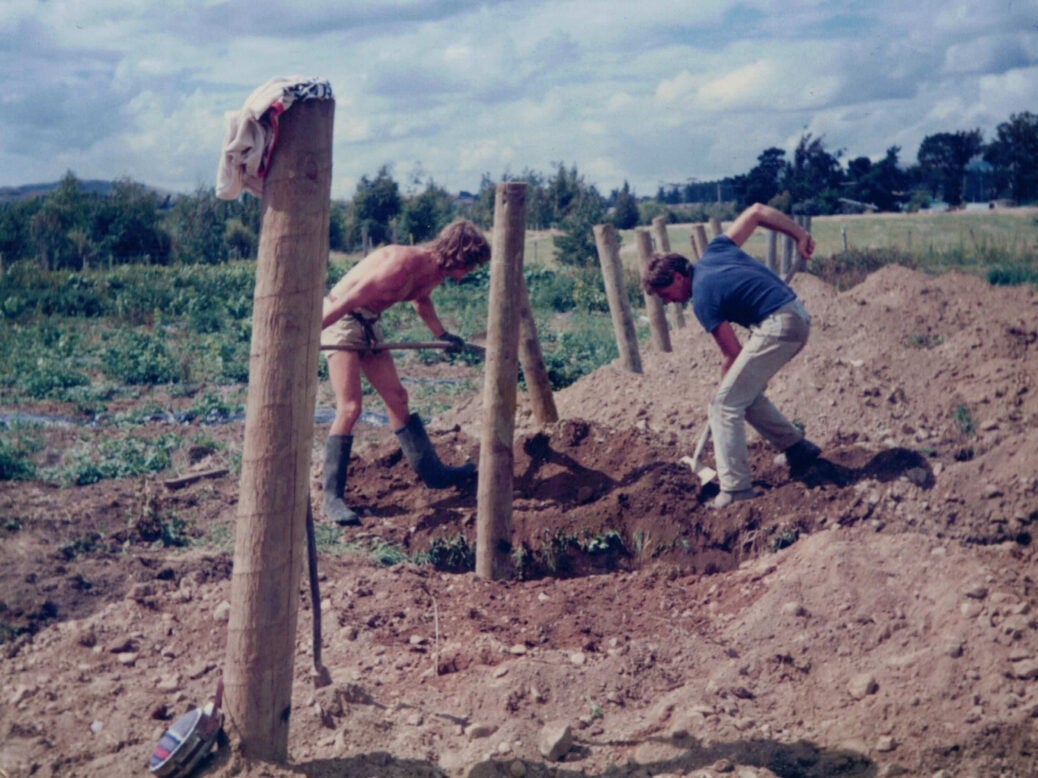
Did the Abel clone originate in a suitcase-smuggled cutting taken from DRC’s La Tâche monopole? Or does it have an altogether more modest background?
Many a folkloric wine tale has melted away under the harsh light of DNA analysis over the years. It was recently the turn of one of New Zealand wine’s most endearing back stories to feel the heat of this method of scientific truth-seeking. Helen Masters, winemaker at Ata Rangi in the Wairarapa, alerted me to it in the latter half of 2025. “It’s the Abel clone,” she said. “They’re saying it’s Swiss?”
She went on to explain that the Pinot Noir clone commonly known as the Abel clone in New Zealand had undergone genotyping. The result of this analysis asserted that the clone had closer family ties to Switzerland than to France, which immediately threw shade on the veracity of a tale that has nestled happily in the folds of the wider New Zealand Pinot Noir story for decades.
The mythology of the Abel clone
This long-accepted account of Abel’s origins began with an encounter at Auckland International Airport in the mid-1970s. Those were the days before incoming luggage was x-rayed, scanned, and sniffed by dogs for anything that might compromise New Zealand’s biosecurity. And yet there was still a high level of scrutiny (who can forget, upon landing, the aerosol spraying of the interior of every airplane that all seated passengers had to endure?). All perishable food or plant material had to be declared. Everyone was asked if they had visited a rural property during their time overseas. At the customs gate, any hint of a traveler harboring something undeclared and/or potentially menacing meant that their bags were opened and searched.
Related

Malcolm Abel, a customs officer working at the airport at that time, was doing just that on the day in question. A man’s suitcase lay open before him. It contained gumboots. Inside one of them Abel discovered undeclared vine cuttings.
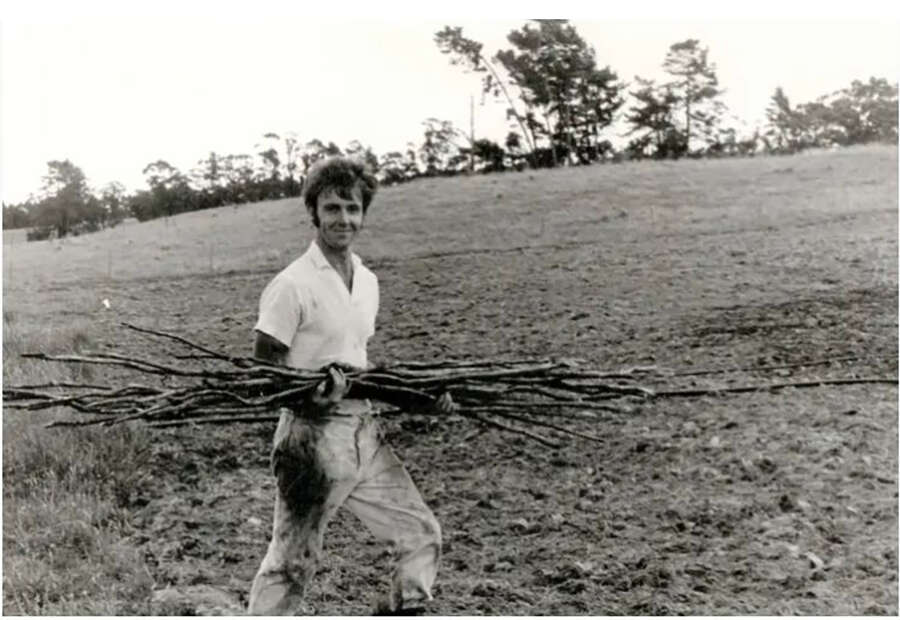
There was a remarkable alignment between our would-be trafficker of contraband Vitis vinifera and his customs officer. Malcolm Abel had another life away from the airport. In 1970 he had established a small vineyard in west Auckland’s Kumeu, with the aim of producing red wine. His interest as a vigneron was piqued by the gumboot find and he began quizzing the suitcase owner as to the provenance of the cuttings.
The passenger told him they had been surreptitiously taken from a vineyard in the Burgundian village of Vosne-Romanée. Indeed, the source was La Tâche, the famous monopole owned by Domaine de la Romanée-Conti. Abel had no choice but to confiscate the cuttings. He made sure, however, that they were not destroyed, but rather sent to quarantine. After clearing that hurdle, he retook possession and the cultivar was planted in his Kumeu vineyard.
Content from our partners

Malcolm Abel lived for only a few more years after this encounter. He died suddenly in 1981 aged 38, just months after his marriage ended in divorce.
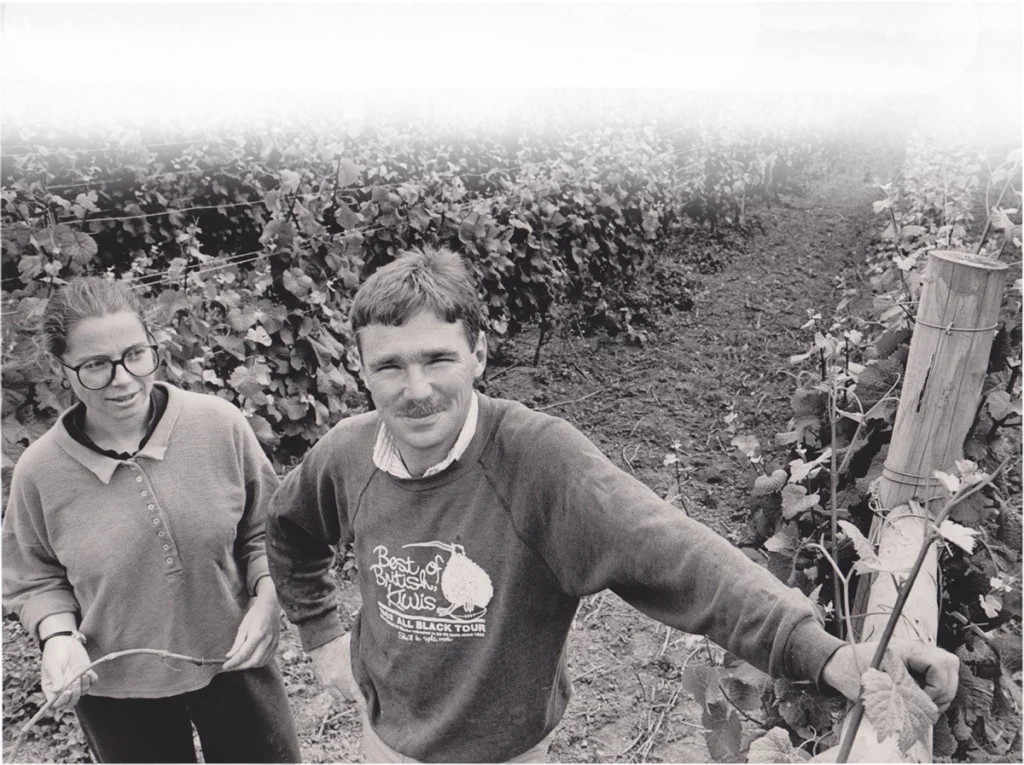
Not long before his death, Abel had become friendly with another young man fired with ambition to make wine. Wairarapa-born Clive Paton had bought a plot of land on the Martinborough terrace, joining the small first wave of dreamers who ushered in the region’s modern era of wine production. One problem facing them all at that time was a dearth of planting material. Paton found his association with Abel more than helpful on that front. In 1980 he bought young vines from his Kumeu friend and planted them in Martinborough. The Abel Pinot Noir clone made up a large part of this initial planting, by which time Paton had settled on a name for his wine project—Ata Rangi (meaning “dawn sky” or “new beginning” in Maori).
Returning to the present, Masters was a little put out by the news of the DNA results. I could see why. The Abel clone goes by several other names. One is the “gumboot clone” (for obvious reasons). Another is the “Ata Rangi clone,” due to the fact that the cultivar’s New Zealand journey began in earnest at this family-owned estate. The first varietal Pinot produced by Ata Rangi in 1985 was made entirely from Abel fruit. The international renown for this estate’s Pinot Noir over the past few decades is due, in no small part, to the performance of the Abel clone in Martinborough.
“It has a distinctive, sweet-savory, hay character, fruit prettiness, and a spread of tannin that you don’t get with, say, the Dijon clones or clone 5,” said Masters. “And I love that it holds acidity. Beyond that, in our region it has become important in the way it matches the climate. Budburst and flowering occur later with Abel, so it often comes after conditions have taken a toll on other clones. Abel has saved us in the years where spring frosts have wreaked havoc.”
DNA results
Abel soon became sought-after by serious Pinot producers around the country. Ata Rangi set up a small nursery to cater for this demand, as Abel spread first throughout the Wairarapa and then around New Zealand’s South Island Pinot-growing regions. Today it is estimated that the Abel clone accounts for 15–20% of all the country’s Pinot plantings, while at least ten Kiwi wineries produce a Pinot made solely from the issue of their Abel vines. Ata Rangi’s founder Paton is, in essence, the last living link to the clone’s early days in the country and has been the storyteller-in-chief of the Abel provenance yarn. Abel and Ata Rangi are almost synonymous with each other.
Nor was Masters thrilled by the context of the DNA revelation. It came from the other side of the Tasman. Wine, like rugby and cricket, is something of an ANZAC competitive sport. There’s plenty of mutual respect, but also a mutual desire to snatch a bragging right (not to mention shelf space) whenever possible. Masters learned of the DNA results via an article published in the July 2025 issue of Australia’s Grapegrower & Winemaker journal. Written by Dr Chris Bourke, a New South Wales vigneron, the article discussed the genotyping of all the Pinot Noir clones in use in Australia carried out by Australian Wine Research Institute (AWRI) back in 2022. The results of this research had, to my knowledge, gone almost unnoticed in New Zealand until now. Bourke took the opportunity to match the AWRI analysis of some of the clones to their less-than-scientific provenance stories. He went on to make deductions of his own, declaring that Australia’s Mount Pleasant and Pommard clones “have Domaine de la Romanée-Conti connections, but (Abel) does not.” Masters and other New Zealand readers—myself included—questioned the reasoning behind his hard and fast conclusions and found his tone supercilious.
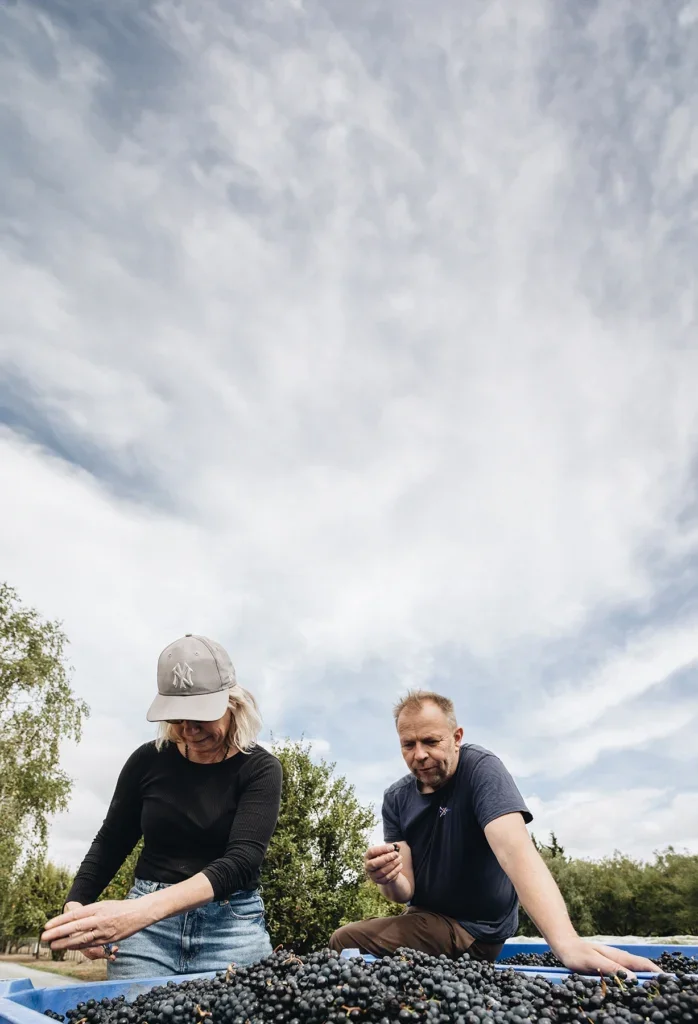
Masters had no issue with the DNA analysis itself, carried out by the AWRI’s Dr Anthony Borneman. The Abel clone first migrated across the Tasman to Australia around 20 years ago. As part of his project, Borneman genotyped six different samples of the clone, five of which were from Australia and one from New Zealand. Borneman told me he has genotyped up to 40 other different clones of Pinot, mainly French in origin, so had ample material with which to reference the Abel clones he was sequencing. The end results, he said, clearly placed Abel in a genetic sub-group that includes Swiss clones Mariafeld, D2V5, and D2V6.
That may have been enough for Bourke to dismiss the Abel smuggler’s airport confession as fiction. But Borneman himself took a “not so fast” stance. In a follow-up piece in Grapegrower & Winemaker, Borneman set out to address what he felt were instances where Bourke had “misinterpreted or over-interpreted” the genomic data. In the case of the Abel clone, he wrote: “The positioning of Abel within the Mariafeld genetic group does not totally preclude this material from being genetically related to vineyard material from within the Domaine de la Romanée-Conti vineyard or the broader Burgundy region. Indeed, additional pedigree work has shown that Australian “Bourgogne clones,” with origins supposedly in Burgundy but which came via Switzerland, are the most closely related material to the Abel clone sequenced to date.”
A conversation I had with Borneman during this period also raised this possibility: “The fact is, a lot of those old vineyards in Burgundy were likely mass selections, with diverse genetics.”
Masters, a dedicated and astute vigneron, was also perplexed from a qualitative perspective by the DNA results. She found Abel’s apparent close genetic adjacence to Swiss clone Mariafeld hard to fathom. She recently invited me to the winery to taste Martinborough-grown barrel samples of 100% Mariafeld (which is also present in the Ata Rangi vineyard) and Abel, both from the 2024 vintage. The Mariafeld was dark, inert, and inexpressive—barely recognizable as Pinot Noir. The Abel danced; it had both intensity and elegance. I agreed with Masters that from a taste perspective, they were chalk and cheese. She pointed out that differences in the vineyard were equally stark: “I can walk into a vineyard and recognize Abel immediately. Abel bunches have such overt shoulders—sometimes the shoulders can be as big as the main bunch. It’s so different from Mariafeld and others. Mariafeld also ripens later, usually at the same time as Merlot. It accumulates sugar well but will have massive TA (titratable acidity) and often lacks phenolic ripeness.”
More questions than answers
Where does all this leave us? With more questions for which there are no ready answers.
Was the man with the cuttings in his gumboot to be believed? He obviously knew something about wine to be bringing in such a cargo and to have told the story he did. But after his airport meeting with Malcolm Abel he vanished, never to be seen or heard from again. That in itself is odd. There can be little doubt he was a New Zealander. A different nationality would have been a detail Abel would have included when telling the story to Paton and others. Surely a Kiwi would have resurfaced to claim ownership of this significant contribution to the local wine industry? This international man of mystery is the weakest link in the chain. Nothing so far has disproved his story outright, but because we know nothing about him, a question mark hangs over his reliability.
Also less than reliable were the vine identification standards surrounding vine plantings in New Zealand 40–50 years ago. I spoke to Nick Hoskins, a New Zealand viticulturist with extensive experience of the Abel clone, who currently works at New Zealand’s largest vine nursery, Riversun. Also present during the early days of Martinborough and Ata Rangi, Hoskins recalls the chaotic, learning-on-the-job nature of the operations. The practice at that time was to source 12-inch (300mm) cuttings and plant them on their own roots, either rooting them in an onsite nursery or in some cases planting in situ. There was no paper trail nor even an ampelographic check (as there is today) on the vines from which cuttings were supplied.
Hoskins added: “I’m not surprised that this (the DNA analysis) has happened. In the future we’re going to find out more of these kinds of things. People think they know the origin of something and actually they don’t. The question we have to ask is: Is it that important? Abel plays a critical role in New Zealand Pinot, it makes an excellent stand-alone wine, and is likely the most widely planted clone in the country’s Pinot vineyards. This makes no difference to that, only to the story.”
Because we live in a world that likes to know and categorize, we are likely to find out more about the identity of the Abel clone during the years ahead. More testing using multiple samples from both sides of the Tasman (including from Ata Rangi) will give us a higher resolution DNA picture. The Abel story has a few more chapters to run yet. Hoskins is correct, however, in emphasizing how brilliantly the vine has performed in our South Seas archipelago. That is beyond dispute and, indeed, what matters most.


