


We could have started anywhere, the study of Pinot Noir being a broad church. As it happened, we started with an acknowledgment of the crucial role of country, a practice now common in Australia, New Zealand, Canada, and the United States. Jacqueline Dutton, professor of French studies at the University of Melbourne, opened the Pinot Noir & Identity Symposium with a formal acknowledgment of the lands where she lives and works, “lands that were never ceded by treaty or agreement,” paying respects “to the traditional custodians, elders and knowledge holders—past, present, and emerging.”
The practice demonstrates the respect held for the First Peoples and their connection to the country that they cohabit, and drew the gaze downward to place, the rich and complicated layers of history and geography, offering a fitting start to the consideration of terroir to follow. The symposium—which opened at St Cross College, University of Oxford, on July 10, 2025—was the inaugural event of the Pinot Noir Project, an interdisciplinary group of academics and experts in the field.
A year after the initial emails calling for papers, the last message received just before the symposium included a reminder of the requirement for an electronic travel authorization: “Nobody wants to get stuck in Border Control.” Since then, I’ve been thinking about how we regulate movement into and across our lands, and how we delineate and define land—how, for example, premier cru is not quite grand cru, though it could be contiguous.
I’ve been thinking about Pinot and place—or “placeness,” to borrow Andrew Jefford’s term for terroir. Any conversation on terroir is interested in the “here” that the wine seeks to express, encompassing fields and paddocks, climats and lieux-dits, wherever situate. I’ve been thinking about our points of reference and how we position ourselves.
Related
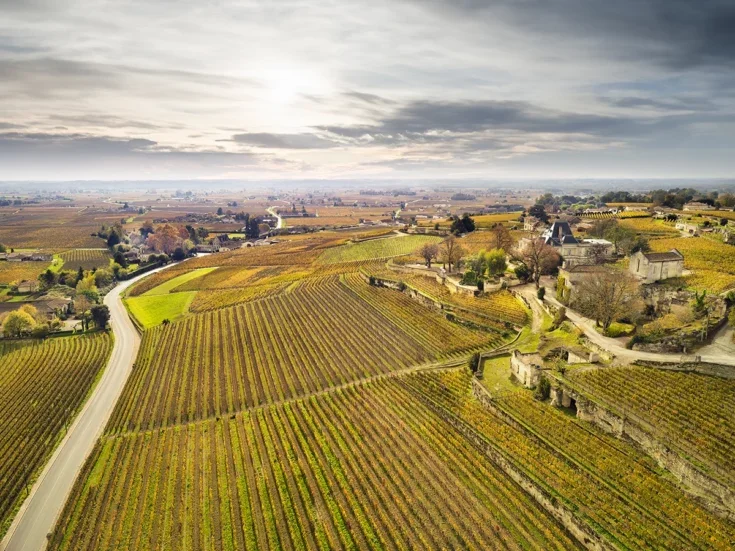

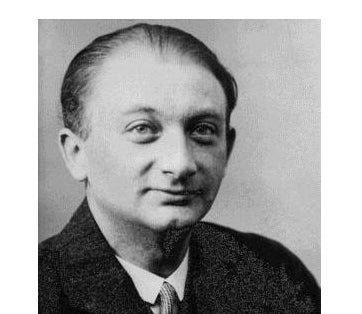
If you’ve been in France recently and watching the news, you’ll have come across a recurring term: outre. Newsreaders might say, outre-Atlantique, meaning the US, reporting perhaps on trade tariffs. They might pause briefly, before the next segment, outre-Rhin, Germany, showing footage of a handshake between Macron and Merz. Outre-Manche, “across the Channel,” in the UK, Macron and Starmer might be embracing as part of the rapprochement between European heads of state. Outre suggests “across” but seems to carry a sense of “away from the gaze centered on France,” whereas en outre means “furthermore.” The conversations on Pinot at the symposium were not limited to the Côte d’Or, so that Burgundy formed part of the debates and discussions that followed, without being held up as the benchmark.
Much of what has remained with me since the symposium centers around how the grape variety has been carried from one culture to another. Julie McIntyre’s paper, “Australia’s Pinot Noir Mothervine (MV6): Creating Historical Capital in a Settler-Colonial Narrative,” explored the lineage of “the noble ‘Australian’ Pinot Noir clone MV6 (Mother Vine 6, via Mount Pleasant, via the James Busby Collection, via Clos Vougeot).” Her research interrogated the paradox of the Mothervine identity, the simultaneous claims of Australian science and Burgundian ancestry, showing how this paradox “uses history, myth, and science to achieve a post-terroirist symbol of locality as a marker of distinction.”

A polymathic approach
Academics from science and the humanities shared their research; we considered questions and equations, even metaphors. On mythology, Marion Lieutet’s paper, “The Holy Grail Metaphor in Pinot Noir Narrative: A Mythical Pursuit of Perfection,” analyzed the use of the holy grail as quest leading to obsession.
Content from our partners

The symposium considered terroir that stretched across five continents—Asia, Africa, America North and South, Europe, and Australia (Oceania or Australasia). In the United States, we addressed California and Oregon (which, together with Burgundy and New Zealand, formed what was once considered “the Pinot Triangle”). We learned of developments in Texas, where 25 acres (10ha) are now under vine.
The symposium offered a polymathic approach to Pinot Noir. Research was gathered from universities in Bristol, Bath, Beyreuth, Geisenheim, Geneva, Dijon, Dublin, Helsinki, Hong Kong, Paris, Rome, Sheffield Hallam, Stellenbosch, Texas, and Zaragoza. Across three simultaneous strands of presentations—“Creating Identities,” “Producing Identities,” and “Consuming Identities”—papers were delivered by viticulturists and food chemists, sommeliers, sociologists, social scientists, social anthropologists, and others.
Economists from Cornell, Davis, Fribourg, North Carolina State, Oklahoma State, and Princeton universities were among the presenters. Several applied mathematicians contributed, including Dr Neal Hulkower, whose work focuses on applications of mathematics to wine. His paper offered “a soupçon of stem science,” tracing the history of whole-cluster fermentation in the Willamette Valley. Lawyers included maître en droit Tilman Reinhardt and Alessandro Monaco, postdoctoral researcher at the University of Bayreuth, who analyzed the legal identity of Pinot Noir in light of developments in biotechnology. They examined intellectual property rights, proposing new systems to define and label Pinot Noir. Dominic Buckwell, shipping lawyer and sommelier, presented on the aging process of Pinot Noir.
Authorities were cited from a wide range of sources. We considered viticultural innovations to combat climate change. Olivier Jacquet, research historian and executive project manager of the UNESCO chair Cultures et Traditions Vitivinicoles, shared the results of his archival research on the creation of appellation standards. Dr Graham Harding, cellar master at St Cross College, cited English writers on Burgundy in his paper, “The Most Perfect of All Known Wines: Burgundy in Britain from 1730s to 1930s.” Harding cited Thackeray on how Beaune “causes a man to feel a certain manly warmth of benevolence” and on how Chambertin “will set all your frame in a fever, swell the extremities and cause the pulses to throb.” He quoted Druitt on Volnay—“not a liquid plus perfume, but […] itself a liquid perfume”—and Collins on Clos Vougeot, “the king of Burgundies.” Scholarship in the form of artificial intelligence informed a research paper from the University of the Witwatersrand that was titled “Humanoid Robots as Storytellers: Preserving and Sharing the Cultural Heritage of Pinot Noir in Fine Dining Restaurants.”
Papers elucidated various expressions of Pinot Noir, from sparkling wine, to “Spätburgunder Wunder.” Tastings and sensory sessions were offered in addition to the lecture-theater presentations. On the palate, researchers from Toulouse Business School and the University of Vale do Itajaí, Brazil, presented on perceptions of Brazilian Pinot Noir. A multidisciplinary team shared its findings from the Hong Kong wine trade on sensory perception and acceptability of Pinot Noir from Switzerland, France, Argentina, and Brazil. Sonoma State University researchers Xiaoyu Feng and Kyuho Lee presented on interviews with younger Chinese wine consumers and wine experts in the Chinese market, including their use of social media, smartphones, and AI.

Pinot on its own terms
Elaine Chukan Brown’s keynote address offered an elegant examination of culture and place through the lens of French architecture in Vietnam. She demonstrated that when one culture is carried over to another as a process of colonization, the efforts fail to land. The transposed results stand out of place, failing to import or impart emotional resonance or historical or aesthetic significance, doing a disservice to both countries. The issue of dominance was central to the discourse, the attempt to import or impose notions of sophistication. The concept was transposed into the world of wine, exploring how references to “Burgundy” often carry limited or no meaning, other than for tasters, in the absence of a shared point of reference. The politics of art and culture informed and inflected the papers and debates to follow and invited questions of identity: how winemakers are not explicitly seeking to produce wine “in the Burgundian style”; how writers continue with descriptors such as “tastes like a fine Burgundy.” In fact, I recall a producer in Rioja indicating that they were aiming for a Burgundian style.
Many of the papers considered lexicons, even translations, that themselves offer a sense of carrying across, from one language to another. Many of the researchers were qualified translators. A question from the floor began, “As a linguist, I understand that if I ask a question, I lead the answer.”
Since the symposium, I have been reading, and writing, with those issues in mind: as tasters and writers, how we can best carry over descriptions of tastes or lands not necessarily experienced at first hand by a reader. If we consider terroir to encompass a sense of “here,” how might we invite readers into this space, where they can feel comfortable, even curious? How might we make “here” available to readers who might not be “here,” in the style of great travel or adventure writers such as Dervla Murphy, Patrick Leigh Fermor, or Robert MacFarlane? Lately, I have come to consider terroir as an invitation, rather than a line that may not be crossed.
Meg Maker, chair of the Circle of Wine Writers, presented a thoughtful discussion on the language of wine (a version of which will be published in WFW 91), examining the lexicons and motifs of wine writing, the tropes that often alienate readers and consumers, citing James Thurber’s gently mocking New Yorker cartoon, “It’s a naive domestic Burgundy without any breeding, but I think you’ll be amused by its presumption.” Maker, who lives in the United States, outlined the rise of American wine publications, from mainstream newspaper columns, starting with The New York Times column in 1972, to Wine Spectator, Parker’s The Wine Advocate, and Wine Enthusiast. Maker discussed gendered descriptors, a subject developed further by sociologists, anthropologists, and others at the symposium. She cited wine writing styles from classical or traditionalist, to analytical and scientific. We considered the Wine & Spirit Education Trust (WSET)’s Systematic Approach to Tasting as an evaluative tool. We discussed the balance between objective descriptions, how “the inside of my grandmother’s handbag” might bring a description to life. (This brought back WSET diploma days, when we were warned to stay well away from anything approaching Granny’s handbag.) We considered the work of Dr William Kelley, who holds two degrees from the University of Oxford, now editor-in-chief of The Wine Advocate. From Kelley, we segued to Jermaine Stone, an American wine educator, producer, and impresario, who incorporates hip hop into his work. Stone describes himself as “the lost son of Burgundy.” Of Fat Bastard Pinot Noir, he pronounced, “I feel like there’s definitely some rebellious energy here.”
Maker’s paper considered how wines were personified, anthropomorphized, and gendered—themes also taken up later in a lively presentation by husband-and-wife academics from the universities of Rome and Helsinki, titled “Intersecting Pinot Noir: Applying Sociological Secateurs to a Grape Variety (Which Doesn’t Deserve Such Ignominy).”
Jasper Morris MW’s address started out with his student years, tasting at the University of Oxford, leading to a lifetime in Burgundy. The keynote included, but was not limited to, Pinot pageants and celebrations, collaborations and collective learning, and the exchange of stagières between Burgundy and Otago. He cited with approval the initiatives beginning with the Steamboat Pinot Noir Conference in Oregon that inspired New Zealand’s Southern Pinot Noir Workshop held at Hamner Springs. Such is the importance of the Hamner Springs gathering that every time I hear winemakers mention it, the same two comments always follow: The press are excluded, and you leave your ego at the door. Morris made mention also of the innovative work of Jim Clendenen of ABC on California’s Central Coast, Domaine de la Romanée-Conti, Becky Wasserman, Henri Jayer, Clive Coates MW, and Anthony Hanson MW; harvesting before phenolic ripeness, pigeage as a dying practice, and dying declarations.
Morris emphasized that Pinot is not limited to one style or expression, winemakers now seeking to make the best wine in their area. He cited Nigel Greening of Felton Road, Central Otago, on how Pinot is not a competitive sport. He mentioned with approval Greening’s T-shirt bearing the hieroglyphics depicting Heisenberg’s uncertainty principle—the quantum physics concept that Greening claims drives everything in the universe, and in Pinot. We considered the potential of discovery that leads us further.
Since July, I have found myself thinking more than ever about place and provenance, place and terroir, place as “here,” and where we position ourselves. I’ve retained an image of an image during one of the presentations that appeared to show the sun rising. The audience’s perception was corrected: The planet is in motion, spinning around the sun; the image showed us sinking, the sun remaining in situ.
As temperatures rose to 86°F (30°C), we continued beyond the Bodleian, beyond the Ashmolean Museum, to St Cross College, a meeting point to consider Pinot. We talked of place and patrimoine, we remembered those who went before us, we considered ancestry and heritage, lineage and learning. Our focus was not limited to, but neither did it exclude, Burgundy. We considered the rich and complicated pattern of terroir, which continues to reconfigure: beyond triangles, beyond borders. Our explorations carried us beyond outdated binaries: Old and New Worlds, established and emerging regions, masculine and feminine. We tasted Pinot no longer considered “in translation,” “in exile,” or “in diaspora,” Pinot on its own soil, on its own terms, even on its own roots. We considered Pinot as a place to meet. We celebrated Pinot and its ability to transport us.
A further Pinot Noir symposium is planned for Burgundy in 2027.


