

I have long been a fan of Château Cantemerle. A previous owner, Caroline de Villeneuve, is a historic heroine of Bordeaux. The feisty 70-year-old fought to include the property in the 1855 Classification at the last minute. It was added in September 1855, months after the original document was released.
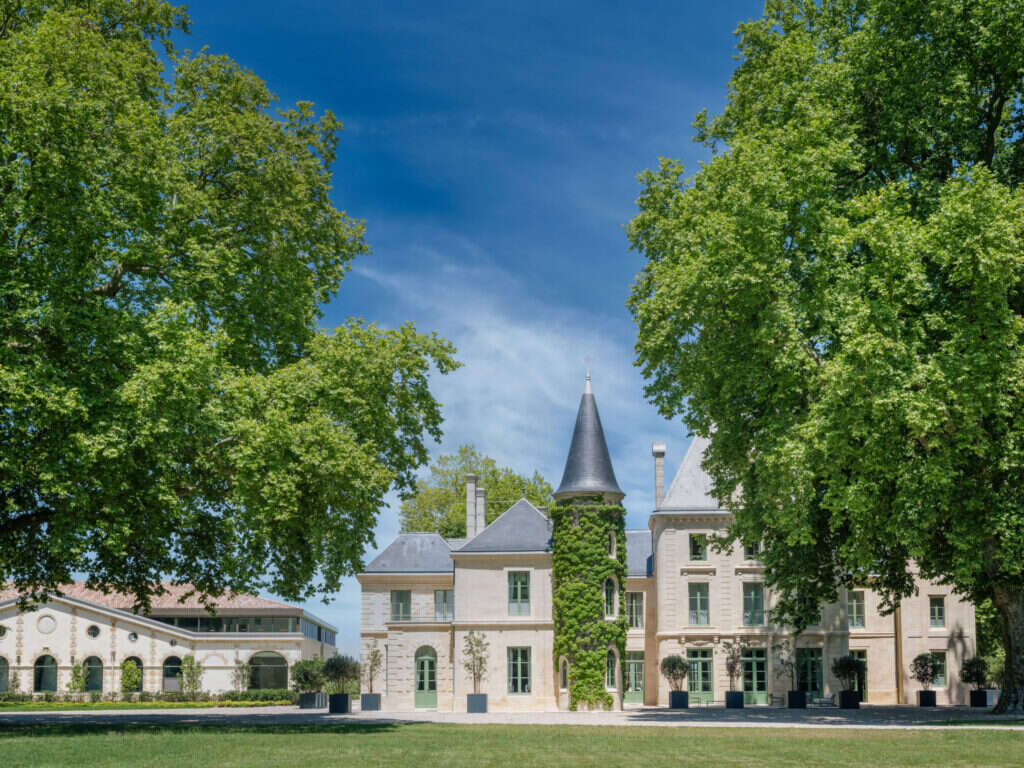
The property brings together so many things that define the best of Bordeaux: the long and fascinating history, the amazing gravel terroir, fabulous architecture, an integrated approach to sustainability, delicious wine at a sensible price… And today it is run by another dynamic woman, Laure Canu.
In the prestigious appellation of Haut-Médoc, it’s a large property—20oha (500 acres)—half of it dedicated to vines. It makes a lot of wine, averaging 600,000 bottles, of which 70% is the premier vin, Château Cantemerle Grand Cru Classé of Haut-Médoc. Size does matter, meaning the wine can be found in the world market, making it easier to build recognition. Size and availability also contribute to the sound value for money. It is, after all, an 1855 classified wine
Despite its location in the south of the Médoc, so close to the city, it wasn’t always easy to visit. Now, thanks to a three-year renovation, that has changed. Not only have the cellars been transformed and the château renovated, but there is a whole new approach to wine tourism.
Related
Timely
Château Cantemerle is one of the oldest properties in the Médoc, dating back to 1147, with vines planted there as early as 1354—that’s nearly 700 years of wine production. But it has not always been smooth sailing over the centuries.
The original château was about half a mile (1km) farther east than it is today; a medieval fortress built on a motte féodale,
a fortified hill in the low-lying palus near the Garonne River before it reaches the Gironde Estuary. This was part of the fortifications keeping the French at bay (back in the days when Aquitaine was under English rule).
The original château was demolished during the French Revolution and everything transferred to Sauves, an agricultural outpost of the estate. This became the property we see today.
Content from our partners
The Villeneuve family owned the estate from 1579 to 1892, when Caroline de Villeneuve won what was possibly the first legal wine-trademark battle with her neighbor and joined the 1855 Classification at the last minute. Later, land was lost to the construction of the railway that runs from Bordeaux to Soulac-sur-Mer in the north of the Médoc, and the property was badly affected by phylloxera in the 1860s.
It remained in the hands of the family of Bordeaux négociant Dubos for almost 100 years, until 1980, when it was purchased by the SMABTP. It was the very first of many insurance companies to invest in Bordeaux vineyards. It is also the owner of Château Grand Corbin in St-Emilion.
Cantemerle was a very different property in the 1980s—only 20ha (50 acres) were under vine. It immediately began replanting, adding 33ha (82 acres) within two years, reaching 67ha (166 acres) by the 1990s, finally bringing the property back to its historic size.
In 1997, it changed the encépagement, in both vineyard and winery, using an innovative and successful “chip-budding” technique to graft Cabernet Sauvignon and Petit Verdot onto Cabernet Franc rootstock. Today, some 68% of the vines are Cabernet Sauvignon, with an average age of 40 years.
Renovation of Château Cantemerle
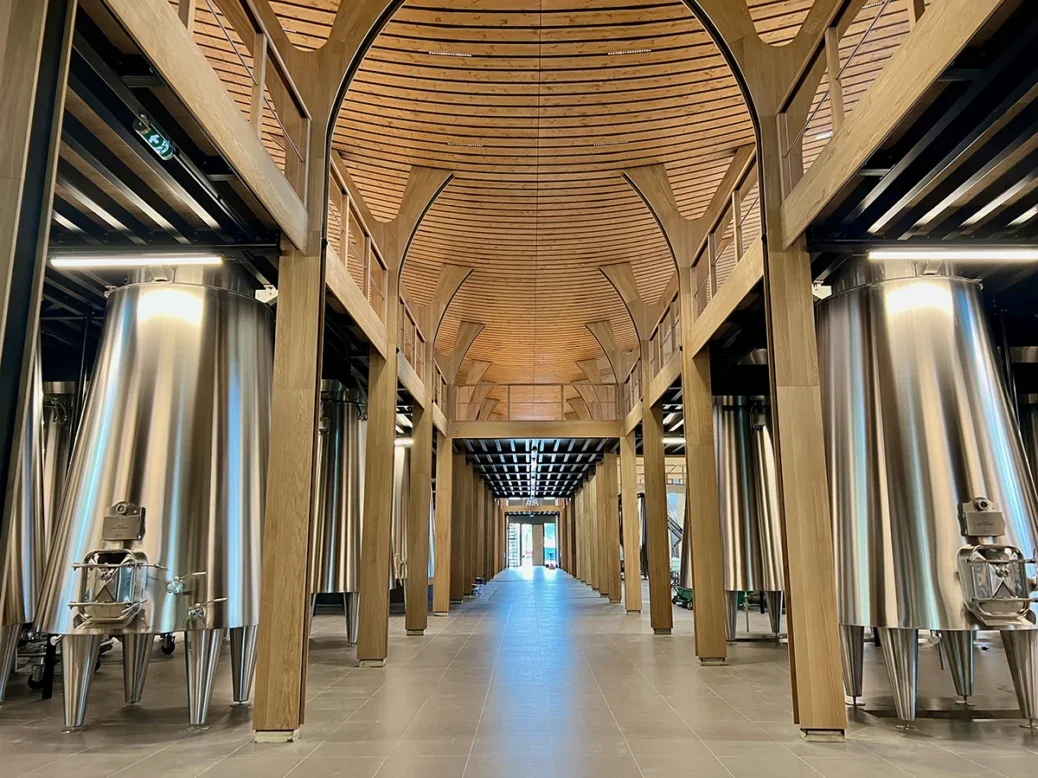
Since 2001, most of the investment has been vineyard-driven. But more recently, with more than 90ha (222 acres) in production, it was time for another look at the cellars. The project started in May 2022. Local craftsmen and builders brought this huge, three-year project in just in time for the 2025 harvest. I visited early in September, as the renovations were finishing and days before the first grapes arrived in the new cellars. It was all hands on deck.
The surface area of the vat room has tripled, and the whole renovation covers 140,000 sq ft (13,000 sq m). As many as 114 vats have replaced the 40 dating from the 1990s, including some very clever, split stainless-steel vats. The cellar receives grapes from 140 microparcels across the 90ha, into a space that is designed for the team, using daylight to maximum effect.
The new design increases both speed and efficiency; the team can now receive 4 tons of grapes an hour, a flexibility that allows each plot to be picked at just the right time. One-ton cuvons (hoppers) move the grapes rapidly into the relevant vats, using lifts for gravity flow and Air Pulse for effective, energy-saving and gentle pumping-over.
The underground barrel cellar stays cool thanks to a natural water-cooling system, and Médoc-based Maison Juste had the original and sustainable idea of recycling used barrel staves to create a stunning soundproofed ceiling. Do be sure to look up when visiting.
Cantemerle: What’s in a name?
Merle is French for blackbird; these birds, known to relish ripe grapes, gave the name to the “black” Merlot variety. And cantemerle is the song of the blackbird—appropriate for a property deeply invested in protecting its unique natural environment.
Almost 30ha (75 acres) of woodland and park surround the château buildings. Originally laid out in the 18th century, it was redesigned by French botanist Jean-Bernard Fischer, who also designed the Jardin Public in the center of Bordeaux. It’s a clever marriage of elegant parkland and wild woodland. Bridle paths run through the park to water features and open up to beautiful vistas.
Ancient trees include a magnolia and intertwined plane trees, known as les jumeaux (“the twins”), dating from the 1800s, and possibly planted by Caroline de Villeneuve in memory of her husband and son. There’s also a 450-year-old yew tree, hinting perhaps at a distant religious history.
A survey found that the park is home to more than 150 different species of plants and animals, including ten species of bats, deer, rodents, and less welcome wild boar, which leave their signature uprooting on the lawns.
Determined to preserve this precious biodiversity, quality and environment manager Alice Baudouin oversaw a seed-collection program of the endemic species. Preserved and cultivated, these have been used to create eco-corridors throughout the large vineyard as part of their agroforestry project.
The château has a kitchen garden for in-house entertaining and staff, some of whom are trained beekeepers and look after the hives. As well as producing delicious honey, the bee population is a key indicator of biodiversity. There are château chickens, and children of the staff have created bird boxes in the park.
Come visit
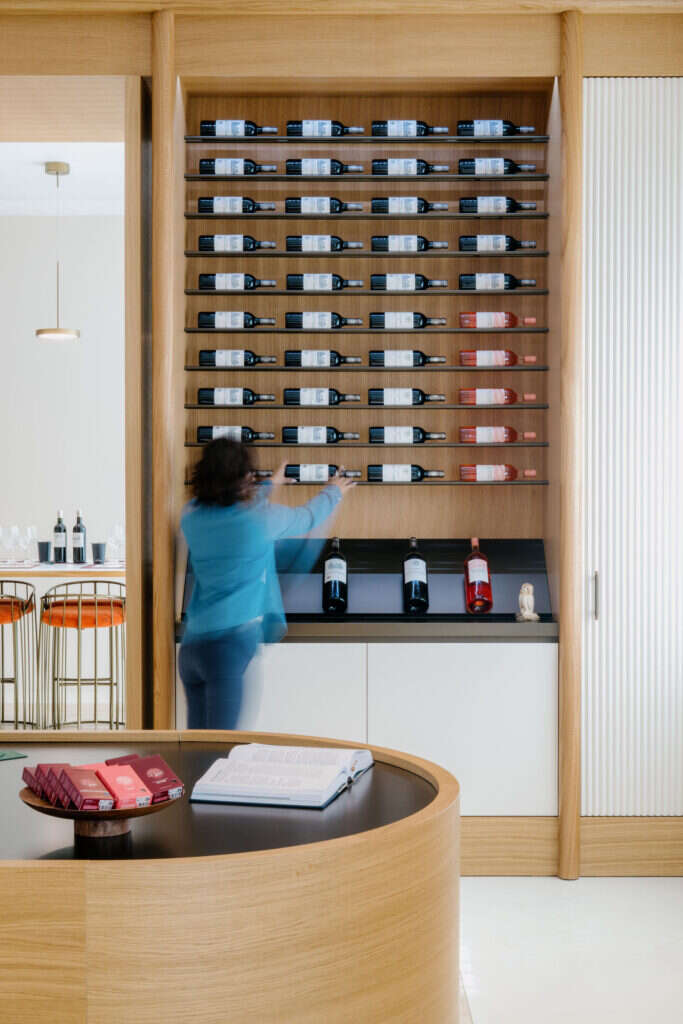
This natural environment is fully integrated into the new tourism philosophy. Alongside visits to the stunning new cellars, guests are invited on a trail through the grounds to highlight this biodiversity. A wooden vat from the old cellars, installed at the center of a labyrinth, has been transformed into a wildlife observation station and tasting platform. Bamboo tunnels and giant waterside ferns make for an enchanted discovery as guests wander through the woods and park. Children love this tour and are encouraged to look out for deer, squirrels, rabbits, and birds, including the rare golden oriole.
The bees aren’t the only ones enjoying the flowers. Local herbalist Babette Poncet creates herbal teas, or tisanes, from flowers and plants collected in the grounds. She invites guests to join her in an aromatic experience that awakens their senses for the wine tasting. Young and old discover where therapeutic plants are hidden, allowing everyone to make their very own take-home tisane. Further senses of sight, touch, and smell are stimulated in the immersive shinrin-yoku forest-bathing experience, the perfect preparation for a mindful tasting.
Guests can taste the wines of Château Cantemerle alongside the wines of Right Bank sister property Château Grand Corbin in St-Emilion.
Original food pairings with delicious and unusual specialties offer a fun way to test the palate. These locally produced foods are also available to take home or for creating a picnic to enjoy on the terrace or in one of the park’s clearings.
The château champions local creators, showcasing their wares alongside the wines. The château honey and tisanes are sold alongside local veggie-based spreads and pâtés. Creations by ceramics artist Erwan de Rengervé are on show throughout the château, and his interpretations of vines and vine leaves are available for sale in the boutique, alongside local author Camille Piantanida’s engaging books and illustrator Clémentine Sourdais’s coloring books.
As well as the tutored tastings, the wine bar serves wines from both properties by the glass. Feel free to linger and discover. And while parents taste the wines, the younger generation have their own Pause Raisin et Dessin, a grape-juice and coloring activity inspired by Clémentine’s illustrations.
The property is open Monday to Saturday, with bookings recommended. And don’t forget to look up!


