Andrew Jefford looks back on his friendship with Peter Hall, a relationship that developed over 36 years of visits to Hall’s magical Sussex farm, Breaky Bottom.
The friendship had a beginning: October 1, 1989. That was the still, misty day I first left the Iford Road that runs from Lewes down to Newhaven, bumping and lurching in an old Vauxhall Astra over the brow of the South Downs on the deeply rutted white track that leads to Breaky Bottom. Now the friendship has an end, 36 years and one day later: Peter Hall died at 1:30 am on October 2, 2025. We last embraced on the afternoon of May 12. I walked afterwards, in sunlight, back up the track to the South Downs Way. From there through flint-strewn fields and across springy downland sward to Kingston, past Ashcombe Windmill and down through a strip of woodland to Lewes: the walk had become a kind of annual pilgrimage, first gifted by the hygienic scruples of Covid. Peter’s life was celebrated at Breaky Bottom Farmhouse with family and friends on Hallowmas; now he rests. We’re sad to have lost him, but that rest is richly deserved. Here’s why.
Beauty and bravery
Climate change is redrawing the global wine map. The cartography will often be brutal, the cartographer’s pen dipped in red ink. Not in the United Kingdom. There the ink is all green, the new circumscriptions expansive. Climate regimes move fitfully but, since I first met Peter, winegrowing in southern England has been meteorologically transformed. The eccentric and often losing battle to make imitation German wine is history. England now offers Europe’s most promising new cool-climate viticultural scene: accomplished sparkling wines; fresh, slender, and shapely still wines. When Peter Hall and his first wife Diana planted their Sussex downland vines in 1974, it contributed to a national total of less than 500 acres (200ha). It’s now almost 12,500 acres (5,000ha) and rising. 1.4 million vines were planted in English soil in 2021 alone.
Peter Hall played a leading role in that transformation. Not because he was an organizer and committee man; not because his 6 acres (2.5ha) ballooned to cover hillside after hillside; not because he became a virtuoso winemaker or sales impresario, campaigning for English wine on six continents. Indeed, he spurned committees, never coveted more land, and hardly ever left Breaky Bottom. He called himself a recluse and a hermit; I’ve never met a winegrower with a smaller carbon footprint. Our friendship unfolded almost entirely in little Breaky Bottom valley.
Related
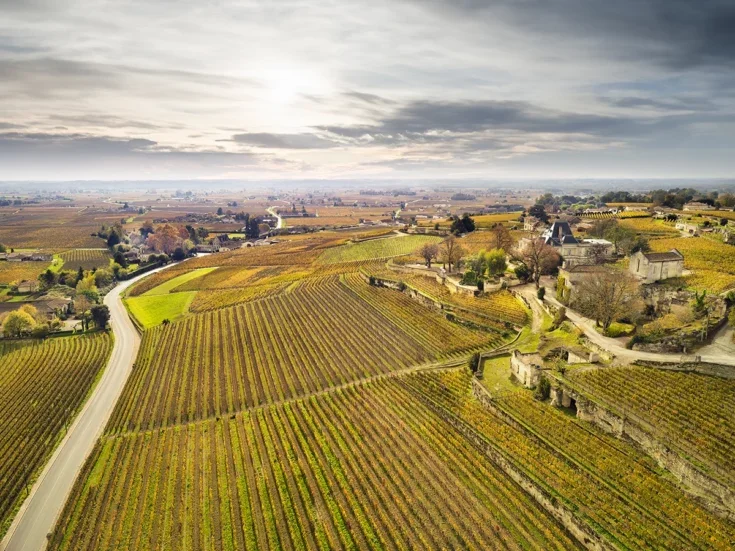
But for other reasons. First, he had vision; he flew high. He never wanted or tried to make imitation German wine, early harvested for safety, deacidified, then given a mawkish palatability with süssreserve. He wanted to make fine, pure, vinous dry white wine for the table by dint of late picking, still initially and later sparkling; the kind of wine the French half of his family had drunk all their lives, and that his maternal grandfather Alex Mercier would have served in his Soho restaurant, Le Petit Savoyard, on the eve of World War I. That was what he crafted when I first met him, using the hybrid Seyval Blanc vines he never ceased to champion. Later, after it became clear during the 1990s that England’s principal vocation would be for sparkling wine, he was determined that Breaky Bottom’s iterations, drawing on the Champagne variety trio as well as on Seyval, would be wines of finesse and elegance. Here it was possible. The vines were rooted in chalk a few miles inland from Newhaven, nourished by gentle sea air and pearly light but screened from England’s boisterous winds by the environing downs.

He didn’t just want to make beautiful wine, though. Peter was born in a house with 21 rooms in Gloucestershire; he’d grown up in some style in Notting Hill and later Fenplace Mill in Sussex; his father was a nighttime novelist and story writer; he’d fallen in love with Schubert as a lad of 12. This self-taught winemaker had a finely honed sense of aesthetics: bottles, labels, even boxes were all forever dignified by the Reynolds Stone lettering he confidently commissioned in his first four years as a winegrower. They also bore the Hall family motto Lex est ratio summa—Law is the highest reason. [I]nsista in natura, continues the original Cicero quotation, quae iubet ea quae facienda sunt, prohibetque contraria: “rooted in nature, which commands things that must be done and prohibits the opposite”: fine sentiments for a winegrower. Virginia and Leonard Woolf’s Monk’s House is nearby in Rodmell, and the spot along the banks of the Ouse where Virginia waded in 1941 into chill March water, her coat pockets stuffed with stones, lies less than two miles from Breaky Bottom Farmhouse. Vanessa Bell and Duncan Grant’s Charleston Farmhouse sits another seven miles along the Downs, at Firle. The graceful Bloomsbury aesthetic always seemed to be blowing over those hills to Breaky. Peter wanted to make beautiful wine, but he also wanted to make wine beautifully.
And courageously. “I am a pauper. That I promise you,” were almost his first words to me on that day I arrived in October 1989, after zero crop in 1987 and only 1,000 bottles in 1988—and with four children to feed and clothe. “I rejoice in it.” Setback after setback checked Breaky Bottom, from the sulfuring error that ruined his first crop in 1976 (entrusted to a contract winemaker), through four major floods, spray-drift catastrophes, bird and badger damage, repeated devastation by hordes of pheasants released by others for the pleasure of recreational assassination, and finally (when replanting was possible) the delivery of invisibly disease-infected vines.
Content from our partners
I never saw Peter cowed or daunted, though absorbing any combination of these blows without riposte would have ended winegrowing at Breaky Bottom. He had to fight back. Fight he did, pugnaciously and repeatedly, by recourse to the law which (when meagrely funded) is a poker game with blood-draining stakes. He came to play it well, with immense patience, but I was always terrified for him. For Breaky Bottom, lex truly was ratio summa; it saved the vineyard repeatedly.
Meditation, celebration, mystery
After the worst of the floods (in October 2000), Peter and his second wife Christina lived in a caravan for just over two years, winter and summer. Bloomsbury aesthetics aren’t possible in a caravan; life is necessarily squalid. We drank wine together on a table in the sheep shed. Peter and Christina could have driven over the hill, tossed the keys at a land agent, and moved to a warm flat with a bath and no condensation on the windows. It was, of course, never an option. At the age of 31, Peter had decided that he was on earth to make beautiful English wine. That was what he was going to do. He was still doing it with almost his last breath, throughout spring and summer 2025, directing helpers from his armchair, baccy tin to hand. We both loved Shakespeare. Peter was determined to die like Macbeth: “Blow, wind! Come, wrack! / At least we’ll die with harness on our back!” This made life difficult for his children (who would have loved to help) and for his assistant viticulturalist and winemaker Louisa Adams, but Peter died as he had lived: as a working English winegrower.
Neither vision nor courage, though, would have ensured success, and even the beautiful wine that Peter learned to craft would not have been enough, on its own, to make Peter into what he was: the father of the contemporary English wine scene and England’s emblematic vigneron. He became these things because everyone loved him, as I did. That love brought fame. We all loved to visit him, talk to him, film him, and interview him, photograph him, write about him. He was charismatic: an extraordinary person in a magical place. Simply driving over the long and bumpy track that led to Breaky Bottom had a Narnia-like quality of passage to another world. The rattle of tyres or boots over the cattlegrid at the top of the hill was its fairy music. Iford Road is boring, muddy, and messy; delivery vans drive it too fast. Step out at Breaky Bottom 15 minutes later, and you found yourself in an enchantment of elderflower and chestnut trees, of vines and sheep with names, of lights glowing in a pretty flint house, of calling owls, of harvest feasts, of books and poems read out aloud to children by firelight, of a 19th-century barn where the owner presses his harvest to the sound of Don Carlos live from Covent Garden.

True, Peter liked to call himself a recluse or a hermit, but he never scuttled into a ditch at the sight of a visitor, as Jacques Reynaud of Château Rayas in Châteauneuf-du-Pape used to do. Instead, he’d entertain them for several hours, expansively, his conversation a tour de force of allusion, of imitation, of jokery-foolery, of learned digressions and trivial tangents, of teasing, of gallantry. He could find common ground with anyone; his culture was broad and juicy with relish; he tolerated most faults save pomposity. Inevitably Peter became celebrated; his vagabond chic (cap, neckerchief, striped shirt) almost became a brand; his tanned, white-framed, ruggedly noble features lent rakish, cinematic allure by the smoke from his Old Holborn roll-ups. In his heyday (and it lasted well), he was a fine figure of a man.
I loved him for all these things—but also for being the antidote to the place that the wine world was becoming. Wine was getting grander and grander, becoming more and more expensive, beginning to stagger under its carapace of luxury, through all of those years when Peter was fighting to stay in business because the pheasants had gobbled up his grapes, or because wide, steep, hedgeless swathes of former downland sward had been plowed for cereals and could no longer hold their autumn rains. Everyone was excited to meet him, to taste at the yard table and to bask in his rustic glamor, but the truth was that his life was a long struggle, one of extraordinary labor, often mentally stressful, and filled with the repetition of physical work. He was up at 5:30 most mornings, and often back in the vineyards at dusk, too, always uncomplainingly. Work for Peter was, according to his daughter Kate, both a meditation and a celebration; he welcomed its arduous embrace. “Go deep,” was another family exhortation; he had no time for sloppiness or dilletantism. “Leave room for the mystery” was a third: Peter had stood outside under the stars often enough to be intimate with human insignificance, to revere the magnificent arrangements underfoot and overhead, and to cherish the awe they inspired. All this was true; all this was real; all this was what his family and friends knew of his life; all this was the tide he swum in, the life he lived to the last.
Perhaps it’s universal; perhaps it secretly lies behind the luxury, too; but this was where I came to know it best and, a scruffy poetry-loving recluse at heart myself, felt most at ease with it. All this is what I will miss.