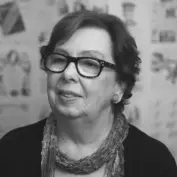
Elin McCoy reviews The Wines of California by Elaine Chukan Brown.
Did you know that during Prohibition the Colonial Grape Products Company in California produced “sherry” for the Campbell Soup Company to use as flavoring in their canned soups?
Or, much more important, that exploited Indigenous peoples were central to the beginnings of the California wine industry?
These were among the fascinating revelations I savored in Elaine Chukan Brown’s The Wines of California, one of the latest volumes in the esteemed Classic Wine Library series published by Académie du Vin Library.
Related
Every generation sees wine through a new, contemporary lens. And writer, speaker, and wine educator Elaine Chukan Brown—who lives in California wine country, blogs at Hawk WakaWaka, and is a former professor of philosophy—turns out to be an ideal person to bring current sensibilities to the task, with deep, nuanced intelligence and admirable clarity. Their (Brown identifies as non-binary) meticulously researched book trains a candid spotlight on long-ignored aspects of the state’s often unsavory wine past, offers a detailed description of its regions and wines today, and predicts where it is headed next.
Brown centers the underlying identity of California’s wines—rightly, I think—in the ethos of the California gold rush, a story of discovery, economic promise, and hope. “California,” writes Brown, “is about believing luck, innovation, and hard work can convert impossibility into the next great industry.” Add to that a devil-may-care curiosity and the willingness to experiment and risk everything on a dream.
What makes this dense, weighty (in all senses of the word) 468-page The Wines of California such an essential read, though, is the depth of political and social context Brown layers into the wine scene. It includes the kind of social justice and environmental topics most books on wine leave out: immigration, the rise of DDT and the fight against pesticides, the farm workers movement, labor negotiations and union contracts, the influence of the freedom movements of the 1960s and ’70s, and how recent diversity initiatives have opened the wine world to new audiences.
Content from our partners
The book is arranged in three parts. Part 1, How We Got Here, looks at the past; Part 2, Where We Grow, is the longest section and core of the book, resembling a more traditional wine guidebook; and Part 3, What We’re Facing, is an extended meditation on challenges for the future.
In fact, the three sections might almost seem like three separate books. But what I eventually realized is how much they build on one other to give the most complete panorama yet of California wine today.
The Wines of California: Multifaceted and original
Let me start with Part 1. This covers everything from the first planting of vines to the 2024 election of Donald Trump, as well as railroads, gold (of course), water, land, wealth, and people exploiting others. If you think you know a lot about California wine history, you will find plenty of stories and information that are new to you, as I did. Brown’s background as a professor has surely influenced the way they weave together diverse historical facts into causal explanations for how the California wine industry evolved the way it did. I sometimes felt that I was reading a series of engrossing lectures, helped along by timelines of key dates.
As an example, I think of how Brown manages to tie together several US government actions during World War II that are unrelated to wine yet weirdly ended up improving wine quality. One was price fixing to protect the economy, which changed the way wine did business. At the same time, regulations mandated that railway tanker cars could only be used to transport oil, not bulk wine, a restriction that pushed producers to estate-bottle their wine, and this, too, boosted quality.
In a similar way, Brown explains, the farm worker movement and freedom and peace movements of the 1960s and ’70s led to “a broader back-to-the-land ethos” that caused the expansion of smaller, family-run wine estates, the planting of additional vineyards, and organic farming.
The section ends with where we are now, in a time of global turmoil, with wildfires, the impact of Covid, tariffs, economic distress, and much more.
What feels most original is Brown’s laser beam on the importance of Native Americans to the development of the wine industry, a theme that runs throughout the book. It’s a recognition that’s long overdue. Maybe it’s not surprising when you consider that Brown is Inupiaq and Unangan-Sugpiaq—that is, Indigenous from what is now Alaska, from a family of salmon fisherfolk. The first hundred years of wine growing depended heavily on Indigenous vineyard workers, subjected to forced labor and taught by the Franciscan monks, and a deep anti-Native racism that was a part of the system. In fact, in all their writing and speaking, Brown has long stood against these kinds of injustices.
Part 2 of The Wines of California, Where We Grow, is a 200-plus-page guide to the soil, weather, geology, altitude, wind, and climate in the state’s 154 American Viticultural Areas (AVAs), the US’s version of an appellation system, with a selection of producer profiles and their wines for each. This is the section that most wine lovers will turn to for information, and there is plenty of it. Brown is up to speed with the latest trends, and the writing has a pell-mell quality, as though they are rushing to pack in as many details as can fit. Helpful boxes throughout—such as the ones on the San Andreas Fault, the Historic Vineyard Society, the Paris Tasting, and grape whisperer Ruben Solorzano—slow you down and offer more depth.
Each region is accompanied by a box encapsulating what it’s known for, when the first vines were planted, the first peoples who lived there, and so on. What I loved were Brown’s often amusing “lesser-known strengths” asides; for Monterey County, they include “prior home of Salvador Dalí, Jimi Hendrix, Joan Baez, and Doris Day,” a truly diverse mix. If they all had dinner together, what would they have been drinking? I’m still pondering that. Southern California’s hidden strengths, it turned out, are “T-shirts and shorts on roller skates, psychics.”
But while much of the information on AVAs is comprehensive, I would have liked more info on the character of various grape varieties. I was disappointed that so few producers were profiled, as well as puzzled about Brown’s rationale for which to include. Many, of course, are icons that have been influential in making the industry what it is today—for example, Ridge Vineyards in Santa Cruz, whose winemaker Paul Draper is known around the globe.
But many other key players are missing. Where is Napa’s Chardonnay powerhouse pioneer Kongsgaard, one wonders? Only a handful of the new producers making stellar wines is mentioned. Among my other quibbles, I wish Brown had included the date when the wineries were founded. Many profiles are short, basic, and straightforward, and I liked best those such as Bedrock and Ryme Cellars in Sonoma County for which Brown shared personal insights on the winemakers. Of those with tasting notes—and not all have them—
the same descriptors, especially “mouthwatering,” are used over and over, a clue, presumably, to Brown’s personal taste preferences.
The maps are clear and easy to navigate, if a bit basic. There are photos of a few winemakers, but they’re snapshots rather than glossy images. In fact, the design—like that of other Classic Wine Library titles—looks more academic tome than flashy, highly illustrated consumer wine book. I would have liked to see more of Brown’s own charming tasting-note drawings, which I first saw at a seminar about tasting-note language titled “Pinot Noir and the Doors of Perception” during the International Pinot Noir Celebration in Oregon. Brown came down on the side of the poetic and holistic. Their hand-drawn examples are like visual wine haikus, with imagery of color and fruit and phrases like “smashed cherry” and “juicy crunch.” One for a vertical tasting of Ridge Vineyards Monte Bello appears on p.200.
A thought-provoking classic
The final section of the book, “What We’re Facing” looks to the future and how winemakers can navigate everything from generational change, through the anti-alcohol movement, and to the most pressing issue for wine everywhere: climate change. Brown does an excellent job analyzing today’s market and helpfully points to wineries that have come up with imaginative solutions. It reads like a very long keynote address to wine-industry players on business strategies of how to survive in the coming decades.
But—and this is a big but—I wish Brown had shortened this last section and increased the number of wineries covered in Part 2. I’m happy, though, that they left in several appendices and an extensive glossary and index, with which most wine books no longer bother. Especially valuable for consumers are the ones on sustainability certifications, which very few understand, and the list of the 154 AVAs with their main grape varieties.
This book made me nostalgic as I reflected on how much the California wine world has changed and vastly expanded since I first coauthored a book about American wine in the late 1970s. That was the era when much of the industry felt like a startup, rising out of nothing but the dreams of individual small producers aiming to make great wines and gain recognition for them.
Now, as Brown lays out so clearly, is another time of what seem like insurmountable problems. “But if the history of California wine demonstrates anything,” Brown writes, “it is the power of the state’s people to innovate.”
An ambitious, thought-provoking book, The Wines of California is a new classic for you to read and add to your bookshelf.
The Wines of California
Elaine Chukan Brown
Published by Académie du Vin Library; 468pp; $47.50 / £35