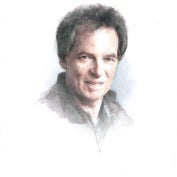
A performance by the Japanese pianist Mitsuko Uchida prompts Harry Eyres to muse on the sublime in art—and wine.
Not long ago I received a message from a wine friend in Singapore, who also happens to be chair of the Singapore Symphony Orchestra, saying he was coming to London in a few days and had a spare ticket for a recital at the Wigmore Hall. It was one of two concerts in which the great Japanese pianist Mitsuko Uchida was playing the last three Beethoven sonatas, Op.109, Op.110, and Op.111. Being an ardent Uchida fan, I jumped at the chance. My friend wrote to me after the concert and said, “I think we were in musical heaven.” I agreed but felt the journey Uchida had taken us on had encompassed the profoundest depths of sorrow—in the arioso dolente of Op.110—as well as gruff defiance, then joy and exaltation, the state beyond words that Beethoven reaches in the arietta of Op.111. At the end of Uchida’s radiant performance of Op.109, I turned to my friend with a single word: “Sublime.”
I feel rather strongly that the word “sublime” should not be overused or trivialized and perhaps, to risk sounding pedantic, should be reserved for certain specific kinds of experience, most often related to nature and art. This was clearly the view of certain 18th-century philosophers, especially Edmund Burke and, following on from him, Immanuel Kant and Friedrich Schiller, who wrote extensively on the subject. They took pains to distinguish the sublime from the beautiful. The beautiful gives pleasure because of qualities such as harmony, symmetry, and order; but the sublime goes beyond all that and may induce feelings of awe and even terror, rather than pleasure. Schiller defined the sublime as a “compound of unease, expressed in the highest degree as terror and joy, capable of intensifying to delight, and although it is not really pleasure, it is much preferred to pleasure by fine souls.” According to Kant, the locus of the sublime is not so much “out there” as in our minds, and related to the fact that we can live with and not be overcome by the infinite vastness of the universe and power of nature.
Uchida’s performances of Op.109, Op.110, and Op.111 were sublime because she did not aim primarily at aesthetic pleasure, at least not for its own sake, but at contacting and transmitting the molten, volcanic core of the music—the passion at the heart of it. This involved being utterly fearless and taking considerable risks. The risks nearly always paid off, but even when (once or twice) they didn’t, this listener, at least, felt moved and exhilarated that she had taken the risk rather than playing safe. But even to suggest playing safe with music such as this is to sound quite ridiculous. Can you play safe with a tiger or a volcano?
Related
Risk, reward, and the sublime
How, you may be wondering, does any of this relate to wine? Can a wine transcend the merely pleasurable and attain something approaching the sublime? This is connected to the wider question of whether we can consider wine to be an artform but is somewhat more specific. And because of the fact that if wine is an artform, it has more of the “natural” and less of the human than most other artforms, this question encompasses both the non-human origins of the wine and the human actions of the wine grower and/or winemaker. But here we will focus on the latter.
With Uchida’s fearless performances and certain details of them (specifically the sequences of trills near the end of both Op.109 and Op.111 in which time seemed to stand still despite the extreme rapidity of the notes) still ringing in my ears, I started to consider whether there were any equivalents in the approaches of wine growers or winemakers of which I had knowledge.
I mentioned risk-taking not in the interests of passing “thrills” but of truth to the molten core of the music, as one of the characteristics of Uchida’s playing. Taking risks in the interests of truth is also a characteristic of many of the wine growers I most admire. Some fly the flag of biodynamics, the system of cultivation inspired by the theories of anthroposophist and educationalist Rudolf Steiner. To say growing and making wines biodynamically is riskier is both obvious—you deny yourself the safety net of chemical sprays—
and debatable.
Content from our partners

For a start, biodynamics defies conventional scientific orthodoxy. Or as Olivier Humbrecht MW—one of the great pioneers of biodynamic wine growing in Alsace—once said to me, “Biodynamics comes in where science meets its limits, when one cannot understand anymore the concepts of life, consciousness, taste, energy…”
Now if this sounds mystical, anyone who knows Olivier will surely agree with me that he is an intensely practical wine grower. When I dropped in on Domaine Zind-Humbrecht a few weeks ago, he pointed out that farming without sprays reduces the stress on the vines and improves the health of both soils and vines. Ailments such as chlorosis disappear. This is not mystical at all.
Have we lost sight of the sublime? I would say that taking the kinds of risks that biodynamics involves, dispensing with certain synthetic props, makes it more likely that a wine, given the right conditions, can attain the sublime. The right conditions, of course, include what the French call terroir. Olivier Humbrecht’s walled vineyard of Clos Windsbuhl, together with the grands crus Brand and Rangen, consistently produce wines for which the word sublime does not seem inappropriate. Whether they can bring us to that state of heavenly bliss with which Beethoven, and Uchida, closed Op.111 may be the subject of another column.