


Jim Clarke heads to upstate New York to meet the team behind the Dr Konstantin Frank sparkling wines.
Sparkling wine has a long history in the Finger Lakes. As early as 1867 Hammondsport’s Pleasant Valley Wine Co received an honorable mention at the Exposition Universelle in Paris for its sparkling Catawba. More prizes followed, and when a Boston connoisseur dubbed the wine, “The Great Champagne of the Western World,” the Great Western brand was born. But it was another company, the Urbana Wine Company, based four miles away, that would welcome a Ukrainian immigrant and thereby rattle the firmament of New York state’s wine industry, first in the world of still wine and later in sparkling wine as well.
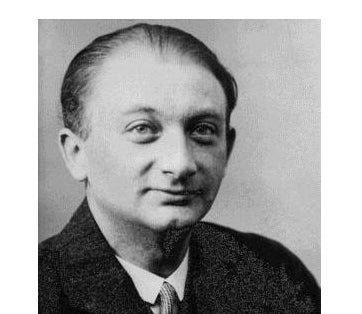
Konstantin Frank arrived from Ukraine in 1952 with 30 years of experience growing grapevines in cold climates; as early as 1928 he had designed and built a plow that folded the soil over onto the base of the wines, a process called “hilling up,” to protect the graft or even the entire vine from winter temperatures, and in 1930 he had completed his Ph.D. with his thesis, “The Studies of Frost Resistance, of Frost Damages, of Frost Effects Overcoming and of Mechanical Covering and Uncovering of Grapes.” With no English and no professional contacts, Frank landed a job at the New York State Agricultural Experiment Station in Geneva. While the industry was making steps in moving from native varieties like Catawba to French-American hybrids, the accepted wisdom was that vitis vinifera varieties could not survive the winters there. Frank knew this not to be true.
In 1953 Frank met Charles Fournier at a seminar at the station. Fournier was the former production manager at Veuve Clicquot Ponsardin; almost two decades earlier he had come to New York State, and by the 1950s he was the production manager of the Urbana Wine Company. Both men spoke French, so Frank was finally able to explain his ideas and experiences in detail. Fournier hired him and the two began the experimental plantings that led to the so-called Vinifera Revolution in the Finger Lakes.
Related
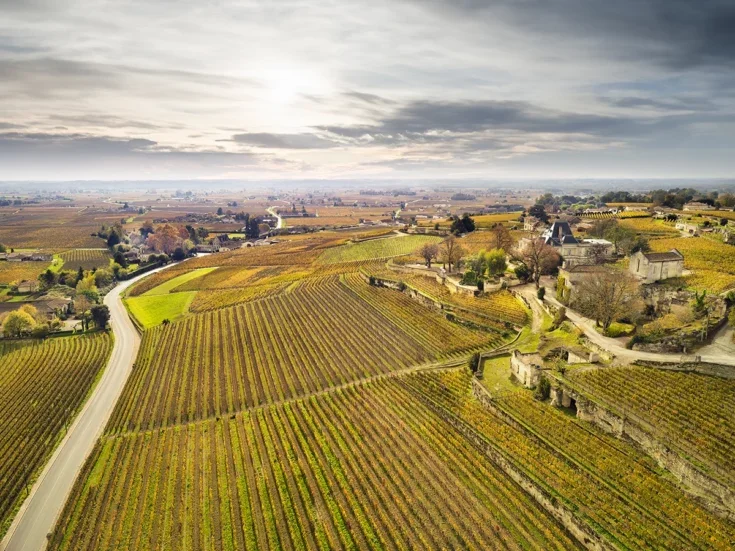
In 1957, the year he became a U.S. citizen, Frank purchased a 188-acre (76ha) property on the western side of Keuka Lake, the westernmost of the three lakes that are the center of winegrowing today. It’s also the smallest, with steep slopes and shale soils. The following year, working on weekends and in the evenings, he began planting vines—all vinifera. When he went into business in 1962, he left no room for confusion as to his goals; the full name of the company was “Dr Konstantin Frank and Sons—Experimental Nursery, Vineyards, and Vinifera Wine Cellars, European Grape Varieties and European Estate Bottled Wine.”

For all the success of Great Western and Urbana’s own Gold Seal sparkling wine, Frank had little patience for bubbles. “He kind of poo-pooed sparkling wine,” says grandson Fred Frank. “He said the only reason the French make sparkling wine in Champagne is because it’s so far north they could never make a decent table wine. That gave his son Willie a niche, something he could do without competing directly with his father.”
Willy Frank and the move into sparkling wine
Willy, already an adult when his parents had moved north, remained in New York City and had made a living selling photography equipment. But when Dr Konstantin Frank & Sons opened, he came aboard to handle the business and legal side, occasionally coming up to work harvest or pitch in in the cellar. In 1982 he and his wife Margrit purchased a house from just down the road from the winery—a stone building dating back to 1886; its deep, cool cellar would prove ideal for cellaring traditional method wines as they aged on the lees.
Content from our partners
Willy and the family began planting vines on the weekends, when they came up from the city. With sparkling wine on his mind, Chardonnay, Pinot Noir, and Pinot Meunier went in; Willy was actually the first to bring Meunier to the Finger Lakes. Willy’s family settled into the house full-time in 1984, and the following year, the same year that Konstantin passed away, Willy made the Finger Lakes’ first 100 percent vinifera traditional method sparkling wine.
Forty years on, Chateau Frank’s sparkling program is as vibrant and almost as diverse as Vinifera Cellars’ still wine program. Today they are branded as one company, Dr Konstantin Frank, to avoid confusion in the market, but ownership remains slightly different between the two sides of the company. Barbara Frank became head winemaker in 1989; today her niece Meaghan fills that role. But the company brought in an outside winemaker, Eric Bauman, to oversee sparkling production in 2005, when Willy retired. A native of upstate New York, Bauman had previously worked in Sonoma, making the J Vineyards sparkling wines as well as those of Piper Sonoma.

Eric’s arrival put a renewed focus on the sparkling wine program and brought new ideas to the table. Several innovations elevated the sparkling program further after his first vintage in 2006. The cellar now has for gyropalettes to ease the labor of riddling. The introduction of a Non Vintage series, the Célèbre Brut and Célèbre Rosé, allowed them to refine their grape and pressing selections; the Célèbre wines include more of the taille pressing, and therefore receive a higher dosage to smooth out any rough edges which that later pressing might bring to the blend. The Célèbre Brut is 100 percent Riesling, while the Rosé is a blend of the three classic Champagne varieties, with five percent still Pinot Noir added for color.
Across the sparkling portfolio dosage has gotten smaller and smaller through the years. “We’ve noticed that we’ve needed less dosage as our climate has warmed,” Barbara says. “So what we’re seeing now are some really nice, much drier styles than when we first started, because our grapes are ripening more fully, and they don’t need as much dosage to round them out.” That includes a Brut Nature, added to the portfolio five years ago, made entirely from Riesling.
Barbara says they emphasize freshness by avoiding malolactic fermentation for all of the sparkling wines, and embrace extended lees aging and sometimes barrel fermentation for added complexity. The easier drinking Célèbre wines only spend 12 months or more on the lees, but the vintage Brut receives at least twice that. The Brut is a blend of the three classic Champagne varieties, with Chardonnay typically making up a bit more than half of the blend and Pinot Meunier making a small contribution—5 percent or so. In riper vintages such as the 2021 currently on the market some portion of the Chardonnay may be barrel fermented. In the vintage Rosé the proportion of Chardonnay and Pinot Noir are more-or-less flipped, with Pinot Noir making up as much as two-thirds the blend.
Red change
The contribution of the red varieties has changed over the years. “Pinot Noir, not only here, but in the Finger Lakes in general, is a very sensitive grape,” Bauman says, “so we definitely sort more Pinot Noir than we have to with Chardonnay or some other fruits.” In the rosés they’ve also moved from saignée to using still red wine, a change that allows them better able to control astringency in the finished wine. A replanting of Pinot Meunier in 2017 has brought it a more prominent role after some years where they had little or none to work with. “My dad was always adamant about the importance of Pinot Meunier. “Barbara says. “He described it as the secret sauce, and it does add yet another layer of complexity.”

Blanc de Blancs are fairly common around the Finger Lakes. Dr Frank’s includes five percent barrel fermented fruit to add a bit of texture and complexity, and the wine spends 36 months on the lees. Fuller and richer in vintages a decade or so past, the wine has evolved into a more linear style than that of the vintage Brut. Finger Lakes Blanc de Noirs are less common, but despite the difficulties Pinot Noir presents Dr Frank has access to some top vineyards, including their estate plots, which are home to the second oldest Pinot Noir vines in the U.S.. An impressive 100 percent Pinot Noir wine has been part of the line-up for over a decade, made entirely with estate fruit and aged for 42 months on the lees. In 2019 they also added a 100 percent Pinot Meunier Blanc de Noirs as part of their limited-production Art Series. The series of remarkable wines is built around single-varietal sparkling wines, including a Pinot Gris, Pinot Blanc, and Grüner Veltliner—Dr Frank was the first to plant the Austrian grape in the Finger Lakes, back in 2006. It also includes sparkling wines from two Eastern European varieties Dr Frank has long embraced as still wines, Rkatsiteli and Saperavi, and which pay tribute to Konstantin Frank’s Ukrainian past.
The newest addition to the sparkling wine stable, created in honor of forty years making sparkling wine and Bauman’s twentieth vintage, is the Cuvée ’85 Brut. The base wines are all from the 2021 vintage, and have the same proportions as the 2021 Brut: 55 percent Chardonnay, 40 percent Pinot Noir, and 5 percent Pinot Meunier. The dosage wine, however, comes from the first vintage of sparkling wine, the 1985, adding subtle tertiary touches. Its tech sheet recommends enjoying it now or as long as another forty years down the road, and a vertical tasting in August of 2025 proved that is not entirely out of the question; a 1986 Brut, honeyed, complex and rich, still retained its fruit and liveliness. The purity and depth of the younger wines suggest they could easily outlive their predecessors as well.


