Indigenous grapes are both highly fashionable (searching for something distinctive and different) and highly problematic (because by very definition they are unsuccessful on the global scene). They are in a sense the antithesis of globalization. But is all this myth or reality?
I’m not sure it’s really possible to define indigenous grapes. It’s easier to define what they are not. Cabernet Sauvignon, Merlot, Syrah, Pinot Noir, Chardonnay, and Sauvignon Blanc have spread around the world and are recognized as international varieties. Grapes that are grown in multiple locations, extending even from different countries to different continents, have clearly managed to break out of the indigenous arena.
But their fame rests as much on international recognition as on geographical dispersion. And the grape varieties have not only moved on from their original locations but have become available in a variety of styles. Sauvignon Blanc exists in extremes of style—from its original location in Sancerre, to the piercing style of New Zealand. That most malleable of grapes, Chardonnay, exists in a range of styles even from a single location, or even from one place over time: Just compare Meursault in the old, buttery style with the lean “le matchstick” of the new Meursault. Cabernet Sauvignon has reversed its style, with Bordeaux becoming more like the New World. It can be hard to recognize the same grape variety in Syrah from the Northern Rhône and Shiraz from Australia. Diversity is an important part of not being indigenous.
The usual appeal of an indigenous grape is that it offers something different. In the era of climate change, this is often that it achieves ripeness without excessive alcohol. Indeed, one reason for it remaining indigenous may have been that previously it had difficulty in reaching ripeness. Southwest France and the Languedoc are good examples of areas with a supply of grape varieties that were mostly pushed out by the more successful international varieties but that now are being resurrected for one reason or another.
Related

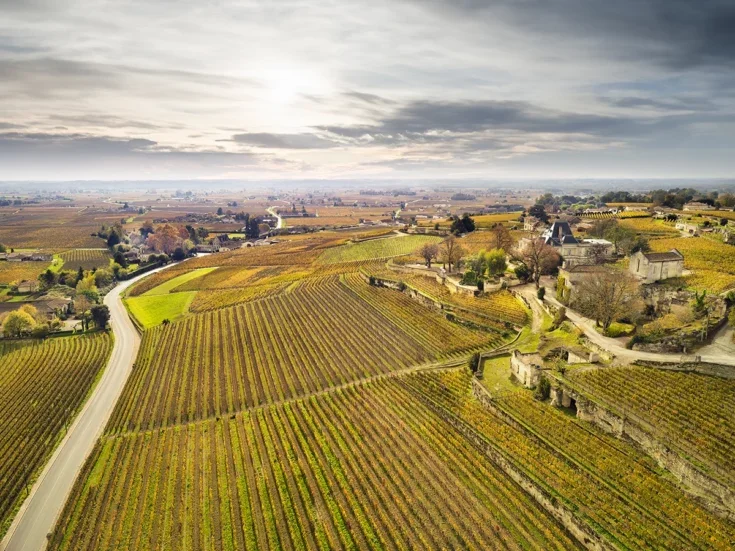

The Plaimont cooperative in Southwest France probably has the world’s largest collection of forgotten or even unknown varieties. Manseng Noir was recovered from a single plant; Tardif was recovered from two plants. The historic Pedebernade vineyard has 12 rows of plants, several of which remain unidentified (and not related to other known varieties). You really can’t get more indigenous than that. It is perhaps ironic that becoming extinct (or almost extinct in the cases we know about) is the ultimate vindication of being indigenous.
My problem with discoveries of new indigenous varieties is that I have so far failed to find one that makes wine as interesting as the established varieties. For the most part, you can see why indigenous varieties failed to succeed, with relatively thin palates, a tendency to light if not monotone flavors, and overall a lack of presence. Perhaps my palate has become “Parkerized,” but there usually seems to be a lack of intensity compared with today’s established varieties.
An answer to climate change?
Sometimes suggested as a possible answer to climate change, indigenous grapes—at least in the form of grapes that have fallen out of favor but are still permitted under the local rules—have been resurrected as a more important part of the blend. (This option is not available for wines that are made from single varieties.) Clairette has acquired a new prominence in Gigondas. Counoise and other neglected varieties are increasing in Châteauneuf du Pape. Malbec and Carmenère have been reintroduced in Bordeaux. This is at best a palliative in the short term; it will not adequately solve the problems of lack of acidity or excessive alcohol resulting from global warming. Nor will it make these grapes any less indigenous.
Content from our partners

The more pertinent question is what to make of varieties that have been grown historically in limited regions but that have never broken out to more widespread plantings. Are they varieties that have been perpetuated by nostalgia, faute de mieux, or that simply attract a local clientele without appealing to a wider audience? Or are they varieties that, for whatever reason, are successful in their locale but not successful when exported anywhere else?
Southwest France has a series of varieties that are the base for its wines, sometimes as monovarietals, sometimes as blends, sometimes as blends with international varieties. Braucol, Duras, Mauzac, Loin de l’Oeil are really known only in the area. Tannat is more widely recognized but still remains a local variety. Malbec might be viewed as indeterminate in status. For years known for making the “black wine” of Cahors, now it is also Argentina’s claim to novelty in winemaking. So, with two principal locales, it’s no longer really indigenous, but it would be pushing the definition to call it an international variety.
The Mediterranean is the source of a large number of lesser-known grapes, especially in Italy and Greece. Going south, there are many varieties that have done well in these hot climates but have never made it to cooler regions, such as Aglianico or Nero d’Avola. Global warming does not seem to have led to any move to plant them farther north, marking them as indigenous varieties in the sense that they are only of local interest.
Sometimes an indigenous variety can break out. You might consider Zinfandel a rare example of an indigenous grape from the New World. Well, of course, in the strict sense no Vitis vinifera can be considered an indigenous grape in the New World since it originated in Europe, but Zinfandel came to fame strictly as a variety making wine only in California. If it wasn’t for the accident of its origin in Europe, it would be indigenous.
But where exactly does it come from? It turns out to be identical to Primitivo, a variety previously identified only with southern Italy, where it might be considered an indigenous grape of Puglia. Then it seemed it might be the same as Plavac Mali, an indigenous grape from Croatia. DNA testing, however, showed that they are related, but Primitivo is a parent of Plavac Mali. This led to a search in Croatia for a variety that might be the origin of Primitivo. It matches a variety known as Crljenak Kaštelanski or Pribidrag, which appears still to exist only as a handful of individual grapevines. So, whatever its name, its origin is a decidedly indigenous grape in Croatia. What do we call a variety that has three separate, more or less indigenous existences?
Shorthand for limited success?
The biggest challenge to the concept of indigenous varieties is posed by the two great varieties of Piedmont and Tuscany: Nebbiolo and Sangiovese. Neither has made any notable wine outside of the immediate region, but both have an international reputation, with admirers worldwide. Despite restricted locales for growing, both make wine in a wide range of styles. The historic clash between the so-called traditionalists and modernists in Barolo attests to the potential variations of styles of Nebbiolo. The difference between Brunello di Montalcino and Chianti Classico attests to the intrinsic variety in Sangiovese. If every indigenous grape aspires to be promoted to an international variety, Nebbiolo and Sangiovese are the two exceptions that have satisfied the criteria of international success in a variety of styles but have failed to make the move into new locales. But they are not usually described as indigenous.
Indigenous varieties can lurk even in successful wine-producing areas. None of the varieties of Piedmont, irrespective of success locally or internationally, has managed to establish roots elsewhere. Nebbiolo is the only variety that has built an international reputation, but there is no halo effect to pull other varieties out of the indigenous class. Arneis is highly successful as a white wine in Italy but has not spread beyond the area of Cuneo. Dolcetto and Barbera are somewhat also-rans in Piedmont, quite successful locally, but with not much reputation outside. Judged by the fact that it was almost extinct when rescued, Nascetta is an indigenous variety, still confined to a very small area. There is definitely an attempt to expand production of another rescued variety, Timorasso, and calling it “the white Barolo” certainly suggests potential, but its production and reputation remain local at present. In fact, though Barolo producers are planting Timorasso, they are doing so in its original area, near to Tortona. Once a variety is marked as indigenous, it stays that way.
The number of grape varieties is infinite, extending from examples that exist as little more than individual grapevines, to those that have spread to every corner of the wine-growing world. Indigenous has become more or less shorthand for a variety that has had only limited success. At the risk of reinforcing the stereotype of modern wine, it is probably true that the first reaction to being offered wine from an “indigenous” grape is suspicion.
Is the concept of indigenous grapes at all useful? I suggest it’s more interesting to think about character and style, even about success or failure. “Indigenous” is an interesting concept really only insofar as it casts a light on the question of whether grape varieties can be uniquely matched to specific terroirs. Now that is a question with infinite depth.