


A radically intimate attention to the different behaviors and needs of every individual plant is right at the heart of everything the Harlan family does at their Promontory project in the Oakville district of Napa Valley, says Adam Lechmere.
In a recent interview, Bill Harlan articulated the winemaker’s desire for a wine to approach the condition of art. “If we can more purely express the character of the land, going beyond quality, […] we get closer to something that belongs to the realm of art,” he told Marvin Shanken of Wine Spectator.
In “going beyond quality,” of course, Harlan isn’t talking literally—at least, his customers would hope not. He is simply saying that the winemaker must be open to anything the land might suggest. He or she must not be beholden to any notion of what should be.
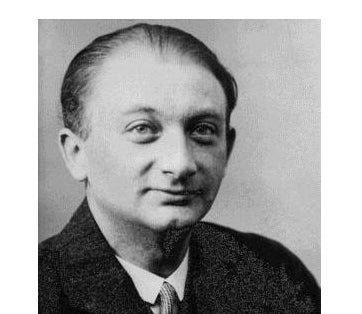
It might be a stretch to compare the work of one of the greatest British portrait artists of the past 100 years with a bottle of wine, but what the Harlans are trying to do at Promontory is to produce something that aspires to the condition of art, as set out by Lucian Freud when he was asked by the Royal Academy to explain his creative process.
Related
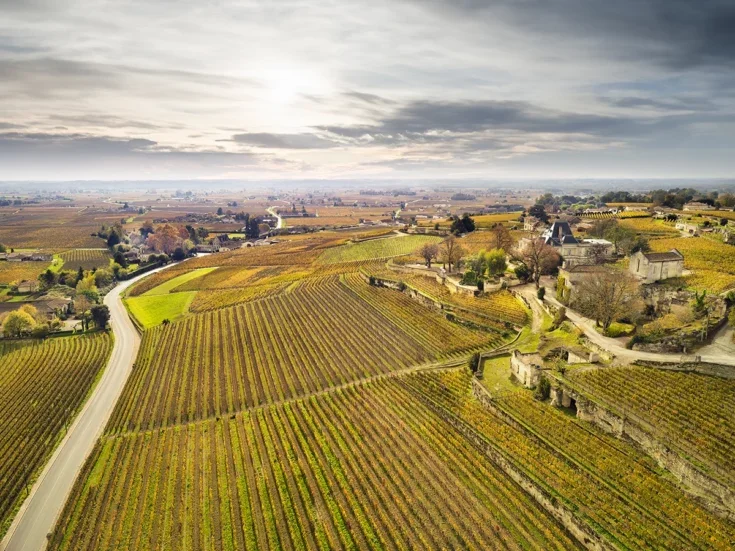
Any winemaker will tell you that the most meticulous focus is essential at every stage of production. (“The subject must be kept under closest observation,” Freud said, sounding more like a biologist than a painter.) In the vineyard at Promontory, the estate in the foothills of Mount Veeder that Harlan bought in 2007, on a hot May morning with Bill Harlan’s son Will and winemaker Cory Empting, I see “closest observation” in action. In a quarter-century of standing around in vineyards, I’ve never spent so long contemplating one vine.
The Harlan team—Harlan, Empting, and David Cilli, who is responsible for Promontory but who isn’t here today—have evolved the theory of “vine energy” to maximize the potential of each vine. In a letter to their customers they explain, “No two trees in the forest are alike. Their peculiar architectures—curves, boughs, and explorations of light or shade—are living records of the soil beneath; and of the wind, sunshine, and rainfall that nature alternately withholds or bestows.”
Despite these differences, a forest has harmony. A vineyard could behave in just the same way, as long as the individual vine is acknowledged. Each vine should grow (preferably gobelet-trained—“it allows us to see every individual”) according to its needs. It may behave very differently from a vine a few rows away, but still the vineyard grows in harmony.
Content from our partners
“I think of it a little like gardening,” Harlan says, “where there’s a respect for the individual, methodical care and attention, moving intentionally throughout the group of plants.” Empting adds, “There’s a kind of intimacy, too. You’re living in a garden, and you’re seeing it every day, and so you’re more aware. You notice when something is amiss.”
This intimacy extends to an almost anthropomorphic relation to the vines. “It’s a partnership,” Empting says. While conceding that “it’s important to know where you end and the vine begins” (we’re not in a John Wyndham novel, after all), his language is more akin to animal husbandry than conventional viticulture. “[The vine] shows you things and you respond, and there’s gratitude that’s given in different ways. That’s the key: You’re intervening, as if it’s a partnership. ‘I’m showing you that I can’t carry this cluster. Can you help me?’ And you do it. And then you see the vine say, ‘I can feel that my load’s been lightened.’”
Vine energy, mastery, and healthy stress
To make sure each vine gets the attention it needs, the Harlan team has developed the Vine Masters program, whereby vineyard workers—some with decades of experience—take full responsibility for a block, understanding the peculiarities of individual vines through the seasons.
Much of the point of this focus on single vines is conservation and channeling of energy. This is far from the old-fashioned concept of stressing the vine as much as possible (a winemaker once told me you should subject the vines to a “near-death experience”) to force them to put energy into producing fruit so as to ensure the survival of the species.

Empting has no patience with that. “[The vine] needs to be in the band of healthy stress. If conditions are not ideal, it has to take a fork in the road and make decisions and live through them.” This is a natural process. “This is not so much what we want; it’s what nature naturally does. The balance, the magic, is finding the right amount of stress for the age [of the vine], so that when it does have to make a decision, we’re creating an environment where it makes the one that we want it to.”
We’re crouching around the fat bole of a healthy vine. “At the beginning, it’s all about roots,” Empting says. The process begins at planting. (The vines are grafted in the third year.) Empting describes the rootstock as “like a little battery, […] and that battery is going to run out. So, it has to get into the ground to get resources to then be able to produce leaves, so it can produce energy, and so on.”
The vines are all bush-grown. “Keeping the vine low to the ground is really important for its energy. If you ask it to create a trunk, that comes at a cost, because it has to invest carbohydrates in maintaining that wood.” A good, robust, low trunk is an investment of energy, “which it uses for the growth of the next year, and it builds momentum. It’s a balance. The goal with the vine masters, working vine by vine, is not making big changes but fine-tuning.”
There is so much that is uncertain in vineyard and winery (the weather’s the least of it) that guiding the vine’s decisions—how many shoots to put out this year, what sort of energy to put into leaf cover—allows you to reduce the multiplicity of variables you’re dealing with. And then you can begin to think about what’s going to end up in the glass.
Freud talked about the relationship of the sitter to the artist. “The painter must be as concerned with the air surrounding his subject as with that subject itself. It is through observation and perception of atmosphere that he can register the feeling that he wishes his painting to give out.”
The artist is not painting the model, but their essence: “the aura given out by a person or object is as much a part of them as their flesh.” Is it too much to suggest that the winemaker has much the same relationship with a vine? Just as the artist channels the energy (“the aura”) of the sitter onto the canvas, so the winemaker channels the energy of the vine into the wine. “So much of the work is to map what you see on a vine to what you taste,” Empting says. “For me as a winemaker, it’s something that’s very visceral. If I see a vine that’s stressed, my mouth starts to dry out [as if] the tannins start to get a little bit more peaked. I’m tasting the vine as I’m looking at it.”
Sophistication and wildness
In the spring of 2024, I sat down with the Harlan team in the big tasting room at Promontory for a vertical of every vintage since the first—the unreleased 2008. The theme of the tasting might have been “sophistication out of wildness.” The wines were all different, in some cases radically; from the structured delicacy of the 2016, to the reserved, slightly chalky 2020, and the wet-stone freshness of the 2013. It was in the lovely 2016 that all the elements that seemed to sum up Promontory came together: a savory nose, fine tannins, and weight without heaviness.
Throughout, the team cast around for ways of explaining the wine. The wildness of Promontory is a frequent theme. It’s a hidden fastness, a deep valley between Napa and Sonoma, dense forest enfolding sunny, half-acre-wide parcels of vines sewn into the hills. Bill Harlan had come upon the land hiking in the 1980s and kept it under his hat until it went up for sale in 2007, by then planted but neglected.
“We didn’t think, ‘This is an obvious place for viticulture,’” says Will Harlan. “It was more following a feeling that we don’t know exactly what it’s going to be, but it’s right on the edge. It’s a feeling of incredible potential.” Empting and Cilli are as concerned with oak regimes and maceration times, cover crop and water stress, as any winemaker, but they also celebrate the fact that at some level, what they’re doing is inexplicable. This isn’t anything as obvious as never knowing what nature will throw at them; it’s more that they don’t really know how their effects are achieved, and they are working on better understanding the land’s potential. Only up to a point, though.

Is there a danger that as they get to understand the land more, to channel the vine energy more predictably, the wine will become more polished and so less compelling? That idea is interesting, Empting murmurs. “Because there is, like, a honing. Whether or not I think there will still be natural variation, there is a kind of understanding that maybe the natural amplitude will be taken out of it between vintages, though never completely.”
However, he goes on, “There is real curiosity at all levels of the team, to understand what we might not yet understand. And so, I think every year we’re hoping for a little illumination—something that we haven’t thought of before or we haven’t seen.”
Describing the genesis of Harlan Estate, Bill Harlan describes how he “had an idea of what I wanted to create out of the raw land.” At Promontory, he says, that is turned on its head. “The land is changing them, instead of them changing the land.”
Freud reckoned the painter’s relation to the sitter to be a partnership, of sorts. He talked about “the effect in space of two human individuals,” of the essence of the sitter and its effect on the artist. He said his aim was to “translate life into art, almost literally.” It’s not a million miles from what the Promontory vigneron is aiming for as he channels the vine’s energy to translate the land into wine.


