Simon Field MW enjoys a London vertical marking the 40th vintage at the small but highly respected “Napa grand cru,” Spottswoode.
The flow of humanity in and around California over the centuries has been well documented—from the frenetic optimism of the gold rush, through to a sunny self-identification with high tech, not forgetting the enforced migration of the Great Depression. Less significant, perhaps, is the genesis of the vineyards of Napa and Sonoma at the artisan apex of a burgeoning industry, where the grapes, disinclined to manifestations of wrath, were and are able to benefit from microclimates that stand out for viticultural potential. So it was that, more than half a century ago, medical practitioner Dr Jack Novak and his wife Mary adopted the faded Victorian grandeur of Spottswoode Estate and turned it into one of the most respected properties in Napa, thereby joining many other entrepreneurs and visionaries, a familiar rollcall of evocative names such as Schafer, Duckhorn, Davies, Krug, and Mondavi.
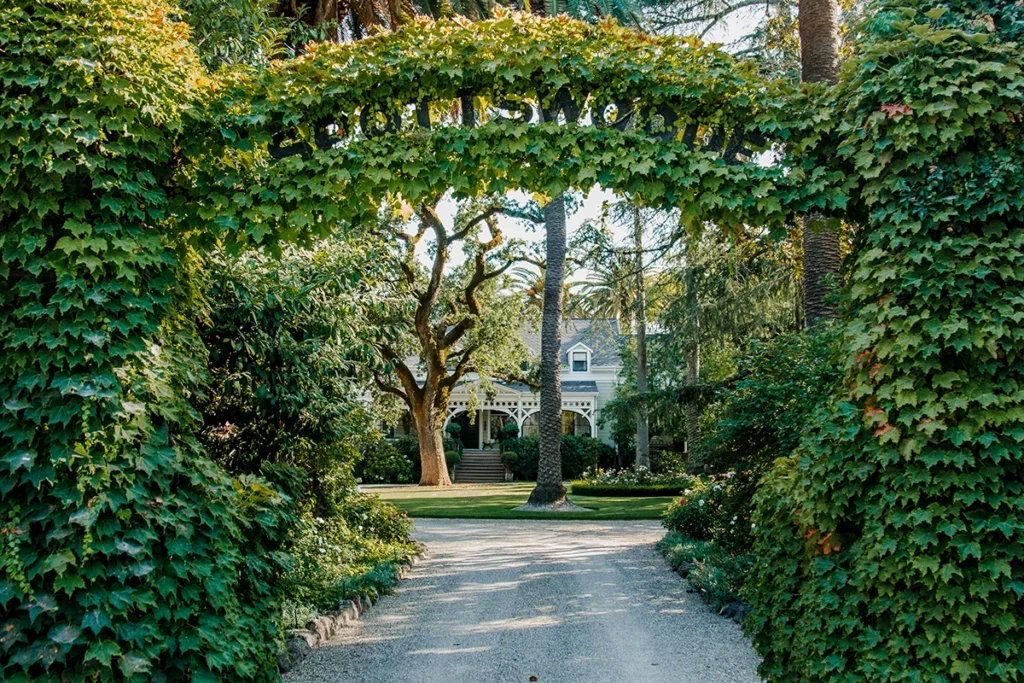
Established by another traveler, German George Schonewald, in 1882, Spottswoode assumed its name with the arrival of the Spotts family in 1910. They were responsible for guiding the estate through Prohibition, during which time the grapes were sold, inter alia, to The Christian Brothers for use in the sacrament. It wasn’t until 1982, ten years after the appearance of the Novaks, that the estate started to produce its own wine. The Novaks had arrived with five children, two dogs, and two horses, not forgetting a large stone fountain, which further weighed down their modest trailer, but now features as a focal point in front of the distinctive cast-iron balustrade of the neo-colonial house. Both feature prominently on the labels. The vines are located all around the gardens of magnolia, cedar, and 350-year-old native Valley Oak. There are tall palms, a Japanese pagoda, and the balmy and seductive aromatics of redwood, heat, and pine.
The spirit of the family is ubiquitous and informs every aspect of their vinous philosophy. After Jack’s early death in 1977, Mary assumed control and navigated the production, encouraging replanting, rootstock selection, and the early development of her beloved Sauvignon Blanc. Mary’s children, Beth and Lindy, took over after her death in 2016 and highlighted the 40th anniversary of the Estate Cabernet Sauvignon, the 2022, with an auction of all 40 wines at Christie’s, London, in September 2025—a worthy celebration of a notable achievement, all the more so because the proceeds (doubling the reserve) have been donated to the Napa Green environmental organization.
Related


Spottswoode: A gemstone between two creeks
Spottswoode has always been a bijou estate, producing only three wines and covering a mere 45 acres (18ha), which means a production of no more than 5,000 cases or so. It is often described as a de facto grand cru, with Château Margaux most frequently assuming a sisterly comparison, thereby underlining a perfumed elegance of style and a deceptively impressive capacity to age. The estate is located to the west of St Helena at the start of the Napa Bench and at the base of the Mayacamas Mountains, the location (between this range and Spring Mountain) ideal in allowing cool maritime breezes to temper the worst excesses of a California summer and to ensure a relatively long ripening cycle. The alluvial clay-loam soil from Sulphur Creek provides excellent drainage but is prone to the dangers of drought and hydric deficit.
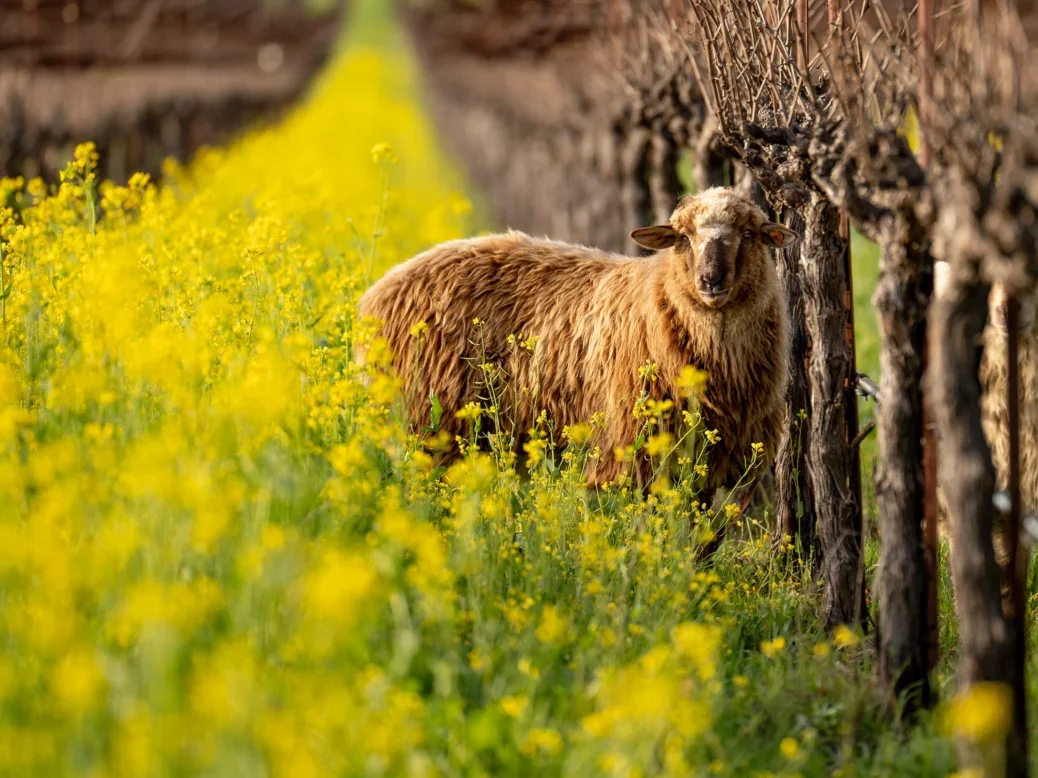
Current winemaker Aron Weinkauf has been in the post since 2006. He has helped the sisters to continue to push environmental stewardship as a key value, an initiative dating from 1985 when Mary made the decision—radical at the time—to farm the entire property along organic lines. Full organic accreditation ensued, followed by Demeter biodynamic status and, most recently, the accolade of being the first Napa winery to achieve B-Corp certification. The latter is described by Aron as a “holistic and mutually beneficial system,” given that everyone and everything benefits—from the roots in the ground, all the way through to suppliers, and ultimately, dear reader, to us, the consumers.
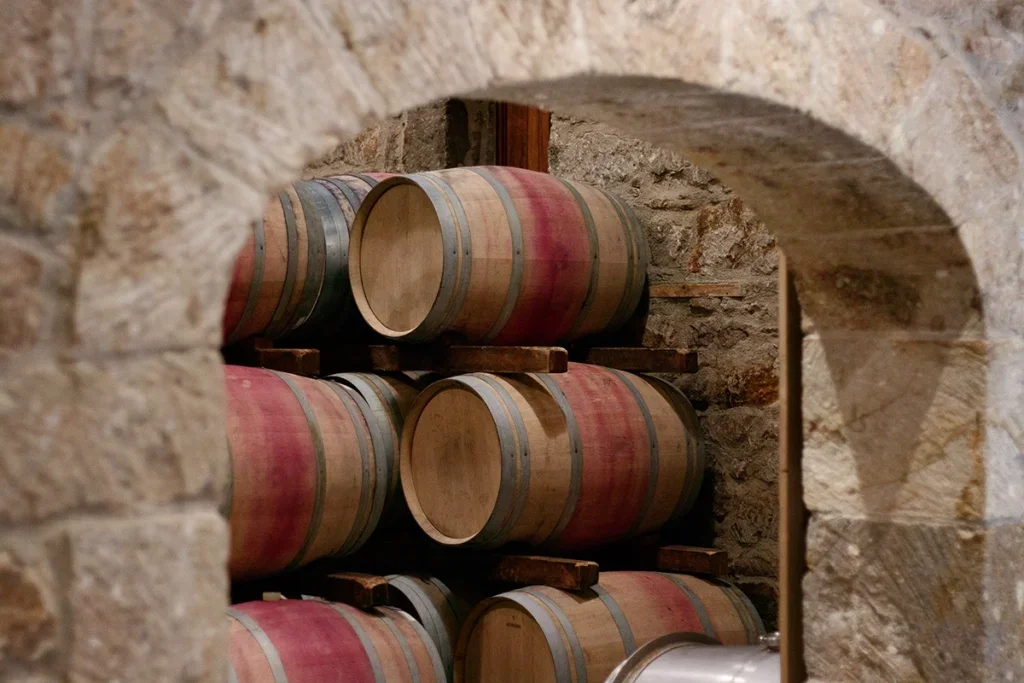
Most of the vineyard is dedicated to Cabernet Sauvignon. Early experiments with Zinfandel proved unsuccessful, but there are also plots of Malbec, Cabernet Franc, and Petit Verdot, the latter two of which typically make up 15% of the final Estate blend. The vineyard is subdivided into blocks that inform the size and nature of the vinification vessels. The Cabernet is aged for 18–22 months in 60% new oak, most of which is French. The second wine, Lyndenhurst, was introduced in 2002 and is named for the linden trees that add another beautiful feature to the Spottswoode garden. Unlike the Estate wine, some (but not all) of the fruit here is sourced externally, always from partners with a similar environmental agenda and from a variety of complementary sites including Howell Mountain, Oak Knoll, and Atlas Peak, all offering further variables (such as altitude) to what is essentially a not dissimilar blend, albeit one that includes a little Malbec and is therefore oaked for a little less time. The Lyndenhurst is a full-fledged Bordeaux blend, making use of all five varieties.
Content from our partners

Last but not least (certainly not for Mary, for whom it was her favorite) is the Sauvignon Blanc, which was introduced in 1984, and which again uses some fruit from outside of the estate. Up to 200 vats provide the raw materials for a sophisticated wine that is aged with recourse to what Aron describes as “an epic toolkit”: 15% new wood, concrete eggs, amphorae, small stainless-steel vats, and larger stainless-steel tanks are all employed. The resulting wine is, not surprisingly, exceptionally complex and richly textured, without in any way losing a seam of freshness. Aron advises decanting the older vintages.
The block-by-block philosophy—backed up by early (and ongoing) work on rootstocks, clones, and the like—is supported by an embedded environmental philosophy; the happy marriage of these key features points to a property profoundly at ease with itself, a philosophy that flourishes in the warm familial atmosphere that underlines the entire process. Long may it continue.
Tasting Spottswoode
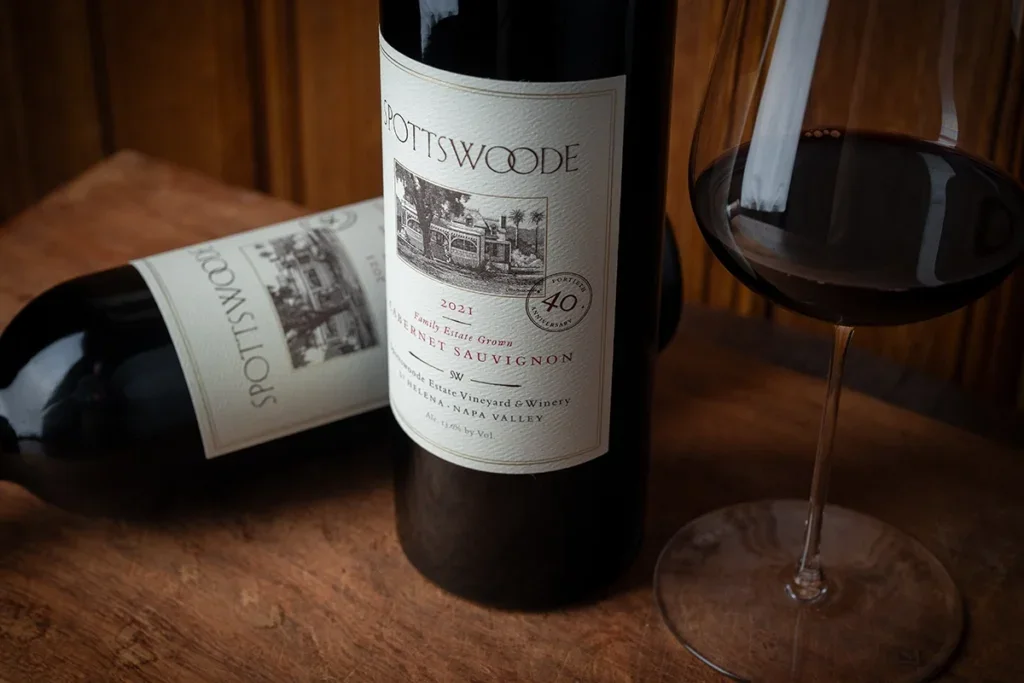
Corrigan’s Restaurant, London; September 10, 2025
2023 Sauvignon Blanc (95% SB, 5% Sem)
White flowers and peach on the nose, a touch of gentian, and a whisper of mandarin. There is exuberance and power on the palate, betraying both a sophisticated upbringing and the warmth of the vineyards, which stretch across Napa and Sonoma. Juicy stone fruit and the merest hint of woodsmoke underwrite the palate, which is marked by a beguiling marriage of restraint and indulgence. | 94
2024 Sauvignon Blanc (95% SB, 5% Sem)
The 2024 is richer, warmer, and more expressive than its immediate forebear, precocious in its citric grip, yet rounded by hints of tropical fruit, guava and honeydew melon immediately persuasive amid the panoply of evocative flavor. The backdrop of stone fruit and soft spice underlines innate complexity, the rigor of which is such as to signal a pleasing peroration, with harmony and balance its main themes. The line of acidity is deftly drawn and quietly persuasive, careless of the heat of the vintage. | 93
2022 Estate Cabernet Sauvignon (86% CS, 9% CF, 5% PV)
This is “a lanky thoroughbred getting ready to run,” says Aron. Why lanky? Well, there is an impressive linear character to the palate, which belies the rich, rounded fruit, itself dominated by ripe strawberry, loganberry, marionberry (per Aron again), and plum. Less cassis, but more of everything else. Finely poised tannins confirm the quality and the potential. | 93–94
2021 Estate Cabernet Sauvignon (87% CS, 9% CF, 4% PV)
A cooler season offers graphite, smoke, and roses; thereafter, sandalwood and a hint of lavender and esteva. Intriguing in its youth, this is sure to continue to intrigue henceforth, such is the quality of the chalky tannins and the complexity of flavors, some of them, such as eucalypt and cardamom, pleasingly idiosyncratic. | 94
2019 Estate Cabernet Sauvignon (90% CS, 6% CF, 4% PV)
Deep garnet, with the faintest concession on the rim; this powerful promissory note is repaid with honor and interest. The palate is dense, layered, and rich, the dark fruits (black cherry and raspberry compote) coating the palate with such rigor that only the tense spell of the firmly acidic backbone can maintain a semblance of freshness and, ultimately, a pleasurable bout of drinkability, both now and in the future. | 93
2017 Estate Cabernet Sauvignon (89% CS, 7% CF, 4% PV)
Reminding me a little of the 2021, the 2017 is also a child of a relatively cooler vintage. There is a floral uplift to the aromatic and hints of lavender and damask winning over the obligatory bedrock of finely textured fruit and firm yet chalky tannins. The secondary notes are starting to impose themselves, politely, and are dominated by cinnamon and cedarwood. The finish is refreshing and linear, a cascade of evocative provocation. | 93
2016 Estate Cabernet Sauvignon (85% CS, 9% CF, 6% PV)
A hint of oxidation on our first bottle. No such problems with the second, marked by classicism and the perfect moment to taste the fruits of the handover from a primary to a secondary age, the pure and elegant fruit legacy of the former still cajoling the spicy, herbal impulses of the latter. | 95
2015 Estate Cabernet Sauvignon (90% CS, 7% CF, 3% PV)
The 2015 is a little more evolved, and one can almost discern its third age, such is the dried-fruit, sous-bois character already evidenced on the mid-palate—not, of course, at the expense of a fundamental generosity of temperament and most certainly not manifesting a drying of the tannic structure. Everything is poised and complete, pure and elegantly textured. This appears to be more than a mere year older than the stentorian 2016 and does not want for an elegiac, cerebral character, which recalls some of the finer properties on the Left Bank of Bordeaux. | 95
2022 Lyndenhurst Cabernet Sauvignon (84% CS, 11% Mer, 2% CF, 2% PV, 1% Mal)
Blue, black, and red fruit burst forth from this classic Bordeaux blend. Plenty of fruit, but all held in check by a typical Spottswoode structure, robust and yet supremely elegant, the weave of the tannins above all betraying quality and a capacity to age with grace. Hardly a “second” wine, temperamentally, but most certainly a pleasing, sometimes teasing foil to its Estate sibling. There is purity and power on the finish here. | 91