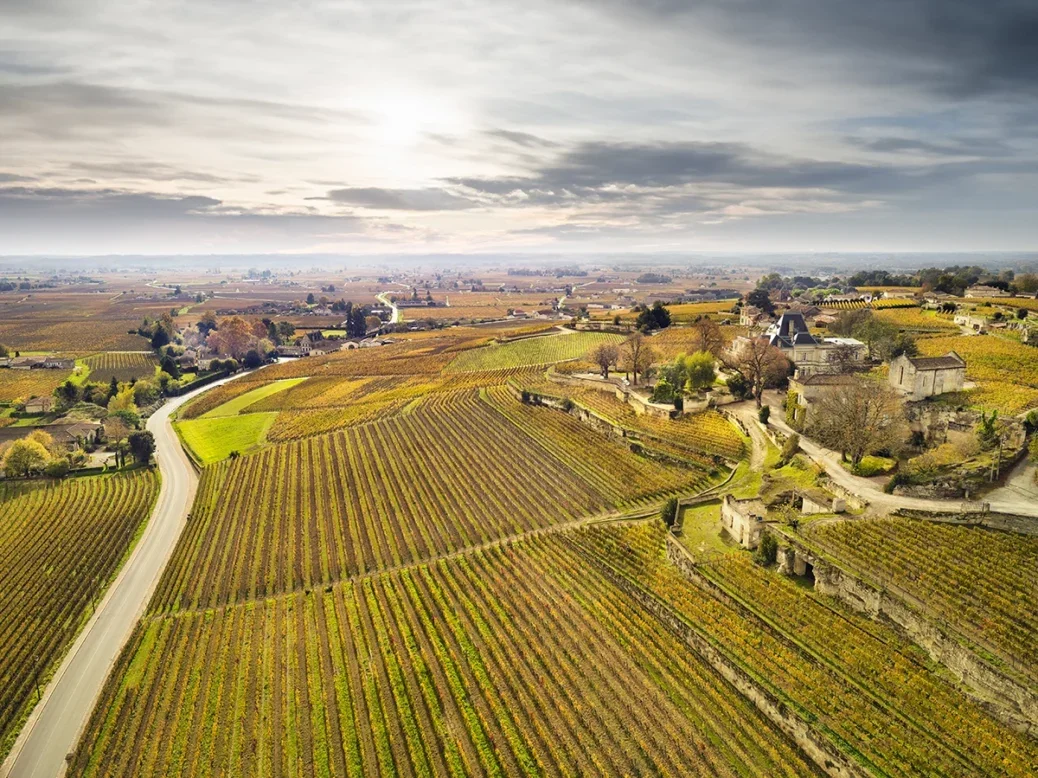
With its complex mosaic of terroirs, its human scale, and its cast of intriguing winemaking characters, St-Emilion, France’s largest communal appellation, remains a law unto itself, says Colin Gent MW.
Bordeaux is in crisis, we are repeatedly told. People are not interested in its wines anymore; people are no longer interested in wine, period. Yet St-Emilion receives more than a million visitors each year. Parking lots are full by mid-morning, coaches and minivans block the narrow approaches to the town, restaurant terrace spots are snapped up, and a tide of tourists flows through the town’s quaint medieval streets, where the principal activity on offer is wine shopping. Some are here on a genuine fine-wine pilgrimage. Most come because they’ve heard it is beautiful, and because they’ve heard that the wine is pretty good, too.
Marketers would say St-Emilion has strong brand equity. Romantics might say it has a soul, a special sense of place that resonates with people when they visit and also when they drink the wine. Cynics will say that St-Emilion has sold any soul it ever had, pointing to over-the-top wine styles, over-the-top pricing, opportunistic garagistes, feuding families, succession battles, and contested classifications, as well as the increasing Disneyfication of the village itself. St-Emilion certainly provokes a lot of questions, and as I continue to discover, there are no simple answers.
Simple answers require generalizations, and generalizing about St-Emilion is hard because of it sheer size. At 5,500ha (13,600 acres), St-Emilion is the largest communal appellation not only in Bordeaux but in all of France. This makes it five times the size of Pauillac and seven times the size of Pomerol. Explaining the geography and wine styles of those smaller appellations is just about possible, allowing for some oversimplifications, but St-Emilion defies neat categorization in terms of its patchwork of terroirs, its 650 estates, or its 30 million bottle per year wine production. I made a habit of asking producers and industry actors, “What is St-Emilion?” and was met with a series of Gallic shrugs and wry smiles but very few comprehensible answers. “Merlot on limestone…but not always,” someone said. “The many different facets of a ruby,” someone else said, quoting Jean-Claude Berrouet. “The local Tabac-PMU,” a third told me, referring to the old-fashioned café/bar in the town center where you can find Alain Vauthier of Château Ausone discussing tractor parts with growers from the cooperative. Most often, the answers came back to the town itself and its central role in forging a common identity for the diverse styles and quality levels of wines that call themselves St-Emilion.
Related
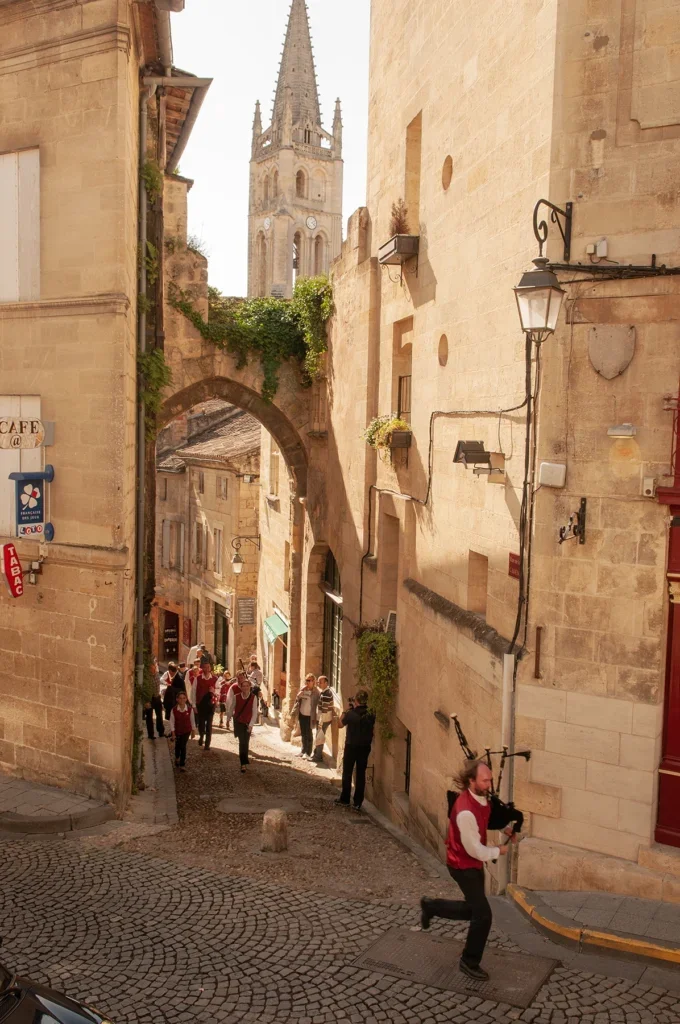
Disneyfied as it may appear, the town is the economic lifeblood of the whole ecosystem. Tourists come from all over the world now, but the majority are still French, and brand St-Emilion is built on a solid base of domestic market loyalty. Although 55% at grand cru classé level is exported, overall appellation sales are 70% domestic. Most of the production is sold as St-Emilion Grand Cru, an intermediary tier in the quality pyramid, below cru classé level but above regular St-Emilion (on account of the stricter yield restrictions and minimum aging requirements). This delivers a notion of “affordable luxury” for consumers and generates a degree of extra added value, even for the more modest producers. More than 4 million bottles are sold by the local cooperative, with its own stable of St-Emilion and St-Emilion Grand Cru brands, as well as 60 individual château brands that are made for the growers in the co-op, again helping to share the market among a large base of growers. This ecosystem has (so far) better resisted the crisis than other areas of Bordeaux. Overproduction is currently estimated at 10% across the appellation, but vines are not being pulled out as they are in other districts close by.
There are rumors of inventory buildup and financial trouble higher up the quality pyramid. Certain producers may have overextended themselves during the boom times, or maybe pricing simply got too ambitious. The problem is no doubt compounded by the sheer number of grand cru classé estates—up to 85 with the latest classification—making more high-value wine than the market can absorb. Even Bordeaux wine professionals have difficulty navigating this crowded category: What are the genuine points of difference? Which among the list are of real interest? And what style of wine can be expected?
Stylistic upheavals
Style is one of those complicated questions in St-Emilion, because there have been various stylistic upheavals over the past 30 years, and different producers are at different stages of stylistic evolution. The first—more a revolution than an evolution—is now told as a sort of fable: a whole village led astray by disingenuous garagistes and consultant winemakers promising the riches bestowed by the grace of King Robert Parker. Vines were pruned like bonsai plants; hang-time was extended beyond reason; dark practices in the wineries made for dark, super-concentrated wines; and expensive new oak was applied not once but twice.
Content from our partners
It is easy today to point out the worst excesses of this movement, but as ever, some context is required. Two high-profile agents of change—Jean-Luc Thunevin and Stephan von Neipperg—both emphasize the background of underperformance in the 1960s and 1970s that necessitated change. Excess fertilization, coupled with Merlot’s tendency to overcrop, explained the preponderance of unripe wines, unbalanced by excess chaptalization. This reduced the propensity of the top sites to make great wine and made life even harder if the site was less than top. Von Neipperg knew his sites could produce better, because older bottles testified to this. He just set about reproducing what had been lost: intense low-yielding wine from healthy vineyards. Thunevin was criticized as one of the leading architects of excess, but his techniques were honed trying to ensure quality in a less-than-ideal site in a series of very difficult vintages. Severe green-harvesting and leaf-plucking were born not of conceit but of sheer necessity.
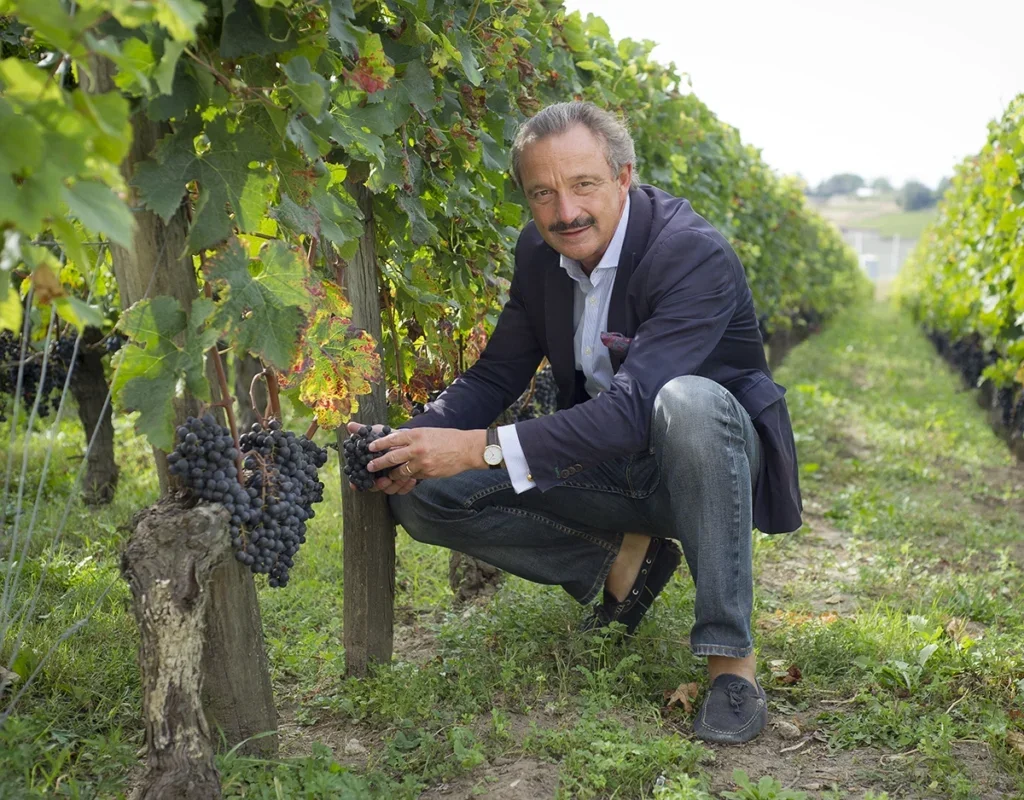
Maybe some people did not know when to stop the stylistic turbocharging. Maybe the climate just got hotter. Low yields plus warmer years certainly make for very ripe grapes and higher alcohols. Higher alcohols create issues with both extraction and oak balance. Aromas can become spirity and cooked. Many St-Emilions of the first part of the 21st century show these traits. Blame has been apportioned to the producers but equally to their unwitting accomplice, the Merlot grape.
St-Emilion has long been home to Merlot. Many outside the district claim that its days are numbered, a grape variety ill adapted to climate change. No one I have spoken to in St-Emilion is of this opinion. Yes, there has been a trend to increase the share of Cabernet Franc in some top estates, yet high-profile Cabernet champions like Cheval Blanc, Figeac, and Ausone all tell me they have no further plans to reduce their Merlot. Cabernet Franc is itself a capricious grape; it does not like cool, wet soils, but it does not like excess heat either, and it reacts very badly to hydric stress. Vineyards that are well suited to Cab Franc are now planted to Cab Franc. For the rest, Merlot remains the most qualitative choice, with research and experimentation centered on clonal or massal selection of later-ripening plant material, later pruning, and encouragement of cover crops. Trees are being planted between vineyards for shade, and the St-Emilion Wine Council has established a stock of recommended plants for hedgerows, which they describe as nature’s very own air-conditioning units. Properties like Cheval Blanc are unabashed advocates of regenerative viticulture, Fonroque and Jean Faure are both completely biodynamic, and as many as 132 St-Emilion estates are now certified organic. Merlot certainly comes in with higher potential alcohol levels now, but good vineyard management techniques protect freshness and balance, and the best soils also imbue the Merlot with low pH.
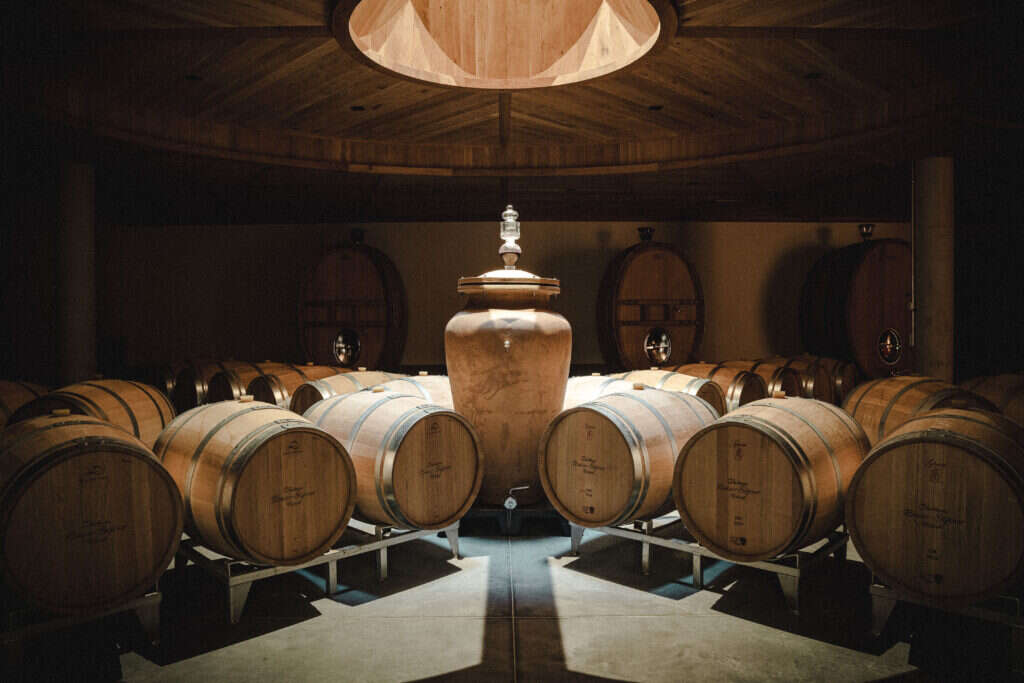
As well as evolving viticulture, St-Emilion producers are changing their winemaking practices, too. Most practice an extended cold soak now, often under the protection of CO2 and non-fermenting yeasts rather than the harsher use of sulfur. Fermentation temperatures are kept below 82°F (28°C) to ensure bright fresh-fruit aromas and flavors, and extraction regimes have been dialed right back. The natural “sweetness” of oak is less desired given the riper fruit, so there is a concerted move to reduce the proportion of new oak barrels and to age at least a part of the production in 400- or 500-liter casks and/or larger oak foudres. Amphorae, eggs, and globes are being tried for the same reasons. If the period 1995–2010 was categorized by the pursuit of richness and power, more recent changes indicate a desire for balance and drinkability.
All the above reads like good marketing copy. What it actually means taste-wise is another of those harder questions to answer. For one, finding a common theme is difficult given the diversity of recent vintages. 2023 and 2024 were distinctly wet, while 2022 and 2025 have tested the capacity of vineyards to resist heat and prolonged drought. The very top estates manage to produce impressive wines in all these challenging conditions: bright and perfumed, fruity when looked at from one angle, but profoundly earthy at the same time, with velvety tannins and more or less depth/length depending on the year. At lesser estates, the earthiness can tend toward rusticity, in terms both of flavor and of texture, and successful balance is harder to achieve. And that brings us to the dual questions of hierarchy of terroir and hierarchy of estates.
St-Emilion’s ten terroirs
St-Emilion has long been known for its diversity of terroir. I remember books that divided St-Emilion into three: the plateau (good), the slope (good), and the plain (bad). This did not really explain the fact of Cheval Blanc, located on what also looked to be the plain—obviously the truth was more complex. Modern understanding is based on the detailed work of Professor Kees van Leeuwen, who identified subdivisions within these broad categories, making for ten distinct terroirs across the appellation. The plateau is easiest to identify on maps, a Rorschach-test–shaped table of land sitting on a block of solid limestone at 260–330ft (80–100m) above the Dordogne river. The thickness of the limestone varies, as does the topsoil that has collected above it. Even within the single parcel Le Haut Plateau at Bélair, for example, soils vary from 1 to 10ft (30cm–3m) in depth. The plateau soils are whiter (calcareous) above and around St-Emilion itself and often redder-browner to the east, but local variations again confound generalizations. Given its altitude, the plateau should benefit from cooler air, but Juliette Bécot of Beau-Séjour Bécot reminds me that it can get pretty warm when the wind is bringing hot air from the south. Look for both structure (tannin and acidity) and minerality on the plateau—Troplong Mondot and La Mondotte illustrate this well. Jean-Luc Thunevin even uses the word “austerity,” describing the particular influences he encountered when finally able to buy land on the plateau at St-Etienne-de-Lisse. Cabernet Franc can work well, but Merlot brings the extra flesh to complement the structure. Christian Moueix, for example, is committed to maintaining 98% Merlot at Bélair-Monange, light-heartedly claiming that he does not have the patience to wait for the Cab Franc to ripen.
The limestone table sits on various layers of blue clay and “molasses,” a calcareous composite of clay, sand, and silt, and these soils are exposed on the slopes below the plateau. The slopes are naturally well draining but also manage to retain moisture in the clay, which prevents excess hydric stress. Both Merlot and Cabernet Franc are very happy here. Steep south-facing exposures at Pavie give power and intensity, while east-facing exposures at Ausone deliver something sublimely graceful, but both wines also include parcels on the plateau. To the north of the plateau, the slopes are less inclined and the soils siltier. Exposures here were traditionally regarded as less noble, but maybe these cooler north-facing slopes will become more highly valued as temperatures rise.
The plain features benches of alluvials, sands, sometimes gravels, and younger or older sedimentary sandy silts. Cheval Blanc itself counts no fewer than 15 different soil types on its estate. Sandy topsoils on the plain dry out and warm up quickly, which should mean soft, easy-drinking wines, but the presence of gravel (concentrated in the west but also claimed by some in the south) can make for more structured wines, such as Monbousquet and, of course, Figeac, one of the few places where Cabernet Sauvignon can ripen successfully and consistently. The western end was traditionally divided into the Graves-St-Emilion (with strong similarities to neighboring Pomerol) and the less distinguished Sables-St-Emilion, which was actually a separate “satellite” appellation until the 1970s. Detailed microclimatic temperature recordings (thank you again, Professor van Leeuwen) indicate that the warming effects of the day are countered by cold, no doubt moist air settling on the plain at night, and the overall heat summation on the plain is actually less than up the hills, except in the area closest to Pomerol. Jonathan Maltus knows not to try to make a Le Dôme-style wine with his vineyards on the plain and, instead, has made Château Teyssier into a shining example of restraint and easy-drinking pleasure.
Attempting to understand what makes for a good terroir in St-Emilion is a complicated calculation of diverse influences: temperature highs but also lows; drainage, but also water retention in moments of drought; water-table variation; soil composition and depth; and so on. The analogy with Burgundy’s Côte d’Or is striking, as much for the complexity of localized terroir influences as for the visual similarities between the two vineyard regions. This in turn provokes the question of whether St-Emilion could and should be looking to the Burgundian practice of individual site bottlings. This was perhaps part of the notion of the garage wines, but the pendulum swung back. Valandraud evolved into a multi-terroir cuvée, and Jonathan Maltus now blends the parcel previously used for his plateau expression Les Asteries into Le Dôme. The traditional Bordeaux model has always privileged estate blends rather than individual vineyard bottlings, arguing that the whole is greater than the sum of its parts but also no doubt motivated by ease and efficiency of commercialization. St-Emilion châteaux with multiple terroir parcels continue to respect this model, though exceptions are beginning to appear: Angelus’s Hommage à Elisabeth Bouchet is one; the “confidential” 100% Cabernet Franc from La Gaffelière is another. Is this a sign of more to come?
Classification controversies
The whole notion of terroir versus estate—land versus brand, if you like—is one of the elements at the heart of the classification controversy. One of my most fascinating interviews while preparing this article was with Jean-François Quenin, owner of Château de Pressac. I went there looking for perspective on life at the less fashionable eastern end of the appellation and was mightily impressed both by the dedication to quality at the estate and by the quality of the wines. I also learned that Monsieur Quenin (as former president of the St-Emilion Wine Council) had the unenviable task of driving and overseeing the radical changes in the 2012 St-Emilion classification. Change was necessary because he inherited a system that was broken, discredited, and dismissed by the law courts. The previous classifications of 1955 through to 2006 had all been based on estate prestige, as assessed by local industry insiders, those who were deemed to have the necessary knowledge to judge. This had worked perfectly well until the sheer sums of money involved became just too important for an estate to accept demotion—or lack of promotion—without a fight. The classification criteria looked to be arbitrary and opaque, made by a committee with evident conflict-of-interest issues.
Tasked with rescuing the classification, the Council had little option but to outsource judging to an independent organization, Veritas, which in turn required strict metrics for assessment and ranking. This led to the almost philosophical question, What are we ranking: the wine, the estate, or the land itself? Quenin says the answer came to him through the word “cru,” that strange, untranslatable word that nevertheless appears in the title grand cru classé. The cru is the growth, the interaction of land with human endeavor resulting in vines, grapes, a progression of wines through the vintages, and an overall aura of prestige attached to the whole. Once this was agreed, codification of the individual criteria was possible: the quality of the wines produced (over a ten-year period for a ten-year classification), the inherent quality of the land, the input of the humans responsible (installations and so on), and the prestige accrued (notoriety). The 2012 classification, and its subsequent reiteration in 2022, were noble attempts to bring objectivity and definable metrics to the ranking. But they have proved just as controversial as that of 2006, albeit for different reasons. The competence of the independent blind-tasting jury has been questioned, and one leading French journalist is said to have derided a classification calculated on criteria such as the brevity of the skirts of the tasting-room hostesses.
Leaving aside such infantile commentary, there does appear to be a couple of fundamental questions over the new classification system. Can blind tasters accurately measure absolute “quality,” and should that quality be “St-Emilion-ness” or just some arbitrary wine-scoring grid? And has the new clarity about the notoriety and installations criteria enabled certain estates to “game the system,” deliberately spending on peripherals that contribute ranking points and even (as is rumored) manipulating prices to inflate their notoriety score? The lawsuits have stopped, which is a relief, but some very high-profile châteaux now refuse to participate; and if this trend spreads, that could call into question the future of the whole system.
The Burgundy of Bordeaux
It is easy to be cynical or dismissive about St-Emilion, maybe because too many opinion-formers (even those based in the city of Bordeaux just 25 miles [40km] away) don’t get past the preconceived ideas. This is nothing new; back in 1855, no one in Bordeaux even thought to include Bélair, Figeac, and others in their classification. Even into the early to mid-20th century, the Bordeaux industry bible Cocks & Feret continued to damn the appellation with the faint praise of “best of the wines from the hills,” compared to the inherent superior class of wines grown on gravel, revealing some underlying anti-hillbilly prejudice. Prices certainly lagged behind those of the well-connected and well-marketed châteaux of the Médoc (and the 1855 Classification was of course based on the prices the wines commanded), but if one asks why prices were lower, the most convincing reason is that few from Bordeaux could be bothered to fight their way across two dangerous tidal rivers and some very poor roads to actually go to see what was happening.
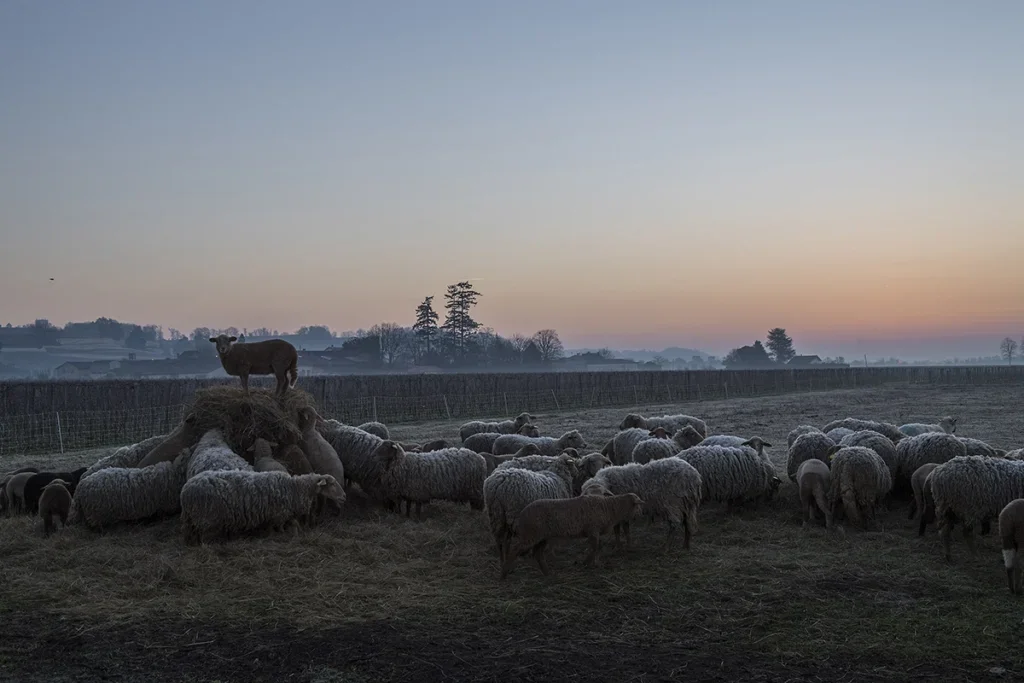
by François Poincet.
Today the journey takes less than an hour, if Bordeaux traffic permits, and St-Emilion is no longer a backwater. On the contrary, I would argue that St-Emilion has exerted a profound influence on viticulture and winemaking throughout the Bordeaux region—and beyond. Labor-intensive techniques of green-harvesting and leaf-plucking originated on the smaller estates of the Right Bank, led by visionaries such as Alain Vauthier and the Moueix, as well as by the garage gang, whose minuscule scale also permitted hand-sorting, malolactic in barrel, and other complicated, fiddly operations. Managers of large estates elsewhere would never have considered such practices, but the St-Emilionnais raised the bar, and now all ambitious estates right up to 100ha (250 acres) or more feel compelled to do so.
If I am asked, “What is St-Emilion?” I am tempted to reply, “The Burgundy of Bordeaux.” Approaching from the south, it certainly looks as bucolic as the Côte d’Or. The terroir mosaic is complex and fascinating, the scale is human, and the actors are human, too—in the best sense of the word. There has been a change of generation at the helm of many leading estates, with intelligent and passionate young directors bringing fresh ideas. And the wines themselves are becoming brighter, silkier, more perfumed and elegant… “Burgundian,” but still essentially Bordeaux. “Ageability and approachability,” said Pierre-Olivier Clouet of Cheval Blanc. “St-Emilion… Ah, c’est compliqué,” said Christian Moueix—but with that glint in his eyes that shows he enjoys every minute of it.