What do Joseph Roth’s novel The Legend of the Holy Drinker and Horace’s Odes have to say about the perils and pleasures of alcohol?
The other day, a young Ukrainian writer and artist I have come to know and esteem highly told me that he considers all forms of alcohol to be “evil.” This seemed a step up from the general move away from wine and other alcoholic drinks that has been widely noted in younger generations. When I asked Ilya why, he answered that they were addictive.
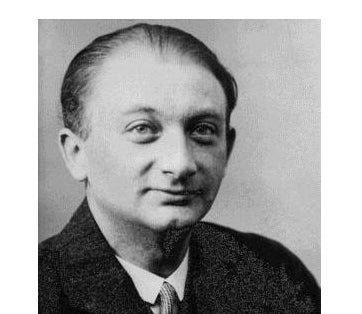
By coincidence, around the same time a book arrived in the post, a present from another writer friend, a Spanish diplomat and novelist. On a recent trip we made together to a fertile valley beneath the Gredos mountains, Ignacio had mentioned this book, a novella called The Legend of the Holy Drinker by the great Austrian interwar writer Joseph Roth, and expressed surprise when I said I hadn’t read it.
Perhaps Roth’s tale would provide some kind of rebuttal to Ilya’s starkly prohibitionist edict. For those who don’t know the book, The Legend of the Holy Drinker tells the story of Andreas, a penniless vagrant who sleeps beneath the bridges of the Seine and is never willingly sober. Fortune seems to smile on Andreas when a mysterious do-gooder slips him 200 francs—technically a kind of loan to be repaid, when and if the opportunity arises, to a saint—and Andreas is suddenly able to live the life of Riley. He smartens himself up, goes to a nice bistro and… You can probably imagine much of the rest.
Related


It must be said that Andreas is not an aficionado of fine wine—rum, anis, more or less anything will do. He is, in fact, by all conventional and scientific measures, a hopeless drunk. Far from getting back on the rails into, say, steady employment or a stable relationship, Andreas’s life continues to be a roller-coaster of indulgence, leading inexorably back to lonely chilly nights under the bridges. And the money, despite his best intentions, never quite gets paid back—or at least not to a saint.
So, Ilya was right. Alcohol really is evil and ruins lives. You might cite not just Andreas but his creator, who died from alcohol-related causes aged 44. Joseph Roth completed The Legend of the Holy Drinker in the last months of his life; it was his final work, and you could say his last will and testament. And yet, the picture I have given of Andreas is incomplete. As well as being a hopeless drunk, he is also, as Roth portrays him, a kind of saint or holy savant.
Among his virtues, as well as an uncommon courtliness (to use translator Michael Hoffman’s beautiful word), are a sense of honor and a complete lack of avarice. When offered money by the do-gooder, he initially asks for 20 francs—a pittance. Really, he doesn’t give a damn about money. He is singularly free of several others of the deadly sins—envy, wrath, gluttony, to name three. Even beyond that, he is not attached to things, including relationships of questionable value, that pass. He likes the good things in life but does not try to hold onto them. He is even willing to work, if the occasion arises.
Content from our partners



Divine intoxication
Am I convincing you—would I convince Ilya—that in his drinking, through his drinking, Andreas finds a kind of spiritual grace? Probably not. Let me try another tack, or another great author who celebrated the virtues of drinking, in this case specifically wine. Regular readers of this column will be aware of my reverence, only just this side of idolatry, for the Roman poet and enophile Horace.
Horace often and rightly linked wine and friendship. He is also known as a proponent of the golden mean and, in one poem, tells off a bunch of young men whose riotous carousing has descended into drunken brawling. But in two of his deepest and strangest poems, Horace speaks of a visitation of the wine god and of his personal experience of divine intoxication, which is also poetic inspiration. In the first, Odes 2.19, Horace claims to have seen the wine god Dionysus (also known as Bacchus), with his retinue of nymphs and satyrs, high on some craggy mountain. And the great Horace scholar Eduard Fraenkel believed he was telling the truth. “What excited the poet,” writes Fraenkel, “[…] was the mysterious power that emanated from the god himself, shaking a mortal out of his balance, and filling his breast with contrary emotions by mingling deadly fear with inexpressible joy.”
In the second poem, Odes 3.25, Horace goes still further and identifies himself with one of those followers of the wine god. Interestingly, they are mainly women (the Maenads or Bacchants), and they have the power to uproot trees with their bare hands. Nothing safe about this pursuit. “Dulce periculum est… sequi deum,” Horace tells Bacchus: “It is a sweet danger… to follow the god.”
Poor Andreas didn’t need to be told that. And yet he continued to follow the god, his god. And if, when he finally got to repay the loan of 200 francs, he offered it not to the sainted Thérèse of Lisieux but to an ordinary girl of the same name, who seemed as wonderful to him as any saint, who can really blame him?