


In his last column for The World of Fine Wine, Michel Bettane reflects on 20 years of working with this magazine and shares his concerns for the future of wine.
This will be my last “last page” for this magnificent magazine. I have been writing it ever since The World of Fine Wine made its debut and Hugh Johnson did me the honor of asking for my contribution. I imagine he thought it important to air the views of a journalist living in one of the great, historic wine-producing countries (a French-speaking journalist, that is—though you would never know it from Flo Brutton’s faithful and invisible translation). For me, this editorial was a way of thanking my English friends for bringing me into the fold of wine writing in the first place.
I will forever be indebted to the much-missed Steven Spurrier for admitting me to his Académie du Vin in 1979—the first school in France to take wine appreciation seriously at a time when the French and their close neighbors no longer led the field in wine education. These days, it lies with such authoritative bodies as the Institute of Masters of Wine to teach us about wine, based on global criteria that inevitably differ from the culture-driven standards prevailing in the Old World.
Struggle for survival
For two decades now, I have greatly enjoyed sharing my views, regrets, and hopes with this readership. I was able to do so because I made a point of visiting vineyards worldwide and reflecting on their future, something we French were not known for at the time. But at age 73, I feel my globetrotting days are largely behind me, and it is time for the new generation of wine critics to take over. Let them face up to the responsibilities of the job, which, to judge from the current state of things, will be onerous.
Related
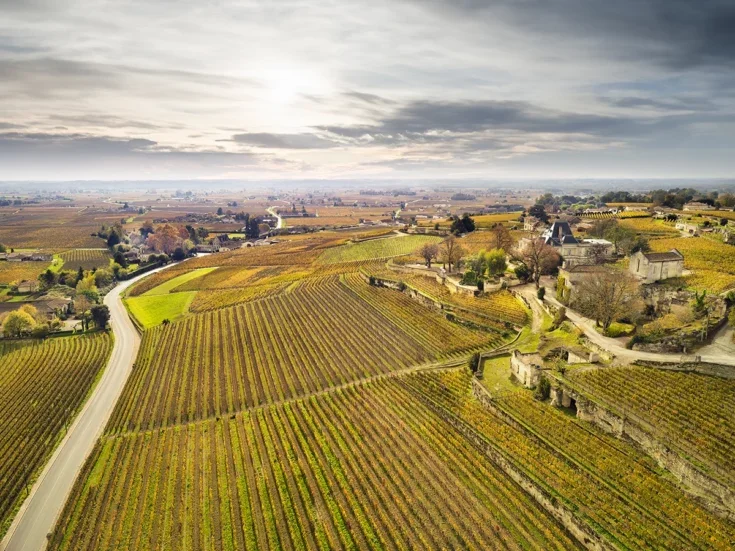
The world of wine is on the brink of the biggest struggle for its survival since the phylloxera era. First and foremost, there is the climate crisis. Global warming is changing the face and geography of wine, and unlike in the past, human activity is mainly to blame. We must therefore think very seriously about where our responsibilities lie—which isn’t easy when you have private interests masquerading as public concerns. The challenge, and it’s a tricky one, is how to maintain consistency in wine when production conditions are never the same from one year to the next. New wine technologies can certainly help, but only if we keep business and politics out of it. Because as we all know, there are hysterical moves afoot to uproot the world’s vineyards on the grounds that what they produce is a deadly poison. So says the anti-alcohol lobby, citing dubious claims in scientific papers that even one glass of wine is bad for you.
Here in France, we give credence to such nonsense, invoking the precautionary principle enshrined in our constitution. In Spain, by contrast, they invoke the right to protect their vineyards—a right that is not enshrined in the French constitution, despite a heritage of winemaking stretching back millennia. But then, to judge from the growing number of alcohol-free wines, not to mention all the media hype around Dry January, we appear to be in the grips of a new temperance movement heading us straight for prohibition.
What the new generation must do, therefore, is convince politicians of the disastrous prospect of a world bereft of vineyards. Without vineyards—and the vignerons who have shaped them over thousands of years—those pristine landscapes we admire today would not exist. Rural communities would lose their last remaining jobs. International trade would lose that subtle component that has made people prosperous, protected, and free—in democratic countries at least. For some, trade is at best a dirty word, at worst an instrument of warfare. For idealists such as Jean-Jacques Rousseau, trade alienated humans from their natural goodness. For Voltaire (and I’m with him), trade, from Latin commercium, signified an exchange that bound the seller to the buyer. For wine to exist at all, there must be people who want to drink it and do drink it, and people who produce it. Those producers in turn must be assured of a return commensurate with the effort they put in: working outdoors in all weathers to safeguard their harvests, and working indoors to maintain consistency year after year, despite the varying quality of the grapes.
Content from our partners
In practice, more than 80% of the world’s producers now struggle to make ends meet. With sales in freefall courtesy of your neo-prohibitionists, supply continues to outstrip demand, despite wine production being at its lowest level since 1961. Add predatory pricing, and is it any wonder that producers are going out of business? Only the luxury segment remains buoyant (just), which is no real consolation, since expensive wines are increasingly the preserve of the wealthy or are bought as speculative objects that make you forget they are beverages at all. One day, perhaps, they’ll end up in wine museums, as great a temptation to thieves as the French crown jewels…
As you can see, my young friends, you will have your hands full as you navigate this fascinating but endangered world. But on that whimsical note, let me reassure my friend Neil and all who sail with him that I am not abandoning their ship: There are many more moments of shared wine enjoyment yet to come!


