

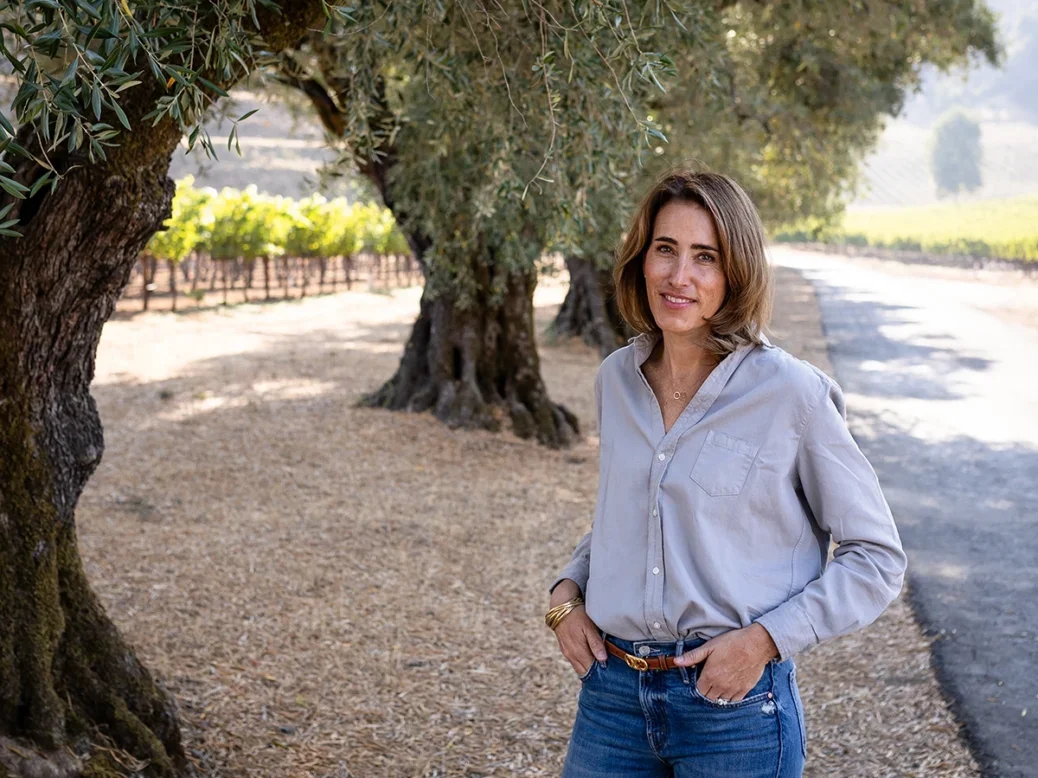
Under the benign but watchful gaze of the previous owners, Kathryn Green and her husband Jeremy have been intent on preserving a quieter Napa winemaking style at their St Helena and Heath Canyon properties—a way of being that stands apart from the glossy, glamorous caricature. Paula Redes Sidore reports.
There is a fear that Kathryn Green wakes with every day. Not a diffuse, free-floating unease but a precise, tactile worry—the fear of taking something beloved a degree off true. It is the kind of fear that comes with stewarding a set of vineyards whose former custodians still live within them, watching the seasons—and her choices. Most days, quite literally.
“Knowing they’re looking through their bedroom window makes you really think about what you’re doing,” Green says, with a cautious, wry laugh. “It keeps you on your toes.” Theirs is an unusual arrangement, one that would feel improbable elsewhere. In Napa, where land and stories tend to stay rooted even when ownership changes hands, it feels almost inevitable.
When Green and her husband Jeremy bought their Heath Canyon property in 2016, including 7 acres (2.8ha) of what they would come to call Cornelius Grove, and, three years later, the tiny 2-acre (0.8ha) Grace parcel above St Helena, both previous owners simply stayed. “They have been incredibly wonderful about not intervening and trusting that we’re bringing a new energy to the wines.”
Related
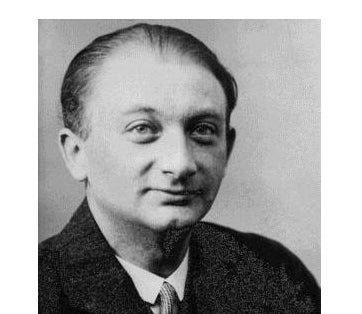
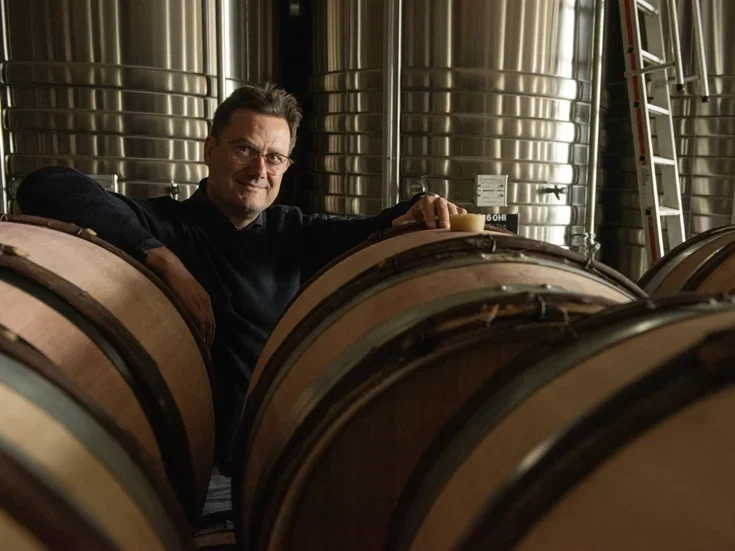
“They,” in this case, are California legends Dick and Ann Grace and Cornelius “Connie” Corbett, former owner and namesake of Cornelius Grove. They still walk the rows, point out wet spots, recall where the roots run shallow and the winds shear hardest. This gives Green more than a working map of some of California’s oldest Cabernet vines; it preserves a living archive that she now feels responsible to continue rather than overwrite.
“I believe that there is something that is lost when a person just sells, hands over the keys, and then walks away,” she says. “Their presence is a gift. It’s a living history.”
A valley built on accident and appetite
What makes that living history so essential becomes clearer once one senses the valley’s layers, how Napa stacks its stories the way it stacks its soils: volcanic against seabed, memory against myth.
Content from our partners


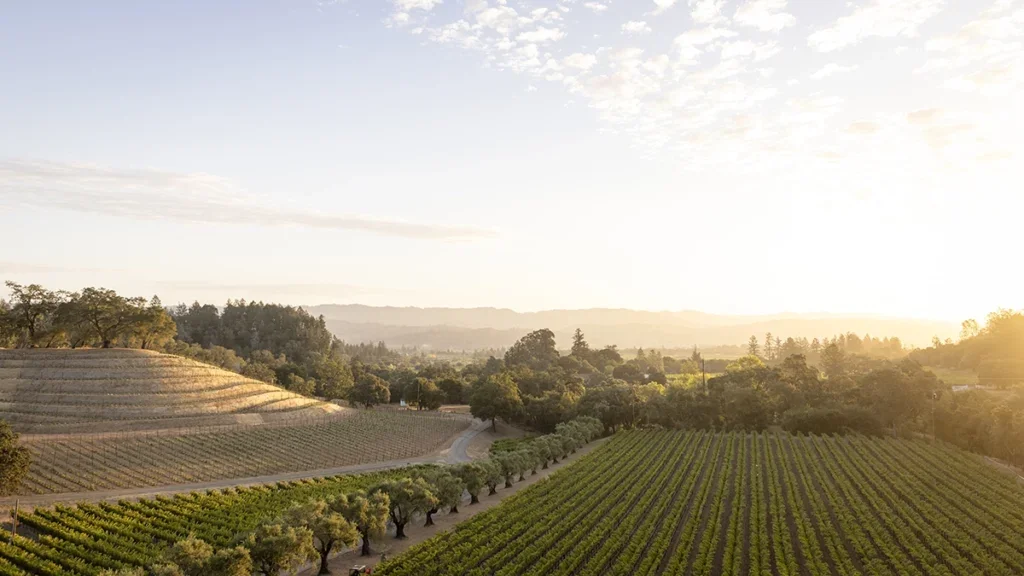
On paper, Napa is a 30-mile (48km) corridor of manicured vineyards and destination hotels, responsible for only 4% of California’s wine-grape volume yet driving nearly one fourth of its $84.5-billion wine-industry impact, mostly through premium bottles and the pull of its own story.
Napa is a narrow basin framed by the Mayacamas Mountains and the Vaca Range, warmed by a Mediterranean sun, and cooled by fog that pools in the mornings and drains away by afternoon. Its soils are a geological braid of volcanic rubble and ancient seabed, half the world’s known soil orders compressed into 5 miles (8km) of width. Land is scarce; planting new vineyards even scarcer. Scarcity became structure; structure became mystique.
Couple that with quality, and one gets the Napa the world thinks it knows—a natural engine for big fruit, bigger scores, and the kind of serious money that, as Hugh Johnson once wrote, turns a “sleepy farming community of walnut and prune orchards into the world’s most glamorous, most cosseted, and most heavily capitalized” wine address.
Then there is the other Napa, plainer and less photogenic: a small valley where people came for agriculture rather than adulation. “That’s the Napa we fell in love with,” Green says. “There are diamonds in the rough all over the valley.”
It’s easy to sort the valley into binaries—the postcard and the practical, the glossy and the gritty. Green’s remark suggests something more nuanced: There were never just two Napas. There are as many as there are bowls of soil and bedroom windows overlooking vines. “There’s a Napa,” concedes Green, “for just about everybody.”
Grace’s Place: The accidental icon
Grace Family began not with a business plan but a party. In 1976, newly arrived on their St Helena hillside, the Graces tore out old olives, planted a single acre (0.4ha) of Cabernet on a friend’s suggestion, and treated the fruit as little more than an afterthought to the Victorian house on the hill.
Dick was clear from the start: “I’ve never had any experience in agriculture, and I don’t plan on it.” In 1978, they invited friends to help pick their “hobby fruit,” and when the party ran long, they—and the fruit in the back of an Oldsmobile—arrived hours late to their appointment at Caymus. Chuck Wagner happened to be watering his vegetables. He tasted the grapes, was impressed, and gave the vineyard its own name on the label—an unplanned act that nudged Grace into California wine history.
The coincidences kept coming. Out of a casual dinner and a few admiring remarks came the decision to launch a label and convert the old barn into a 2,500-sq-ft (230-sq-m) winery; a few bottles passed around dinner tables became a mailing list; one steep acre of vines became part of the rising tide that would come to define Napa’s cult-Cabernet era.
The ethos of serendipity extended even to the estate’s people. When Helen Keplinger, then a pre-med student backpacking through Nepal, saw Dick and Ann Grace with a bottle of their own wine at a base-camp picnic table in the Himalayas, she introduced herself. Years later, when she interviewed for the winemaking position at Grace, she reminded Dick of the encounter.
His response was immediate: “You’re hired.” Out of a bottle opened at base camp came the winemaker who would, years later, shift the estate toward terroir and eventually bridge the Graces and the Greens.
Through the 1990s, these wines became a genre unto themselves—mailing lists, auction theater, and a stylistic consensus around dense, concentrated, lavishly oaked wines that commanded headlines and reset the valley’s center of gravity.
Even as ripeness and scores swelled in equal measure, Grace stayed strangely steady. The critics called their style lean, restrained; more interested in keeping its edges taut and focused than in chasing power. Some called it unfashionable. The Graces simply called it “site.”
Some, however, also began to question the viability of the general approach. Hugh Johnson, for example, captured the growing unease of the time in the last line of his Napa entry in The World Atlas of Wine (6th edition, reprint 2008) as he wondered how the “super‑ripe, super‑alcoholic Cabernets that now result from fashionably prolonged ‘hang time’” would stand the test of time in bottle—a doubt Green would later echo in her own, more local way. That refusal to swell with the times became, almost by accident, the estate’s signature—and the inheritance Green now feels obliged to protect.
The Cornelius conversation
Green’s path into Napa’s mosaic, however, begins not at Grace but in Heath Canyon, in an amphitheater of land where aspect and elevation shift the story by degrees, known today as Cornelius Grove.
“I’d been living in Napa for ten years, and I didn’t know this site well,” she admits, recalling the first time she saw the bowl on the east-facing slope. “The property is just magical. You drive past town, up this old winding road that leads to the top. If you keep on going over the road, you end up in Sonoma. Suddenly you’re in this bowl. It feels like you’re a million miles away, but the town is just right there.”
When the Greens took over, they resisted quick imprint. Instead, Green and winemaker and friend Keplinger divided the 7 acres (2.8ha) into 18 small blocks—by sun, by slope, by what burned off first when the fog lifted.
Cabernet and its cousins dominate, but there is plenty of room to play. “We brought over the Grace clone,” Green says, threading these two sites together, “and then Merlot, Petit Verdot, Cab Franc, [and] a little bit of Sauvignon Musqué and Sauvignon Blanc.” The aim was never to create a companion to Grace but a counterpoint—a place to ask what else Napa can be without pretending to be elsewhere.
“Everybody wants to liken Napa to Bordeaux,” Green says. “But it’s really more like the Rhône, with so many different soils and differences in microclimates over just a few hundred meters.”
On paper, the next step might have been to fold Cornelius Grove into the Grace property, turning two east‑facing benchland sites into commercial volume. Combining the two would have doubled inventory but blurred the distinctions that make each site legible. Green declined. Grace remains Grace.
“Grace makes itself,” she says. “Cornelius Grove requires conversation.” It is also the place where she experiments, recalibrates, and listens for a voice still finding its own form.
A voice that knows its register
Grace remains exactly what it began as: 2 acres (0.8ha) of Cabernet stacked like children’s blocks on an “incredibly red, rocky, and really hard” knoll above St Helena. Green calls the 5-million-year-old volcanic upper block, planted in 1976, the backbone, and the lower complement of sloughed-off ash and cobble, from the mid-1980s, the flesh. “Where the upper vineyard gives the strength and the power, and is incredibly dense, the lower vineyard brings a bit more plushness, an unmistakable velvet entry.” Together they form a balance whose subtle green edge and quiet tension echo a quality Green calls “Old World,” with an elegance uncompromised through almost 50 years and four winemakers: Randy Dunn at Caymus, then Gary Brookman’s calm articulation, Heidi Barrett’s power and precision, and since 2014, Helen Keplinger’s poised restraint.
Inheriting that steadiness is both obligation and relief. “It’s easier to protect a voice that already knows its register,” Green says. The window helps. Having Dick and Ann Grace above the vines is both “a blessing and a curse,” she admits, but mostly the former. They are a resource for stories, practical lore, and a daily reminder that someone who knows every vine is watching what she changes—and what she leaves alone. So do the soils. So does a sense that what matters in wine is not invention but interpretation.
Farming against the formula
For decades, Napa’s fast‑track recipe has been predictable: Hire a star viticulturist, hire a star consultant, plant Cabernet on a prized slope, and aim for power, polish, and points. When Green took over in 2019, she brought back David Abreu as viticulturist, not to replicate that formula but to close a loop—he had farmed Grace earlier and took pride in returning. “Yes, David created the crews that have put Napa on the map,” Green concedes. “But going back to him brought things full circle.” Now his son Matteo leads the crews, carrying that knowledge forward. “Matteo is really thinking about culture differently than it has been historically.”
The estate’s other pillar of continuity came through technology rather than lineage. Shawn DeMartino, whose career bridged Screaming Eagle and Harlan, came in to help with mapping during a planned replant. And he stayed. “He’s got a brain the size of a planet,” Green says, describing vine-by-vine mapping software that tracks pruning efforts, disease pressure, and micro-variability across tiny blocks. He is a beneficial counterpoint to Keplinger, who remains “an Old World winemaker at heart. Everything is in pencil and pen. She adapts, and she does use all the technology. But at the end of the day, you could take all that away, and she’d still make amazing wine.”
Together, the team navigates the “tough, painful calls” of agriculture: when to rogue, when to replant, how long to fight red blotch or esca, when sentiment must yield to the future. “You make decisions thinking in decades,” Green says. “We farmed a block for two or three years even though it was heavily virused and the yields were terrible,” she adds, a patience that can look like stubbornness or stewardship depending on your balance sheet. “The payoff is that that vineyard today is producing more yield and better-quality grapes than we’ve ever seen.”
None of this reads on the label. All of it writes itself into the wine.
The phoenix at the postern gate
And then came 2020. Smoke threaded the valley; prudence became a moving target. “You get one chance to tell your story every year,” Green says. “I’ve tasted smoke‑tainted wine, and it is like an ashtray, and what you don’t know is how that’s going to evolve.” The decision not to bottle was painful but obvious.
For a 350‑case estate, a missing year is measured in paused allocations, postponed cash flow, and relationships held with empty hands. “Fires reached the edge of Cornelius Grove, burning irrigation. Both sites bore smoke. “Thankfully, we had picked most of [the fruit] before it got that close. We were just trying all sorts of things,” Green adds, “because it’s not going to be the last fire.”
Reliquus—the name meaning “what follows”—was born from the gap: a 100% Cabernet Sauvignon blend drawn from the estate’s two vineyards. It was a wine intended to be more an expression of the vintage than the vineyard. Priced well below Grace and sold only to restaurants, it keeps the conversation alive without pretending to replace the core wine. “It shows Napa at an achievable level,” Green says—an experiment in cult without preciousness.
Scarcity remains structural—2 acres (0.8ha) can never be argued into abundance—but Green rejects its usual posture. She reduced allocations, shifted to three‑packs, and placed bottles with restaurants from New York to London, so the wine would be tasted rather than traded. “It’s great to have that moniker,” she concedes of “cult,” “but at the same time, there’s a snootiness, a gatekeeping—and that is not who we are. If you’re looking to tell a different story of Napa—the next-chapter story of Napa—you need to get the wine into people who maybe don’t know the chapters that came before.”
Terroir as governance
Grace Family’s arc and Green’s succession track Napa’s own evolution: from accidental origins and handshake deals, to cult mythology, and now into a more contested, climate-pressured future where stewardship matters as much as scores. Her decisions—keeping Cornelius Grove separate, skipping 2020, planting a diverse palette in Franciscan melange, rejecting gatekeeping—offer a glimpse into a Napa that could be, if listening outweighs ambition.
When asked what fire her up, Green doesn’t hesitate: “Oh, it’s Cornelius Grove,” she says. The bowl where mornings linger and afternoons soften; where soils shift from cobble to ash over a few steps; where 18 micro-blocks pose 18 slightly different questions. The place where the future is negotiated vine by vine. The place where possibility is its own form of accountability.
Cabernet may yet fall out of fashion, she concedes, “but if we do it right, there’s a beauty in Cabernet. We just have to go back to the 1970s, 1980s, and 1990s and find that beauty again.” The sentence lands like an answer to Johnson’s earlier question about ripeness and time. So, there are as many Napas as there are people willing to wake up with a very specific kind of fear and step out among the vines.
Which brings us back to the bedroom window
“When you’re building on top of a legacy of stewardship,” Green says, “you worry about taking a misstep and taking it in the wrong direction.” She pauses. “That, I think, is the fear that I wake up thinking about every day.”
The work now is to ensure the valley’s next chapter is written not by the loudest voices but by the most attentive ones—those who know that terroir is governance as much as geology, and that legacy is a conversation between what was planted and what is still possible. This, after all, is how a happy accident grows up.
An earlier version of this article appeared in German in Fine 71 (vol.4, 2025), and we are grateful to the editor and publisher for kind permission to republish it here.


