On a glorious spring afternoon, with the peach trees in full bloom, candy-floss against the vivid green of the pasture, I arrived in the southeast of Piedmont, the warmest part of the Italian region, to taste Timorasso—and where better to start than with the queen of Timorasso, Elisa Semino, at her estate La Colombera.
Elisa was among the original five producers, along with Walter Massa, who rescued Timorasso from near-extinction in1987, when just 0.5ha (1.2 acres) remained. Grown since the Middle Ages, this 19th-century stalwart had been replaced by the higher-yielding Cortese and Barbera. “It’s a rustic and ugly variety,” remarks Gian Paolo Repetto, president of the Colli Tortonese Consorzio. “Difficult to train and even in hot and dry years you can get botrytis.” (Not the noble stuff.) It’s slow to ripen and in foggy October harvesting Timorasso’s large, compact bunches is beset with difficulties.
Timorasso and TDN
But some like it hot and Timorasso has basked in the sunshine of recent summers which promote earlier harvest when this highly acidic variety finds a balance of 7 g/l total acidity at approximately 14% potential alcohol. Timorasso has dry extract more typical of a red variety and a component in the skin called TDN (1,1,6-Trimethyl-1,2-dihydronaphthalene) a precursor of its trademark hydrocarbon, kerosene-like aromas, similar to those in Riesling, but twice as potent. All this combines to make an aromatic wine, heady with ripe peach and exotic florals with a dense and substantial palate of rich texture—from heavy silk to oily—through which a blade of acidity cuts. It’s surprising how complex the aromatics become after just three or four years in bottle—think marzipan, honey, fennel, smoke, and of course petrol/kerosene (aka hydrocarbon) while its textural viscosity slims to reveal saline or smoky flint.
The mineral character is linked to the Sant’Agata Fossil marls (compact clay with high calcareous content) which characterize the region. Where the clay content is higher the wines seem silkier and charming, with soft salt to the finish; and where the calcareous element increases vigor, an austere character (producers say “rustic”) and hard minerals come to the fore. The active calcium contact is typically 20% but can rise to 40% although it’s difficult to establish a young vine at this level.
Related

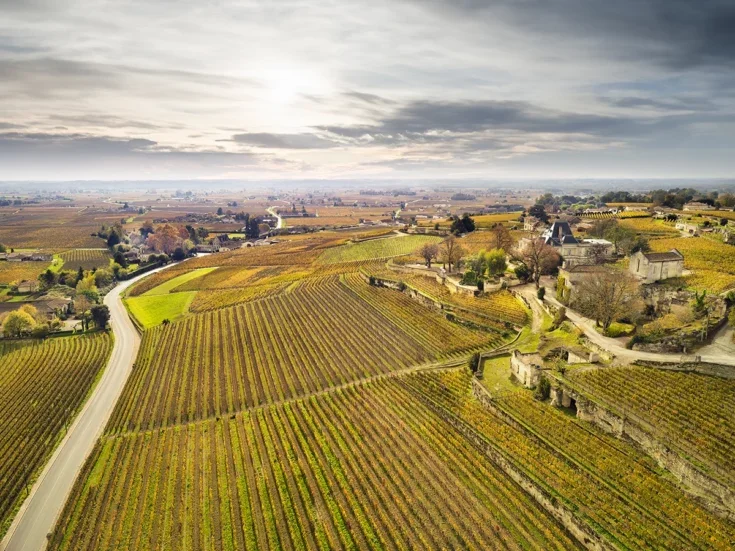
A special appellation for Timorasso was delimited in 2020. Dubbed Derthona, this sub-appellation of the wider Colli Tortonesi ties the variety to its terroir and is widely used on labels although yet to be fully ratified.
In common with many producers, La Colombera produces Colli Tortonesi Derthona Timorasso from a blend of parcels, and single-vineyard wines including Montino, which, in 2021—a hot but not extreme vintage with sufficient rain—already shows honey, dried fruits, and ginger aromas while the palate is rich but fresh, streamlined and salty. Montino from the cooler 2018 vintage has medicinal herbal aromas while the zesty palate combines chamomile with sapidity. The kilky-miso characters of the colder 2013 vintage have accrued no kerosene, since Timorasso requires heat to develop the TDN component.
“I like to see hydrocarbons in an older wine,” says Gian Paolo, “but feel it is a fault on young wine.” However, in the en primeur tasting, the character was apparent on many 2022s and 2023s. “Genetics, soil, and sun all contribute to TDN, which can increase by 25% in direct sunshine,” remarks Gian Paolo, who uses leaf cover for sun protection, and cover crops to prevent reflection from the white soil.
Content from our partners


The 2015, 2017, 2022, and 2023 vintages were all hot and dry, but the wines are in general marginally less alcoholic than in 2021, although 2021 seems more harmonious. This extreme weather has prompted producers, including Gian Paolo, to plant some vines on colder northwest-facing slopes. Vigneti Repetto Quadro is blended from the best fruit from multiple aspects as a means of finding a consistently elegant, trim style, while Repetto’s single-vineyard ORIGO is punchier and denser, with 24-hour skin contact (without stems) and plenty of solids building the burlier structure. Within a vertical of ORIGO, 2021 stood out for its energy and oyster-shell smokiness. My favorite, the 2019, showed marzipan and truffle aromas with a salty Parmesan palate, and the slimmer 2018 was savoury and saline with a mix of garden herbs and kerosene.
Terroir, variety, and winemaking in Derthona

Derthona is a combination of terroir, variety, and winemaking with the latter steering style in several directions. Among the 59 Timorasso producers, some use extended skin contact—from 12–40 hours, which lowers acidity, while increasing TDN and phenolics. Some go further, fermenting on skins, which didn’t work for me. Some use barriques to soften Timorasso’s acidity or flesh out the linearity from white soils. This works in La Colombera Santa Croce with its whiplash salinity, although it’s not not strictly necessary. At Sassaia, they take an unashamedly Burgundian route. The wines are well made, but the approach masks Timorasso’s varietal character and Derthona identity.
Claudio Mariotto is among those who favor whole-bunch soft press to minimises TDN and preserve low pH, followed by stainless-steel fermentation and aging on lees. This quirky producer, whose vineyards lie within a 6km (3.7 miles) radius of Sarezzano where active limestone is high, are lovely, with Pitasso the more refined single-vineyard wine, while Cavallina is more austere and compact.
MLF is not favored by home-grown producers. At 3.1–3.2 the pH is prohibitive, but malic is low at around 2g/l. “I prefer wines which are fresh and vertical, based on alcohol and acidity. Malolactic makes them more approachable but blocks longevity,” says Mariotto.
Langhe producers, including Vetti and Oddero, who started arriving in 2014, now have age-worthy whites to show alongside their reds, and using their established distribution channels have increased global recognition of Derthona Timorasso. This awareness is reflected by a rapid rise in planting from 40ha (100 acres) in 2008 to 440ha (1,100 acres) in 2024, although the permitted area for Derthona is currently capped by the Consorzio at 330ha (815 acres) in production, to avoid over-saturating the market.
The Consorzio has also introduced three categories of Derthona, and producers and press gathered to taste the latest releases of each at the Derthona Due.Zero event earlier this year. The categories start with Piccolo, which is released six months after harvest (and this year comprised wines from the disastrously wet 2024; alas the extreme nature of climate change); Derthona, which is released in the September of the year after harvest (which at this year’s event meant 2023 wines) and Derthona Riserva, which is released on March 1st in the third year post harvest (and this year featured 2022s).
At the tasting, I generally preferred the more energetic and consistent 2023s, with highlights including La Colombera Santa Croce; Borgogno & Figli; Boveri Giacomo Lacrima del Bricco; and Boveri Luigi. Among the Derthona Riserva 2022s, I enjoyed Davico Stefano Regina and Claudio Mariotto Cavallina, while both Marina Coppi Fausto and Boveri Giacomo Lacrima del Bricco were standouts and the highest score went to Boveri Luigi Filari di Timorasso.