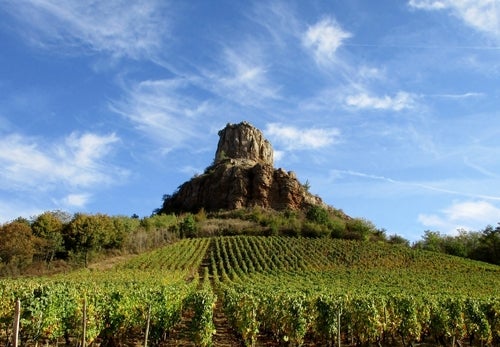
I enjoyed the fresher style and lighter body of the 2024 wines in the Mâconais in comparison with those from 2023 and 2022. But there is also good concentration. Fuissé Vignes Blanches is more precise at the edges and Les Reisses has produced rather elegant wines from a slightly cooler exposition. From both of these premiers crus I particularly liked wines from Pierre Vessigaud. Les Perrières can feel a little light on intensity, but Domaine Ferret has a vibrant expression, straight, light, and saline. Spot-on for typicité.
I warmed to the full and juicy, fresh character of Les Ménétrières, which seems in its element in 2024. Vers Cras benefited from having a little less weight in 2024, but no lack of power. Even in 2024, the wines from Solutré are quite rich, with Le Clos de Solutré producing wines of some density, while Au Vignerais is full and glossy in texture.
In Vergisson, 2024 is a better vintage for La Maréchaude which is lighter on its feet than recently. Although it may be the coolest village, in a hot vintage both La Maréchaude and Les Crays show very ripe fruit, which detracts from the vibrant style that makes the wines of Vergisson so attractive. Les Crays has thin, stony soil and is well-exposed, so can get very warm. But 2024 showcases the more stylish profile of these climats, with plentiful ripe fruit together with more tension. I liked the savory grip in Jacques Saumaize Maréchaude. The best Les Crays are concentrated, straight, channeled and racy. Domaine Morat have a great example. Sur la Roche, always among my favorite premiers crus, is silex and salty. The most intense example comes from Domaine Morat, but Gilles Guerrin’s wine also shows nervy typicité.
In Chaintré, it was the first time I have tasted wines from premier cru Le Clos de Monsieur Noly that align with my expectations of the terroir—inviting, rounded, and generous.
Related

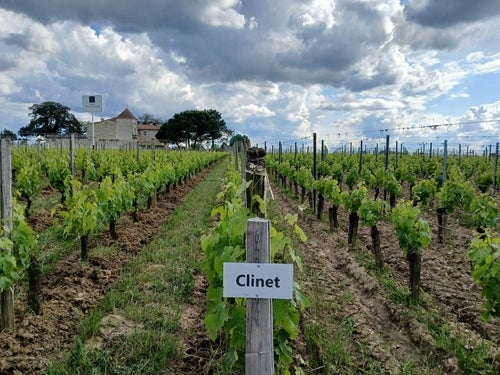
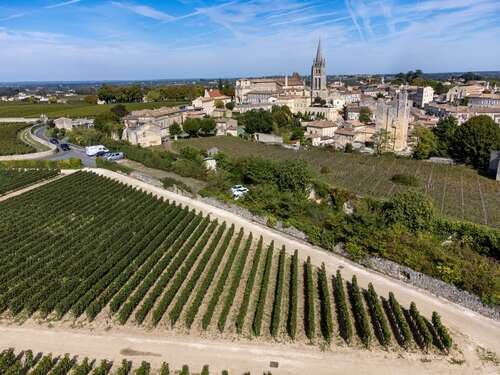
As elsewhere in Burgundy, it was a difficult growing season in the Mâconnais, starting with some hail, although that was the least of the problems. Olivier Giroux at Domaine du Clos des Rocs lost 20% to hail but was much more concerned by the mildew. “This is the main fight for the future. After the harvest last year, every winemaker was destroyed.” Early-flowering parcels suffered from coulure and millerandage, because it rained throughout that crucial stage of the cycle. Pierre Desroches in Solutré, however, believes that growers in his village suffered less from mildew than those in other villages, “as we have less water in the soil.”
“It was a difficult vintage, with lots of rain and mildew,” says Aurélie Cheveau who has been working organically since 2021 and is now certified for the 2024 harvest. “We had to spray often—15 or 16 times—and three times by hand early on, as it was too wet to use the tractor. There was not a lot of sun—just three weeks in August were sunny—and this was important for generosity in the wine. In general, in Pouilly-Fuissé we harvested 15% less than usual, September 13–19.”
“Between the end of July and throughout August we had about two weeks of good weather,” recalls Olivier Giroux, who started harvesting on September 10.
Content from our partners
At Château Fuissé, Antoine Vincent, who spoke of leaf-plucking for better aeration and spray penetration, began harvesting on the September 12 and remarked on the colder mornings—a chilly 43–46ºF (6–8ºC) versus 68–77ºF (20–25ºC) in 2023. Château Fuissé’s average yields were good at 50–52hl/ha. Lower in Fuissé, the crop was 30hl/ha, but it was 40hl/ha in Vergisson, where the estate has some village parcels, thanks to better conditions at flowering. Antoine achieved natural alcohol levels of 12–12.5%—even 13% in some premiers crus (so no chaptalization)—with pH levels of 3–3.2.
Simone at Domaine Pierre Vessigaud looked up the figures from the analysis. “For two premiers crus, the acidity was very present after MLF—pH 3.12–3.13 and total acidity levels of more than 4g/l (as sulfuric)—while the alcohol level was 13%.”
Some chaptalization was necessary for regional wines, but rarely for premiers crus. At Domaine Cheveau, Pouilly-Fuissé Premier Cru Aux Bouthières reached 14% naturally.
In general in the Mâconnais in 2024, acidity was relatively fresh in comparison with 2022 or 2023, and pHs on the medium to low side. Pierre Morat in Vergisson harvested from September 18 and had pH levels of 3.15–3.2. There was about 4g/l of malic acidity in Sur La Roche, and Pierre describes the impression of the lactic acidity as “melted—it was absorbed by the oak.”
At Château de Fuissé, Antoine Vincent emphasized the importance of a light crush followed by a soft press. He took the juice only from the first 0.2 bar of pressure for Le Clos, declassifying the remainder.
Pierre Desroches, like almost all of his fellow growers, finds that 2024 has more freshness than 2022 or 2023. He loves big, rich wines, but most producers prefer 2024 to 2022 or 2023. At Domaine Ferret, Clément Robinet considers 2024 to be most like 2021, but a bit riper: “Both had high acidity, but there was a lot of millerandage in 2024, which helped with the concentration.” Pierre Morat also finds it similar to 2021: “Riper, but with similar acidity. We also started the harvest earlier in 2021. The style of 2024 is fresh and pure, without the round side of 2023 or 2022.”
Antoine Vincent finds 2014 and 2024 similar but adds, “There was more ripeness in 2024. So, there is 2014’s freshness and minerality, with some of 2020’s structure. 2018 and 2019 were both richer, while 2011 was sharper, than 2024.”
First premiers crus for Pouilly-Loché and Pouilly-Vinzelles
It took 18 years for the Mâconnais villages of Pouilly-Loché and Pouilly-Vinzelles to receive accreditation from the INAO for four premiers crus. These are Les Mûres (7.09ha) in Loché, and in Venzelles, Les Quarts (12.45ha), Les Longeays (7.5ha), and Les Pétaux (2.26ha). The first eligible vintage is 2024, which will come to the market in 2026.
The lengthy process was spearheaded by two high-profile organic producers—Olivier Giroux of Domaine du Clos des Rocs in Loché and Jean-Philippe Bret of Domaine de la Soufrandière in Pouilly-Vinzelles. In order to use the premier cru classification, no herbicides can be use in the vineyards, which must be manually harvested. “We are committed both to quality and sustainability,” remarks Olivier.
Loché’s and Vinzelle’s premier cru surface area is dwarfed by that of Pouilly-Fuissé. Loché has just 32ha (79 acres), of which 65% of the area is managed organically and 25% is sold to the local co-operative. Vinzelles has 52ha (129 acres), of which 45% of the area is organic and 40% is sold to the co-op. Only five domaines are based in Loché and seven in Vinzelles, while across both villages there are approximately 60 growers cultivating less than 0.5ha (acres), many selling to the co-op.
The local co-op (cheekily called Caves des Grands Crus Blancs) objected to hand-harvesting and the ban on herbicides. It lost the argument but continues to accept fruit from growers using herbicides in premiers crus, thus forfeiting the classification. This seems to me such a wasted opportunity to aim for higher quality, fulfil the potential of the terroir, and promote the new premiers crus, not least because they sell to visitors at the cellar door in Loché. I tasted their Les Quarts and Les Mûres: not good.
As president of the syndicat of growers, it is Olivier’s job to police the vineyards, reporting those using herbicides or machine harvesting where they shouldn’t. We walked and talked in the premier cru vineyards, stopping to assess the contrast between responsibly cultivated parcels and the lunar landscape where herbicides had been used. There was moss growing in the top section of newly minted premier cru Pétaux: “A sure sign of a dead soil,” says Olivier.
Let’s start in Loché, where Les Mûres (literally, “blackberries”) proved quite complicated to ratify. Originally it was 9ha (22 acres). After the soil scientists had assessed it, INAO discounted the top section, reducing it to 5ha (12 acres). Olivier challenged this on the basis that the calcareous clay continues up the slope, which was upheld, gaining 2ha (5 acres). He comments, “It was correct that the very top should be discounted, because the soil is sableux (sandy) over deep clay.” Potential premiers crus were assessed on terroir,“usage” (historical precedent), and three blind tastings of several vintages.
Les Mûres is east-facing on a gentle slope, quite close to the mother rock, with a thinnish topsoil. “You get the richness of the terroir, with the dynamic style of the limestone,” remarks Olivier. “It’s always generous, but salty to finish. In Loché, we harvest a week later than Vergisson. Mûres can gain 1% potential alcohol very rapidly. To keep the balance is not easy.” Mûres is produced by six winemakers and all but 0.5ha (1.2 acres) is managed organically. No moonscape there.
Incidentally, Olivier tells me that Clos des Rocs (a monopole, tipping slightly northward, that he owns) was discounted for promotion on the grounds that he is a significant owner of Les Mûres (with 4ha [10 acres]). Well, even new classifications are not perfect.
A small road runs along a tiny ridge dividing Les Mûres from Pétaux in Vinzelles, where the orientation is south. The lower section of Pétaux belongs to Château de Vinzelles and is managed organically, while the upper part, owned by a herbicide-using grower, is sold to the co-op. “Pétaux always had something to offer in the blind tastings,” recalls Olivier. I was underwhelmed by the 2024 sample from Château de Vinzelles, which had nothing distinctive about it. At the time, the estate was in transition to Jean d’Arthuys a businessman with interests in TV and football, so maybe someone took their eye off the ball. This 60ha (148-acre) estate has unexploited planting rights within Vinzelles, which will probably see the surface of the village increase by 8ha (20 acres) under the new ownership.
On the BIVB’s terroir map, Les Mûres and Pétaux share the same soil profile—“argileux caillouteux sur calcaires durs a entroques” (stony clay on hard limestone)—with neighboring Les Buchardières, which, Olivier explains, was discounted on the grounds that it is not produced by anyone, so there was no history and nothing to taste, except for a parcel on an east-facing slope directly in front of the 17th-century château, which is in production. Olivier believes it would certainly have qualified for premier cru status. But ten years ago, the owners registered it as a lieu-dit, “Château de Vinzelles,” and were not prepared to relinquish the name. Apparently, premiers crus cannot include the word “château.” So, another climat missed out on promotion.
Next up is Les Quarts and its southerly neighbor Les Longeays. These occupy an east-southeast slope, which catches the sun until the evening. Adjacent to Longeays is Chaintré Aux Quarts, part of the Pouilly-Fuissé stable of premiers crus. Olivier considers the overarching village profile of Loché and Vinzelles similar to the rich, full-bodied style typical of Chaintré.
Quarts and Longeays share a deep clay profile. Jean-Philippe Bret is the largest owner of Quarts, with 4ha (10 acres). Bret also has vines in Longeays, but here Domaine Thibert (based in Fuissé) are the major proprietors, with 1.2ha (3 acres). Jean-Philippe tells me there is more iron in the soil in Les Quarts than in Longeays, and the quality of the clay is superior. He considers the premier cru delimitation of Les Quarts extends too far down the slope—below which it becomes Vinzelles and, on the flat, Mâcon-Vinzelles—but his concerns were over-ruled. In neighboring Chaintré, there is a similar argument that Le Clos Reyssier extends too far, but it squeezed in among the premiers crus on the grounds of historical precedent. Olivier remarks ruefully that many factors come into the process of defining a premier cru. “There’s always a discussion.”
The soil map indicates a stony strip along the top of both Les Quarts and Longeays. From this part, Jean-Philippe produces Les Quarts Cuvée Millerandée from 80-year-old vines. This has an extra level of intensity, earthiness, and grip, while from the section below he makes his main cuvée from vines of 50–80 years old, which is generous with greengage fruit, even in 2024. In comparison with Les Longeays, Les Quarts is more muscular and full-bodied, while Longeays is supple and charming. In Longeays, Sophie Cinier has 0.1 ha (0.25 acre) of 120-year-old vines from which she produces around 800 bottles. She describes her lively Longeays as elegant, by comparison with her Pouilly-Fuissé premier cru Ver Cras. Domaine Thibert makes a richly textured, showy Longeays.
It must be acknowledged that Jean-Philippe and Olivier, as the largest landholders, have benefited more than any other producer from the premier cru promotions, but Olivier will not increase his prices. “We should respect the customer and not repeat the mistake of Pouilly-Fuissé.” I believe him when he says, “It’s not for us but for the next generation.” Of most significance to Olivier is the “recognition that Loché and Vinzelles have the quality to make premier cru.”
CHÂTEAU DE BEAUREGARD (FUISSÉ)
Ninety percent of this 60ha (148-acre) estate is hand-picked by 80 harvesters. Some Mâcon is harvested by machine.
Pouilly-Fuissé Premier Cru Maréchaude
Spicy aroma, with lots of fresh fig and nutmeg. Glossy richness up-front, to a full and generous palate, with quite a lot of oak evident. Fleshy. Succulent finish, but not so long. A more opulent style. 2026–34. 88
Pouilly-Fuissé Premier Cru Vers Cras
Cool, stony aroma. Smooth, warm- and wet-stone minerals on the palate and finish. Good depth. Well-balanced, with a warm/cool juxtaposition, and very inviting. 2027–35. 91
Pouilly-Fuissé Premier Cru Les Vignes Blanches
Pretty white floral aroma. Ripe strike, lightly rounded at the front. Notes of toasted almonds. Savory fruit is undercut by a sappy line of acidity that carries into a sapid and lightly salty finish. 2027–32. 88–89
BRET BROTHERS (VINZELLES)
The Bret Brothers make 15 smallish cuvées (around 3,000 bottles per cuveé) under their négociant label (their domaine wines are under La Soufrandière). Since 2019, they have bought only from certified organic vineyards or those in conversion. Very low added sulfur levels (total 25–35 ppm). A couple of engaging Mâcon wines. Jean-Philippe Bret finds interesting parcels.
Mâcon-Igé En Chanelet
From a west-facing parcel at 230m (750ft) with white, limestone soil. pH 3.1 12.5% ABV. More sapid and intense than the Mâcon-Verzé Les Perches, this also has lively energy but is more savory and has an attractively dry-stone saltiness to finish. 2026–30. 87+
Mâcon-Verzé Les Perches
From a north-facing parcel at 230m (750ft) 230m, with 40–50-year-old vines. pH 3.1 12.5% ABV. Sweet lime fruit; nice energy and plenty of freshness. Juicily citrus. Sprightly. Certainly appealing. 2026–29. 87
Pouilly-Fuissé En Carementrant
From a 0.4ha (1-acre) parcel at 280m (920ft) with a 20% gradient on a south-facing slope and limestone soil. Early maturity in this spot. A sunny, ripe-citrus aroma. Nutty on the attack. Savory and citrus on the open palate, with miso notes and slight fennel bitterness, which serves as freshness and provides balance. 2026–30. 88–89
Fleurie Poncié
From a 0.5ha (1.2-acre) parcel on rose granite at 280m (920ft). Carbonic maceration. pH 3.47 and 12% ABV. Élevage in pièces for 10 months. Total SO2 10ppm. Such pretty red fruit, as you might expect, but with lively crunchiness and slight anise bitterness. There’s transparency to the terroir in this light-bodied wine. Simple but so very yummy. 2026–28. 85
Nicolas and Aurélie Cheveau have 5.6ha (14 acres) and five premiers crus. Samples were just from one barrel, so are not representative, but Nicolas had broken his toe in the middle of June, when the pressure of mildew was high, and Aurélie was run off her feet.
“A little chaptalization for the Mâcon. Because we hand-harvest everything, we had to start picking and needed to chaptalize wines from the higher, north-facing Mâcon parcels, but not the premiers crus. Aux Bouthières premier cru naturally reached 14% ABV.”
Nicolas says, “Typically, the wines did not have much malic acidity—2–3mg/l—it was mainly tartaric acidity. After MLF, pH levels averaged 3.2, but Ménétrières was lower, and is really fresh and vibrant. “2024 has good acidity,” says Nicolas. “When you work organically, you have good acidity and pH.”
“I separate out the end of the press. A little foulage, and with this crush we have only a little juice. I need just one hour, and I take 85% of the juice at 0.8 bar. The press goes into the Bourgogne Blanc.” They make 20 cuvées here.
The premiers crus are aged in a mix of 600- and 300-liter barrels, Damy and François Frères, for the main part. They spend 12 months in oak and ten months in stainless steel with lees. No bâtonnage, except one before the blending and transferring into stainless steel, as they take all the lees. No filtration.
Nicolas never uses any fining agent now, and for the premiers crus no filtration either. He works with the moon for bottling and will bottle the premiers crus in July, with SO2 at maybe 20–30ppm. Natural CO2 is key: “I keep a lot of gas, so I can use less SO2.”
Nicolas says the 2024 vintage is “maybe like the 2014 and has the best acidity since 2014. In 1996, we had ripeness, with less good acidity—and larger yields, too. It is difficult to compare newer with older vintages, as the vineyards are older and the work is so different now. We also have lower yields than ten years ago. Maybe a little like 2010. Not like 2008, as we had 4g/l malic.”
Aurélie Cheveau, who is president of the Pouilly-Fuissé growers’ association, remarks, “The premiers crus are on the road. We need to work more on the notoriety. It’s difficult in the market, but sales are good. We do not have a lot of stock [I know that other producers are sitting on more stock], as we have a good quality/price ratio and more market in Asia, because when you have premiers crus, you have prestige. We sell about 10% to the US, which is okay for us. Other estates are selling about 30% to the US.”
Pouilly-Fuissé Sur La Croix
From a north-facing parcel near Aux Bouthières but over the hill on the cooler flank, beside the cross, with deep marl soils. It is aged in 600-liter demi-muids, and my sample was from a Rousseau barrel. Warm, perfumed aroma; a charming nose to a sappy, pure, and smooth-stone palate, with an attractive, sapid finish. This is more instantly harmonious than some of the other cuvées. 2026–32. 85
Pouilly-Fuissé Sur La Rochette
From a north-facing village parcel on the slope opposite premier cru Frérie, with red clay as well as lots of stone and limestone. My sample was from a Damy barrel. This was to be bottled in October 2025 after two months in stainless steel. It is straight and citrus, with some tension and herbal bitterness. I like the intensity for a village wine. Top-notch. 2026–31. 85
Pouilly-Fuissé Premier Cru Aux Bouthières
From an east-facing vineyard where, Aurélie adds, “There is more limestone than in Chailloux.” There was only one 600-liter new oak barrel in 2024, all for the US market. This was to have a further six months in stainless steel, as it was pretty oaky when I tasted it. Beneath the obvious oak, it is zesty but also full-bodied, fruity, and up-front. 2027–33. 90
Pouilly-Fuissé Premier Cru Aux Chailloux
From a small parcel with only 12 rows of vines, south- and (a little) east-facing, with brown clay soil mixed with chailles (flintstones). One 600- and one 300-liter barrel in 2024. A warm and fruity aroma. Juicy, splashing, apricot and peach fruit, with vibrant citrusy acidity. Upfront and gregarious. 2027–30. 90
Pouilly-Fuissé Premier Cru Les Ménétrières
Only a wall divides this climat from Les Clos, at about the same altitude as the middle section of Les Clos, but the slope is slightly more south-facing and the soil is slightly richer in clay. My sample was from an older 600-liter barrel. It is ripe and rounded but also nicely fresh and surprisingly energetic. 2027–33. 90–91
Pouilly-Fuissé Premier Cru Pouilly
From an east-facing 1.5ha (3.7-acre) parcel on a 40% slope where it catches the sun all day. From 2024 there will be 10,000 bottles. Picked in the middle of the harvest, it is super-juicy but retains good acidity. It’s ripe but has good tension, even though the finish is sunny. 2027–32. 89
Pouilly-Fuissé Premier Cru Vers Cras
My favorite cuvée at this domaine. My sample was from a new 600-liter Tremeaux barrel, so quite oaky, but under this, there is vibrant, intense fruit, with a direct and well-sustained finish. Another sample from a four-year-old Damy barrel showed such attractive mandarin aroma, with a bright and juicy palate. Appealing sapidity and freshness to finish. Rather elegant, with sweeping stretch on the finish. I did not get the full picture, but the composite parts look good. 2027–34. 92
Beaujolais-Leynes Le Bouteau
From a lieu-dit close to Chaintré Monsieur Noly, on the slope opposite St-Amour across the valley, with clay, granite, and blue stone in the soil and a southerly exposure, so the vines reach a good level of ripeness. “We harvest this after the white wine and vinify it like a Burgundy, with pigeage [by machine] and remontage over 12–14 days, followed by two years in foudres. An up-front, red-fruit aroma. Super-juicy splash on the front-palate. There is substance and tannic bite. Very attractive. 2026–31. 81
DOMAINE SOPHIE CINIER (FUISSÉ)
From a small domaine of less than 4ha (10 acres). In her Pouilly-Vinzelles Premier Cru Les Longeays parcel, Sophie Cinier has 0.1ha (0.247 acre) of 120-year-old vines from which she produces around 800 bottles. She describes her lively Longeays as “elegant” by comparison with her Pouilly-Fuissé Premier Cru Ver Cras.
Pouilly-Vinzelles Premier Cru Les Longeays
An upright citrus aroma. Attractively light, with vibrant fruit and slicing acidity. Bright and lively to finish. 2027–31. 88
DOMAINE DU CLOS DES ROCS (LOCHÉ)
Olivier Giroux is a relaxed winemaker. He doesn’t like looking at the numbers but works with what the vineyard and the season give him.
Olivier bought the domaine when he was just 22 years old, because he wanted to work alone. He was born in Fuissé but left to establish a large joint venture in the Rhône, before returning when his mother tipped him off that him a small domaine in Loché was for sale. “There were a hundred interested parties. I came here just before a big storm, and it just had a good feeling,” he says. It is indeed a stormy place—he has since lost several of the trees.
Because Olivier works organically, in 2024 he had to spray 16 times. The early-flowering parcels had a lot of millerandage. The mildew pressure came later. “Between July and August there were two weeks of nice weather.”
The wines age for a year in oak and he likes 500-liter barrels with a further year in stainless steel. Sulfite-free until bottling and no filtration. I tasted in June and again toward the end of the year.
How does Les Rocs differ from Mûres? “The aspect is a little different and Les Rocs has absolutely no topsoil. It is also a little higher and gets a bit more of the north wind, while Les Mûres has deeper soil and is just off due east.” A little bit of Rocs was formerly a quarry, but this chunk isn’t included.
What is most important to Olivier? “The life in the soil and the resonance it gives to the wine.” Olivier’s wines certainly resonate with me.
Pouilly-Loché Les Barres
From a 0.5ha (1.2-acre) parcel of 50-year-old vines on an east-facing slope with gravelly soil and pebbles. Crushed grapes and a slow press, then 500-liter barrels 2–8 years old. Energetic and sappy, with ripe citrus fruit combined with cool-stone grip. Nice juxtaposition and good energy. A discreet wine but it does not lack personality. Pushes through rather well, to boot. 2027–30. 88
Pouilly-Loché Révélation
An experimental cuvée from 0.2ha (0.5 acre) of the oldest vines of Clos des Rocs, now 85 years old, in red-clay and limestone soil rich in iron. From 2024 there are 1,200 bottles. Aged for 11 months in Minier barrels. Somewhat exotic fruit, with pineapple richness. Dense, rounded, full, and juicy, with a ripe, succulent, sumptuous feel yet so sapid and salty on the finish. It’s quite rugged. This has rusticity, while the main Clos des Rocs cuvée has a more balanced and sophisticated profile. 2027–33. 90–91
Pouilly-Loché Premier Cru Cuvée Clos des Rocs (Monopole)
This vineyard, planted in 1985, is largely east-facing but tips slightly to the north, so it is cooler than Les Mûres. There is certainly iron in the soil, for it’s quite red, but it’s also “high in active limestone,” says Olivier. The rocks here are tremendously heavy—I picked one up to check it out. When first tasted in June 2025, the wine was steely, super-energetic, and tense. Much more citrus, sappy, and sapid than the rounder Les Mûres. The acidity was very lively, and the finish was citrus and fresh, with a touch of almond bitterness, which I liked. Tasted blind at the end of the year, I noted a tannic character, an alluring, burned cumin-seed bitterness, and a salty freshness on the finish, which was well-sustained, so I nudged the score up a tad. 2027–35. 92
Pouilly-Loché Premier Cru Les Mûres
Tasted in June 2025, this was golden, juicy, and round, with a touch of apricot on the nose. The palate was full, with good depth and generosity, and a supple, stony, savory finish… just slightly salty to end. Tasted blind at the end of the year, it was more focused, powerful, and persistent. Cracks the whip, with chilly, stony notes and phenolic grip and a savory, tapenade note. Earthy depth and silex smokiness. The creamy texture reins in the severity. Very good and well-sustained. 2027–35. 93
Jeremy Corsin has 3.5ha (8.6 acres) in Pouilly-Fuissé and is a sixth-generation vigneron. He has vines in three premiers crus, but the fruit from those in Pouilly and Bouthières are blended to make an exceptional cuvée of about 1,500 bottles most years. He says south-facing Chailloux has less chaille (flintstone), and more limestone and clay, than you might suppose based on the lieu-dit. His vines here are 75 years old. 2019 was his first vintage and he tells me his grandfather was among the first to bottle here, starting in 1936. He works organically but is not certified. He aged the Chailloux in 50/50 stainless steel and oak and bottled just after the following harvest.
Pouilly-Fuissé Premier Cru Aux Chailloux
Attractive, fresh apricot aroma into a succulent, full, and rounded palate, with tropical notes of pineapple. Plenty of up-front fruit here, rather than minerality. Enveloped in spice and cedar notes from the oak. 2027–30. 87
DOMAINE DE LA CREUZE NOIRE (CHAINTRÉ)
At their family domaine, Dominique, Christine, and Loïc Martin are the only producers currently making Pouilly-Fuissé Premier Cru Le Clos de Monsieur Noly, and I was delighted to try it. It showed all the typicité I had anticipated from this terroir.
Pouilly-Fuissé Premier Cru Le Clos de Monsieur Noly
Rich with Brazil-nut unctuousness and viscosity, full-bodied and generous, underscored with just nicely savory minerals and I like the sight bitterness to finish. Very yummy and inviting, with the honeyed/bitter almond finish providing some oomph. 2027–32. 88–89
Pierre Desroches likes a richer style of Pouilly-Fuissé and waits to harvest at full ripeness. “I like round wines, so I harvest later.” He works with his wife Marie. His father started with just 0.3ha (0.75 acre), and Pierre, who made his first vintage in 2010, has built the estate to 13ha (32 acres) in Pouilly-Fuissé, mainly in Solutré, where the family have had vines for six generations. He has been certified organic since 2022, when he also built a new winery. In 2025 he will bottle five premiers crus, adding Maréchaude to the list (until 2025 he had been selling the grapes).
Pierre describes the Solutré premiers crus where he has holdings as follows: “Servy, which is in the middle of the hill, is more rounded and richer in texture. Clos Solutré is also rich, while Vignerais is a bit more mineral.” We tried a magnum of 2018 Vignerais; this hot vintage was clearly helped by the large crop, for this full and rounded wine has retained freshness and balance.
Pouilly-Fuissé Premier Cru Le Clos de Solutré
Hot stone and tropical fruit. Mango fruit on the full-bodied palate, which is quite thickly textured, but there is sapidity underneath, which pushes into a longer and more assured finish. It’s really quite punchy. Muscle and vigor. 2027–35. 90–91
Pouilly-Fuissé Premier Cru La Frérie
Fern-like aroma. Much greener on both nose and palate than the sunny Servy. Quite lean and crispy. Not that long, but fresh and energetic. Nervy and herbal. 2027–32. 88–89
Pouilly-Fuissé Premier Cru En Servy
Succulent, with a touch of tropical fruit; rounded and forthcoming. A light bite of graphite minerality comes up under the palate to finish. Should be widely appealing. 2027–32. 88
Pouilly-Fuissé Premier Cru Au Vignerais
Richer still, this is full, opulent, and voluptuous; super-juicy and generous, sweet acidity providing balance for the caramel richness. A very sunny disposition. 2027–35. 90
This domaine, part of the Jadot group since 2008, has 17ha (42 acres) in Pouilly-Fuissé, all hand-harvested. The cellar manager and winemaker, Clément Robinet, joined two vintages ago, and in 2022 he blocked the malolactic in part for Les Ménétrières. We tried the 2014, as Robinet finds this the most comparable vintage. It was surprisingly rich and full, showing depth, tension, and minerality. “Full east-facing on a gentle slope above the road,” Clément explains, “and we have 0.8ha [2 acres] in the historical part.” I chose to include the two wines below because they are polar opposites, but all of the wines have transparency to the terroir.
Pouilly-Fuissé Premier Cru Les Ménétrières
Of all the Fuissé vineyards, this climat has the highest proportion of clay. A dense, rich, and muscular profile, with some oak giving a hint of coffee mid-palate, which shows up in the burned-toast bitterness on the finish. A sense of fresh earth balances the chunky fruit. 2027–35. 91
Pouilly-Fuissé Premier Cru Les Perrières
Pure, upright, and precise, this has a breezy floral aroma and an iodine, seaweed note on the palate. A stylish, delicate, straight, and light Pouilly-Fuissé, which tiptoes for this appellation. Shimmers on the finish. I’d happily drink this. 2026–34. 91
CHÂTEAU FUISSÉ (FUISSÉ)
Antoine Vincent’s family bought the Château in 1862 and the estate now extends across 40ha (100 acres) in the Mâconnais. His grandfather was Mayor of Fuissé in the 1920s and instrumental in the creation of the appellation.
Antoine recalls the 2024 season thus: “A big difference in the mid-slope—the flowering was not so good at the bottom—but the premiers crus had more yield on the mid- and higher slope. Summer was rainy and not so warm. After August 15 and veraison, we had some sunny weather. We harvested from September 12, as the ripness came quite fast after veraison. We had sunshine and water in the soil, so we didn’t have to wait a long time to harvest. Yields were quite good—45ha/hl—which was a good thing for balance and ripeness. A little frost at the bottom but not hail, and a regular year for yields. The pHs at 3.25 are good, and the total acidity is 4g/l (as sulfuric).
“We want to reduce spraying and to use modern machines, so we direct the sprays on the grapes and adjust the tractor speed to the incline of the hill. We have managed to reduce the treatments we use by 20–25%. In 2024, the mildew pressure was there, but we took care of it.”
Aside from Les Clos, most of the parcels are quite small at around 0.25ha (0.6 acre)—, “so it is like moving from little gardens and we have to adapt the picking order and the sprays. The chaille [flintstone] soils are always easier to ripen, as they cannot produce a lot of sugar and there is less risk of over-ripeness. I like to focus on their freshness and ferment them in stainless steel then blend them with vineyards that are on more clay, as I am always thinking of the balance of the final wine.”
The three parts of Les Clos are vinified and aged in barrel separately—100% new oak for premiers crus at this estate—blended into stainless steel after 12 months for a further six months. Sometimes Antoine blocks the MLF but not in the 2024 vintage, when the malic acid level was only 3g/l.
Antoine has 4.5ha (11 acres) of other premiers crus but they are blended with village wines into one Tête de Cuveé, of which there is normally 10,000 bottles. One of these other premiers crus is Vignes Blanches, where the domaine has 0.8ha (2 acres); I tasted the 2024 separately and found it delicate and floral.
Antoine sums up the 2024 vintage as follows: “It is a bright and focused vintage. A more classic and historical Burgundy style, with a lot of freshness—you don’t have the sunny, warm influence. It’s more like the 1990s than the 2000s, but a bit like 2014. It is not like the sexy vintages with opulence and warmth. I like the focus and acidity and balance. These are wines you can keep—for 10–15 years, without a doubt—because they have the acidity. You feel the freshness, but they are not fragile. This is the kind of vintage of which I keep more in my private collection.”
Pouilly-Fuissé Premier Cru Les Brûlés (Monopole)
This monopole in Fuissé is at the same altitude as the top of Les Clos, at around 300m (1,000ft), but this is more south-facing. Clay soil, with some limestone and chailles (flintstones). “It always matures well,” says Antoine. “We always get 13.5% ABV. The risk is over-ripeness, so we are careful of the picking date, which depends on the growing season. Here you are obviously on more concentration.” The 2024 was harvested mid-September at a potential alcohol level of 13.2%, with a pH of 3.32 and total acidity of 3.5g/l. There is a touch of marmalade on the nose—but more lemon than orange. Super-juicy. It is less oaky in a way than the Clos at the moment. Not very mineral, but generous and splashing. 2027–32. 88
Pouilly-Fuissé Premier Cru Le Clos (Monopole)
This climat is on a gentle (11%) slope, about halfway up, at 275–280m (900–920ft). The 2024 was harvested on September 20 at a potential alcohol level of 13.2%. 100% new oak. We tried the three parts of Les Clos from the bottom, where there is deeper clay, which can always support dryness—not that this was a problem in 2024: rich, with greengage fruit, full and generous. The middle part is more compact and zestier, with some bite, more tension and length. The top of the Clos is delicate and tight and straight, mineral, with a racy, salty line. The blend shows crystallized fruit on the nose with a hint of greengage—the notes from the bottom of the slope. Juicy mid-palate, with some richness and citrus generosity. Some punch and density. On the finish, it is saline, which shows the top part. Quite oaky for my taste because it’s in new oak—but it’s all there. 2027–35. 90–91
Sylvie and Gilles came to Vergisson in 1984 and are now making wine with their daughter Brandine.
Pouilly-Fuissé Premier Cru Sur La Roche
Appealing, upright aroma, with a hint of white peach, then a floral start to the palate. Slices with freshness and flinty notes to a silex finish. It’s straight and whips the palate. Terse. I like it a lot. 2027–32. 91
DOMAINE LES HÉRITIERS DU COMTE LAFON (MÂCON)
Pierre Lafon believes they had twice as much rain in the Mâconnais as in Meursault, and lost to mildew as well as the difficult flowering. He chaptalized to 12.5% ABV: “Lower is too skinny.”
Mâcon Chardonnay Clos de Crochette
Elegant and silky, with smooth-stone minerals. Harmonious and inviting. 2025–28. 86
Mâcon Milly-Lamartine
This is from an east-facing parcel at a higher altitude, 400m (1,300ft), than Clos du Four. Fermented in foudres, most old. Light, tight, lean, and bright, with a lime-fresh citrus note and a cool finish. Quite austere. 2026–28. 86
Mâcon Milly-Lamartine Clos du Four
At an altitude of 270m (900ft), and on a steeper section of Milly-Lamartine with better exposure to the sun, this was picked earlier than the other parcel. More depth, fuller and richer, but it also has good tension and grip and drives into the finish. 2026–30. 87
DOMAINE CHÂTEAU DE LOCHÉ (LOCHÉ)
Pouilly-Loché Premier Cru Les Mûres
From two parcels, one at the top, one at the bottom, with a combined area of 0.5ha (1.2 acres). I tasted two very different sample: one full and rich and oaky; the other much more fruit-driven, steely, and pure, with a zesty finish. Combined, the first dominated, but the latter pulled through on the finish—which was not at all bad. 2027–32. 88
MANOIR DU CAPUCIN (FUISSÉ)
Chloé Bayon is at the helm of this estate. The vineyards have been on long-term leasehold for the past two generations.
Pouilly-Fuissé Premier Cru Aux Bouthières
Skims across the palate with plenty of citrus fruit. A longer finish than the Brûlés, pithy and nicely bitter. 2027–32. 88
Pouilly-Fuissé Premier Cru Les Brûlés
A warm exposition, south-facing, with limestone soil. It is oaky and the most “classic” Pouilly-Fuissé at this domaine, since it is full, opulent, and rounded. 2027–30. 87
Pouilly-Fuissé Premier Cru Le Clos de Solutré
Lime-like citrus, with light herbaceous notes. It’s fresh, which is nice, but a bit lean for the terroir. 2026–30. 86
DOMAINE GILES MORAT (VERGISSON)
This family domaine of 7.2ha (18 acres) is fully organic. Pierre Morat returned to it in 2020 after working abroad as a professional winemaker, but his parents are still fully involved, and his grandfather was also a grower. Pierre has decreased the proportion of new oak—now 10–15%—as well as lowering the levels of added sulfur in the winery. He has a very good Haut de La Roche: spot-on typicité and quality.
Pouilly-Fuissé Premier Cru Les Crays
From mid-slope vines with a sunny exposure, reflected in the intensity and concentration of fruit, but sliced with sizzling minerality. More restrained and channeled than the 2023. A warm/cold feel. Fruity and salty. A hint of tapenade to finish. Exciting wine. Let it mature. 2027–35+. 92–93
Pouilly-Fuissé Premier Cru Sur La Roche
Pure, tight, linear, racy, and steely. A well-sustained, salty, sea-spray finish. Precise. Much more delicate than Les Crays, and maybe it will not last as long, for it doesn’t have quite the same intensity, but it is certainly the style of wine I love. The best example of 2024 Sur La Roche that I tried 2027–33. 92
A domaine with 5ha (12 acres) of vines across four premiers crus.
Pouilly-Fuissé Premier Cru En Servy
From vines planted by Romain’s grandfather, most now around 100 years old. A ripe citrus aroma with a touch of apricot and a hint of oak (30% new). The palate is full and rounded and juicy, quite spicy with the oak but nicely fresh onto the finish. 2027–32. 88
Fabio Montrasi harvested September 14–23. “We managed to have a satisfying yield (average 45hl/ha) with nice grapes and a less extreme ripeness than 2022 or 2023.” After the fermentation the average alcohol is between 12.5 and 13% and pH around 3.20, with acidities ranging from 4g/l to 5g/1. He planned to bottle these wines in July 2026.
“As a general impression, I think that 2024 will be (it’s not finished) somehow an ‘old times’ vintage, with lower alcohol and higher acidity, but also full-bodied, as the yields were not too high. If I have to take a guess now, I would compare it to 2018 but with higher concentration, and maybe to 2021, but with fuller ripeness. If you go further in the past, maybe 2013, but with higher pH, and also 2014, but with a smaller yield and more depth.”
Fabio’s vineyard at 370m (1,215ft) above Fuissé was deemed too high by the INAO to include in premier cru classification. Given the trend of warmer summers, this is hard to believe.
No fining or filtration; The wines settle for a long time in tank before bottling. They will be bottled in July 2026. I tasted blind. Twice. There just wasn’t time to visit, within the schedule of premier cru I had to cover, but this is a domaine worthy of everyone’s attention, so I tasted at home in London with sent samples.
Pouilly-Fuissé Les Birbettes
From four plots (1ha [2.47 acres] in total), two planted in the 1920s, right after the phylloxera epidemic, and two right after World War II. Small berries. Aged in 228- and 400-liter barrels for a year and in stainless steel for a further year. The most energetic, pithy, and bitter of the three wines. I like the focus, intensity, and lemon-pith, bitter, puckering finish. Very tangy. What a snap. Quite eye-watering. 2026–34. 91
Pouilly-Fuissé Clos Varanbon
All the vines in the clos were planted after 1945, so it includes some young vines. Aged in barrels larger than barriques. Slim, pure, and streamlined. Channeled and light, with shimmery salinity. It’s forward and accessible, showing balance and charm. 2026–30. 88
Pouilly-Fuissé Pierfolle
From vines outside the clos at an altitude of 500m (1,640ft)—a warmer site, with its easterly exposure and sheltered from the north wind. Granitic soil, with no clay or limestone. Aged in 228- and 400-liter barrels. Toasty, sesame depth to the aroma and earthiness on the palate, with a creamy, miso richness and salty freshness to the finish. This wine extended itself. 2027–33. 90
DOMAINE JACQUES SAUMAIZE (VERGISSON)
Anthony Saumaize joined his parents in 2012 bringing 3ha (7.5 acres) of his own vines. He is using some foudres and larger barrels for the village wines, including the stylish Haut de La Rochem, and is also experimenting with glass globes. Certified organic from the 2024 vintage.
Pouilly-Fuissé Premier Cru La Maréchaude
This Maréchaude attacks the palate with vigor. I like the savory richness, compact feel, and grip. It’s not too forward or ripe. The smoky, reductive note is good, too. Finishes firmly. I think this is from foudres. If so, these are working well. 2027–33. 91–92
Pouilly-Fuissé Premier Cru Sur La Roche
Fizzling. Keen, straight, tight, and cutting. White floral notes waft high above the palate, while beneath it’s salty and smoky, with gunflint to finish. Nicely reductive. 2027–33. 91–92
DOMAINE DE LA SOUFRANDIÈRE (VINZELLES)
I needed to taste these wines a second time, just as I retasted those from Domaine des Rocs. They were very backward when I first tasted them in the summer of 2025—much more so than the wines I tasted in the Côte de Beaune—so I tasted a second time from samples sent to London. Some gathered momentum, others not. Bear in mind there is very little added sulfur here. In the Côte de Beaune, producers don’t take the same risks with the higher end climats. This is a selection of my favorite wines.
St-Véran Cuvée La Combe Desroches
From a 1.5ha (3.7-acre) north-facing parcel at 250m (820ft), below the Roche de Vergisson, with 25–30-year-old vines. Aged 20% in barrel and 80% in tank, with pH 3.2 and 13.5% ABV. Pleasing, quite gentle and soft, despite the pH of 3.2, with white-peach fruit and a rather modest but attractive smooth-stone finish. 2026–28. 85
Pouilly-Fuissé En Chatenay
Cuvée Zen, signifying no added sulfites until bottling. From a 0.6ha (1.5-acre) parcel at 250m (820ft), beneath the Roche de Vergisson, with a 25% northeast-facing slope. I recall visiting this vineyard with Jean-Philippe a while back. A peaceful place, bordered by woods, it has a red soil—clay and limestone. Rather a straight, cool, and reserved profile. Light and savory, with tangy saline freshness. It has delicate prettiness but lacks much finish. 2026–30. 86
Pouilly-Fuissé Premier Cru Au Vignerais
Cuvée Zen. From a 0.4ha (1-acre) parcel at 310m (1,020ft), beneath the Roche de Solutré. Succulent fruit, with a tropical note. Hints of perfumed, ripe mango. Gently rounded and softish, with a fluffy, open feel. 2026–29. 87–88
Pouilly-Vinzelles
Lightly tropical, guava fruit. Dynamic, with a super-juicy and saline finish. 2026–30. 87
Pouilly-Vinzelles Premier Cru Les Longeays
In June it was rich with slightly golden apricot notes and a fine line of acidity. I liked the tension and the sliding smooth and silvery minerality. Stretches into the finish. I felt it was straighter on the palate than the main Quarts cuvée, and not quite as broad. Then I tasted it again toward the end of the year (blind). It had a rich, creamy, orange-peel aroma. Sapid and attractively phenolic. Neatly rounded palate. Ground ginger and white pepper. Savory and spicy. It has grip. Bitter lemon pith to finish. And it’s well-sustained. Assertive wine. It had gathered more from the extra months. I am really impressed with this wine, tasted several times—and it goes from strength to strength. 2027–35+. 93
Pouilly-Vinzelles Premier Cru Les Quarts
Lemon and quinine aroma. Good, but not high, intensity. A fresh, straight, silky, salty palate, with an attractive ozone iodine finish. It did not benefit from the extra time before my second tasting of it in the same way that the Longeays did. 2027–32. 91
Pouilly-Vinzelles Premier Cru Les Quarts Cuvée Millerandée
Cuvée Zen, no added sulfites until bottling. Full, juicy, and generous, there is density and dark graphite, mineral punch. Quite earthy: a ferrous note, with good depth. Much more austerity and grip to the finish than the cuvée above. Retasted at the end of the year, it showed exotic perfume and ripe strike; exotic fruit, a hint of pineapple, and certainly density. Broad palate, focused to a dark, smoky stone finish. I left it another 24 hours, and it was still so compact and stately—almost like licking granite. I gave it a score of 91 in the summer, but I just felt there was so much more here. This wine is a trooper—not as refined as the Longeays, but there’s grip for the long haul. 2027–35. 93
DOMAINE THIBERT (FUISSÉ)
Pouilly-Vinzelles Premier Cru Les Longeays
An oaky, light toffee aroma, and oaky on the attack, too. All rather oaky, indeed, but this has high acidity and no lack of concentration. Showy wine, with a rich texture. 2027–32. 88
Pouilly-Fuissé Premier Cru Au Vignerais
Succulent and juicy aroma and strike; full-bodied, with tropical fruit on the palate, but quite aggressive acidity pokes through and sadly there is not much on the finish. 2026–28. 83
DOMAINE PIERRE VESSIGAUD (POUILLY)
I do enjoy the wines of Pierre Vessigaud. He has now been joined by his son, Simone, who is 25 and the seventh generation. Simone went to Mendoza for some experience in winemaking and to Singapore for wine business. This estate has been organic since 2010 and biodynamic since 2023.
I met with Simone. “My father wants to have perfect grapes, because he wants to be very low-intervention in the winery. His passion is in the vineyards.” All the fruit is hand-harvested.
The estate is 10ha (25 acres) in total, including 1ha (2.47 acres) of premier cru in Pouilly-Fuissé, 75% in Fuissé. There are also some St-Amour vines through his grandmother.
“Vignes Blanches got its name because it gets oidium and, seen from a distance, the vines look white—this is what my father told me. When it rains, it dries well, but it has enough moisture in the soil and a good mix of 60% limestone with clay and a little red soil, thanks to some iron here. My father tells me the iron gives good density and that the plants like it—it’s good for the leaves.” They hold on to Vignes Blanches for an extra year to give it some bottle-age before release.
In Les Reisses they are planting peach and apricot trees, which are traditional here. This is Simone’s idea, to have more biodiversity. “The soil has more clay and a natural spring, so is difficult in the winter. Many premiers crus have more limestone, but not this one. It is very different from all our other terroirs.
“The flowering was difficult in 2024. The humidity caused coulure, so we had not many grapes—sometimes only 10–15 in a bunch. Yields were 40hl/ha. We had a lot of rain, but we did not have much mildew—we sprayed at the right times and we were lucky. Some neighbors were devastated by mildew, and there was a lot of pressure. We had no rain during the ten days before we started the harvest on September 12. We were fortunate there was no rain at harvest.”
Simone presses at 2 bars over three hours. “We started in 2020 to oxidize a bit in the press pan,” he says. They use 500-liter barrels: “We really like Damy, which have a long and light taste. He uses the new oak for the Pouilly-Fuissé Vieilles Vignes cuvée to “wash” it, but the barrels for the premiers crus are all at least three years old. The wines spend 12 months in oak, followed by six months in stainless steel for the village cuvées and the premiers crus.
The wines are precise and translucent. There are two premiers crus (there will also be Bouthières in 2026, rented from his grandfather) and two village wines, as well as various Mâcon cuvées. Spot-on terroir typicité for the premiers crus.
Simone feels that the “style of 2024 is classic Burgundy. Nice acidity and balance. We like to have tension. We like acidity. It is like 2021 for the acidity. A lot of people in Burgundy don’t like the 2021, but it was very good for us in whites. Very close in style.”
I asked Simone about the aging potential of the premiers crus. “They should be at their peak after five years but will still be okay in ten. I really like the 2012 Vignes Blanches—my father says 2012 was classic, and 2024 has more acidity than in 2012.”
Pouilly-Fuissé Premier Cru Les Reisses
There is a colder cut to Les Reisses than Vignes Blanches. A nicely edgy palate, straight, with hints of anise on the mid-palate and dill frond on the finish. I like the slight bitterness. 2027–35. 92
Pouilly-Fuissé Premier Cru Les Vignes Blanches
A delightful Vignes Blanches, which dances on the palate, bright and lively. Floral notes and a line of salinity to the finish. Really quite delicate and certainly precise. A sprinkle of salt. 2027–35. 92
The wines here are made by Denis Dutron’s son, Maxime.
Pouilly-Fuissé Premier Cru Les Perrières
Trim, light, and straight, with a slight salinity to the finish. I’d like to see a little more intensity and length, but it’s pretty and representative of the climat. 2027–30. 88