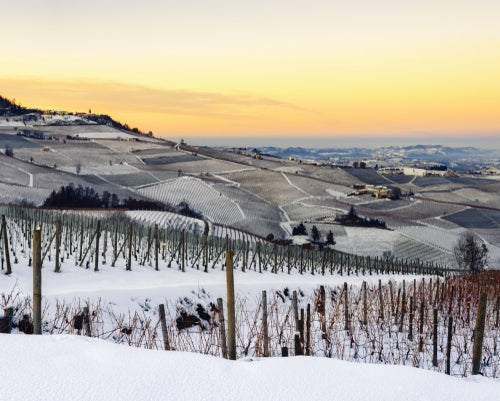
With its ample winter snows and long, unhurried growing season, 2021 in Barolo was ideal for producing high-quality Nebbiolo, says Andrew Jefford as he introduces a high-scoring tasting shared with Bruno Besa and Michael Palij MW.
This is an extract from an article first published in WFW91. For full tasting notes and scores for all 50 wines tasted by the panel, subscribe to The World of Fine Wine.
The quality of a vintage is decided by the growing season: rain, clouds, wind, and sunlight, playing photosynthetically on leaves and triggering the cascade of biochemical processes that constitute fruit ripening. The equilibrium of the plants themselves, though, is conditioned during the winter that precedes budburst. That’s when soils are stocked with moisture, and when the biological life of those soils and of the vine environment is regulated. Piemonte’s Covid-calmed 2020 Christmas and the chilly January that followed were ideal. Barolo’s grand hillside arrays of vines lit up the night, their marl-soiled vineyards locked beneath a deep crust of snow. January 2021 was the wettest first month of the year of the 21st century thus far, with 5.4in (137mm) of precipitation, but the fact that it fell as snow and that soils warmed only slowly during this month and the next meant that the moisture was retained in the soils rather than rushing muddily for the Tanaro river. Early and mid-February saw subzero temperatures continuing.
There was a dramatic pulse of warmth at the end of February (70°F [21°C] on February 25), and March remained warm; the buds were on the move by the end of the month. This was unfortunate. Cold air caused by the disruption of the polar vortex moved south into Piemonte April 7–8 (as it did to around 80% of France’s vineyards). The resulting frosts were unusual in Piemonte in that the air drainage provided by vineyard slopes didn’t always save the day; Barolo’s Cannubi and La Morra’s Brunate and Rocche dell’Annunziata were all badly affected, though other key sites escaped unscathed. On aggregate, overall losses of around 10% of the potential crop were disagreeable but not catastrophic—even viewed by some as beneficial for quality.
Related

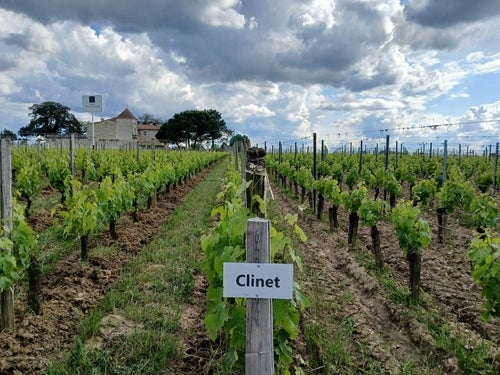
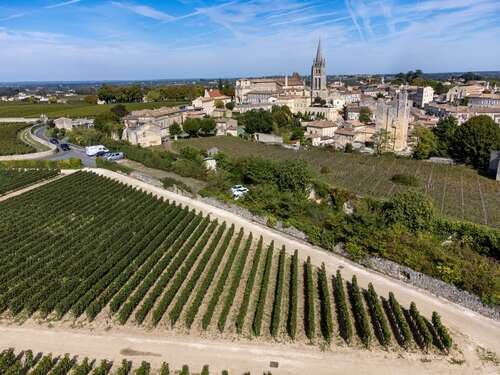
April and May were both slightly cooler months than in recent years (April the coolest since 2012, and May just a little warmer than the exceptionally cool May of 2019), holding flowering and vegetative growth in check. By June, though, a summer of significant warmth was under way, with very little rain—leaving growers more grateful than ever for January’s snowy generosity. August was leonine, and the roar of heat eased only with showers and cooler nights from mid-September onward, with another pulse of rain around October 4. Thanks to the cool spring, most were able to wait until after this rain to begin picking, meaning that the 2021 Barolo season overall was satisfactorily long, with the vines strolling rather than sprinting toward ripeness—just what Nebbiolo likes. Harvest was unhurried, and growers were delighted with the health of bunches and berries. The ferments revealed wines of structure, drive, energy, and freshness.
2021 Barolo: A cascade of points
How are the wines of 2021 Barolo tasting at the four-year point? They’re shining. Bruno Besa and Michael Palij MW each found 26 wines in our two top score categories (93–96 points, and 97 points and above), meaning that for these tasters, more than half the field of 50 wines qualified as “outstanding.” (One wine arrived late so was sampled only by the slowest taster, which was me.) My own score sheet produced 12 wines scoring 93 and above, and my scores peaked with four wines scoring 95. Bruno Besa, by contrast, found two 97-point wines and seven scoring 96, while Michael Palij found a 98-point wine and eight that scored 97 points.
This cascade of points puts 2021 Barolo firmly into “great vintage” territory, so I thought it would be interesting to compare the aggregated results with the previous five vintages, each tasted for WFW by the same team, with the exception of the 2020 vintage, when Susan Hulme MW kindly stood in for Bruno Besa. If we take aggregated scores of 95 and above, then 2016 remains the vintage in first place, with nine such wines, followed by 2017 and 2021, with eight wines apiece; 2018, 2019, and 2020 then bring up the field (in that order). For aggregated scores of 97 and above, 2017 stands (perhaps surprisingly) clear of the field, with five such wines; 2016 managed two, and 2019 one.
Content from our partners
Congratulations, by the way, to the team crafting the Luigi Baudana wines from Serralunga—both Baudana itself and Cerretta. This tiny cantina of just 2.6ha (6.4 acres) has been managed by GD Vajra since 2009. No other submission to our tastings has featured so regularly among our winners, with top-ten finishes in 2016 (for Baudana), 2017 (for both wines), 2018 (for both wines, with Baudana in joint first place), 2019 (for Cerretta in joint first place), and 2022 (for both wines, in joint third place)—an astonishingly consistent performance for these much-admired wines.
What, though, of our words for the 2021s? Bruno Besa’s enthusiasm was wholehearted; he found “vibrant acidity and powerful tannins” and felt that they would deliver what Barolo drinkers love over “a long life.” For all that, Bruno noted, the 2021s are “extremely enjoyable to drink now,” notwithstanding the wines’ generous constitutions—indeed, Bruno alluded to a “super-refined, weightless, transparent character” that he feels is increasingly typical of the region’s wines. Michael Palij’s reading of the vintage was more mixed: “[T]rue greatness was not as ubiquitous as one might have hoped,” he wrote, even though the style of 2021 at best offered “a rare combination of perfume and structure.” My scores were lower than those of my two fellow tasters, but this is a question of calibration with our tasting rubric; I was enthusiastic about the majority of the wines, and 2021 certainly seems to me to be the best Barolo vintage since 2016. Any tasting of 51 wines is going to throw up quality nuances, but I walked away from our tasting room feeling certain that I would enjoy drinking almost all of these wines, those that I had marked 85–90 included.
Verduno won our 2021 Barolo commune challenge, but on the unreliable basis of a mere two samples (an aggregate score of 285.5 points per wine). More significant, perhaps, was that Monforte overhauled Serralunga for second place (by a narrow margin: 279.44 from nine Monforte samples compared to 278.61 from Serralunga’s 13 samples). Barolo (272.55, nine samples) was fractionally ahead of La Morra (272.33, nine samples), with blends/Novello in sixth place (268.6 from five samples). Castiglione Faletto scored 265 from one sample; the other Castiglione was set aside as borderline faulty, as was one wine each from Monforte and Barolo.
2021 Barolo: The top five
Poderi Luigi Einaudi Barolo Monvigliero Verduno 2021 (14.5% ABV) | 96
BB | Transparent ruby to pink. A touch closed, yet complex on the nose: red fruits, blood oranges, cassis, yellow peaches, crushed stones. Beautiful, layered, fine tannins, citrus acidity, sour cherries, peaches, and mint on the palate, with a long, chalky, salty finish. 2030–40. | 97
AJ | Pale and translucent garnet red. Terrific aromatics here: a whole landscape of autumnal fruited charm. Woodland and hedgerow, copse, wild mushrooms—yet the glow of autumnal fruit infusing it all. Something almost truffley, as well… You could spend a long time with this nose, exclaiming in delight. Wonderful work—and the fruit has real aromatic penetration, despite its almost spectral style. Grand wine here: a privilege to sample. The fruit just sings and sings, yet it is perfectly covered and backed by the silky tannins and soft finishing extracts, and lifted by its glowing flood tide of soft acidity. There is swift, mouth-filling volume to this wine, yet it’s so soft… You’ll find you’ve swallowed and barely noticed. The finishing resonance validates the whole, and it all subsides in a rosy glow. 2027–42. | 95
MP | Immediately attractive, this leads with herbal notes, including mint, bay, and rosemary, then adds redcurrant, cooked red cherry, red apple, black cherry, licorice, and menthol. An absolute firecracker in the mouth, this has layers of fleshy cherry, berry, and currant notes allied to more savory characteristics including Bovril, clove, and licorice. The finish is superb, with layers of fruit, masses of complexity, and a gorgeous balance between the tannins and the ripe fruit. One for the cellar, if you can resist the temptation. 2028–32. | 97
Casa E di Mirafiore Barolo Lazzarito Serralunga d’Alba 2021 (15.5% ABV) | 96
BB | Deep garnet to tawny. Complex and spicy on the nose, with smoke, leather, prunes, sweet tobacco, road tar, and forest floor. Sweet, black-fruit palate—inviting, with medicinal herbs, black cherries, plums, and prunes, and a long, nuts-and-orange-peel finish. Textbook Barolo. Drink 2030–40. | 96
AJ | Bright, translucent garnet red. Warm, tarry, open, and ample, with lots of bright, fresh plum and damson. Pristine, open, and articulate. Bright, light, lifted, and aerial—but the Serralunga impact and tenacity are ample in evidence on the palate. Very sweet-fruited and sucrous. Perhaps this mitigates a little from the central palate fruit spectrum, but on the other hand it works very well with the seizing tannins—they catch each other beautifully. Clearly toward the ripe end of the spectrum for this vintage, but very successful in that style for me. Succulent yet dramatic; sensual yet intellectual, too. And perfumed, right the way through to the finish. The more air and the more time you give this wine, the better it becomes. Drink 2027–42. | 94
MP | Perfectly judged, with a ripe nose showing black cherry, plum, damson, tomato, and cold tea, this has complexity in spades. The finish is truly epic, with great power derived from an enormous concentration of red and black fruit, with additional complexity supplied from very subtle oak notes of vanilla and cinnamon. The tannins are exceptionally silky and resolved, and there are notes of black cherry, cassis, mineral oil, tar, and wild rose. This is a truly compelling example. 2027–34. | 97
Luigi Baudana Barolo Baudana Serralunga d’Alba 2021 (14% ABV) | 95
BB | Bright garnet to pink. Complex and intense, with nuts, black and red fruits, crushed stones, sea salt, blood orange, and hints of sweet tobacco and oriental spices. Full body, huge yet super-refined tannins, layered, vivid, red fruit, and a long, mineral finish. Serralunga at its best. 2030–40. | 96
AJ | Deep, clear black-red. Pungently bright, fresh plum fruits, with crisp focus and lively sweetness; some floral notes, too. Primary in style but very attractive. A big splash of lively, primary fruit here, too—alert, exciting, vital. This definitely needs time, but the purity and sheer force are exemplary. 2028–40. | 92
MP | The nose is desperately serious, with layers of fruit including redcurrant, cranberry, raspberry, hawthorn, incense, black cherry, and clove. This wine really shines on the palate, with a combination of concentrated fruit, very fine and ripe tannins, superb length, and clearly defined red and black fruit, supported by licorice, hay, and clove. It’s complex and balanced, and it is sure to provide excellent drinking in the long term. 2030–38. | 97
Luigi Baudana Barolo Cerretta Serralunga d’Alba 2021 (14% ABV) | 95
BB | Bright ruby to pink. A touch closed yet complex, intense, and super-clean on the nose: nuts, red and black fruits, crushed stone, and salt, with hints of chalk, tar, and sweet tobacco. Full body; balanced, with layered black and red fruit, great salinity, citrus acidity, and a long, inviting, youthful finish. 2030–40. | 96
AJ | Bright, translucent black-red. Warm, fresh, lively, and boisterous, with spiced fruits in the driving seat. Not hugely subtle (at first look) but attractive. Bustling and purposeful, and actually, with time in the glass, the fruits themselves begin to gain in complexity, beckoning the drinker back. Tar, leaf, petal, twig: all there. Grand purity. Quite smooth, with less angular tannins than many, and the acidity, too, is ultra-tender and folded into the quiet, smooth, purring, Bentley-like fruit. Very seamless and beguiling; not at all a challenge to drink. So satisfying, though. 2027–35. | 93
MP | Youthful and very bright, this shows vibrant red-fruit notes including cherry and currant. Notwithstanding its Serralunga upbringing, this is remarkably light on its feet, with delicate aromatics and bright fruit notes across a wide spectrum, including spice, red fruit, black fruit, and empyreumatic notes. The finish is just as appealing, with delicacy and balance in the absence of outright power. 2029–35. | 95
Ceretto Barolo Bussia Monforte d’Alba 2021 (14.5% ABV) | 95
BB | Garnet to pink. Clean, elegant, complex, mineral, red-cherry, orange-peel, rosewater, forest-floor nose. Clean, medium to full body, fine tannins, and weightless on the palate, with bright red fruits and a long crushed-stones finish. Drink to 2038. | 94
AJ | Bright pale to mid-red, with garnet glints. Fresh and lively, with the significant aromatic fruit architecture that Monforte generally manages. Sweet cherry and plum, but earthy and broad, too, and with the ability to broadcast and fill a glass that not every village in the DOCG zone has. Some dried-mushroom maturation notes are beginning to creep into the picture. In the mouth, this wine is broad, open, and energetic yet caressing, with a big tumble of boisterous plum/pomegranate fruit, packed not just with tender sweetness but also freshening, succulent acidity. Few tannins this vintage are more tender and flavory than these. The vintage sings out of this hugely enjoyable, unforbidding wine that is almost ready now but would repay keeping for a decade or so. Impeccable quality and a joy to drink. 2027–40. | 95
MP | Inviting nose, with notes of dried rose, blood orange, violet creams, redcurrant, pomegranate, and dried cranberry. It’s just as impressive in the mouth, with a great mass of fruit including black cherry, plum, licorice, tar, and tobacco, resting on fine tannins and supported by refreshing acidity. This is a compact Barolo with the balance necessary to age well. 2027–32. | 96