BEAUJOLAIS
DOMAINE THIBAULT LIGER-BELAIR
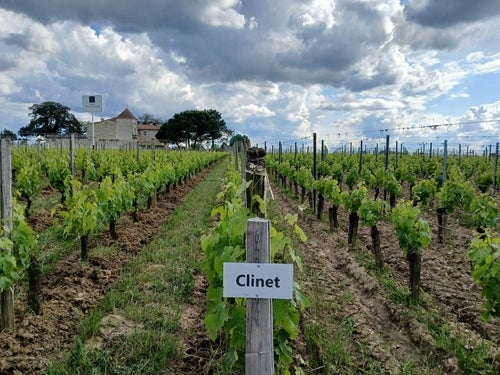
Thibault Liger-Belair recalls that there was less rain in Beaujolais than in the Côte de Nuits—“only 900mm [35.5 in] of rain and no frost in Moulin-à-Vent, where the issue was black rot. We used a team in the vineyard to remove all the leaves with any spot, as it would have moved to the grapes a week later. The pedicel is affected, and the grapes will not ripen. We burn them. It’s a huge amount of work in the vineyards, but it has reduced the problem. Our yield was 15hl/ha in Beaujolais. The ripeness was there in terms of sugar, but less so in terms of the phenolics.”
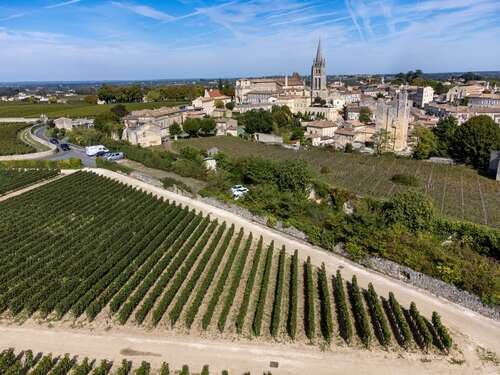
I have selected the following two cuvées, which are at a similar altitude, are both windy, and have similar soils—pink granite and sand—but the exposures and the profiles are so different.
Related

Moulin-à-Vent La Roche
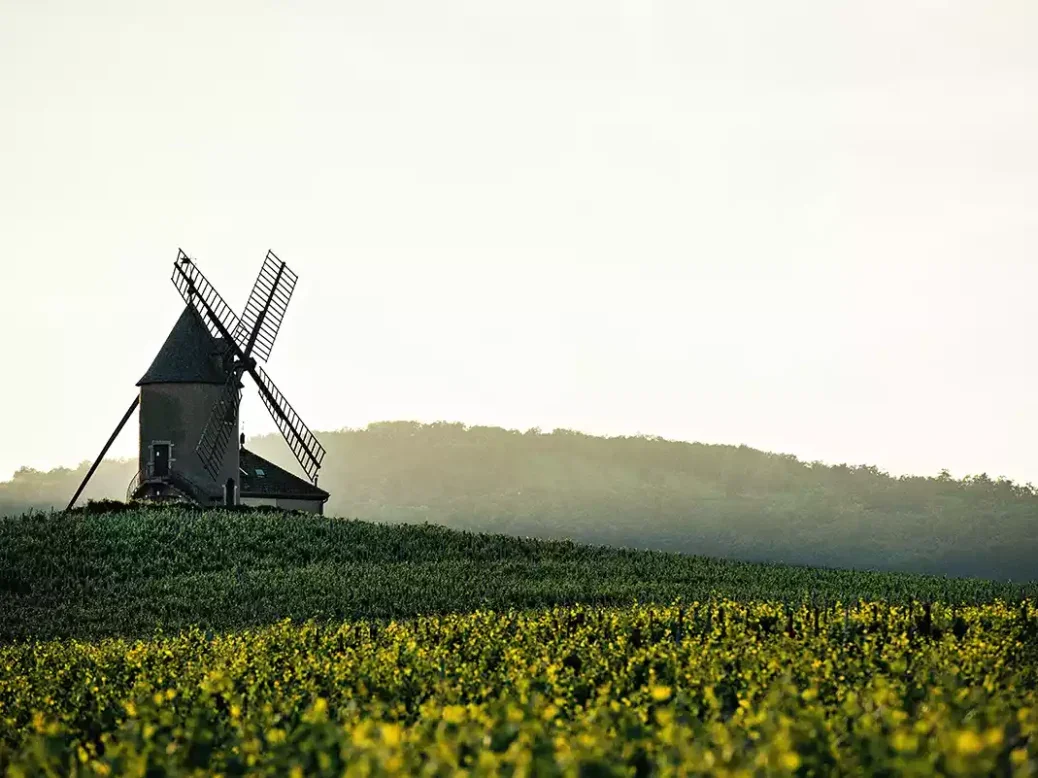
From a single parcel at the top of the hill, where it is very windy—the windmill is only 50m (55 yards) away. There is not much topsoil—just 20cm (8in) of pink granite and sand. An upright, red-fruit aroma, fresh and brightly energetic, with crunchy tannins. Slightly herbaceous and salty. 2027–30. 87
Moulin-a-Vent La Rochelle
Content from our partners
From a south-facing parcel that has a little less wind. The wine has a spicy aroma. Softer, smoother, and more succulent than La Roche, supple and rounded. 2027–30. 86
DOMAINE LAFARGE-VIAL
Maxime Lafarge found the growing season quite similar to that in Volnay, in terms of the rain and mildew, but it was complicated further by the hail storm that hit Fleurie on June 18 during flowering. Yields were low, at 5–20hl/ha. “So, quite the same dynamics and the same story.”
The family has an entirely separate Beaujolais operation in Fleurie. As Maxime explains, when his parents created the domaine in Fleurie, they wanted it to be rooted in the local community and properly to reflect the terroir. It’s an entirely separate team who work the vineyards, and Maxime points out that the requisite skills are different—they have to prune gobelet vines, for example. But the philosophy is the same. They work organically and bio-dynamically to make wines that have density of fruit and will age well. There are very old vines. The estate is largely worked either by horse or by hand. Some vineyards are so steep that there is a winch system. “It’s heroic viticulture, working as a biodynamic producer.” The wines were to be bottled by the end of 2025.
There is a fruity, splashing Chiroubles, and the Fleurie from pink-granite soil is deep and juicy, with good concentration and lively acidity. The Côte de Brouilly is the most firmly structured wine—really quite muscular, with a grippy, quartz character. I particularly liked the following, more delicate wines.
Fleurie Clos Vernay
A floral aroma and silky tannins. This flows on juicy fruit to a cool, graphite, mineral finish. Elegant. 2026–29. 86
Fleurie La Joie du Palais
Delicate and refined. This skims on a high-wired line; tense and super-saline. Precise and balletic. 2026–29. 87