VOLNAY
DOMAINE MICHEL LAFARGE
Frédéric’s and Chantal’s children, in their early 30s, are all now working at the domaine. Clotilde started in January 2018 and prefers to work in the vineyard. Eleanor works in the office. Maxime studied at the Lycée in Beaune, having returned from a career in finance in Paris and began working at the domaine in 2023.
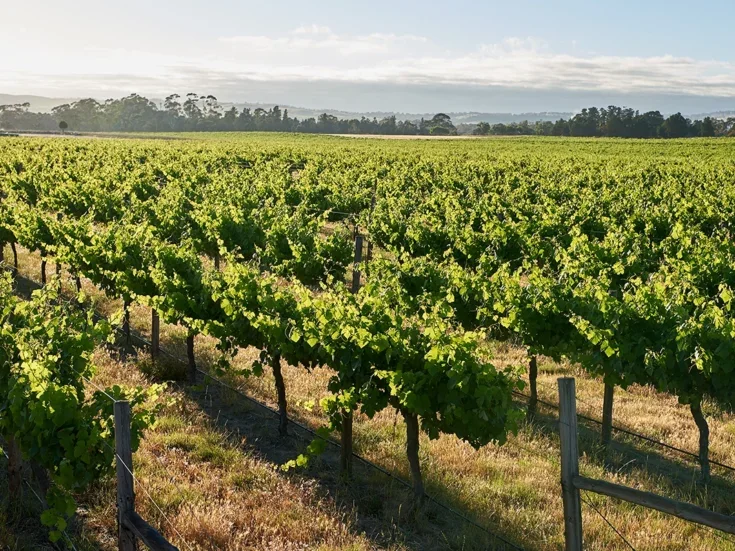
They work Caillerets by horse, and Clotilde remarks on the soil: “It is so much softer and more airy.” They sprayed 11 times. “We try to spray at the most effective time, before and after the rain.” Copper usage was 3–4kg, which is high for them. “Algae helps but has to be used with copper. We also use a lot of tisanes to build resistance. In an easy year it might be possible without copper, but not in a season like 2024.” Average yields were 10hl/ha for the regional reds, 12–13hl/ha for Volnay (Beaune was slightly higher), and 15–18hl for the Volnay premiers crus.
Related
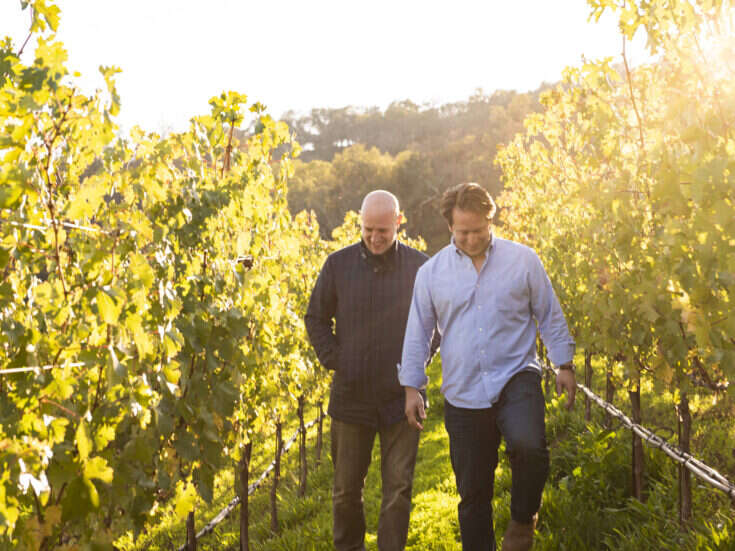

The Lafarges started harvest on September 10. Despite very low yields, it was possible to make all the premiers crus separately. Frédéric remarks on the good phenolic maturity. “The berries were small. The skins were thick and pips are big. When we destemmed, they didn’t give the juice immediately.” They needed 330–350kg to make a barrel. Three cuvees were destemmed by hand: Pitures, Clos des Chênes, and Caillerets. “With a small harvest, we have more time to do exceptional things,” remarks Maxime.
“We always do the same extraction—16–17 days is the normal cuvaison—and use a vertical press, which is very soft and gives a good clarification,” says Frédéric. Four to six days of settling, before barreling down, for fine lees. Reds have pH levels in the range of 3.45–3.5 after malolactic. The reds were racked in the autumn and returned to barrel for the winter.
Low yields for the whites: 10hl/ha. The Meursault is on 161-49 rootstock and always crops low, and because it is at the bottom of the village, it was badly affected by the mildew. The whites were whole-bunch-pressed for five hours and only the very light lees were kept for the barrel-fermentation. Racked off the lees in August, blended in tank, and returned to barrel for a second winter. Sometimes they use the basket press for the white Beaune Aigrots, and did so in 2025 but not in 2024. The whites have a pH of 3.3 after MLF.
Content from our partners
The Bourgogne Aligoté Raisins d’Orés has plenty of texture and lime-like, zippy acidity. Aged in barrel, but not new, it has plenty of substance without any help from the oak. The Meursault, which comes from parcels below Santenots, on the clay, shows the fullness you would expect, with quite some concentration and chew. The Beaune Premier Cru Clos Les Aigrots Blanc has vibrancy and elegance, pushing well onto the finish, with an attractive, phenolic bitterness.
Bourgogne Passetoutgrains L’Exception has morello-cherry fruits and fresh acidity, but the Bourgogne Pinot Noir is more attractive, pretty, and pure, with crunchy tannins, fresh and bright. There’s an elegant Volnay from ten parcels below the village. Only one Volnay cuvée this year. It is ripe with summer fruits, sprightly, zesty, and juicy, with finely textured tannin.
“It is classic, with good acidity, and is very well-balanced. We reach a good harmony. It is a very good vintage for whites,” remarks Frédéric.
Of the reds, Maxime says: “Good tension and acidity, to keep the wines well.” Clotilde sees them more for earlier drinking. “They are pleasant to taste now, so they will be accessible and easy to drink after bottling.” I think she is right. They are very accessible. There are other vintages to age.
Beaune Premier Cru Les Aigrots
Very pretty floral aroma, white flowers and red-current fruit. I like the crispness and taffeta texture. Light, intense, and refined. Super-fresh and a touch mineral on the finish. 2027–30. 91–92
Beaune Premier Cru Grèves
From 103-year-old vines. Lovely intensity of aroma and quite some concentration on the palate. Silky texture couples with an intensity of red-cherry fruits. Really rather racy, this stretches nicely onto the somewhat mineral finish. 2027–32. 93
*Volnay Premier Cru Caillerets
From 2020 plantings and worked entirely by hand. Red rose-petal aroma. Sweet red-currant strike to a fruit-driven palate, with such intensity and focus. Silky flow of delicate tannin. The acidity holds the line on the sweet finish, which extends until you feel the salinity right at the end. Such a lucid and refined example of Caillerets. Delightful. 2027–34. 95
*Volnay Premier Cru Clos du Château des Ducs
Super-juicy and vibrant on the attack. There is volume here. A fuller and more expansive palate, richer and more tannic than the other premiers crus. Abundant aromatics, which are rather exotic. These expand the palate, adding to the volume, and push into the persistent and scented finish. 2027–34. 95
*Volnay Premier Cru Clos des Chênes
Satin-textured and rather sumptuous upfront, this tightens and batons down to become salty and austere, with some grip and a slight severity on the finish—just as it should. Good terroir definition. 2027–34. 94–95
Volnay Premier Cru Pitures
Only in magnum since 2020, “as it is made for aging,” says Maxime. It’s clipped and tense. Morello-cherry fruits. Super-snappy. Even quite terse. A cherry-kernel note to the finish. It is straight, a touch severe, and more precise than the more fruity, accessible, and charming Mitans. 2026–32. 92–93
DOMAINE HUBERT DE MONTILLE
“The only thing I don’t like about this vintage was the growing season,” remarks winemaker Brian Sieve.
“All fruit, from cherries, to plums, went from ripe to overripe in four days, so grapes were not going to hang well, and I picked early, from September 9,” recalls Sieve. He finds that he gets higher total acidity when he crushes from whole-bunch, but the same pH. He did many trials working in California at a custom crush facility for 12 wineries. “When I came to Burgundy, I realized crushing is a thing. Some do it for more phenolics. The wines are less reductive if you crush. It is my house palate, in a way. In whites, I like primary fruit less and less, so I am moving to more phenolics. We crush everything (up to 2 bar) and I settle overnight for all the cuvées. When you think back in the day, in the ’70s and ’80s, when they were using Vaslin presses, the pressure was much higher. They got a lot of phenolics and they needed acidity for the wine to age wine. I get lots of lees. [1,000 NTUs!) For everything pressed at under 1.5 bar, I use all the lees. Over 1.5 bar, I take just the wine after it has settled for 24 hours. We are not a domaine focused just on white, but maybe this is an advantage, as we have the time to press for 3.5 to 4 hours. The juice is very dark by then. This works stylistically for the white wine I want to make.”
For the reds, Brian used a high proportion of whole-bunch—100% for many. He usually includes plenty, but in 2024, as in 2021, it was also necessary to fill the vats.
“I am a firm believer in waiting until the fermentation reaches 28ºC [82ºF] before any extraction. That first week I do remontage if there is juice, or just feet through the cap, so start to homogenize it. Once it’s warm, its a bowl of trouble. Then I use punch-down. I press off dry, with four days’ settling before barreling down.”
Total acidity levels are around 4.75 and pH levels are 3.5–3.6. Brian considers the stems do not increase the pH, but pH is more related to when you do the MLF—lower when MLF is later. “I sulfur the grapes before they go into tank—at 35ppm—which fights off any bacterial growth, which is more of a risk when using whole cluster. This blocks malo, which can happen in the fermentation when you have whole-bunch. Press dry and then get it cold… so MLF doesn’t start. Twelve degrees is the magic number in the cave. When the MLF starts, it’s very slow and the color and acidity stabilize, so there’s no swing in the pH.”
Montille reds have substance and tannin. “To make super-light and fluffy wines, discredits the terroir. It doesn’t give the terroir a chance,” says Brian Sieve.
“They are light, bright, and acidic, with good primary fruit and a lovely acid backbone to them. I am pretty happy with the vintage, considering the growing season.”
Bourgogne Clos de la Château
After a deal with Artemis, Montille keeps 3ha (acres) here. Two thirds aged in 600-liter barrels. Old and young vines in this cuvée. There is good intensity, sapidity, and bite. This regional wine is not far off village level, and has distinctive Puligny salinity. 2026–39. 86–87
Beaune Premier Cru Les Aigrots
From a part of Aigrots where the clay is quite deep and it shows in the generous, full body and softer feel. Quite deep, somewhat languid, rolling into a smooth, savory minerality to finish. 2027–31. 91
*Beaune Premier Cru Sur Les Grèves
The first year for this cuvée following the deal with Bouchard and Artemis. This is a more exciting terroir than Aigrots. One parcel is on a bench, the other on a steepish slope that is not easy to work by tractor. An energetic wine. There is tension on the attack. The palate is focused and straight, with a shimmery saltiness on the finish. 2027–33. 93–94
Meursault Premier Cru Porusots
Super-savory, with attractive bitterness. It is sturdy, quite broad, earthy, punchy, and dense. Not especially persistent, but full of character. 2028–33. 92–93
*Puligny-Montrachet Premier Cru Caillerets
Compact and tense. Battened down, layered, mineral, and sappy. This has a properly long finish. Much keener and more persistent than the Folatières. 2028–35+. 96
Reds
Monthelie
The last vintage of this. No added sulfur in this cuvée. “We make it ‘naturally,’ so it evolves more quickly. Not the usual Montille way or it would be too severe. We use less punch-down.” Straight, terse, lightly austere, and sappy. Bites. You can feel the limestone here. There is chalkiness. I like it. 2027–32. 86–87
Beaune Premier Cru Les Grèves
Some 50% whole-bunch and 25% new oak. Delicious, red-cherry fruit and a fine, silky texture. A lively profile. The stems accentuate the freshness and add complexity in the floral notes and spiciness on the finish. 2028–33. 94
Volnay Premier Cru Taillepieds
Two thirds whole-bunch, giving crunch and herbal notes. Lively red fruit. Straight as a die; pure and neatly edged. Slightly green pea, but I do like the tension, salinity, and persistence. 2029–35. 94
Pommard Premier Cru Pezerolles
100% whole-bunch for the old vines in the clos. Rather refined Pommard. Dark cherry fruit on a sweeping fluid line, to a lively, lightly crunchy and salty finish. Silky texture. Pure and zesty. Really rather good. 2029–35. 94–95
Vosne-Romanée Premier Cru Aux Malconsorts Cuvée Christian
This cuvée comes from the northeast corner. Much more serious than the main cuvée of Malconsorts, which lacks some mid-palate, this has grip, tension, and intention. There is certainly some layering, but not quite the depth and intensity one would like to see. Quite persistent. 2028–34. 93
MONTILLE SOEUR ET FRÈRE
Pouilly-Fuissé
From three parcels with different exposures around Solutré. Aged equally in 228-liter barrels and stainless steel. Super-savory and nicely balanced. It’s quite full, slightly sumptuous, yet salty. 2027–30. 87
St–Romain
From three parcels, this is pure, straight, juicy, and silky to finish. A light wine that slips neatly across palate. 2026–29. 86