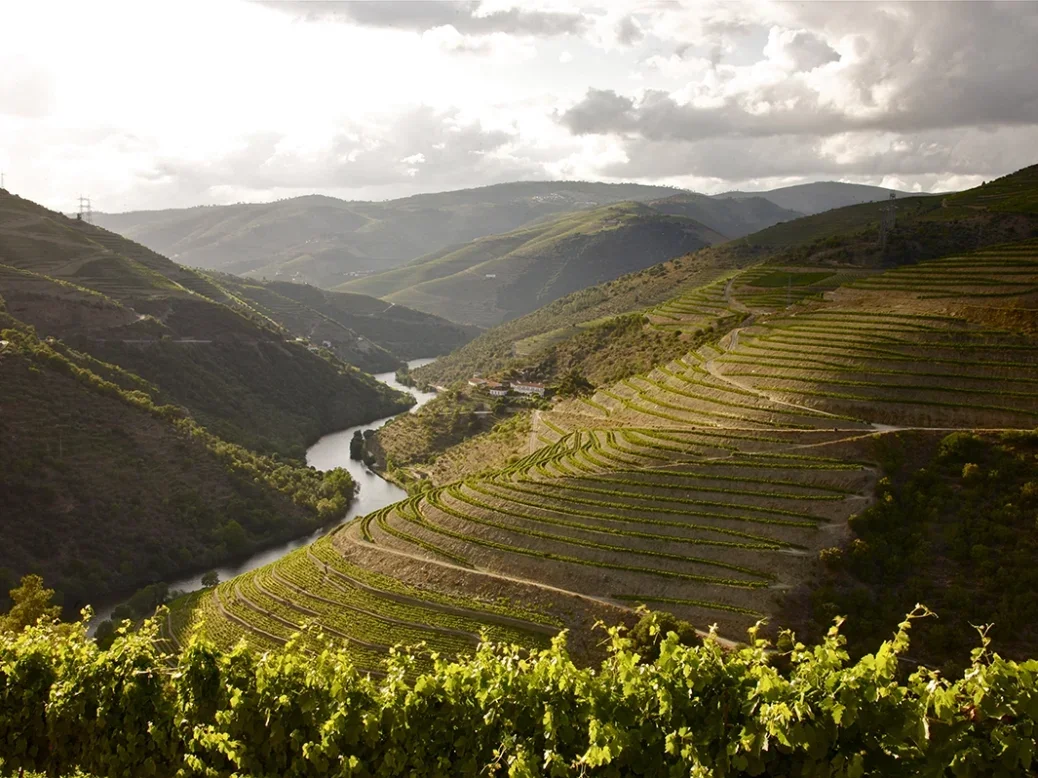
Simon Field MW tastes 2024 Vintage Port from the Fladgate Partnership, Quinta do Noval, and Quinta da Romaneira.
The grandees of the rarefied world of Vintage Port look very much at home at Christie, Manson & Woods in St James’s, London, where they assembled in May to show their 2024 Vintage. They seem, at times, to be “more English than the English”; indeed, some of them are English, and most if not all were educated here. The UK is their most important market, and it is in establishments such as Christie’s that fine Port has been traded down the centuries. It has been sewn into the fabric of the British wine trade. Today’s market is difficult—not only for Port—and there are questions as to how successful this first universal declaration for seven years will be. Naturally small yields have been further reduced by final selections and cautious bottlings, which means that the availability of such great names as Taylor’s and Graham’s will not exceed 5,000 cases. Caution is marketed as qualitative excellence—correctly as it turns out—and there is a collective will, alleged rivalries set aside, to make this declaration a success.
The wines are supremely helpful in this regard. A warm but not scorching August, appreciable diurnal variation, and the benevolence of occasional rain—all of these factors have conspired to fashion a range marked by aromatic purity and structural elegance, its potential to age guaranteed beyond peradventure. The Touriga Francesa/Franca, late-ripening and often recalcitrant, has been singled out for particular praise; the same goes for Sousão. Both contribute to aromatic integrity and complexity of texture. The Touriga Nacional is reliable in the engine room, while other, less familiar grape varieties, field-blended, also contribute to what amounts to enviable complexity.
There is consensus that treading in robotic lagares can be as efficient, or almost as efficient, as that performed by the human foot. The only frisson of contention centers on the use, or otherwise, of stalks. Carlos Agrellos, technical director at Quinta do Noval, reveals that his crop is destemmed but that then the stems (only the ripe ones) are added back to the lagares in the name of textural harmony, with reliable pH levels. He is supported by David Guimaraens, who concedes that the stalks absorb a little color (a minor detail, one would have thought) but that their inclusion in the lagares is beneficial for overall structure and aging potential. Charles Symington alone abjures the practice, defending “purity of fruit and tannins” in his family’s wines, from which stalks have been banished. If it is true to say that this relatively mild vintage has highlighted stylistic differences in terms of terroir, it is also undeniable that there are appreciable differences between the Symington wines on the one hand and those made by Fladgate and Noval on the other. The differences are clear, for example, when one compares Graham’s and Taylor’s—the first rich, generous, and velvety of texture, the second chiseled, edgy, and winningly cerebral. Both are excellent, of course, but given that Vintage Port is still all, or at least mostly, about the future, it will be revealing to follow the wines’ progress down the years.
Related


Tasting 2024 Vintage Port
2024 Croft
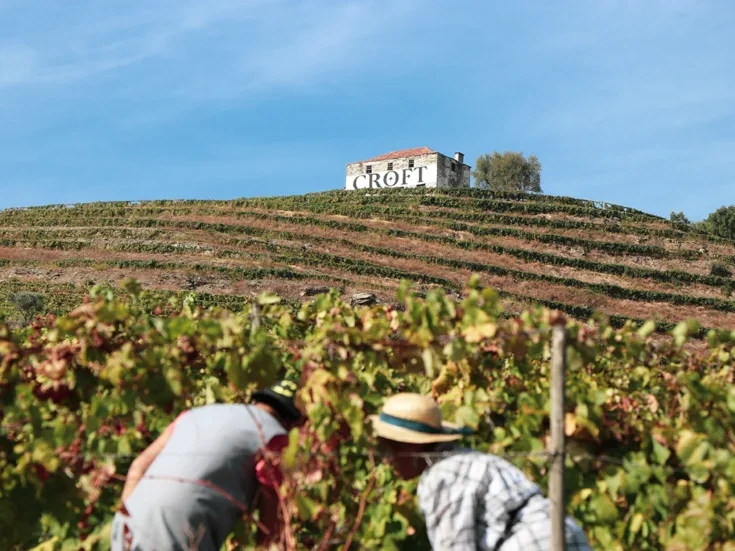
SF | Founded in 1588, the year of the Spanish Armada, Croft is centered on Quinta da Roêda, a southwest-facing semicircle of terraced vineyards on the right bank of the Douro, located close to the village of Pinhão. The vineyards were the first to be planted with Touriga Francesca/Franca, the grape variety of the ’24 declaration, after phylloxera, and the wine exudes old-vine charm. The 2024 is a foot-trodden field blend comprising at least six grape varieties, the other key component being Touriga Nacional. Deep of hue, the wine has a memorable and almost tropical aromatic that recalls ripe plum, blueberry, and even a hint of mango. Behind that, licorice and lavender, then a palate that juxtaposes an elegant weave of silky tannins with a powerful foundation of mouth-filling fruit. An individual style: a pleasing paradox between opulence and restraint, thereby capturing the essence of this intriguing vintage. | 94–96
2024 Fonseca
Content from our partners

SF | One of the most aromatically powerful of all Ports, Fonseca has been made by five generations of the Guimaraens family and finds its spiritual home at Quinta do Panascal. Famously opulent and generous, Fonseca does not disappoint in 2024, its quality seeping from the bottle all the way from the rockrose and crushed-blueberry aromas to the ripe yet grippy tannins. There are hints of crushed mint, wood resin, and wild herbs to provide a deft counterpoint to the layers of ripe fruit. A riot of cassis and dark chocolate, yet at the same time, pure and architecturally upstanding. A fascinating Fonseca. | 95–97
2024 Quinta do Noval
SF | Ten parcels have been selected from Noval’s 100ha (250 acres) of contiguous vineyards, its fruit foot-trodden, its stems added back to the lagares to underpin structure and acidity, both providing a welcome foil to the generosity of ripe fruit. The blend is dominated by Touriga Nacional (40%) and Touriga Franca (also 40%), with Sousão and old-vine Tinta Roriz dominating the minority shareholders. Near opaque and initially reticent, the wine slowly concedes notes of garrigue, black cherry, aniseed, and ripe plum. Structurally imperious and precise, the wine is lifted by a stony freshness, powerful but not overpowering, ethereal but grounded. A basket of tense potential. | 94–96
2024 Quinta do Noval Nacional
SF | Replanted in 1924, the Nacional vines comprise at least 30 grape varieties, their progeny foot-trodden, their heritage, free from foreign rootstock, captured in their patriotic name. The grapes have their own, exclusive lagar and cask and have yielded, selection completed, a somewhat modest 170 cases. The harvest took place a little later than usual (on September 30), and the residual sugar is higher than sometimes (108g/l). Neither of these details has proved detrimental to a style that verges on the ascetic, with dark cherry, spice, pepper, and licorice the only early concessions to a coherent description. Firm of structure, but with fresh acidity, the wine broods knowingly with coiled energy and whispers of a regal evolution. | 95–98
2024 Quinta do Passadouro
SF | AXA Millésimes (which also owns Noval) bought Quinta do Passadouro in 2019, and this is its third Vintage wine. Located adjacent to Noval’s vineyard in the Pinhão and Roncão Valleys, Passadouro is west-facing and can get very hot. Ideally suited to the relatively temperate 2024 vintage, the wine boasts a signature floral aromatic (iris and violets) allied to lavender, plum, and ripe damson. The palate is dignified and layered, its tannins ripe but strident, its sweetness beautifully integrated, with a schistous acidity in support and hints of eucalypt and black pepper on the finish. | 92–94
2024 Quinta da Romaneira
SF | Part owned by Christian Seely (CEO of Noval), Romaneira is a large estate, with more than 80ha (200 acres) under vine, 3km (2 miles) of which provide an elegant frontage to the River Douro. There has been significant replanting of late, with a new winery also built. The fruit for the Vintage Port has been selected from older parcels of Touriga Nacional and Touriga Franca, to which have been added lesser proportions of Tinta Cão and Sousão, to name the two most important. The exotic, near tropical nose recalls Croft, which is located 5km (3 miles) downstream. The wine is marked by firm acidity (the pH is impressively low at 3.6), a ripe, peppery mid-palate, and a finely etched, allusive finish that is persistent and pure. | 91–93
2024 Taylor’s
SF | The magnificent Quinta de Vargellas provides, as usual, most of the grapes for this impressive Taylor’s, its natural inclination to austerity well suited, it seems, to this pleasingly complex vintage. Scents of rockrose, violet, and graphite segue into a tightly coiled palate, its layers of dark fruit patient and persuasive, woodland herbs and spice enrobing a backdrop of youthfully sinewy tannins. Schist and salinity add focus and prompt a cerebral lift that is deliberately challenging as it guarantees the longevity for which this wine is renowned. | 95–97
2024 Taylor’s Sentinels
SF | Adeus, Skeffington (still made but not part of the declaration), and welcome to the Sentinel, named for the 335 granite pillars (marcos de feitoria) that were erected in the Pinhão Valley in the 1750s to indicate the best terroir. The majority of the vines, needless to say, fall within this zone, and are sourced from four separate quintas. Rigorous selection, then, and a distinctive style; scents of bergamot and roses behind a ripe plum- and sloe-fruit character, then hints of dark pepper and eucalyptus, ripe tannins, and a velvety texture. There is a pleasing crescendo thereafter to underscore potential and underline complexity. The first Sentinel was made in 2022, and it has been made in both of the subsequent years. This is a very worthy addition to the portfolio. | 91–93