

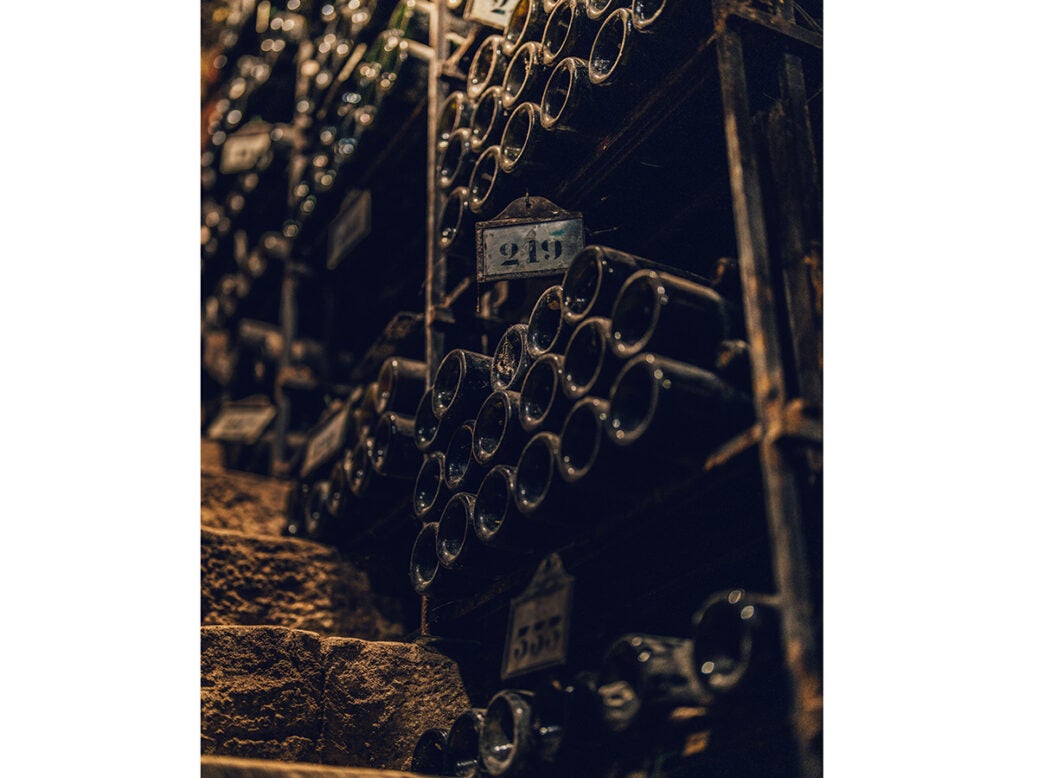
Jasper Morris MW reports from a very special evening at the home base for Bouchard Père & Fils featuring wines from vintages ending in “4.”
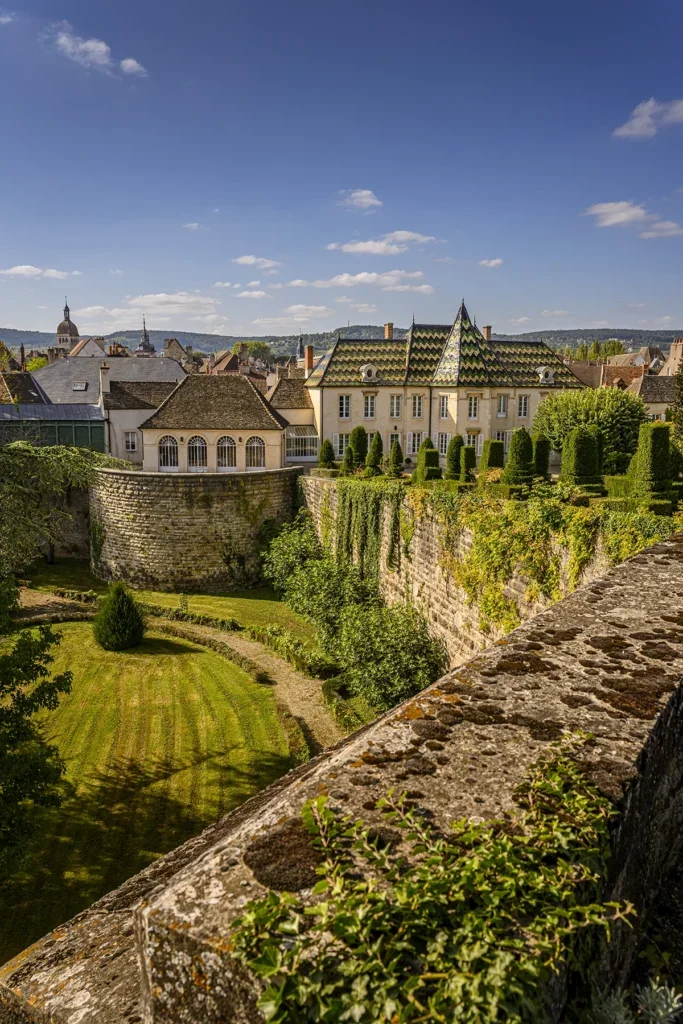
No longer having responsibilities at the Hospices de Beaune wine sale, I find more opportunities to be able to appreciate tastings across the phenomenally busy Vente des Vins weekend in mid-November. One invitation I am thrilled to get is to an evening at the Château de Beaune, home base for Bouchard Père & Fils and, for the time being, the newly established Domaine des Cabottes, before the latter moves to a new home in the Château de Puligny-Montrachet.
The evening had three purposes: to taste the 2023 vintage of Domaine des Cabottes, now in bottle; to understand more about Artémis Domaines’ plans for the future; and to enjoy some glories from the vinous collection held at the Château de Beaune.
To touch on the middle point, after much speculation locally, news finally came through of the future plans for Bouchard since the purchase by Artémis Domaines. The Artémis principle is to work only with domaine wines, where they actually own the vineyards. Previous Bouchard properties in the Côte de Nuits have been passed across to Domaine d’Eugénie. The grandest appellations, including various leading Beaune vineyards have been passed to a new entity, Domaine des Cabottes, which will in due course operate out of the Château de Puligny when works have been completed. This still leaves a good 60ha (148 acres) under the Bouchard Père & Fils name being made at the Bouchard winery on the Route de Savigny. Certain vineyards have been divided so will be made, separately, under both labels. The existing team has also been divided in two, with Frédéric Weber taking responsibility for Domaine des Cabottes, and his previous right-hand man in the cellar, Mickael Baroin, taking the top spot at Bouchard Père & Fils.
Related

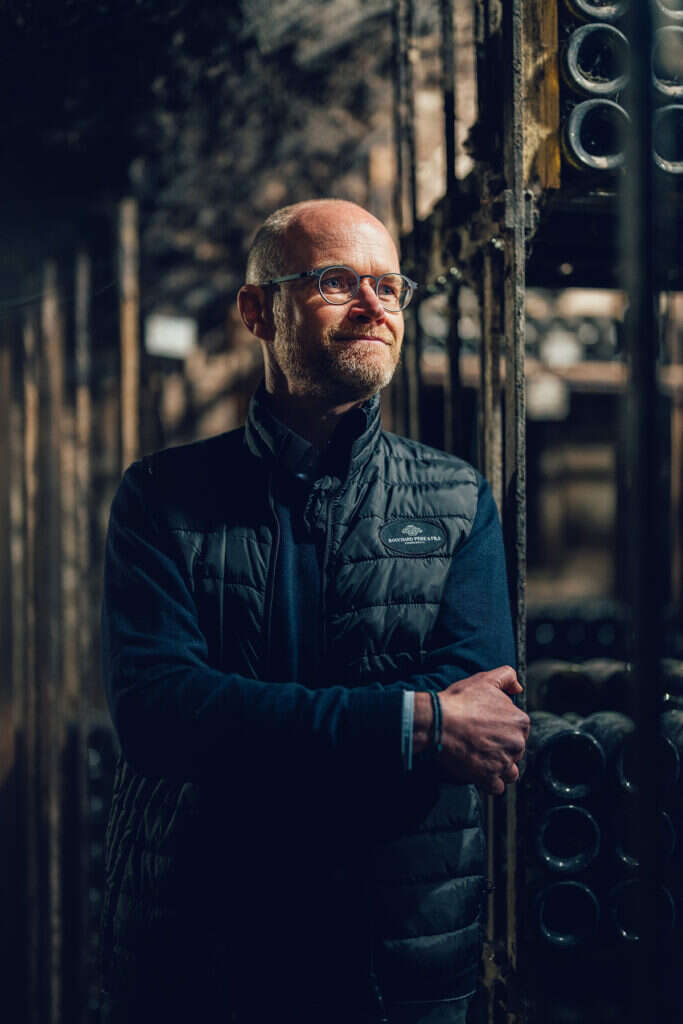
Back to the mature wines on this amazing evening, tasted in the company of Frédéric Engerer, overall director of Artémis Domaines; Jérémy Cukierman MW, communications and sustainability director; and Frédéric Weber, winemaker/technical director for Bouchard and now Domaine des Cabottes. It was a lively group of wine writers and critics that led to a rather heated debate over the age of Charlemagne and his involvement in the Corton-Charlemagne vineyard. The protagonists needed slapping down, and I fully accept my (at least) 50% blame for the whole incident.
The theme of the evening was wines from vintages ending in “4.” I am not much of a believer in the “Years ending in “5”—or indeed “9”—always being good; nor those in “4” being a disaster. I mean, give me ’64 over ’65 any day—at least if we are talking 20th-century vintages. It turns out that ’64 was pretty good in the 19th-century also!
The wines were mostly from the Bouchard Père & Fils vineyards now designated to be part of Domaine des Cabottes. We were told that all the wines came from vintages ending in “4.” We were further guided that no wine was younger than its predecessors, and for further assistance this year we were advised whether there was more than one wine from a given vintage. When we knew all the above and discovered that the youngest red was from 1974, with ten more wines to follow, there were grounds for optimism. Enough prologue, time to get into the wines.
Content from our partners
Tasting
White Wines
2014 Bouchard Père & Fils Corton-Charlemagne Grand Cru
Tense and tight at the outset, the fruit rather hiding under an oak carapace. It took quite a few minutes before the real wine emerged, and it still showed more as a white Corton than a Corton-Charlemagne. Not fully giving yet, but clearly with fine potential. 2028–36. | 94
2014 Domaine d’Eugénie Montrachet Grand Cru
Much more evolved, oxidative rather than oxidized, and clearly a wine of considerable natural richness and less acidity than usual for the 2014 vintage. This turned out to be Domaine d’Eugénie’s first vintage of Le Montrachet, just half a barrel, which is always a struggle to make. On the credit side, while the bouquet retained its oxidative element, the fruit on the palate expanded enormously to fill out the middle ground. Now to 2035. | 94
2014 Bouchard Père & Fils Chevalier-Montrachet Grand Cru La Cabotte
The most interesting of the opening trio, with some citrus notes infusing the bouquet and palate, indicating a mineral framework. On top of this, the orchard fruit has a surprising richness, which led me to the Cabotte bottling rather than the regular Chevalier. 2028–36. | 96
2004 Bouchard Père & Fils Chevalier-Montrachet Grand Cru La Cabotte
The 2004s didn’t quite deliver as much as we had hoped. The first of them had a buttery element on top of moderate fruit concentration, which made me think of Beaune Clos St-Landry rather than the subsequently unveiled Chevalier-Montrachet La Cabotte. Ready to drink. | 93
2004 Bouchard Père & Fils Montrachet Grand Cru
The 2004 Montrachet had just a faint touch of the herbaceous style often found in the white wines of the vintage, as well as in the reds. It had noticeably more precision than the somewhat looser-knit Cabotte, though perhaps without deepening into the full intensity of what Montrachet can offer. Drink soon. | 95
1974 Bouchard Père & Fils Meursault Premier Cru Charmes
Having moved back by three decades, it was no surprise to find a much more golden color. What was intriguing was the complexity of the bouquet after an initial butterscotch note. The mix of mint, verbena, and sage sent me toward Meursault Genevrières, but in fact the wine turned out to be Meursault Charmes, finishing on dried fruits and flowers, along with a possible suggestion of botrytis. There was not quite the length of a great vintage, but this 1974—a vintage I cannot remember having tasted for years—was a special treat, nonetheless. | 92
1964 Bouchard Père & Fils Corton-Charlemagne Grand Cru
Fuller in color than the 1974 Meursault Charmes, this was obviously a much more powerful wine from the outset, and indeed inclined to be slightly brutal at first sight. A drier, richer, high-alcohol wine—apparently above 14%—with lower acidity but still sufficiently structured to be able to age for quite a while yet. Broad shoulders indeed. | 94
1954 Bouchard Père & Fils Corton-Charlemagne Grand Cru
1954 is an unheralded vintage from which I have had occasional red wines but barely ever a white. At this event, we were treated to two of them, both of which were remarkable. The Corton-Charlemagne showed a fullish mid-gold color, with just a touch of butterscotch on the nose, while emerging as a stunning, mature Chardonnay, with a certain sweetness of fruit on the palate. In due course, a trace of field mushroom evolved on the palate. Technically less fine than the 1964, but maybe delivering even more pleasure on the evening. | 93
1954 Bouchard Père & Fils Montrachet Grand Cru
Just as gold as the Corton-Charlemagne but with a greater intensity in all departments. Golden fruit, as well as in color. There was not the same sucrosity here, but a much more impressive tensile strength that, coupled with the awesome persistence, led us all to the right answer: Montrachet. | 95
1864 Bouchard Père & Fils Montrachet Grand Cru
This astonishing wine was not presented with the other whites but instead was served at the end of the meal alongside the red Beaune Marconnets 1864 to accompany the cheese course. The color has now moved on to a light brown note, but the first sniff reveals that the wine is still with us. The palate offers a certain sucrosity, so I wondered if this might not originally have been a fully dry wine, but Bouchard records indicate that it was certainly vinified fully dry, in a season where heat and hydric stress led to early defoliation but concentrated the grapes significantly. | 94
Red wines
1974 Mommessin Clos de Tart Grand Cru
When we had the 1974 vintage at a recent Clos de Tart dinner, the wine was good, but the aficionados around the table lamented that it was nothing like as fine as the Clos de Tart from this otherwise unheralded vintage is supposed to be. This time we had better luck. The color has held up really well, albeit with a lighter edge, while the bouquet indicates a gently aging but still fresh Pinot, with pure and perfect cherries playing on the palate. What a great way to start the red portion of the evening. | 95
1964 Bouchard Père & Fils Beaune Premier Cru Clos de la Mousse
There was plenty of color in the 1964 pairing. The first wine offered rose petals and a touch of bacon on the nose. On the palate, the cherry fruit belies its 60+ years of age, with the fruit growing rather than fading in the mouth. Light in structure with a velvety texture, this wine exhibits the typical qualities of Clos de Mousse, which can age immaculately despite the appearance of a lighter structure. | 92
1964 Bouchard Père & Fils Beaune Premier Cru Grèves Vigne de l’Enfant Jésus
A tale of two magnums. The one originally opened started to show unexpected oxidation. A backup was rapidly sourced and was absolutely divine. The color remains remarkably youthful and with considerable density. There is a stunning nobility to the dark red fruit—sensuality and precision at the same time. A truly great example of Beaune’s most famous vineyard. | 95
1954 Bouchard Père & Fils Beaune Premier Cru Grèves Vigne de l’Enfant Jésus
Much paler in color than its elder sibling from 1964, yet the nose exhibits a lacy delicacy rather than any lack of fruit. Maturing strawberries emerge on the palate, finishing with a slightly drying acidity. Still with us, but it is now time to drink up. | 90
1934 Bouchard Père & Fils Le Corton Grand Cru
The nose suggests a touch of oak, which seems unlikely at 91 years old! Maybe it is more a reflection of this exceptionally powerful vintage—très capiteux (very heady), according to the Bouchard archives, which also reveal that Bouchard requested a derogation to start picking on September 14, when the ban de vendanges, the official start date, had been set for the 20th. Certainly, both the 1934s on show still have a very deep color. The Corton still hangs together really coherently, with powerful rich dark fruit to finish. The wine was reconditioned in 1990, with topping-up from exactly the same wine and vintage. | 94
1934 Bouchard Père & Fils Volnay Premier Cru Les Caillerets Ancienne Cuvée Carnot
A further historical note (see also under Le Corton 1934) is that this vintage marked the change of vine training from gobelet to Guyot. The Volnay Caillerets also still has a very deep color, with an unexpected level of sucrosity about the still very youthful fruit. While Le Corton felt coherent all the way through, the Volnay Caillerets seemed not to have quite the same balance. | 92
1924 Bouchard Père & Fils Romanée-St-Vivant Grand Cru
The stunning intensity of the color could almost have been from 2024. Not so the ageless refinement of the alpine strawberry fruit in this thoroughly cerebral wine, displaying such elegance and precision that when another taster offered Richebourg as an option, I countered with Romanée-St-Vivant—as indeed it turned out to be. The fruit or wine would originally have come from the Domaine Marey-Monge, thus the same plot as now belongs to Domaine de la Romanée-Conti. | 97
1924 Bouchard Père & Fils Volnay Premier Cru Les Caillerets Ancienne Cuvée Carnot
While the Romanée St-Vivant 1924 was cerebral, my first impression of the other half of the pair was that this is a wine you would want to snuggle up to. What starts out as rich strawberry fruit refines into a wine of amazing delicacy. A character that seemed a little over the top at the outset evolved into a wine of wonderful warmth and nuance. I chimed in with a bid of Volnay Caillerets and was thrilled to be correct. Probably a bit smug, actually. | 95
1904 Bouchard Père & Fils Richebourg Grand Cru
A lighter red in color, but still with some depth. The bouquet was less revealing than most, while the palate revealed a surprising firmness of structure, yet with a richer, brighter fruit developing through the middle of the palate. | 92
1894 Bouchard Père & Fils Clos Vougeot Grand Cru
This was the one really pale red wine of the evening, which proved to be deceptive, because the nose was more evocative than that of the 1904 Richebourg served alongside. A slimline wine that retained a fine backbone of fruit, eventually broadening out on the palate. | 93
1864 Bouchard Père & Fils Beaune Premier Cru Marconnets
What an extraordinary privilege to taste a wine of this age that has been kept in such impeccable condition. There is still a gentle red to orange color, and the fruit has remained beautifully intact. No longer youthful, of course, but this is a wine of subtlety and finesse, and it may not be too fanciful to ascribe its effortless grace to the fact that it dates back to the age before phylloxera. Generous to a fault, perhaps, but I have to give it a point more than the Montrachet of the same age. | 95


