Following the merger in 2022 of Bouchard Père & Fils with Artémis Domaines, jointly owned by the families of Pinault and Henriot-Larouzière, there are further changes afoot. The cream of Bouchard’s cuvées will be grouped in new entity, Domaine des Cabottes, and labeled as such from the 2023 vintage, which will be released in 2026. This includes the grands crus of Montrachet and Chevalier-Montrachet La Cabotte, together with the historic premiers crus, including Volnay Caillerets, which was the founding parcel of Bouchard Père & Fils when it was purchased in 1775, and Vigne de l’Enfant Jésus, a 3.91ha (9.66-acre) gem of a parcel in the center of Beaune premier cru Les Grèves, which was acquired in 1791. The newly coined Domaine des Cabottes will comprise 20 cuvées and encompass 35ha (86.5 acres).
The wines are destined (possibly from the 2027 vintage) to be vinified and matured in a winery currently under construction in the grounds of Château de Puligny-Montrachet. This was acquired from Etienne de Montille in a property trade in which Montille retains a small part Le Clos du Château, the 5ha (12-acre) vineyard in front of the Château.
Frédéric Engerer, CEO of Artémis Domaines, explained to me: “We like all our facilities to be in a vineyard, across our eight estates (which include Domaines Eugénie and Clos de Tart in Burgundy and Château Latour in Bordeaux), not in an industrial zone or city” (albeit Bouchard Père & Fils will continue to be produced in the semi-industrial zone on the fringe of Beaune).
Domaines Bouchard Père & Fils and des Cabottes will be managed autonomously, with dedicated winemaking teams. Domaine des Cabottes will be headed up by the highly experienced Frédéric Weber, who joined Bouchard Pere & Fils in 2003 and has been technical director since 2016. Mickael Baroin, who was on Weber’s team for ten years as an enologist, will become the new technical director for Domaine Bouchard Père & Fils.
Related
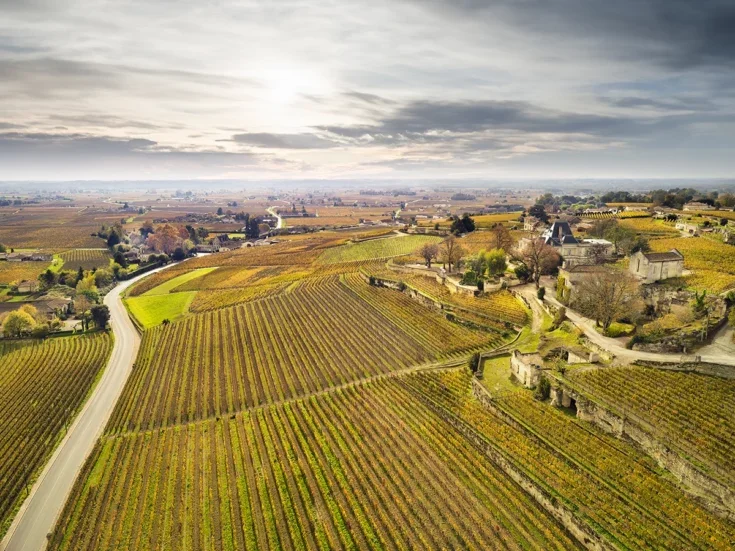
Separating Bouchard’s vineyards began by syphoning off the Côte de Nuits climats to join the portfolio of Domaine d’Eugénie in Vosne-Romanée. Engerer explained, “It was impossible to follow parcels that were spread over 45km [28 miles] with the high level of precision Artémis expects. Bouchard has really been divided into three. The Côte de Nuits parcels could have become part of Domaine Clos de Tart, but I wanted to keep those 7.5ha [18.5 acres] separate, while it is in Eugénie’s DNA to have several small parcels, so it was natural to move them there.”
Frédéric Weber has already experienced the benefits of the Artémis merger. “Since 2022 we have invested double in our vineyards and in the winery, and I am able to employ more people, despite reducing our volume. Honestly, it is a really exciting time. A huge acceleration on many projects. Before this, my team and I had a lot of ideas, but no time and not always sufficient means. Now we do. We share a lot with the teams of the other estates, which permits me to understand more the philosophy of Artémis Domaines. There is no compromise—only the best for the vine, wine, and our customers.”
Engerer told me that Weber has “already implemented so many small technical steps since 2022. In the vineyard, this includes massal selection of Chardonnay, pruning, and green manure. It’s more of a mindset. We are moving toward biodynamics with Domaine des Cabottes.” Both domaines are now certified organic from this year. “We are moving Bouchard from a company run by commercial constraints—for example, Frédéric now has as much time as he wants for élevage, and there is no limit on the cost of the best barrels. All the little steps. And more focus. We want to reach the level we already have at Domaines Eugénie and Clos de Tart and merge Bouchard culture with Artémis culture. From 2026 we will all be going in the same direction.”
Content from our partners

Bouchard Père & Fils retains the lion’s share of the Côte de Beaune vineyards, currently 60ha (148 acres), although approximately 6ha (15 acres) are contracts that will expire. There are 15 cuvées. The parcels are situated primarily in Volnay, Meursault, and Pommard, together with Bouchard’s formidable range of 28 premiers crus in Beaune.
Changing public perceptions
In part, the decision to divide the domaine is one of changing public perception. Engerer considers that the history of Bouchard Père & Fils as a négociant limits its full potential as a quality domaine, particularly in relation to the serious premiers crus and grands crus, and he alludes to higher prices of grands crus from other domaines.
The objective is to separate and elevate those climats that Engerer describes as “iconic”—not only the grands crus, but the Beaune premiers crus including the monopoles of Clos St-Landry (1.9ha [4.7 acres] planted with Chardonnay) and Clos de La Mousse.
When asked whether this will lead to increased prices for the climats that fall into Domaine des Cabotte’s portfolio, Engerer comments, “I would turn it the other way round. The Beaune appellations are underrated and undervalued. This will shine a light on the Beaune cuvées. The grands crus have overshadowed the premiers crus. It is difficult for people, including wine critics, to appreciate them when they know they have greater wines to follow.” Perhaps that means that all the cuvées under Domaine des Cabottes will increase in price, and we may see more significant inflation with the undervalued wines from Beaune.
Staying with Beaune, some climats may be divided. “We will share Beaune les Marconnets between Bouchard and Domaine des Cabottes,” remarked Weber. “You will see in the future two expressions of this beautiful terroir.”
The large cuvée Beaune du Château is the flagship premier cru blend for Bouchard Père & Fils and will remain with this domaine. The company’s headquarters are situated in the fabulous Château de Beaune, which Bernard Bouchard acquired in 1820 and where Bouchard has a library of more than 100,000 bottles of vintages older than 2000, stretching back to 1861.
Beaune du Château is produced in both red and white, using 16 premier cru vineyards for the red cuvée and three for the white. The largest parcel is Les Aigrots. I’ve always hoped that Bouchard would make some Les Aigrots separately, and this is now conceivable. Baroin will have the freedom to make such decisions as part of his new responsibility.
As for the name, there were two reasons behind the decision to call the new domaine Cabottes. “Cabottes are a symbol of Burgundy. They offered protection for vineyard workers as well as a place to keep their tools,” explained Engerer. Equally, it aligns the domaine with one of its stellar parcels. This rather special 0.21ha (0.5-acre) plot of Chevalier lies directly above Montrachet. Bouchard maintains it was part of Montrachet but was lying fallow at the time of the Appellation d’Origine Contrôlée (AOC) classification, so was officially designated Chevalier-Montrachet. When the company passed from the Bouchard family to the Henriot Champagne family in 1995, Joseph Henriot tried to have it elevated to Montrachet. Being unsuccessful in his attempt, it was made as a cuvée separate from that from Bouchard’s other vines in Chevalier, a total surface of 2.4ha (5.9 acres), and named after the Cabotte on the parcel. It has been made separately from Bouchard’s other Chevalier parcels since 1997.
“We thought about calling the new entity Domaine Enfant Jésus,” remarked Engerer, “but were advised it was not a good idea to use the name Jésus on a wine label.”
If you cannot find your favorite Bouchard wine, fear not. It will have been rebranded. A definitive list of the cuvées that will henceforth be under Domaine des Cabottes has still to be confirmed, but it seems as if they will include the following:
Chevalier-Montrachet Grand Cru
Chevalier-Montrachet Grand Cru La Cabotte
Corton Grand Cru
Corton-Charlemagne Grand Cru
Beaune Premier Cru Grèves Vigne de l’Enfant Jésus
Beaune Premier Cru Clos de la Mousse
Volnay Premier Cru Caillerets Ancienne Cuvée Carnot
Meursault Premier Cru Perrières
Meursault Premier Cru Genevrières
Meursault Premier Cru Charmes