Andrew Jefford introduces a tasting of the red and white wines of Collioure shared with Simon Field MW and Stephan Reinhardt.
This is an extract from an article first published in WFW89. For full tasting notes and scores for all 42 wines tasted by the panel, subscribe to The World of Fine Wine.
These are the red and white wines of a Mediterranean headland: deeply incised, schist-soiled hills that ramp from the sea up to a 3,300ft (1,000m) ridgeline. The bush vines perch in lurching, swirling terraces where you work the brown rocks by hand or horse; many roads are recent. Those setting off to prune their vines in centuries past went by boat and brought the grapes back to their cellars over the waves, too; they then left their vines to net anchovies when the silver schools were running. The region has been French since the 17th century but was Aragonese for almost half a millennium prior to that; culturally, we’re in Catalonia. Today’s Spanish-French border threads that ridgeline. Tourists find its little ports magical. It’s a place apart.
It’s seen tragedy. It was along the hot, stony tracks that lead from Banyuls over the hills to Portbou in Spain that the Jewish cultural critic and essayist Walter Benjamin made his final journey on September 26, 1940. Despite holding transit visas for Spain and Portugal and an entry visa for the USA, the Portbou police told Benjamin and his fellow travelers that they would be returned to France (and Nazi persecution) the next morning. Benjamin (by now stateless, penniless, and with a deeply chaotic personal life) committed suicide by taking an overdose of morphine that night in Portbou’s Hotel de Francia. The rest of the party, ironically, were then allowed to continue their journey west; they reached Lisbon four days later. In February of the previous year, the human traffic had been in the other direction—as almost half a million traumatized Republican refugees crossed into France, and an often-frosty welcome, following the capture of Catalonia by Franco’s Nationalist forces. This bitter trudge north is known as La Retirada; there are still many Spanish surnames on Roussillon’s electoral rolls.
Related
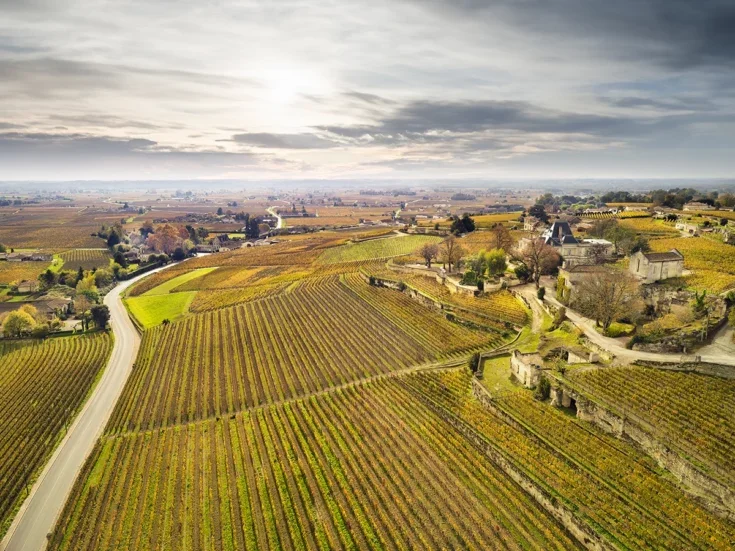
The 20th-century wine history of these beautiful hills evolved more slowly than its politics, but was barely less eventful. The ancient terraces to which the 1,200ha (2,965 acres) of present-day vineyards cling testify to a long wine-growing tradition—which the late-19th century scourge of phylloxera temporarily erased. Crisis ensued (200,000 wine growers and their families demonstrated in Perpignan on May 19, 1907), intensified by rising competition from France’s colonial vineyards in North Africa; World War I drained the region’s manpower. The vineyards of Roussillon eventually found a niche with the production of sweet fortified wines, illustrated by Banyuls, Maury, and Rivesaltes winning some of the first appellations awarded in France in 1936 (Banyuls Grand Cru followed in 1962). Dry, unfortified wines, though, fell into eclipse, and had no appellation status—until 1971, when Collioure was granted its appellation, for red wines only. The appellation boundary is identical to that of Banyuls. Rosé wines followed 20 years later in 1991—and finally white wines in 2003. Production of Collioure (at between 1.9 and 2.2 million liters a year) is rising, while that of Banyuls (1.8 million liters a year with 0.3 million liters of Banyuls Grand Cru) is now falling. A century and a half after phylloxera, in other words, a fine table-wine destiny is being resumed.
That’s the challenge: It’s fine wine here—or nothing. In contrast to the flatlands around Perpignan (Rivesaltes, Roussillon, and Côtes Catalanes), productive viticulture is impossible in Collioure. One third of the vineyards are on slopes steeper than 50%; the sun shines on 325 days a year; the wind rarely drops; there’s rarely more than 28.5 inches (725mm) of rain each year, and much of that comes in useless deluges (the terraces are incised with zig-zag drainage channels called agulles to carry the runoff); many domains average less than 20hl/ha. Grenache (in three colors: Rouge, Blanc, and Gris) is the Hamlet of Collioure, though the cast includes five other red varieties (Carignan, Syrah, Mourvèdre, Counoise, and Cinsault) and eight whites (Vermentino, Macabeo, Carignan Blanc, Muscat d’Alexandrie, Roussanne, Marsanne, Tourbat, and Muscat à Petits Grains Blancs); plantings are often mixed. Anyone who walks the vineyards can sense that, in the long term, this will prove a region of parcellaires.
Red and white honors shared
What did our tasters find? In color terms, the match was an even one, with white wines finishing fractionally ahead of reds: the average white score (17 wines) was 89.46, while the average red score (25 wines) was 89.01. There were six reds and five whites in our top 11 wines, scoring 90.7 or more; but look at the scores of 90 or over and you’ll find nine whites to eight reds. My highest individual score (95) went to a red wine, as did Simon Field’s highest score (94); on Stephan Reinhardt’s scoresheet, the honors were shared, with one wine of each color scoring 93.
Content from our partners
Both Simon Field and Stephan Reinhardt were impressed by the powerfully Mediterranean character of these wines in both structural and flavor terms, and admired the “balance and tension with high intensity” of the wines (Stephan Reinhardt’s words) despite significant alcohol levels, and with texture, extract, and salinity bringing as much balance as acidity. Oak is generally used wisely or not at all, and we all noted a play in the wines along the reductive-oxidative axis adding further interest… where successful.
I’d suggest ignoring the stated alcohol on the label; you may then find these wines much stealthier and more graceful than you’d imagine, certainly by comparison with the most ambitious wines of France’s southwest (Cahors, Bordeaux, and Madiran), and even by comparison with the other great Grenache sites of southern France (notably Châteauneuf). Their color range is wide; the aromatic finesse of the best is astonishing; on the palate they are ample principally by dint of glycerol, of accessible and unforbidding tannins, and of a compelling exoticism and originality of flavor (both fruited and beyond) which surely owes its origin to Collioure’s striking growing location. The less successful wines, by contrast, still tend to be rustic and clumsy. Even then, though, there is often character and interest on offer—as the wide variation in our scores for the bottom end of the field suggests.
The top five: The best of Collioure
Les Clos de Paulilles Cap Béar Collioure Blanc 2023 (14% ABV) | 92
Simon Field MW | Modest of hue, with an appeal to the nose built on firm citric foundations; then nuts, poached pear, soft spice, and a creamy generosity. Broad and complex, with a nutty peroration, an elegant shard of acidity in support, and a textural integrity and balance, both of which predict a fascinating evolution. | 93
AJ | Bright silver-green; honestly a very pretty glass of wine. The vegetal side of Grenache Blanc and the tightly muzzled citrus of Grenache Gris can both be read here (I’d tentatively guess—it’s restrained again). Quietly classical and compelling at first; a little seaside hoot with air, later. Even prettier after five minutes in the glass. Lovely white Collioure: the real deal. It is much broader on the palate than many others, and with absolutely top-level aromatic refinement as well as purity of fruit: clearly a fine wine here. Totally Mediterranean in its range of allusions: thyme, cistus, smilax, almond, sweet fennel. A glorious white glass of the south. Note, too, the lovely, soft supple texture, and a suffusing though latent creaminess. Grand wine. 2025–35. | 94
SR | This bright yellow colored Collioure opens with a clear and intense, savory, and herb-scented bouquet of ripe and intense white fruits intermingled with saline layers of the terroir. Full-bodied, rich, and elegant on the palate, with a juicy fruit and a savory, mineral, structuring grip, this is an intense and saline finishing Grenache in a very elegant and balanced, yet also properly tense, style. 2025–31. | 90
Les Clos de Paulilles Cap Béar Collioure Rouge 2022 (14.5% ABV) | 92
SF | Dense midnight black, with very little variance at the rim. No lack of extraction evidenced here, it would seem. An attractive nose of plums, buttered toast, and sloe all pointing toward a modern style but not one overwhelmed by indulgence, such is the poise and balance in play. The palate underlines the quality of acidity and tannin alike, with neither overwhelmed, but both clearly built on a bastion of irreproachable class. | 93
AJ | Saturated, dense black-red with ample purple; opaque almost to the rim. Intriguing and unobvious aromas. It’s not the fruit that rushes out at you, but the fruit and its compost of plants and herbs: a dense, almost Chartreuse-like weave of green things, peppers, aromatic oily leaves and root spice. You just can’t make an aroma like this without great fruit from great soils. Super. It’s actually a very lively, acid-structured wine with vivacious plum and sloe fruit, framed by those plant-world analogies, much as the nose sketched out. I find it almost over-lively but fascinating and characterful; very expressive, too. Wonderful aromatic work here. 2025–32. | 91
SR | Concentrated and fresh on the nose, which intermingles savory mineral with ripe, dark fruit aromas, this 2022 Collioure is an elegant and full-bodied red, with remarkable mineral freshness, sustainable salinity, and well-integrated power. This is a generous and warm, yet also tight and refreshing, mineral red, probably predominantly based on Grenache. 2025–35. | 91
Coume del Mas Quadratur Collioure Rouge 2022 (14.5% ABV) | 92
SF | Dense raven black at the core, a brief aperture of purple at the rim; a lovely pure cassis aromatic, with hints of Assam tea and dark chocolate in support, then strawberries a la Bergmann, soft but imposing tannins, a deft contradiction in the face or ripeness and rigor. On revisiting an hour later, one is happy to support both ripeness and rigor tangentially and to underline the quality and power of the tannins and finally to commend the baroque grandeur of the construction as a whole. | 94
AJ | Saturated dense black-red. Mentholated black fruits with plenty of rosemary, dry warm wood, cystus and broken stone. Wind over the lagoon, too. Perhaps stored tobacco-leaves from the barn. Exuberant and attractive, super-Meridional and adieu Bordeaux. If you are open to this difference, it is compelling. An ultra-lush wine, letting all its exotic black-fruit richness spill over your palate like a ruptured haggis. (For non-Scots, this is dramatic and inviting) The fruits are very ripe, gloriously low in acidity, mellow and seductive, and lent balance by tannin and floral perfumes. Just a huge amount to enjoy from these extraordinary slopes. A wonderful wine I’d love to own, though it may need a little settling time. 2025–35. | 93
SR | Dark ruby in its brilliant color, this 2022 red Collioure opens with an intense and juicy fruit aroma on the nose reminiscent of cassis bonbons and leafy notes such as ivy. Sweetish, round and soft on the palate this is an intense and elegant red with fine yet structuring tannins and a super ripe and sweetish fruit that is charming but too dominant for my palate. 2025–30. | 90
Nénu Vin de Deux Mains La Cuvée de Claude Collioure Rouge 2022 (14.5% ABV) | 92
SF | Plush, fresh, and alluring; the quintessence of Grenache, which flatters to deceive. Wait a few minutes and the spicy notes will come out (fennel and aniseed); wait a while longer and the uncompromising tannins will soften, fully acquiescent in the face of the alcoholic pull, and forging a pleasing rapport with the taster’s inclination ot early (but not, of course, compete) gratification. | 92
AJ | Dark, deep black-red: very pure. Just translucent now. Sweet, vibrant black berry fruit and some backing savory/animal/fur notes. Intriguing herbal notes, too: a nose you can keep returning to in quest of the truth of place. Sea breezes, too: the salt-mist cast. I feel it’s here, all wrapped up in a strange and surreal, Dali-like opulence. But some, new to Collioure, might find it odd. It’s the site. I adore it: so new, so unusual. Lush, full, vivid, alluring and unusual, with perfumed and incense-laden black berry fruits sluicing into the creek of your mouth, followed by light tannins and soft acidity to leave the creek bed clean. Very good and articulate wine, which speaks a new language 2025–35. | 92
SR | This is a very elegant and refined, opening red Collioure, which combines spicy/peppery notes with bright and fresh air, Mediterranean esprit, well-integrated oak, and ripe, dark-berry aromas. Full-bodied, savory, and fresh on the palate, this is a tight, vital, and nervy red, with firm tannins and a still-young but promising finish. This is a character, and it integrates its 14.5% ABV perfectly well. 2027–36. | 93
Domaine Piétri-Géraud Le Moulin de la Cortine Collioure Rouge 2022 (14.5% ABV) | 92
SF | Midnight-black at the core but conceding vermillion and blood as one moves away. The nose juxtaposes the sweet and the savory, with dried fruit (plum and prune, inter alia) evidenced and a spicy character that recalls Mourvèdre. Rich and resonant, very pure and powerful, with an elegant and expressively spicy backdrop. | 92
AJ | Dense, deep, saturated black-red. Sweet, warm, chunky, very attractive and generous: a mound of plums and damsons. Some flowers, too, more than the savory notes we find elsewhere, almost as if there was Grenache Blanc in here as well (though the color would suggest otherwise). An exciting nose with some nascent finesse. I keep going back and enjoy it more every time. Lovely, pure-fruited wine, with arresting depth and (above all) perfumes, right the way through the palate. Red wines to which this amount of floral perfume might inhere are rare. Very exciting. Plums and damsons as on the nose; ample meshed tannins; almost exotic, incense-laden acidity; and jasmine as you savor and swallow. Grand potential here, given a little more tender loving care, but already very good. 2025–35. | 93
SR | Dark ruby in color, this 2022 Collioure opens with an intense yet elegant and even fresh nose of dark, ripe fruits, such as cherries and black berries, crushed dark stones, and herbs such as sage. Elegant and fresh on the silky textured palate, this is a full-bodied, complex, and sustainable red, with serious but elegant tannins, mouth-watering salinity, and a long, aromatic, and Mediterranean finish. This is clearly still a very young wine, but it is promising as such. 2025–34. | 92