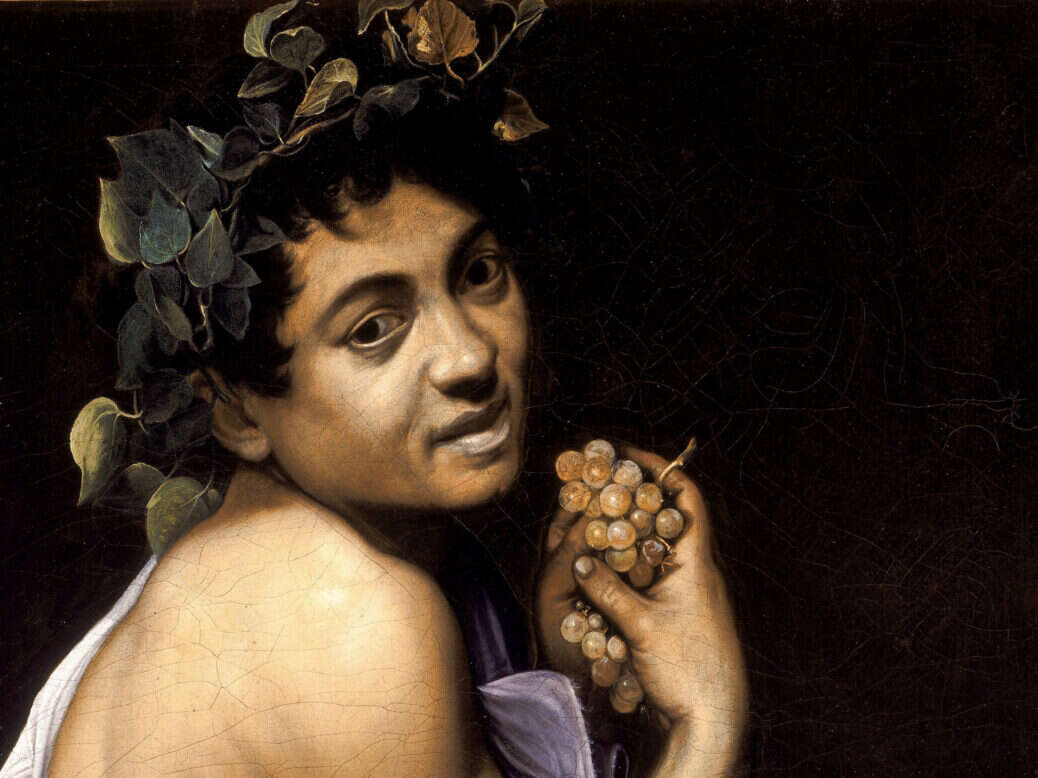
Embroiled in the western cultural encounter with wine is its mythical origin with the Thracian deity, Dionysus, who brought drunkenness down from the barbarous hillsides into the centers of civilization. Whether this has been balm or blight has depended on the historical era in which it was scrutinized, as is richly attested throughout art history.
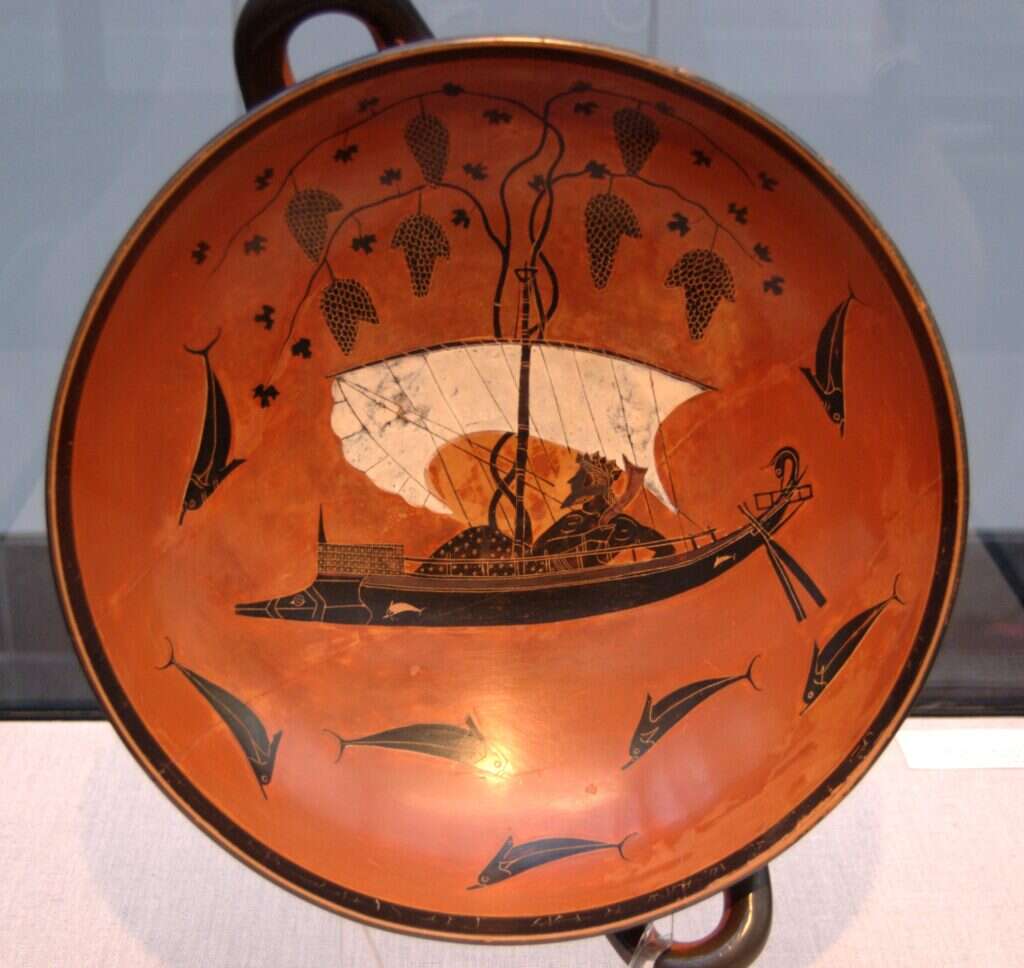
The Dionysus Cup (pictured below), recovered during excavations at Vulci in the Lazio in 1841, now in the Staatliche Antikensammlungen in Munich, was made in the 530s BC by the Attic potter-painter Exekias. It is a kylix, or drinking cup, its exterior painted with hypnotic black eyes and battle scenes. The tondo, or interior image, shows a crowned Dionysus reclining, larger than life, in a ship beneath a strikingly white billowing sail. Above the sail, the ship’s mast branches into grapevines bearing clusters of ripe berries. Around the ship, a school of dolphins plays, referencing the tale in the seventh Homeric Hymn, when Dionysus transforms a marauding horde of Etruscan pirates into dolphins, making the sea mammals another of his multifarious mythical guises.
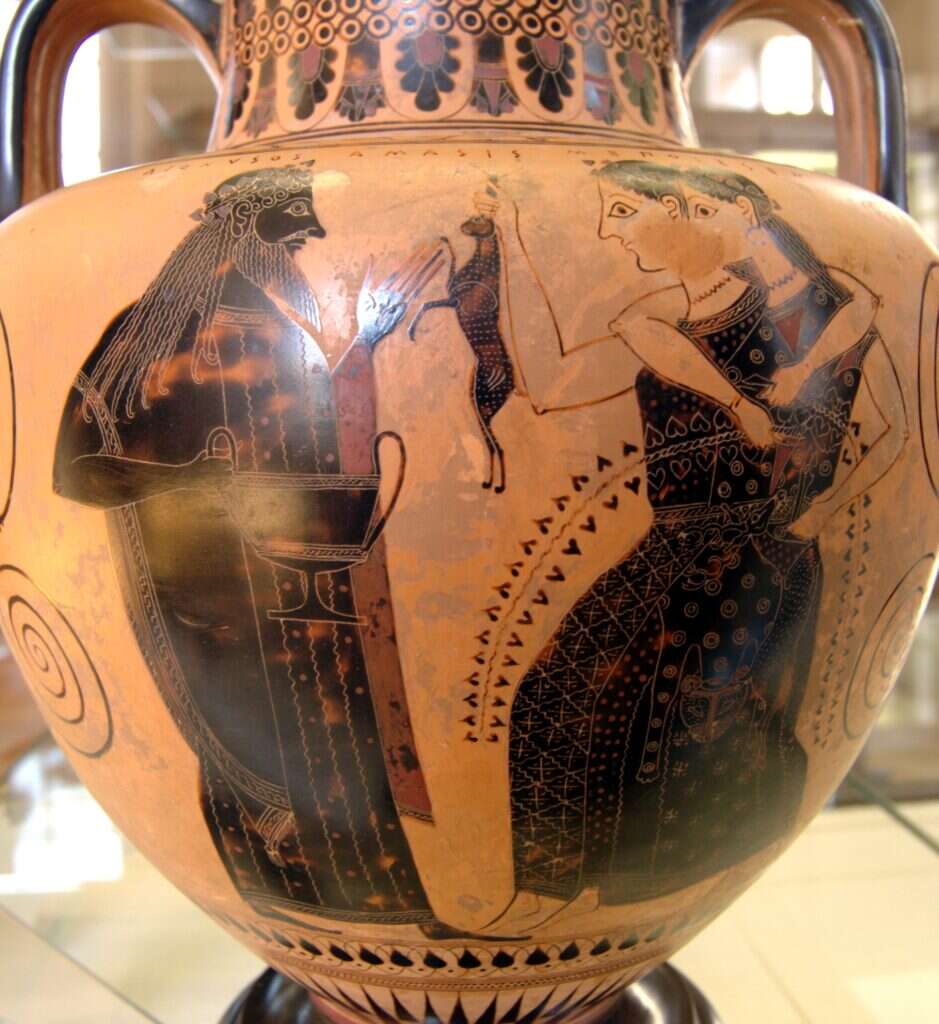
Another Attic artefact (below), from exactly the same period, made by the Amasis Painter, is an amphora in the Cabinet des Médailles, Paris, on which the ivy-wreathed god is depicted at the moment of graciously accepting a sacrificed hare from a pair of his female followers, the Maenads. Given to flights of hysteria during the Dionysian festivals, the women here are immaculately decorous, the one not holding the dead hare having draped both arms around her companion’s shoulders, the only feral touch being a panther skin slung around the lead Maenad’s waist.
In the Roman period, when Dionysus becomes Bacchus, the figurations become gradually more lifelike, often acquiring a psychological gloss. The first-century AD statue of Bacchus with a satyr in the National Archaeological Museum of Naples is a bronze and silver standing study from Pompeii, in which the god, in his youthful incarnation, prepares to lean a steadying arm on the shoulder of his ivy-crowned child adept, who fixes his adoring gaze on the impassive face of the father of intoxication. There are no adornments, either of symbolic beasts or ritual clothing, only two nearly human figures rising out of antiquity, implicitly ready to shed the weight of mythology.
Related

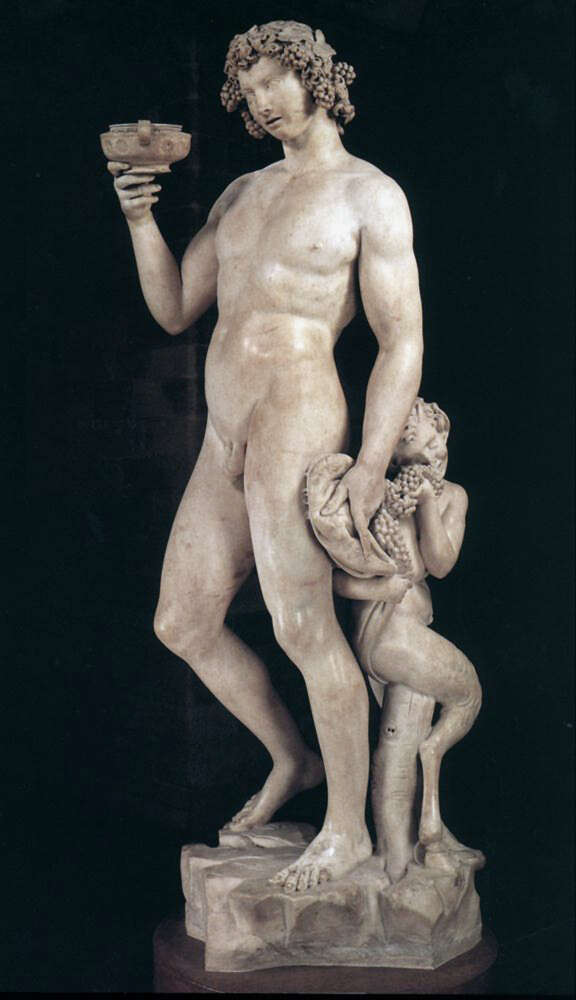
The same pair were hewn in marble in the 1490s by Michelangelo (below). Bacchus is now more assertively sozzled, holding his cup before him, his head loaded with grapes and ivy leaves, his lips parted in tuneless song, his teetering contrapposto suggesting an imminent stumble. The goat-legged satyr shies demurely away behind him, snaffling a bunch of grapes with an asinine giggle. What larks. Oddly, this sculpture, now in the Bargello, Florence, is one of Michelangelo’s few roundly despised works. Percy Shelley saw it in the Uffizi in 1819 and returned it only the sneer of cold command: “It looks drunken, brutal and narrow-minded, and has an expression of dissoluteness the most revolting.”
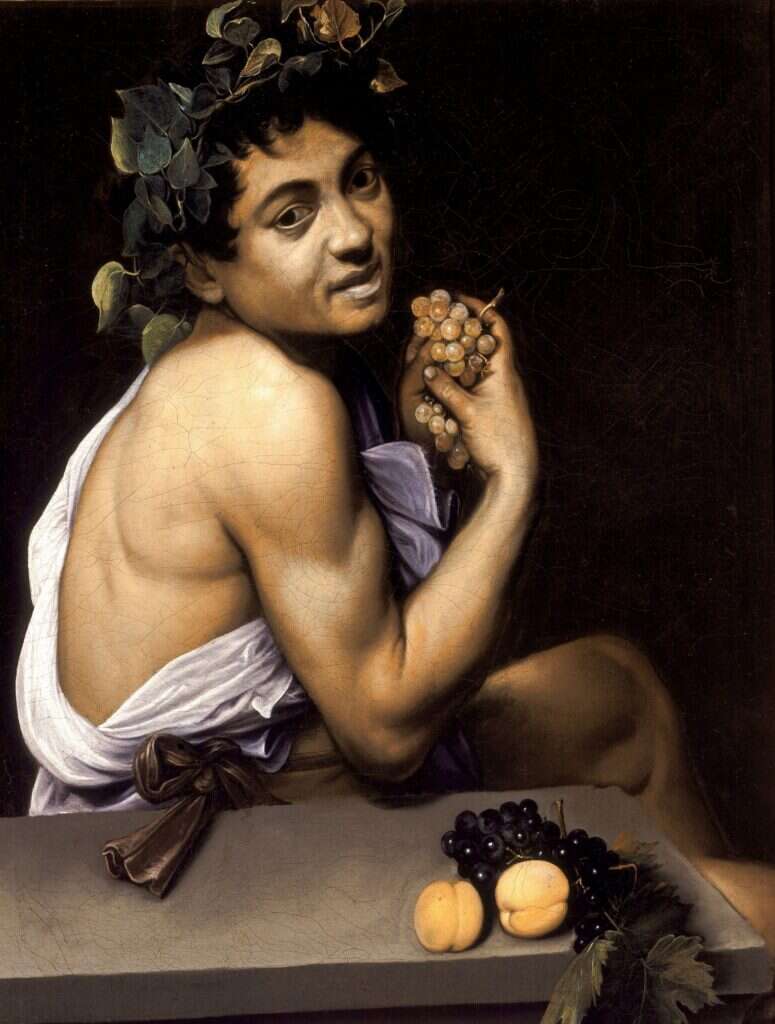
In the Christian era, Bacchus lost much of his ecstasy and acquired a moral patina of dissipation. Caravaggio’s self-portrait as sick Bacchus (1593-4), in the Borghese Gallery, Rome (below), is a young man gone yellow with hepatic derangement, his jaundiced hue echoed in the yellow grapes he still clutches, the wreathed head and dropping shirt an exploded parody of sexual solicitude. On the table by his elbow are gleaming black grapes and a pair of sensual peaches, emblems of a bodily vigour that has presently deserted him. The probably malarial painter executed the work in pitiless self-examination before a mirror.
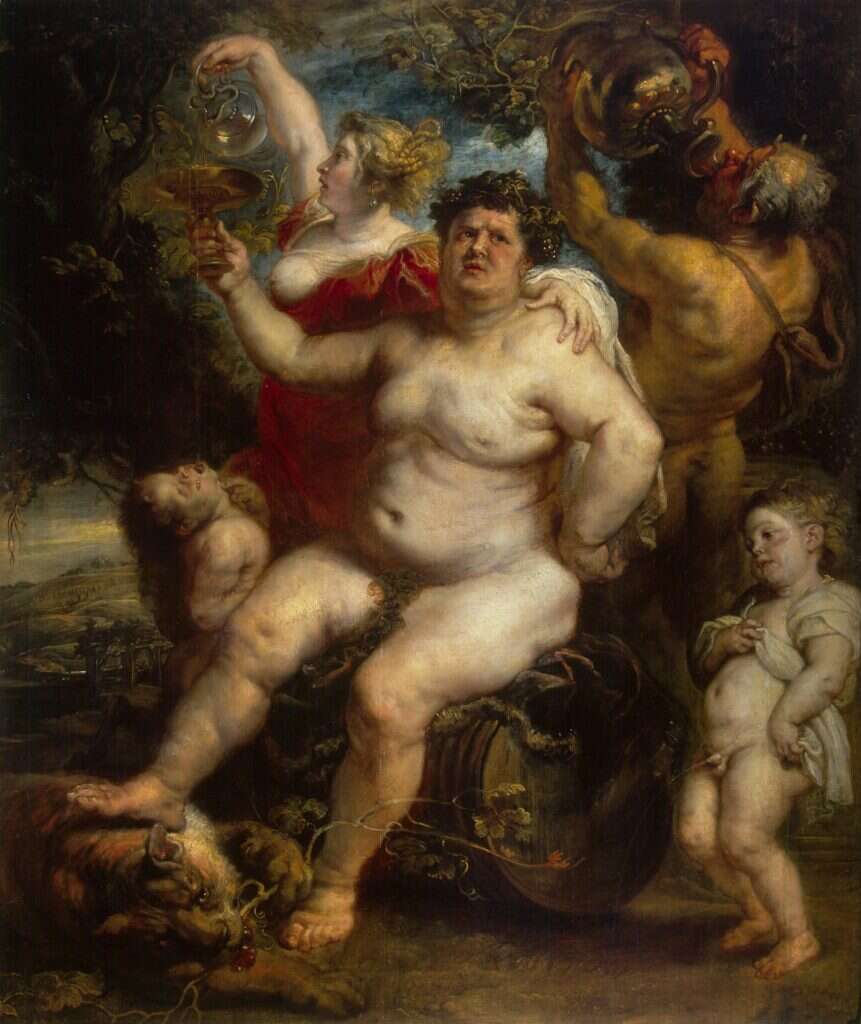
It gets worse. Caravaggio’s young invalid will live to fight another day, but the quiveringly corpulent, naked slob in Rubens’ depiction (1638-40), in the Hermitage, St Petersburg, looks ready for a one-way trip to the sanatorium. A cod-classical Oliver Hardy, all around him are images not of liberating abandon, but of dissolute chaos. The wine being poured at left is overflowing the krater and streaming into the gaping mouth of a gargoyle child. Behind the god, an old satyr upends a hefty silver jug into his gullet, while below him another corrupted putto mimics the streaming wine by pissing into the face of any viewer standing too close. The pastiche regality of the wine god has become a sordid pasquinade. He is enthroned on a wine barrel, one fat foot on a dead panther, his satiated rueful glance to his left a plea for deliverance.
Content from our partners

In the present century, the monumental late Bacchus series by the American artist Cy Twombly (2003-8), who had a career-long fascination with the myth, consists only of a set of exhilarated looping skeins of pure vermilion, applied with a brush attached to a pole. The dribbles they track down the canvas are left in place to suggest that spilling of wine noted by Michelangelo and Rubens, the leaping loops a Bacchanalian dance, the moral sickness sponged away and its elated frenzy restored to it.