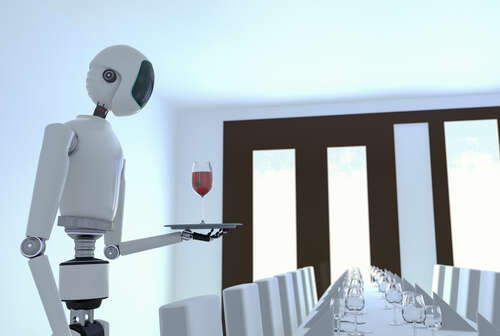
It seems that AI is penetrating all areas of society. Chatbots can talk and read. It’s controversial whether they have passed the Turing test—meaning that in blind conversation you would not be able to distinguish them from a person. But one area they have not penetrated is food and wine. A chatbot cannot smell or taste.
Granted, AI is now making inroads into the production of wine. Precision viticulture provides knowledge of a vineyard in unprecedented detail, using satellites or drones for remote sensing and infrared technology to assess stages of ripeness. Indeed, this is ideal for AI, to use the patterns of prior years to guide harvesting. Fully automated control systems can bring a new degree of precision to vinification. Like any production system, AI can look at
past patterns and improve future plans. But what about consuming the product?
AI and wine: Better objective measurements
Wine tasting is a value judgment par excellence. Wine competitions are based on the assumption of some commonality of judgment among the judges, but one famous test found inconsistency to the point that the same wine placed in three different flights received completely different assessments by the same judges.1 A follow-up study showed little agreement among different judges when the same wine was entered in different competitions.2 There is clearly room for improvement here.
Wine tasting is based on assessing the appearance, aromas, and taste of a wine. The actual parameters that are assessed can be described in objective terms. Color has hue and intensity. Aromas can be identified and assessed for intensity. Taste includes acidity, sweetness, bitterness, and viscosity—all subject to precise measurement. The key to judgment, of course, is to ask how all these meld together: Is the wine balanced and harmonious? How will it age?
Related
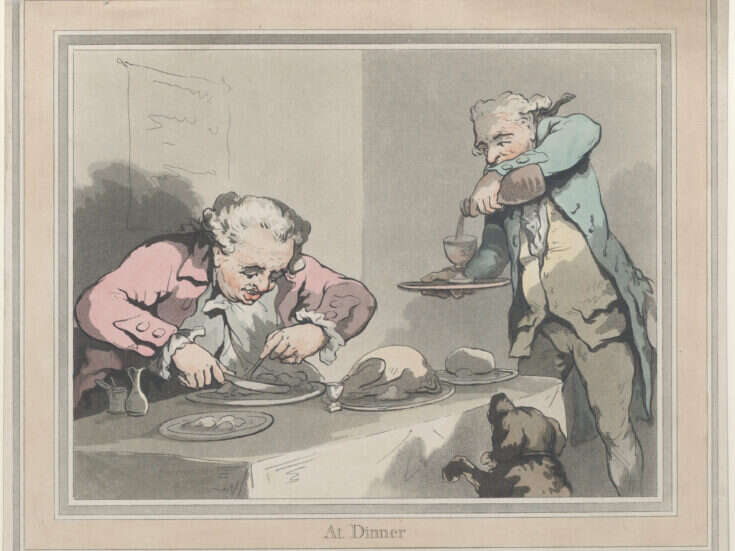


A machine should be able to make the objective measurements better than any human. Color can be described by its wavelength. Intensity can be measured by its radiance. Volatile aromas can be detected and measured exactly in a mass spectrometer, including even those below the threshold for human detection. The playoff between acidity and sweetness that often confuses humans would not confuse a machine that measured pH, titratable acidity, and actual sugar levels. Viscosity could be assessed by physical measurements and levels of glycerol and dissolved dry extract taken into account for assessing mouthfeel. No need to swirl and look for legs on the glass! And of course, alcohol could be measured to within 0.1% or less.
Predictive power
There have already been some experiments to ask whether AI could use such measurements to make predictions about tasting. If a consumer likes a specific wine, then technical analysis should enable software to identify other wines with similar parameters. Of course, this is purely a relative judgment. It does not make any assessment of absolute quality. It’s along the lines of programs that suggest books to read or movies to watch based on past experiences.
Such a program could go much further along the lines of relative recommendations. A conversation could establish whether a consumer likes high- or low-alcohol wines, highly extracted or more elegant wines, strong or weak aromas in varieties such as Riesling or Sauvignon Blanc, and so on. In fact, if it’s possible to think of a way to describe the effects of any particular parameter or combination of parameters in terms of simple tasting terms, an AI-driven program could serve as sommelier. Feedback to learn how well its recommendations worked would be an important part of the process. Software to recommend wines is already in the marketplace. ChatGPT passed three of the theory exams for the Court of Master Sommeliers.
Content from our partners
But theory and relative recommendations are not the same as the absolute assessment of a wine. Here we need to integrate the technical measurements of a wine with the history of criticism on previous vintages of that wine and other wines related to it. This requires the sort of pattern matching that is perfect for AI.
There is now an enormous database of wine tasting notes from critics all over the world. In effect, they are based on each critic’s view of analyzing some relatively simple features, such as alcohol level, acidity, sugar level, dry extract, viscosity, and a very large range of aromatic compounds, often present in trace amounts. Putting all this together (more or less subconsciously) forms an assessment of how the wine relates to other wines from the area or from different vintages, and whether it has that seemingly intangible quality of being harmonious. This is, in effect, a sort of pattern recognition.
Suppose an artificial intelligence is fed all the tasting notes together with technical analysis of all the wines. Would it be able to detect patterns in the technical data that explain why one wine is rated more highly than another? Would it be able to define differences between critics’ ratings of a wine in terms of their preferences, such as influences by sub-threshold levels of specific aromatic compounds? (This is called bias in training in the world of AI.)
For wines that are consumed immediately or soon after the vintage, such a scheme could be in action very quickly. This would not be an instant process for wines that benefit from aging, because the program would need to take the tech specs at intervals over time to see how changes in the wine correlated with tasting notes in each period.
Wine tasting is basically chemistry, and the latest development in chemistry is the self-driving laboratory (named by analogy with the self-driving car). A self-driving laboratory is a fully autonomous unit that conducts and analyzes experiments. It is in effect an extension of the automated laboratories that have been common in clinical medicine. The difference is that in clinical medicine there is a fixed set of tasks. It is more reliable to automate a laboratory to undertake them than for human technicians to perform analyses.
A self-driving lab is driven by artificial intelligence. It starts off by designing experiments to resolve a specific question. It makes all the measurements, analyzes the results, forms a hypothesis, and if appropriate, then designs a further set of experiments. The most sophisticated self-driving laboratories might in fact use a series of AI agents that interact with one another, each specialized for investigating a specific type of questions. This would be a parallel to an interdisciplinary laboratory run by humans.
A self-driving tasting laboratory would have a more specific set of tasks. It would contain the equipment necessary to make all the technical measurements on wine: physical measurements of viscosity or dry extract; chemical measurements of acidity, sugar, and alcohol; and measurements by mass spectroscopy of all aromatic components. All the analytical measurements could be made much more effectively by machines than by the human palate and nose. Impressions would be replaced by actual measurements.
The tech specs of each wine could be related to human experience by training the net on tasting notes from human experts. The laboratory would be equipped with a database containing all published tasting notes. Seeing patterns between the analytical measurements and the tasting notes is exactly what a neural net could do. By comparing the tech specs of a wine with the tech specs of other wines for which it has tasting notes, the AI should be able to formulate a tasting note on the new wine. Once it has a historical database, it should be able to use its sophisticated capacities for pattern recognition to predict aging patterns.
Because the net would have access to all previously published tasting notes, it would have greater objectivity than any single human expert. In fact, it would be possible for the laboratory to have different personas, providing tasting notes from different perspectives. And it would be utterly incorruptible.
With each new vintage, the machine could analyze the wines and offer tasting notes based on patterns detected in wines from previous vintages. This would be an ideal process for a self-driving laboratory: The only variable would be the supply of wines. It would not even need a sommelier to do this.
Notes
1. RT Hodgson, “An Examination of Judge Reliability at a Major US Wine Competition,” Journal of Wine Economics 3:2 (2008), pp.105–13. doi.org/10.1017/S1931436100001152
2. RT Hodgson, “An Analysis of the Concordance Among 13 US Wine Competitions,” Journal of Wine Economics 4:1 (2009), pp.1–9. doi.org/10.1017/S1931436100000638