I met Filipa Pato and chef/sommelier William Wouters in Burgundy for a vertical of Montrachet when they gave me a bottle of Nossa Calcário from old-vine Baga. I was smitten by this elegant, vibrant, and slightly austere red and the following spring travelled to Bairrada in coastal Portugal, 100km (62 miles) south of Porto, to visit the Baga Friends.
Founded in 2012, these eight producers are dedicated to reforming Baga’s reputation for astringent low-quality wine. It was not the variety at fault, but over-cropping and over-extraction from unripe whole clusters.
Baga, probably from the Dão, planted post-phylloxera for its resistance to mildew, was traditionally cultivated in parcels of 0.5ha (1.25 acres), partially for home consumption, but principally to sell to large bottlers. Large crops were desirable, but impossible to ripen—barely reaching 9% abv. Moreover Baga’s large compact bunches and thin skin make it susceptible to botrytis in Bairrada’s humid conditions where 900–1000mm (35–39 inches) of rain annually. But quality is dramatically improved by green harvest or strict de-budding. (Some Baga friends use a first passage to make traditional method sparkling rosé, to which high-acid Baga lends itself.)
Bairrada’s hot summer days are offset by a cool mist which blows from the Atlantic across the light ripple of hills of this low-lying region until reaching the mountains which divide Bairrada from the Dão. Baga has a long growing cycle, well suited in this respect to Bairrada’s relatively cool climate and also to the soils of clay and Lower Jurassic limestone. The latter highlights Baga’s acidity and bestows a crystal-cut edge to the tannin.
Related
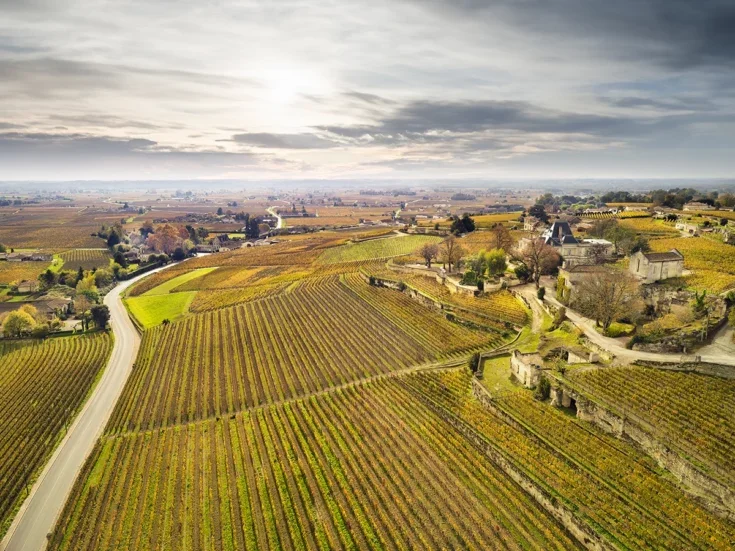
Sadly many old vines have been abandoned by those selling fruit -not worth the effort for a measly E0.50 kilo. But Filipa Pato and Luis Gomes at Giz are on a mission to save old vines which have great diversity of genetic material. Most Baga Friends have some vineyards pre-dating the 1937 register. With TLC, these gnarly old bush vines can fulfil Baga’s potential for light but intense wine of 12.5% alcohol with fresh acidity and fine-gained tannins in which the red fruit evolves forest floor complexity with age. Sometimes reminiscent of Barbaresco, handled carefully Baga can even lean towards Burgundy and with a low pH of 3.4 after malolactic, well-made Baga has the potential to age 30-plus years.
From firmly structured to ethereal Baga
The Baga Friends produce a full gamut of styles, from firmly structured to ethereal, illustrating the versatility of Baga in Bairrada’s terroir. Quinta das Bágeiras makes the former. Bágeiras Garrafeira is produced by intensively punching down whole bunches in lagares before ageing in 3,000-liter old casks. The 2020, a concentrated vintage, is muscular, dense and potent at 15% alcohol (which is unusually high for Baga). Scrolling backwards, the 1995 (14%) has mellowed becoming smooth and truffle-like, while retaining Baga’s trademark high acidity. Sidónio de Sousa is also more old school, producing weighty full-bodied Baga for the long haul. Their compact, chewy Garrafeira 2017 needs time. More accessible is the recently bottled Reserva 2019 with its rich, thick ripple of tannin.

French vigneron François Chasans, who manages his 8ha (20 acres) biodynamically, has moved from a traditional approach to an authentic infusion technique. Since 2016 he steeps stems in raffia sacks into fermenting juice for a smooth, but quite firmly structured result. A vertical of Quinta da Vacariça Garrafeira (2005-2016) showed no consistent stylistic trajectory, but attractive smokiness which François attributes to the blue marl layered with limestone, reminiscent of Château-Chalon, in his Cardosa vineyard. Like most Baga Friends, his wines are under 13%. The tense and graphite-scented 2011 impressed me. François made a good job of the wet 2014 vintage following which more old vineyards were abandoned. Also occupying the middle ground is Luis Pato, chemical engineer and master of experiments. 2008 Vinha Barrosa and 2018 Pé Franco “8” from pre-phylloxera Valadas vineyard stood out from the extensive tasting.
Content from our partners

Filipa Pato’s wines resonate with terroir. Baga with a core of lively austerity. Her 10ha (25 acres) of small parcels, largely old vines, are worked biodynamically. Pigs rummage among them turning and effectively hoeing the soil with their snouts. Calcário is a blend of Óis do Bairro vineyards where limestone dominates: a wiine pinging with energy. When it was partnered with lunch cooked by William, it really highlighted the food-pairing capacity of this pure and edgy style. Missão, a single cru, planted in 1864, makes 671 bottles of richer denser Baga from clay and limestone.
Recovering old vineyards
I would couple Vadio and Giz as modernist and stylish Baga using different approaches. “My mission is to recover old vineyards,” remarks Luis Gomes who established Giz in 2015. “Old vines reach maturity with lower alcohol than newer selections.” Luis makes three harvests to produce sparkling, rose, and in late September for red, which he totally de-stems and ages in 500 liter barrels, of which 50% is new for the notably perfumed, single-vineyard Vinha das Cavaleiras. The 2018 shows austerity, chalkiness, tension, and taffeta tannin polished with a lick of oak. 2021 Vinha Velha is racy, crisp, and saline made of several parcels in 20% new oak. We visited the charming Loiseira parcel off the beaten track surrounded by pine and eucalyptus, olives trees, and bees hives.
Luis Patrão (Vadio) shares Gomes’s passion for biodiversity, but not for old vines. Using material from Luis Pato, from 2005 he has replaced old vines on 27 parcels over 10ha (25 acres) in Val Dom Pedro, dotted with limestone quarries, where he is the sole grower-producer. Cordon is used for yield control and VSP rows are worked by tractor. Recent vintages have a light, sleek modern feel. From 2012 he has used 50% whole bunch, remontage, and older 500 liter barrels for ageing. Baga from his classic range (20 parcels) is pretty, pure, and crisp, while Rexarte 2017, from a single vineyard on a northerly incline, is fluid and elegant. As the vines age the length and intensity of his wines will increase.
The most balletic expression of Baga comes from Douro producer Dirk Niepoort who fell in love with Filipa Pato’s vineyards and the idea of making Baga when she asked for help making fortified wine.“I’ve never cared for young vineyards and I don’t care a shit about phenolic ripeness (sorry I asked). My obsession is acidity.” Poeirinho vineyard is not lacking: the Poeirinho 22 is bright, fluid, and linear, the 2021 light, super crisp, and pure. Niepoort says he’s “inspired by Barbaressco” for the Garrafeira 2018, which is silky, salty, precise, and tense, while the single-vineyard Lote D is super sapid. I love the translucency to limestone in Dirk’s wine. And as Filipa Pato remarks, “It’s thanks to Baga we have this connection to the terroir.”