Once part-owned by Robert Parker, and now part of the elite Artemis stable, Beaux Frères is still run by the founder’s son—and is still making fine Pinot Noir, says Joanna Simon.
In 2016, I succeeded as winemaker. In 2023, I pushed my father to pasture and took the role as leader of the company.” Moments earlier, the speaker, Mike D Etzel (aka Mikey), had been describing how, in 2015, he felt ready to come back to the family wine estate, Beaux Frères in Willamette Valley, to work with, as he puts it, his “crazy dad.” Other people know his “crazy dad” as Mike G Etzel, Burgundy-inspired visionary and founder in 1987—on a foreclosed pig farm—of the acclaimed Pinot Noir-focused Beaux Frères and also, not insignificantly, brother-in-law of the former all-powerful wine critic Robert Parker Jr.
Mike D, the middle of three sons, returned to Beaux Frères as vineyard manager seven years after graduating in enology from Oregon State University. In the years away, he worked as a winemaker in Oregon wineries such as Willakenzie, Brick House, Chapter 24 Vineyards, Maison l’Envoyé, and 00 Wines, as well as founding, with his brothers, Coattails, a wine producer and craft brewery on their father’s Etzel Farm campus next door to Beaux Frères. He had also done two internships in Spain (Clos Erasmus in Priorat and Bodega Remírez de Ganuza in Rioja), thanks to his uncle’s contacts, and worked a vintage at Nautilus Estate in New Zealand in 2012.
He may have felt ready to return to the estate, where he had grown up since he was less than a year old in 1987, but things were not easy (as so often where family succession is concerned). There was, he says, a lot of conflict with his father, so much so that in 2017 he walked out mid-vintage—and this in a year that had already seen major upheaval. That year, Mike senior had been forced to sell the majority stake in Beaux Frères—it was bought by Maisons & Domaines Henriot—after Robert Parker and the other investor pulled out (Parker keeping just a small share). When Maisons & Domaines Henriot merged with Artémis Domaines in 2022, the Etzels retained an 11% stake in Beaux Frères and found themselves in a glittering portfolio with, among others, Château Latour, Champagne Jacquesson, Clos de Tart, Château Grillet, and Eisele Vineyard.
Related

What is it like being part of a group like Artémis? I wasn’t expecting Mike D to bite the hand that feeds him, but it was reassuring to hear that the group respects the Etzels’ culture of doing everything themselves, “like mending the kit.” That said, remaining CEO and technical director Mike D has hired both a winemaker, Damien Lapuyade, from Evening Land winery, in 2023, and “a girl from Artémis” to do viticultural research and development, in 2024.
And now here he was in November 2025 on his first visit to the UK, hosting a tasting lunch of recent vintages of Beaux Frères Pinot Noirs—together with one much older—at Quo Vadis restaurant in London with importer (since January 2024) Armit.
Whereas Mike D is an enology graduate, his father was essentially self-taught, learning from his brother-in-law’s Burgundy contacts and doing four harvests at Ponzi Vineyards while planting the Beaux Frères vineyards—their microclimate distinctively shaped by the majestic Douglas firs surrounding them. The first generation of vines were Pommard and Wädenswil clones on their own rootstocks, and the early wines were made from grapes picked at peak ripeness and with maximum extraction, then raised in 100% new oak and aged on gross lees. A product of their era, they were very well received—but never reviewed by Parker—and commanded some of the highest prices in the Willamette Valley.
Content from our partners

Change came when the original Pinot Noir vines began to succumb to phylloxera and were replaced with by-then-fashionable Dijon clones on resistant rootstock. At about the same time (around the turn of the century), Mike Sr, seeing the deterioration in soil health in the vineyards, “turned spiritual,” as Mike D describes his father’s adoption of organic and biodynamic farming practices. The approach, with its focus on stewardship of the land, has continued. As a scientist, Mike Jr says he’s “not sure about some of the hocus pocus” of biodynamics but believes in the holistic approach, viewing the soil as an organism, a life force, that they dry-
farm and feed with their own compost.
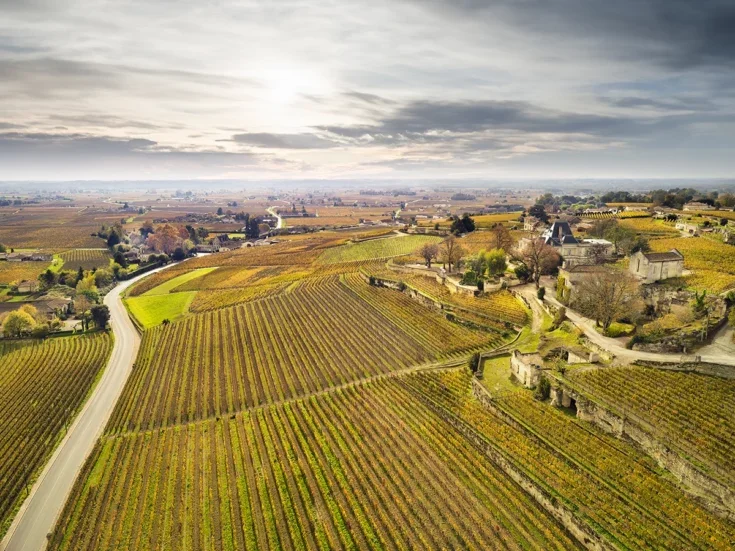
The Beaux Frères soils, in the Ribbon Ridge AVA, Oregon’s smallest, are marine sedimentary: acidic, clay-rich, water-retaining, and deep, but not nutrient-rich, so they don’t promote vigor. As a result, the vine roots go very deep. Mike D has established a nursery program based on massal selection. The newest of the estate’s three vineyards, the 16-acre (6.5ha) The Bridge, lying between the original Beaux Frères Vineyard (26 acres [10.5ha]) and The Upper Terrace (10 acres [4ha]), is entirely massal selection. In total, the property is now 152 acres (61.5ha), with the vineyards sited at an average elevation of 400ft (122m).
Winemaking today involves a little more whole-bunch (about 10% altogether), and all wines are fermented in very small vats with indigenous yeasts for 12–18 days, with punch-downs and pump-overs by hand. They are aged for 10–11 months on fine lees in no more than 20–35% new French oak, depending on the wine and vintage, and a more diverse group of coopers is used than in the past. There is no racking, except into a tank before bottling, and sulfur use is minimal. All wines are bottled unfined and unfiltered.
By way of comparison, 2010, which was the older vintage we tasted (from magnum), had about 50% new oak: “My father was starting to back off new oak.” It was a cold, wet, difficult year. They triaged a lot, removing a lot of botrytis berries, and they declassified as well, but ultimately, they felt it was a wine of “rare purity and finesse [and] almost miraculous balance”.
I found it fragrant and mellow on the nose—reminiscent of old Burgundy—with sandalwood, spice, and incense, and a smoky gunflint inflection. The palate was mellow, faceted, and still piqued with some acidity, but it seemed slightly coarser-textured than the recent vintages I tasted. If this particular magnum was representative, I would drink this vintage within the next year or two.
Tasting Beaux Frères
Quo Vadis, Dean Street, London; November 19, 2025
2023 Beaux Frères Willamette Valley Pinot Noir
The Beaux Frères “village” wine is intended to be an expression of the wider Willamette Valley and the vintage, rather than of Beaux Frères’ Ribbon Ridge terroirs, so the composition varies year by year. It’s gradually moving to entirely estate-grown fruit, but in the meantime, the 2023 is 61% estate grapes, including from young vines, 3% from Sequitur, a vineyard that is Mike Sr’s own project adjacent to The Upper Terrace, and 36% from two vineyards planted and farmed by Mike D in the Chehalem Mountains AVA. In contrast to the late, cool, frost-impacted but ultimately successful 2022 vintage, 2023 got off to a slow start, saw a very wet April (usefully so, as it turned out), and then turned into a hot, fast, dry season in which low disease pressure meant fewer vineyard treatments than for many years. Indigenous yeast fermentation in small vats for 12–18 days; aging on lees for 10 months in French oak barrels, 20% new (compared with 31% in the cooler 2022); unfined fand unfiltered.
A bright and quite deep crimson color (markedly deeper than the 2022). A little shy on the nose at first, but it blossoms into fragrant, ripe, blue fruit, black cherry, and raspberry, with an undercurrent of just-starting-to-fade rose petals and a softly savory, spicy note. The palate has a seductive creaminess billowing around fruit that blends roundness and ripeness with clarity and purity. Oak and a hint of brushwood lightly shade the fruit, and the finish is lingeringly sappy and fresh. | 93
2023 Beaux Frères The Beaux Frères Vineyard Pinot Noir Ribbon Ridge AVA Willamette Valley
The flagship vineyard—Beaux Frères’ largest at 26 acres (10.5ha)—was picked at night from September 10 to 22 in this warm, fast, intense year. The wine is made in the same way as the Willamette Valley Pinot, except that it spent one month more in 20% new French oak. (In the cooler 2022 vintage, it was 35% new.)
Glistening color and an open, sweet, heady, bright perfume of blackberries, dark plums, and raspberries, with lifted floral notes and a light dusting of baking spices. Abundant, joyous, clear, ripe fruit, with a savory-rich, darker, forest-floor undertow and a whisper of smokiness. Seamless tannins and structure, satin texture, and sustained purity and freshness. Generous but elegant and long. Ready now, but it should see in its 10th birthday comfortably. | 94
2022 Beaux Frères The Upper Terrace Pinot Noir Ribbon Ridge AVA Willamette Valley
The small Upper Terrace vineyard lies just north of, and about 50ft (15m) higher than, The Beaux Frères Vineyard and has just one exposure: east-facing. Planted in 2000 with Dijon clones, it’s a 9.8-acre (4ha) plot in a 40-acre (16.2ha) site, the rest of which is densely forested with Douglas firs. It’s always the last to be picked, and Mike D describes it as “very singular.”
The 2022 vintage was also singular. An unprecedented frost on April 12 destroyed at least half the primary buds across the estate, and it was unseasonably cold and wet until June 20. Flowering started at the end of the month (compared with June 4 the previous year) but was very abundant and successful, and the size of the subsequent berries—harvested in October—was such that yields across the estate were only 10% less than usual. The winemaking of The Upper Terrace departs slightly from the other two wines in that there is very little whole-cluster, and in 2022 about 1% of the wine was aged in a 600-liter amphora, and 3–4% was aged in three 600-liter demi-muids. The rest was in barriques for 11 months, 30% of them new. Cooler vintages see more oak and take longer to come around.
Crimson in color, with intense red fruit, including cranberries and redcurrants, pierced with orange zest. There’s a suggestion of black cherry and a whiff of incense, too. The palate is concentrated and youthful, drier and more structured than the Beaux Frères Vineyard 2022 but beautifully fine in texture, and there’s a note of bitter herbs and resin that adds to the interest and allure. | 94