In the second part of his exploration of “once and future grapes,” David Schildknecht examines cépages that have risen from near-extinction.
That certain lost, neglected, or forgotten species and cultivars once enjoyed prestige is itself too often forgotten. A recent issue of Smithsonian Magazine reports on a botanist “scouring remote corners of the earth to find new species” and rediscovering, as the article’s title overdramatically puts it: “A Forgotten Bean [that] Could Save Coffee from Extinction.” But distant exploration was not how Aaron Davis, head of coffee research at the Royal Botanic Gardens in Kew, first came upon Stenophylla, a species last documented in the field in 1954. He encountered it in historical records testifying not just to its heat- and drought-resistance but alleging its flavors are “exquisite” and even “superior to those of all other [coffee] species.”
While the Palm House at Kew is a world-renowned plant repository, and jars of stenophylla beans from 1856 and 1873 turned up in Kew’s Herbarium, a few living plants were only discovered via an arduous search of Sierra Leone backcountry. The species had gone from profitably flourishing, to being abandoned within a century, likely losing favor due above all to low yields—a fate all too familiar from the world of wine. Some 8,000 specimens of stenophylla planted under Davis’s direction will soon yield their first crop. But whatever this species’ future as brewable, it also represents a valuable tool for future breeding and genetic selection. The same can be said for countless vine cépages among the almost-limitless stock of those around the globe.
Conservatory graduates
Like Aaron Davis, Northern Rhône vigneron Eric Texier is a scourer of antique texts, botanical repositories, and back country in search of plants that can meet the challenges of climate change. Texier came to international attention for identifying and propagating Sérine, not to mention raising consciousness of that ancient, small-berried variant of Syrah (or, depending on one’s view, self-standing cépage). Those labors have resulted in a wealth of exciting new vineyards and wines from a renowned region that nearly lost a key part of its heritage.
Related

Lately, Texier has embarked on a project that—with his signature combination of wit and grit—he dubs “a post-modern, global warming-compatible dream”: propagating four forgotten varieties of the Ardèches (Exbrayat, Pougnet, Ribier Gris, and Bourrisquou) from specimens residing in the Conservatoire de Vassal (a project of France’s INRAE: National Research Institute for Agriculture, Food, and Environment). Within four or five years, these cépages will yield their first wine in more than a century. Based on historical records, explains Texier, the four recommend themselves on account of precisely those characteristics that, in the wake of the phylloxera crisis and in the era of AOC, condemned them to disregard: low yields, low must weights, elevated acidity, and stubbornly late ripening.
Hiding in plain sight?
The century-old official authorization of two obscure, late-ripening indigenes for Champagne—while hardly a secret given that region’s notoriety—was long perceived as a mere legal curiosity and historical accident. Today, that accident is increasingly seen as good fortune. Champagne is understandably the wine most often cited in connection with climate change, given the extent to which its character depends on ample acidity and a combination of expressive aromatics with modest must weight; and in that regard, both Arbanne and Petit Meslier have much to offer.
Etienne Calsac and Aurélien Laherte are among growers bullish on Petit Meslier, which, like so many varieties, fell from favor post-phylloxera due to stubborn acid retention, delayed ripening, and low yields. But those are not the only characteristics that lead Laherte to refer to it as “ce grand cépage”—which anyone who has tasted his dense, aromatically intense 100% varietal bottling is likely to second. After being introduced to an insightful neologism of Austrian Markus Altenburger, Laherte enthusiastically applies it to Petit Meslier, opining of this small-berried cépage “that its thick skins probably bring precisely that advantage of ‘phenolic acidity,’ even when the grapes are direct-pressed.” (Jean-Baptiste Lécaillon, chef de cave of Louis Roederer, which has been at the forefront of innovation among large Champagne houses, has been publicizing the notion of “freshness from phenolics.”)
Content from our partners


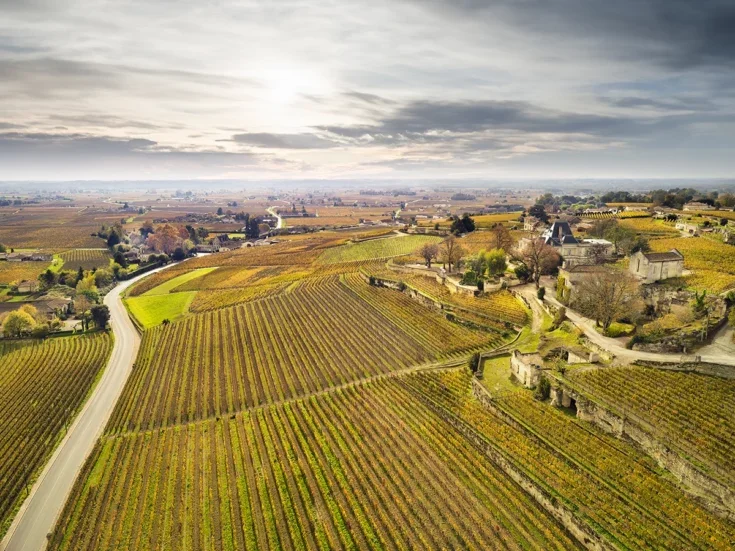
To be sure, one region’s marginalized or neglected grape variety may be well-known and widely planted somewhere else. Among four cépages recently introduced for the production of red Bordeaux are Castets—nearly forgotten save in the itself lamentably neglected Aveyron—but also Touriga Nacional, which needs no verbal introduction given its fame in the Douro. Yet Carménère and Malbec, which together account for less than 1% of surface area in Bordeaux, once shared pride of place there with Cabernet in what is likely their ancestral homeland. That those two late-ripeners are drought-resistant is obvious from their abundance and success in arid sectors of South America. It’s hard not to conceive of their neglect as a lost opportunity for Bordeaux, given the increasing challenge of reining in sugar accumulation in relatively early-ripening and moisture-loving Merlot, which, ironically, got its big break at the expense of Malbec, when in the wake of phylloxera the latter failed to graft readily onto American rootstock. Romane Blaise of Château de Pressac in St-Emilion cultivates both Malbec and Carménère, calling them flavorful insurance against climatic warming.
The hybridizing labors of vine breeders are by no means unimportant. But the successful cépages of tomorrow can also be found by searching the past.