


In the contemporary wine world, choosing to age wine in a barrel is understood as a means of influencing its style. But for most of its history, the barrel’s purpose was solely concerned with storage. Rod Phillips attempts to pin down the historical moment when the barrel became an integral part of winemaking aesthetics.
Two images, almost three centuries apart, illustrate the longer-term history of barrels. Taking the modern period first, think of many barrel rooms. Rows of barrels are lined up with military precision, all of uniform size, in perfect condition, and apparently dusted daily. They are working barrels, full of maturing wine, but they serve a cultural purpose, too, as the rooms are often dimly lit to create an ambience of mystery and timelessness for visitors. Some barrel rooms, as at Chile’s Montes, are filled with soft music, but even when silent they suggest that what happens inside the barrels is an almost spiritual interplay of wood and wine.
At a more banal level, back labels on wine bottles and spec sheets often dwell on barrel aging. They tell us how many months the wine spent in barrel, and they often note the country of origin of the oak (and sometimes the forest), the size of the barrels, and the proportions of wine matured in new and used barrels. Top wines are often barrel selections, and for some categories of wine (such as Chianti Classico and Rioja), one criterion of the quality tiers is the length of time in barrel.
Even with a trend away from wines where oak makes a perceptible contribution to the wine, producers are careful to stress their use of used or larger-format barrels. However it might be described, barrel aging is an important, even if declining, part of winemaking and wine marketing. Producers order new barrels when they need them for their barrel programs, and they carefully calibrate the origin, size, and degrees of toasting of their barrels to the grape variety and intended wine style.
Related
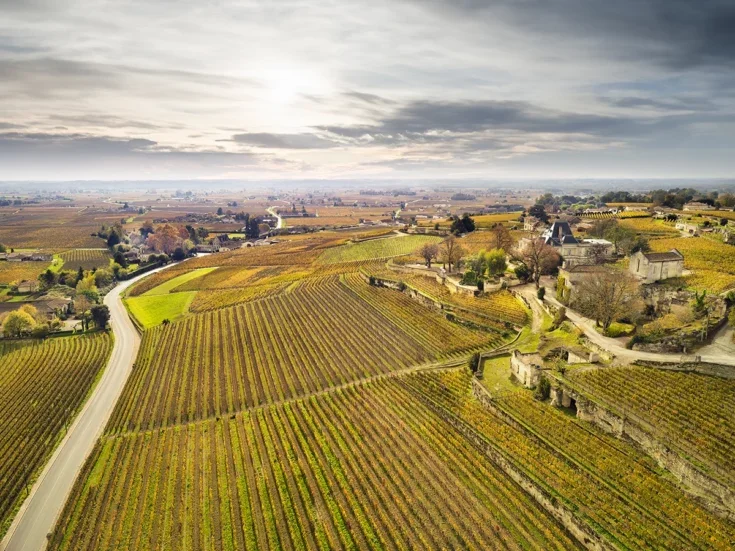
Now think of the mid-1700s, when François Delachère, the priest of Volnay, recorded the size of his vintage. He expressed it as the number of barrels (of varying sizes) the wine filled. In 1750, for example, the “good wine” (by which the priest meant Pinot Noir) from the vines belonging to the parish filled three pièces, five feuillettes, and one cabillon—barrels holding 60, 30, and 15 US gallons (228, 114, and 57 liters), respectively—for a total of 368 US gallons (1,311 liters). The following year, he recorded a harvest about one fifth smaller: nine and a half feuillettes, or 286 US gallons (1,083 liters).
The wine of the parish of Volnay was wholly or partly fermented in these barrels (wooden vats were sometimes used for the initial stage of fermentation), stored in them, sold in them (buyers marked the barrels they wanted to reserve), and taken from the parish in them. Once at their destination, the barrels ended up in private cellars—sometimes royal cellars—or in taverns, where the wine was drawn from them, into bottles for storage in cellars and into pitchers or goblets as customers ordered wine in taverns.
When François Delachère ordered new barrels, it was not because he needed the character they gave to his wine but because some of his existing barrels were beyond repair. Thus, in May 1732 he ordered new barrels with a total volume of six queues from a master cooper in Beaune. In September 1733, the first of the barrels was delivered, and the final barrel arrived in August 1737, more than five years after the order was placed. There was no just-in-time supply chain in the 18th century.
Content from our partners
The way the priest’s vigneron made the parish’s wine and the way it was stored and shipped were standard for Europe at this time. Bigger producers fermented their wine in large wooden vats before transferring it to barrels for storage. Some stored their wine in larger barrels than those the priest of Volnay used, such as the foudres and even larger barrels found throughout Europe at the time. Wine would then be transferred to smaller, manageable barrels of about 53–79 US gallons (200–300 liters) for shipping.
To put it another way, apart from a few rare cases where stone or ceramic vessels were used (such as qvevri in Georgia), by the 1700s grape juice had, for centuries, been fermented in barrels or wooden vats and the finished wine kept in barrels, whether resting in cellars or on the move on carts or barges. It is likely that a lot of wine remained in barrels for a year or more, if that was the time that elapsed between the beginning of fermentation and the last of the wine being drawn from barrels for bottling or consumption.
But this was not “barrel aging” in the sense that we understand the term to today. Wine was not kept in barrels to improve its character, to evolve, to give it exposure to oxygen, or to draw aromas, flavors, or tannins from the wood. Barrels might have done all these things, depending on their age, but that was not their purpose, which was simply to provide a means of storing and shipping wine. There is no evidence in the records of the priest of Volnay or elsewhere else at the time that any attention was paid to the forest the wood came from, the tightness of the grain, or the toasting—or, more generally, to the effects of barrels on wine.
The only criterion for selecting a barrel was its volume, and that was a function of the total volume of wine to be stored. Paintings of the wine trade show that the standard barrel used for shipping was one that one or two people could roll and pivot when it was full of wine. But the priest of Volnay, who was so focused on his wines that he kept detailed annual records on them for more than 50 years, gave no indication that he thought the size or any other characteristic of his barrels had any influence on his wines.
For storing and shipping
If the priest of Volnay was representative of wine producers in the 18th century, in that he treated barrels as nothing more than containers for storing and shipping wine, a question is, When did winemakers start to think of barrels as contributing positively to the character and style of their wine? When did barrel fermenting and months spent maturing in barrels that were new, a mix of new and used, or wholly used become a way of suggesting wine character and quality?
The Internet provides various answers. One website suggests that after the Romans abandoned amphorae and began storing and shipping wine in wooden barrels, they realized “that the barrels had an effect on the wine, making it smoother and improving its taste. Following these discoveries, wines slowly became stored in oak barrels for longer periods of time.” Another website states, “By around the 17th century, when winemaking in France, Spain, Italy, and Germany became more of an exacting science and art, vintners also learned that aging wine in barrels could substantially improve the quality of the wine.” Pinning down the chronology of change is apparently a challenge.

Clearly, the shift had not taken place by the 18th century. The priest of Volnay was not an outlier in apparently being oblivious to the potentially positive effects of barrels on wine. The great Encyclopédie of Denis Diderot—the first compilation of existing knowledge, published between 1751 and 1772—has articles on wine, barrels, and coopers. But in none does it treat barrels as anything more than vessels for storing and shipping goods such as wine, beer, and cider.
If there was no sense that barrels could affect wine positively, it was known that barrels could have negative effects on wine, and winemakers were urged to do all they could to prevent them. One writer in this vein was Jean-Antoine Chaptal, Comte de Chanteloup (1756–1832), famous for promoting the addition of sugar to must so as to boost potential alcohol and compensate for unripe grapes. In one of his works, L’Art de Faire le Vin (first published in 1801), Chaptal appeared to suggest that the size of barrels could be a good influence on wine. Referring to foudres of Languedoc and the “enormous capacity of the foudres of Heidelberg, in which wine improves and keeps for centuries on end,” he noted that “it is recognized that wine is made better in large barrels than in small ones.”
Quite what he meant by this is unclear, because he also wrote that wine improved in bottles. It seems that Chaptal was referring to what he believed was the tendency of most wine to improve over time, regardless of the kind of vessel it was stored in. “Nearly all wines improve as they age, and we can regard them as perfect only a long time after they have been made.” If the size of a barrel influenced the scale of improvement, Chaptal did not specify why or how.
Although Chaptal noted that wine improved in barrels and in glass, he warned against using new barrels for wine. “If the barrels are new, the wood that composes them has an astringency and bitterness that can be transmitted to the wine. These faults can be prevented by several sluices of hot water and saltwater; you stir these liquids carefully and leave them there for as long as it takes for them to penetrate the wood and draw out the harmful substances.”
Barrels could also be washed with water infused with flowers and the leaves of peach trees or with eau de vie, or they could be seasoned for several days with some new wine that was then discarded. In Burgundy, Chaptal wrote, new barrels are often tempered with new wine, but some producers use hot water and peach-tree leaves, a method that “has the advantage of soaking the barrel and saving a pint of wine.”
Using untreated new barrels was, then, out of the question, and Chaptal was negative about barrels in general. When barrels developed bad odors—he mentioned the smell of mold and stink-bugs— there was nothing to do but burn them. But ordinary, serviceable barrels were problematic, too. “The big problem with barrels is not only that they bring soluble substances into contact with the wine, but also that they are affected by variations in the atmosphere, and they have spaces that let air escape or enter.” Glass, he wrote, was a far better medium because it was not soluble, it prevented the wine from having contact with air and dampness, and it reacted less to changes in the atmosphere. Even glazed ceramic vessels were better than wood, though they, too, could be porous.
If Chaptal and others did not think of specific types of barrels as conveying benefits to the wine they held, perhaps there were logistical considerations. Small producers such as the parish of Volnay had a limited inventory of barrels—enough to hold a large harvest, more than enough for the others. They produced a single cuvée of each wine—in the case of Volnay, there was Pinot Noir, Gamay, a Pinot/Gamay blend (called tous-grains), and a white wine from a variety or varieties not specified. There were no limited, barrel-select cuvées; nor is there any indication that the barrels that were used were chosen by any criterion other than volume—not by age or previous usage, for example.
It is possible, too, that producers had limited control over the barrels in their inventory. When they sold a barrel of wine, it seems to have left the cellar in the barrel it was stored in when it was tasted and purchased. There is no evidence that purchasers brought their own barrels for wine to be racked into. We must assume that the buyer paid for the wine, not the barrel, and perhaps replaced the barrel with one of equal size. But did they replace it with one of equal age or in the same condition? And how carefully did producers monitor the age of their barrels? It seems likely that as long as it was serviceable, it didn’t matter if a barrel was five, ten, or 15 years old.
The idea that buyers paid for the wine and not the barrel is reinforced by the observation by renowned viticulturist Jules Guyot—admittedly later, in the mid-1800s—that, in Beaujolais, barrels “are sold with the wines.” If his had been a common practice, it is unlikely that Guyot would have pointed it out.
But it is also likely that practices varied from region to region. One account notes that “Traditionally the wines from Chablis were delivered in barrels by boat to Paris, then the barrels returned empty to Chablis to be filled again […]. In contrast, in Meursault, the barrels were not returned after delivery, so the winemakers would always use new ones.” It is suggested that these historic differences underlay more recent practices—that wines from Chablis continued to be aged in used barrels (if at all), while winemakers from Meursault looked more favorably on new barrels.
There is an intriguing example of barrel return in Toulouse in March 1791, when one Jean Buzat and an accomplice were charged with stealing three barriques of wine from the cellar of one Sieur Martres. They broke the lock to the cellar and rolled the barrels—branded with the letter M, the initial of the owner—through the streets to an awaiting cart. A witness in the case was a Sieur Lacoste Blaize, a tailor, who bought the wine, unaware that it had been stolen. He said that he usually bought his annual supply of wine from various villages around Toulouse, but he never concerned himself with the names of the sellers because was solely concerned about the quality of the wine.
Blaize was offered the three barrels of wine and was given a sample in a bottle to taste; assuming that the sample represented the wine in the three barrels, he agreed to buy them. The seller, he said, wanted the barrels back when they were empty, and Blaize agreed that they could be retrieved the following September. It is possible that Blaize (and his family?) would have gone through nearly 185 US gallons (700 liters) of wine in six months—around one gallon (4 liters) a day—but just as likely that some of the wine would have been put in bottles. Either way, it is clear that Blaize had no sense that by buying the wine, he owned the barrels. Quite why Buzat, the thief, wanted them, is unclear, but perhaps to sell them for further ill-gotten gains.
From neutral to positive
Just as 18th-century publications on wine featured barrels quite prominently but not as a means of giving any particular positive character to wine, so did publications in the 19th century. There were long discussions and many recommendations for ways of cleaning barrels and keeping them clean so that they did not convey off-flavors to wine. Water, boiling water, water infused with flowers, leaves, wine, brandy, and sulfur all played a role.
The overall thrust of these works is that by removing bad flavors from them, the barrels would have no influence on the wine—that they would be essentially inert. Indeed, because barrels were used over and over until they had to be repaired or abandoned, it is likely that most of the barrels in use at any given time had been filled many times. It’s easy to imagine wine being poured into barrels that had served a dozen or more vintages.
In a couple of cases, it was suggested that seasoning new barrels with distilled spirits could give a pleasant character to wine. This was a harbinger of the current trend of maturing some wine in barrels previously used for whisky. But a popular 19th-century American book on viticulture and winemaking (it went through seven editions between 1850 and 1861) noted that it would be a mistake to fill old whisky barrels with wine: “the taste of the whisky would destroy the flavor of our Catawba grape.”
Barrels previously used to store foreign wine were also perceived as problematic in the United States. The report on the wine entries to the 1846 Cincinnati Horticultural Society, noted of one wine, “May have been originally good; believed to have been put in an impure cask, which formerly contained foreign wine, either French or German, which very much changed its flavor.”

There are very few concessions throughout most of the 19th century that barrels, in themselves, could be beneficial to the wine they held. One example is an 1828 French book that noted, “The most enlightened proprietors have their barrels made from [oak, rather than chestnut,] which, as I have observed, preserves the natural aromas of the wine and gives it a flavor that is sought after [saveur recherchée].” This is a significant comment, but it is very much an outlier, and its sense was not repeated elsewhere. It suggests that by the early 1800s, some winemakers were using oak to enhance their wines, but as yet there is no independent supporting evidence.
Until the middle of the 19th century, the overwhelming tendency of publications on winemaking was to treat barrels simply as neutral vessels. But in the mid-1800s there were some hints, particularly with reference to the wines of Hermitage, that some barrels might be better than others. An 1857 book that surveyed viticulture and winemaking throughout France specified that wine from Hermitage was put in new oak barrels that had been cleaned with saltwater and then rinsed with eau de vie. (These were quite small barrels that held 55–57 US gallons [210–215 liters] of wine.) It gave no reason for this, and Hermitage stood out in this book because it was the only area where the author distinguished between new and old barrels. In all other regions, barrels were treated generically.
Although there was no explanation in that book as to why Hermitage was distinctive, a work published four years later provided a rationale: “Hermitage is never put in old barrels [… The] gallic acid trapped in large quantities in the oak staves [in new barrels] gives the wine a dimension that distinguishes it from the same wine put in an old barrel, and gives it a marked superiority.” It was recommended that these new barrels should be washed with boiling water, peach leaves, and salt for 24 hours, then rinsed with fresh water and seasoned with eau de vie. Red Hermitage should spend at least four years in barrel, then two years in bottle, before being released for sale. If it were from a good year, it would last 20 years “without any change.”
Jules Guyot noted in his encyclopedic Etude des Vignobles de France (1868) the same practice regarding new barrels in Hermitage: “It has been noted at Tain that there is a great difference in favor of new wines put in new barrels, as opposed to those put in used barrels, no matter how much care is taken in rinsing and sulfuring the latter.” He went on to add, “This is a very appropriate and important observation: 20 wine-producing departments of France would have very honest and very proper wines, if these wines were put in new barrels; put in permanent barrels, they appear to have a goût de terroir that is, in fact, nothing more than the taste of old barrels.” The term “permanent barrels” probably refers to large foudres installed in cellars used for storing wine.
This is an odd comment, given that using old barrels was the rule in France during the 1800s. Apart from the cost to producers of buying a complete complement of new barrels for each vintage, France’s coopers could hardly have made enough to supply producers with them. Of course, using only new barrels for Hermitage would have measurably increased the cost of the wine. But it seems that the ultimate cost was borne by those who bought the better wines for Bordeaux. One 19th-century source has it that 80% of Hermitage was purchased by Bordeaux producers to blend into their own wines—a process openly acknowledged in the time before appellation d’origine contrôlée laws.
A passing phase?
Guyot’s reference to a goût de terroir being mistaken for the taste of old barrels brings us to the notion of goût de tonneau, a term often used in writing on winemaking from the 18th to early 20th centuries. Although it is always used in a negative sense—goût de tonneau is not something you want in your wine—its precise meaning is elusive. An obvious meaning is that it refers to the influence of barrels that have not been cleaned properly, but goût de tonneau seems more general than that. It is the “taste of a barrel,” not the “taste of a dirty barrel.” The lengthy instructions on cleaning new and used barrels that punctuate writing on winemaking in this period never refer to cleaning as a way of avoiding goût de tonneau.
Is it possible, then, that goût de tonneau is just that—the flavor that oak gives to wine? Is it what people complain of when they say that a wine is “overoaked”? But that generally refers to newer barrels rather than to those that have been used often, whereas most barrels in use—apart from certain parts of the Rhône—had been used for several vintages.
All this suggests that barrel aging wine specifically for the impact wood had on it can be dated back a little more than a century, to the late 1800s at the earliest. Even then, it is likely that the effects of wood that were in play were aromas and flavors rather than tannins or microoxygenation. Pinning down the period more precisely is a further piece of research, but an obvious period to investigate is when there were alternatives to barrels.
Early wines were stored and shipped in earthenware jars. This was the case in Mesopotamia, Egypt, and ancient Greece and Rome, while in Georgia, qvevri—ceramic vessels buried underground—have famously been used for fermenting and storing wine for thousands of years. In most cases, the use of non-wood vessels for storing wine fell out of fashion with the widespread use of wooden barrels—in Europe and wherever else Europeans established wineries.
With the advent of concrete vats in the early 1900s and, later, stainless-steel tanks, the distinctiveness of barrel-aged wines—especially aged in newer barrels—must have become apparent. Perhaps this led, over time, to the widespread adoption of barrels for aging wine. Although barrels have a long history, then, their deliberate use to give positive character to wine appears to have been quite short.
With a broad trend away from wines with perceptible oak, perhaps the mass use of barrel aging will turn out to be a passing phase in the long history of wine. It is too soon to say that wine producers en masse will abandon barrels, but as Jancis Robinson MW has noted, “Oak and wine may be a marriage made in heaven, but the divorce rate is slowly increasing.”


