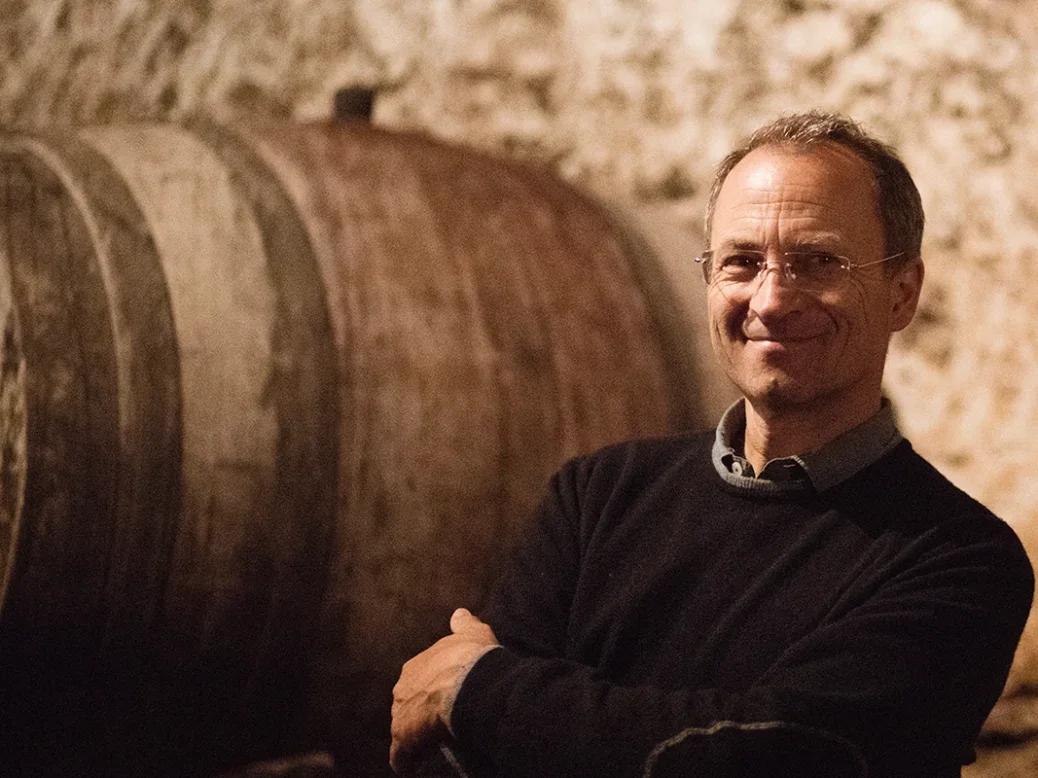
In November 2025, with the passing of Emmanuel Reynaud after a long battle with cancer, France lost one of its most singular and enigmatic winegrowers. Despite worldwide celebrity as the custodian of Château Rayas, Reynaud eschewed the limelight, traveling little and receiving visitors sparingly. Conservative by disposition and devoutly Catholic by confession, he kept the faith with the family’s traditions, preserving the many acres of woodland planted on the Rayas estate which could have produced lucrative Châteauneuf-du-Pape; harvesting much later than his neighbors; and commercializing his wines with an eye to the drinker, not the speculator, many years after the vintage.
To a younger generation of winegrowers and drinkers, Reynaud became something of a living legend (a tendency only amplified by his fidelity, perhaps somewhat studied, to another of the family’s traditions: mild eccentricity). Yet his early career was far from easy. With the passing of Louis Reynaud in 1978, Emmanuel’s father Bernard had inherited Château des Tours; his uncle Jacques had become the steward of Rayas and Château de Fonsalette. The grapes of des Tours had always been sold to the local cooperative. In 1982, Bernard suffered a tractor accident and Emmanuel took his place in the vines. By 1989, he had taken full control of the estate and bootstrapped a winery into existence, beginning domaine-bottling.
Nor was taking the helm at Château Rayas simple. Jacques Reynaud’s death, shopping for shoes in Avignon (a rare indulgence for a man who slept on a straw mattress) in 1997 was sudden. Françoise, Emmanuel’s aunt, managed the succession—already several years in the making—within the family. But the vineyards, which hadn’t been replanted in years, required considerable attention. And Jacques, firmly established in the pantheon of the Rhône’s great winemakers, cast a long shadow. Emmanuel’s first vintage, 1997, was judged harshly: “This lighter-styled wine appears diluted in terms of color,” wrote one influential wine critic at the time. It may be that the challenges of these early years subsequently informed Reynaud’s default stance of aloof skepticism, at least until trust was established, in his encounters with the Anglophone wine commentariat.
Subtle evolutions
With time, however, Emmanuel Reynaud established a reputation as much more than his uncle’s successor. While he always stressed the continuity between the wines of grandfather Louis, uncle Jacques, and his own, there were subtle evolutions. Perhaps partly due to the deteriorating health of the vineyards, Jacques’s wines in powerful vintages such as 1995, 1990, and 1989 were enormously concentrated: muscular in structure and saturated in hue. Emmanuel’s are generally lighter in color (but not in alcohol), privileging structural finesse over sinew and tannin, though not at the expense of intensity of flavor.
Related
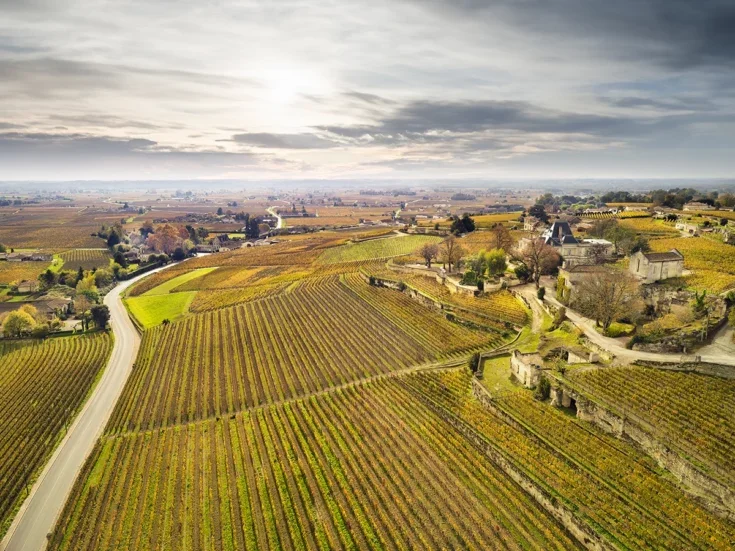
It may be that this tendency was also shaped by Châteauneuf-du-Pape’s climate. The Reynaud family have historically waited for fall rain to restore balance and complete Grenache’s ripening cycle. But those rains increasingly come in October or even November, much later than in the past. That sometimes led Emmanuel to harvest weeks rather than days after his neighbors; and the pale, perfumed, heady wines that he produced in years such as 2011 and 2013 seem to speak of those late harvests and the sweetness and softness that rainfall and very ripe fruit can bring. But whatever its roots, Rayas under Emmanuel has only become more singular, sometimes to such a degree that the estate seems to merit an appellation of its own.
By the 2010s, Château Rayas, long recognized as one of France’s great wines by the cognoscenti, began to attain much broader recognition, with secondary market prices to match. Many would be—and have been—unable to resist the temptation to profit from this enthusiasm, either by increased production or more ambitious pricing. Reynaud, however, did neither: Rayas’s vineyards have remained enclaves within the estate’s woodlands, even as the copses and groves that once characterized much of the surrounding appellation have given way to vines. Prices from the domaine remain reasonable. And in the face of what he saw as premature consumption, the wines are routinely released after more than a decade of aging.
This decidedly uncommercial approach underlines the sagacity of Reynaud’s management of his estates. Retaining Rayas’ woodlands has helped preserved the cooler mesoclimate that contributes so much to its wines’ distinctive style. Stable pricing has protected the domaines from the fluctuations of a sometimes-speculative market and won them immense consumer loyalty. And late releases mean that the cellars are stocked with enough wine to buffer the shocks occasioned by vintages, such as 2024, characterized by tiny production. A well-planned succession in winegrowing responsibilities to two of his sons, Louis-Damien and Benoît, is therefore only the final chapter in a career dedicated to the selfless stewardship of the source of some of France’s greatest wines.
Content from our partners