Sarah Marsh MW meets the growers and tastes the wines responsible for the burgeoning reputation of fine Ontario Cabernet Franc.
Cool-climate Ontario? It’s warm enough to reliably ripen Cabernet Franc. High yielding, easily manageable, and winter-hardy, the variety was for some years used as a workhorse in Ontario to produce entry-level wine. Thirty Bench was among the first to make serious Ontario Cabernet Franc from 2005. Cave Springs followed from 2010, and today there’s a raft of the good stuff. This is bang on trend as global interest in Cabernet Franc flourishes.
My visit began with a tasting of Ontario Cabernet Franc samples drawn from across the region which revealed a range of styles, from the crisp, red-fruited, and light-bodied at 12% ABV, to the full, extracted, black-fruit versions at 14%+. The tasting demonstrated that new oak, even 20%, can overshadow Cabernet Franc’s more delicate expression.I find the lighter, slightly herbal style of Ontario Cabernet Franc most compelling.
It’s worth mentioning clones, principally 214 from the Loire and 327 from Bordeaux. At Dobbin Estate on Twenty Mile Bench I tasted these from adjacent rows of young vines vinified identically. The Loire clone is elegant, straight, and finely texture, while 327 is fuller-bodied with grippier tannin—an observation confirmed by tastings elsewhere.
Related
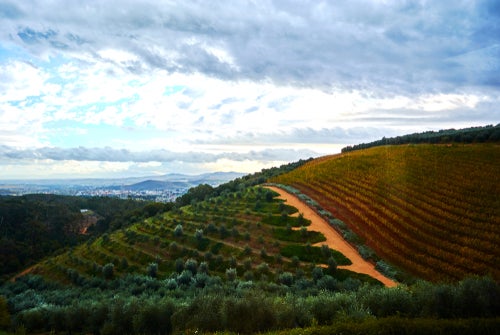
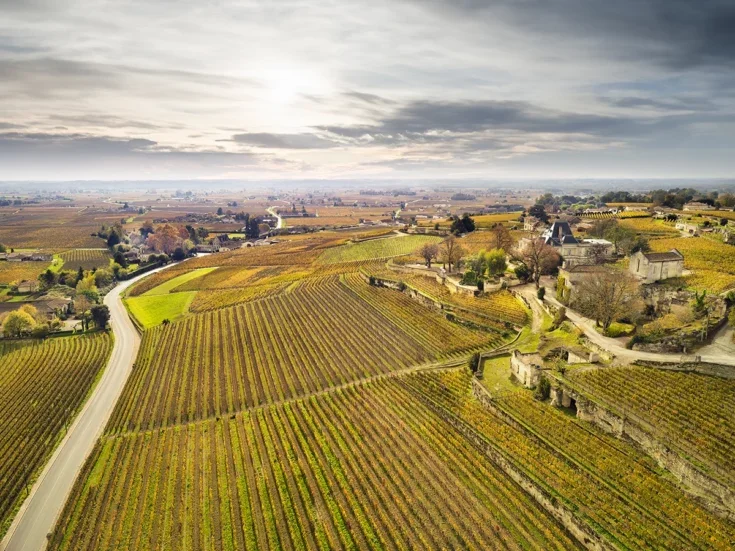
Consultant winemakers Ann Sperling and Peter Gamble highlight the importance of virus-free material—difficult to source in Ontario where leaf roll and red blotch are an issue, not least in disrupting phenolic ripeness. Sperling sources clones from Washington but new initiatives at the Cool Climate Oenology and Viticulture Institute (CCOVI) at Brock University should make clean material more widely available. The 2023 Dobbin Cabernet Franc (a blend of clones) is richly succulent, super-sleek, and fresh to finish. An international, Bordelais style with 50% classy new oak which Peter Gamble deems necessary to bring aging capacity.
At the flighty end of the Ontario Cabernet Franc style spectrum are examples from Prince Edward County. From limestone soils and Ontario’s coolest temperatures come vibrant, light-bodied wines with 12.5% alcohol and crispy, just ripe tannin. Stanners makes some exemplary bottlings, and there are good examples of the style from Three Dog Winery and The Grange of Prince Edward.
Sub-regional profiles of Ontario Cabernet Franc
It was more difficult to identify sub-regional profiles within the Niagara Peninsular. Niagara-On The-Lake typically produces bold, higher-alcohol styles, but the crunchy Liebling Family Select 2022 (12.5%) and supple Southbrook Estate 2021 (13%) are lighter-bodied demonstrating that the wines don’t have to be heavy even in Four Mile Creek, the hottest sub-appellation, if producers balance crop load with ripening potential and extract lightly. (I should also mention Muscedere Vineyards Cabernet Franc 2023, which is soft, friendly, fruity, and just 13% alcohol from the warmest appellation, North Shore Lake Erie).
Content from our partners
It’s easier to distinguish between the “bench” sub-appellations and Lincoln Lakeshore/Creek Shores. The latter have light well-drained soils: shale, silt, and some clay. Supposedly it’s cooler by the lake but vineyards are exposed to sunshine all day. They tend to produce open, rounded, softish, fruit-driven Cabernet Franc. (However, dry summers can result in rustic tannin offset with over-ripe fruit since few producers have irrigation.) Good examples include Redstone 20021/2022 and13th Street Winery Reserve 2019. Black Bank Hill Estate shows promise, although their reserve is too oaky.
Bench wines are more serious. They have tension and sapidity. “Energy and electricity,” says Emma Garner winemaker at Thirty Bench. Tannins are generally firmer, maybe accentuated by lower pHs, but textures are finer. Some have high alcohol, partly because “bench” yields are generally lower, but they have the depth to carry it. Being further from the lake it’s ostensibly warmer, but the cool lake air drawn in as the warm air rises from the land, meets the escarpment and tumbles back over the vineyards, preserving acidity, and there is more woodland and shade. Older vines may tap into dolomitic limestone, but where Cabernet Franc is planted the top soils of clay and glacial till can be deep. The clay brings body, and there is refinement from calcium carbonates. There is also decent water accessibility here, which is vital in drier vintages to establish and maintain a canopy and for berry development.
From Twenty-Mile Bench, Kelly Mason produces some of the most elegant, fine-textured Cabernet Franc. The Landed 2019 is streamlined, sleek, piquant, and 12% ABV. I liked the silky, salty 2023 tank sample from Pearl Morissette Madeline made by Svetlana Atcheva whose light touch and skill is fully revealed in difficult vintages: exotically aromatic, silky 2020; delicate, gauzy 2021. She uses foudres. “Niagara doesn’t need barrels. It has the texture without them.” Oh yes.
From Ravine Vineyard on St David’s Bench, Lonna’s Block is full-bodied, muscular, and concentrated with the structure and balance to evolve. Tawse David’s Block has graphite intensity, retaining freshness and energy even in hotter vintages, albeit somewhat oaky for me. Both estates have good examples of the hotter 2016 vintage, which is generally past it. I feel Cabernet Franc shows less well in hot, dry, and short seasons such as 2020, 2018, 2016, and 2012 when it’s trickier to achieve full phenolic maturity and retain freshness.
I tasted many verticals, some back to 2010. The cool vintage of 2019 leans towards green, but is attractively herbaceous. The wines are good now, even better after 48 hours open, indicating a six-to-ten year drinking window for top-end wine. In the same vein, the slightly richer 2023 is particularly promising. 2022 is heterogeneous and less refined. 2021’s large crop and wet conditions resulted in pyrazines and dilution, but some made pretty wines.
Benchmark Ontario Cabernet Franc
On Beamsville Bench, Cave Springs and Thirty Bench wineries produce benchmark Ontario Cabernet Franc. Here, where the bench is closest to the lake and the escarpment highest, the air circulation is arguably most turbulent and the season longest. That allows Cave Spring to hang Cabernet Franc into November which delivers luscious velvet tannins, concentration, and rather heady 14.5% alcohol in CSV (formerly labelled estate), a selection of best rows matured in older barrels and foudres. But CSV is undercut with freshness. 2014 remains vibrant. Floral, suave Prova 2019, an experimental cuvée using whole bunch, is my favourite Cabernet Franc here.
Thirty Bench’s Small Lot Cabernet Franc is supple-smooth, intensely cassis, and 13.2% alcohol in 2019, layered and reserved. Small Lot evolves beneficially over ten years. In cooler vintages mint combines with salinity, as it does at newer producer Organised Crime, which turns out light, lively, crisply, crunchy Cabernet Franc from a former plum orchard. No new oak used from the perky 2019.
Organised Crime also makes a dry, crisp, salty Rosé 2023 from Cabernet Franc, which vies for prettiest rosé with Kelly Mason’s. One stage further Inniskillin makes a Blanc de Franc. An affectation, but I can’t help liking its spiciness and phenolic bite. Inniskillin is best known for Ice Wine. Winter-hardy Cabernet Franc is picked at -10°C (14°F). 2024 seems overly sweet (220g/l sugar) and rhubarb-like (apparently typical), but with bottle age 2015 reveals complexity and tannin to offset sweetness. There’re a few traditional-method Cabernet Franc sparkling wines, too. Redstone’s attractive Sparkling Rosé pairs admirably with food.
This gamut of styles illustrates the versatility of Cabernet Franc, still working hard for Ontario, but no longer a work horse. While hotter places in the world turn the variety to freshen Bordeaux blends, and increasingly as a single varietal, Ontario is among the few cool-climate regions with everything required to produce ripe, yet light and fresh Cabernet Franc and that balance is the hallmark of the most attractive examples from Ontario.