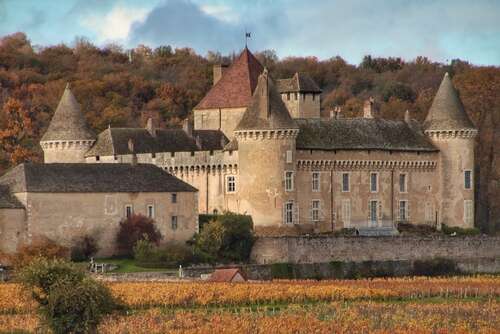
RULLY
David Lefort, president of the syndicat of wine growers in Rully, has taken on a second four-year term of office. His principal objective as president was to map the Rully terroirs. This was realized in 2024, when some pretty impressive looking maps were published. David regards them as being particularly useful in helping to understand the subsoil, especially given the run of dry seasons.
There are 20 producers in the village and five are certified organic, covering 50 of the total 450ha (125 of 1,111 acres). Fruit from approximately 40ha (100 acres) is still sold to the co-operative, but more is sold to large négociants, most notably to Antonin Rodet, owned by Boisset since 2009. Most producers in the village bottle their own wine. David tells me that it tends to be those who own land but do not live in the village who sell their fruit. There are 23 premiers crus, extending over 113ha (280 acres). The average cost of village land is now €250,000/ha, and the normal price for a barrel of village wine between €2,000 and €2,500. While this has clearly increased over recent years, it has not risen as steeply as prices of wines from the Côte d’Or, making it possible for négociants to produce reasonably priced wines from Rully.
David tells me it rained in Rully until July 15, but there was good weather in August. Producers making Rully are allowed to chaptalize by 1.5% ABV. Crop size varied and, with this, the need to add sugar. Those with 15hl/ha could reach 13% naturally in some cases. David Lefort had mildew in Cailloux, resulting in a yield of 15hl/ha, but in Chaponnière he harvested 40hl/ha. He didn’t chaptalize either wine. Whites generally cropped better than reds—on average, 20–25hl, while reds could be as low as 10hl/ha. Jean-Baptiste Ponsot says it was necessary to be very vigilant and precise with the vineyards, something voiced by many, but he feels there have been much more difficult seasons during the 25 years he has been making wine. He had what he describes as “correct yields.”
Related

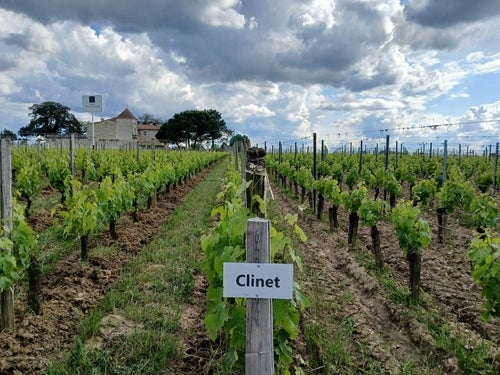
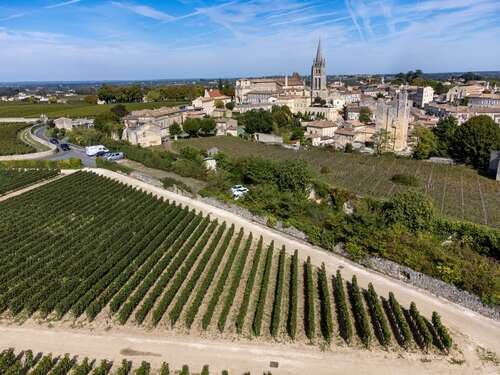
I find the 2024 Rully whites nicely fresh and vibrant. The density depends on yields and vine age, and consequently the overall style varies from wines with more depth and intensity, to those that are quite light but attractive, nonetheless. Some producers used bâtonnage to round out the palate, but this can very quickly overpower the wine. The best wines focus on the purity and elegance of this vintage and lean into the freshness. A better approach, used by many, was to have a longer than usual élevage on lees and keep the wines a second winter.
In this slimmer, less ripe vintage, the wines are nicely expressive of terroir—not only the premier cru parcels but also the village. There is plenty to like about the 2024s whites in Rully, and the quality has improved significantly since the 2000s.
At Jacqueson, Marie Jacqueson remarks, “The 2024 whites are classic, with beautiful thinness and minerality. The high point of their potential will be between five and seven years, although you could keep them longer.” Felix Debavelaere at Domaine Rois Mages finds that “2024 has nice acidity and purity.” Jean-Baptiste Ponsot considers 2024 most like 2017, but many others compared it with 2021.
Content from our partners
In 2022, Thomas Decalo opened a retail store, La Cave de Rully, in the center of the village where 90% of the producers are represented. Here is it possible to try wine served via Coravin from a changing selection of producers, generally from recent vintages.
DOMAINE MICHEL BRIDAY
Stéphane Briday compares the 2024s with 2021s. “A fresh and pure style; less ripe and fresher, especially in the whites.” He tells me the wines were very crisp to start. Whites pre-MLF had pH levels of 3.10, moving to 3.3–3.35 afterwards. He says he doesn’t like too much bâtonnage, but used more in 2024—five or six times, “to feed the wine.” The village wines are made one third in tank and the oak is 10% new. The premiers cru all go through barrel—300- or 400-liter barrels, 20% new.
I find Michel Briday Rully quite rich, slightly masking the freshness of this vintage, with the buttery MLF and textual richness from the bâtonnage. They seem to me to be more style- than terroir-led, but they will appeal widely and are well-made.
Rully Premier Cru Grésigny
Spicy oaky aroma, with white pepper; creamy richness and a toffee note up-front. Rounded, generous, and buttery mid-palate, with the fresher note of this vintage and the terroir coming though on the finish with a fresh, earthy minerality and green herbal notes. 2026–30. 84
Rully Premier Cru Rabourcé
Richly textured for 2024, with buttery, creamy, and toasty notes offsetting the lean, lemon-balm fruit and minty fresh acidity. 2026–28. 84
DOMAINE VINCENT DUREUIL-JANTHIAL
Vincent’s family have been in Rully since the 14th century. His great-grandfather started making wine post-phylloxera, bottling some wine as early as 1920. He has 16ha (40 acres) in Rully, 2ha (5 acres) in Puligny, where his father grew up, and 1ha (2.47 acres) in Mercurey, plus a parcel in Nuits-St-Georges Premier Cru Les Argillières. He started working at the domaine in 1994 and is now 55. “I work like my grandfather,” he says. “I am old-school but with new equipment.”
The domaine had organic certification from 2009 to 2016, then after a brief pause, regained it. “My grandfather didn’t work in biodynamics and that’s not my philosophy either. I use copper, sulfur, and some tisanes. Science is not my culture. I am too much of a peasant to do this.”
He likes to harvest as late as possible, “for full phenolic ripeness. I keep the minerality with the soil.” All is hand-harvested. White bunches go straight in the press. “I always press to 2 bar, to get the phenolics. If you have good fruit, you can press heavily.” The juice oxidizes in the press pan, then SO2 is added after eight hours. He doesn’t separate the end of the press, nor does he check the pH level. “I will never add acidity, so there’s no point. I totally dislike acidification. 2003s are metallic in the mouth when people have acidified. The pH is not an issue. If you have minerality in the soil, you have a perception of acidity in the mouth.” He uses a lot of lees.
For the reds, Vincent destems. “In a very good year, I might use whole-bunch for part of the cuvée—as in 2019, 2020, and 2022.” If the vat is full enough, he does punch-down by foot, but there is more remontage than pigeage. After 11 months of aging in barrel, the wines are moved to stainless steel. He bottles in the spring to sell in November. “I bottle with the moon, as my grandfather did.” There was a full moon when I arrived in June, and mildew pressure was high. Vincent was my last appointment of the day, and he swept in from the vineyards. “The full moon is bad for mildew.” In 2024, he did 16 treatments. “I am the one who does all the treatments.”
The oak barrels are 228-liter pieces, 20% new, 100% Chassin: “For me, he [Stéphane Chassin] is the best. And for the reds, too.”
“2024 is not a bad vintage. 2022 was extraordinary, while 2024 is more normal. There is acidity and minerality in the whites and finesse in the reds. It was a difficult year because of the rain.”
Many of the wines showed a nice light note of reduction. “I like to be reductive. It is more ‘old’ Burgundy. I bottle using natural cork and a wax seal, as I want the security from oxidation. The problem is the density of the cork.”
An exceptional flight of whites. (I tried reds, too, which are also delicious.) The village wines over-deliver, and all the wines have good aging capacity. Impressive intensity, purity, and precision all round.
White
Rully
A blend of four parcels, one of which, Guenes, was planted in 1946. “There are lots of old vines here.” Density and intention for a village wine. 2026–30. 86–87
Rully Chênes
“This is the coldest site, and we always end the harvest here. There was frost in 2024, then mildew because the resistance was low.” 11hl/ha in 2024. Nicely reductive, slim, neatly edged, citrus, and pithy. 2027–30. 87
Rully Maizières
“This is the warmest site, with clay at the bottom, limestone at the top, and long rows of 180m [200 yards].” 45hl/ha in 2024. The wine is compact, dense, and savory, with an earthy mineral bite. 2026–30. 87
Rully Premier Cru Grésigny
From vines planted in 1945. High-toned, refined, light, and swift on the palate. Lighter and tighter than the Margotés but intense. Focused. A lively, saline line to finish. Very stylish. 2027–34. 91–92
Rully Premier Cru Les Margotés
From vines planted in 1946. Savory, stony, sapid, and powerful. Fresh and cold cut on the finish. Powers home. 2027–35. 91–92
Rully Premier Cru Le Meix Cadot
This climat covers around 8ha (20 acres), of which Vincent has 2ha (5 acres). “It’s surrounded by a big wall, so it’s a hot place.” Compact, dense, and punchy, with a rich, honeyed note. 2027–32. 89–90
Rully Premier Cru Le Meix Cadot Vieilles Vignes
A cuvée from the oldest vines, planted in 1920. Intense, more compact and channeled than the main cuvée. Excellent tension and purity to finish. 2027–34. 90
Rully Premier Cru Vauvry
From vines planted in 2008, this relatively young vineyard has produced a bright, taut, and flighty 2024. Zips across the palate with energy. “That’s because it has white soil here.” 2027–32. 89–90
Puligny-Montrachet Corvée des Vignes
From vines planted in 1945. It is straight, channeled, and pure, with a firm line of salinity. 2027–32. 90
Puligny-Montrachet Premier Cru Les Champs Gains
From the Blagny side of this climat. Energetic. Lovely intensity on this straight and energetic palate. Firm, graphite finish. 2027–35. 93
DOMAINE DE L’ECETTE
Vincent Daux’s father created the estate in 1983, starting with 1.3ha (3.2 acres). Now they have 18ha (45 acres) across Rully and Bouzeron, including eight parcels in Rully, but no premiers crus. Vincent took over in 1997. He seems to be supercharging his village parcels, but tells me he is less interventionist in the winery: “I am looking for phenolic maturity in the vineyard.” He uses a machine harvester, explaining, “We can pick up at the right time.”
A rich, full, and up-front style. “I have a long fermentation, and this replaces bâtonnage.” Apparently, his wines finished fermenting as late as June, which is worth mentioning, because they should have settled down and refined since I tasted them. Some new-oak tannin, from He uses François Frères barrels, boosts a sense of freshness in Vincent’s wines.
“2024 has good equilibrium, he concludes. “Nice whites and reds. A classic Burgundy style, with the fresh acidity and alcohol levels around 12.5%.”
Rully Les Cailloux
From vines planted in 1991. Aged in 3,500-liter foudres, some from 2008 and some new. A 10,000-bottle cuvée. pH 3.29 before MLF. Some oak on the aroma. Fruity, rich strike. A hint of tropical fruit—ripe for 2024 and for this parcel. A bold and rich style, but cut by acidity. 2026–30. 83–84
Rully Les Cul des Saloirs
This is from a very small climat (wine from the middle section may also be labeled as Fromange). It is northeast-facing, at an altitude of 260–300m (ft), with very shallow topsoil, including red clay and small rocks, and the vines were planted in 1992. The barrels are 228-liter barriques, 100% new. Richly textured, full, and rounded for this vintage and vineyard, but nicely balanced by a phenolic, tannic bite, together with fresh acidity. I feel Vincent is looking toward a more Côte d’Or style. It finishes on a fresh-peppermint note. 2027–32. 84–85
DOMAINE JAEGER-DEFAIX
The estate came via Hélène Jaeger-Defaix’s 88-year-old great aunt, Hélène renting the vineyards. The first vintage was 2003, and the original 4ha (10 acres) have since expanded to 6.5ha (16 acres), all in Rully. The wines are made in Chablis at the Defaix domaine by husband Didier Defaix.
Hélène remarks of the 2024 vintage: “No frost, no hail, and much less rain in Rully than in Chablis, so the pressure was there, but under control.” Yields averaged 30hl/ha.
“This vintage reminds us of the 2022,” says Hélène, “for the structure and surrounding flesh. Small yields helped this year to have the concentration. In 2024, we harvested the reds before the whites, because the Chardonnay took a long time to mature.”
White
Rully
The originating vineyard was planted ten years ago, and the wine was first labeled as Bourgogne. Since 2022, it has been labeled as Rully, and in both 2022 and 2023 Hélène added no sulfur. This is usually made in tank but in 2024 some 500-liter barrels were used, “as we had barrels to fill.” Cool, floral aroma. Sherbet freshness on the attack. Citrus, with an attractive, bitter bite. No sulfur had been added at the time of my tasting, and the wine was super-fresh. “We were concerned that this vintage was more fragile, but for the moment it is good, Hélène told me then. “If we need to add a little sulfur at bottling, we will.” It will have no fining or filtration, however. 2025–28. 85
Rully Premier Cru Les Cloux
Les Cloux has more white soil at the top of the vineyard. Most of the 1ha (2.47-acre) parcel was planted in the 1940s, but there are some much younger vines, which are a massal selection from the old vines. “The old vineyard is more consistent.” The wine is straight and juicy, and more elegant than the Mont Palais. Nicely balanced and streamlined, with some fine, powdery, minerality to finish. 2026–32. 88
Rully Premier Cru Mont Palais
Ripe and juicy attack. Lively, lime-like, and juicy palate, with a light, chalky line under the fruity palate. A bitter quinine note at the end. 2026–29. 87
Rully Premier Cru Rabourcé
This is from white marl soil. A part came from the great aunt, since extended to 0.8ha (2 acres). This is fuller and richer than Les Cloux, with density and generosity. Succulent, with a smooth, mineral finish. 2026–32. 88
Red
“No discussion about whole-bunch. The grapes were totally destemmed. I like Rully bright, light, and fruity. There are so many other places where you have tannins. But where you can make fruity, drinking wines, I will take it.”
Rully
Fresh strawberry aroma. Light and fruity. Nice acidity. Light hint of tannin. Attractive. 2026–28. 81
Rully Premier Cru Clos du Chapitre
Clos du Chapitre covers 1.4ha (3.5 acres), of which 80% is devoted to Pinot Noir, and it is surrounded by a wall 2m (6.5ft) high. But Hélène explains that “It is not a premier cru lieu-dit in its own right, nor is it recognized as a monopole,” and she doesn’t want to wade through the process to secure such status. A slightly darker fruit aroma than the Préau. Richer fruit density on the palate, with a splashing, juicy profile. A little more of a tannic bite and crunch to the finish. 2027–30. 86
Rully Premier Cru Préau
Like Clos du Chapitre, Préau is mainly red. A menthol hint to the nose, with plenty of redcurrant. Crisp, light, and rather fragrant on the finish. So likeable. Engaging. 2026–28. 85
DOMAINE P&M JACQUESON
The domaine was founded in 1946 by Henri Jacqueson and passed to his son, Paul. Marie joined her father in 2006 and since 2015 has run the estate with her brother Pierre.
“It was not easy in the vineyard in 2024,” recalls Marie. “We had a lot of rain, but the vineyards were healthy. We lost production at flowering, as we had millerandage and some very small berries. A complicated but interesting vintage. Sugar levels allowed us to reach 12.5% ABV naturally, so we did not chaptalize. We pressed a little less than usual for the whites.”
“For the reds, we did less punch-down but a longer vatting, and in 2024 we destemmed. We tried 10–20% whole-bunch in 2018 and 2019, but not in 2023 or 2024, which were complicated on the sorting table.”
Most of the premier cru whites spend 12 months in barrel, though Grésigny, which comes from the oldest vineyard, has 18. Most of the barrels are 228-liter barriques—the only 500-liter barrel is for Les Margotées—with 10–15% new oak. “It was more touched by oak, so some of it is better in a 500-liter barrel,” Marie explains. I also tried the 2023 Grésigny, which had just been bottled in June, and was to be sold from last November. Dense and savory, it hoovers up the hot vintage. The 2022 Les Margotés is dense and punchy; full, almost robust, with a sapid finish.
“We compare the whites with the 2021s—the 2024s are richer but have a similar expression. They are vertical, with beautiful freshness, and in this sense, they remind me of the 2021s. It is good vintage to keep. We love this vintage because it is delicate.”
White
Rully
Impressive intensity in this village wine. It’s ripe and generous for the 2024 vintage, with notes of orange oil and a surprisingly rich texture, which is underscored with sweet acidity. Wet-earth minerals to finish. Top-notch. 2026–30. 86
Rully Premier Cru Grésigny
From vines planted in the 1950s. “The main difference is the age of the vineyard, which makes the difference between this and the Raclot, for instance.” Tight, straight, and tense palate, with saltiness coming through on the finish. Precise. 2027–32. 90
Rully Premier Cru Les Margotés
From vines planted in 1999. “There is more marl here than in Grésigny, which has more limestone, while Pucelle has more clay.” A savory, stony palate. There’s density and punch. 2027–32. 90–91
Rully Premier Cru La Pucelle
From vines planted in 1992. Silky, supple, fluid palate, with an easy charm. It is woven with a light thread of acidity, which provides freshness. Instant harmony and balance. Soft and round. Aromatic to finish. 2026–30. 88
Rully Premier Cru Vauvry
From vines planted in the 1990s. Marie says there is a spring in the vineyard, so it is always more humid, and the soil is “sandier.” I like the lightness and the salty/juicy feel. 2026–32. 88
Red
Rully
Light and bright, crispy and pure, with red fruit. Delightful. 2026–28. 85
Rully Premier Cru Les Cloux
“From vines planted in 1967, on a slope with a mix of clay and limestone but more limestone.” Juicy, red, summer fruits. Lots of sapidity and crunchy tannins. 2026–30. 87
Mercurey Premier Cru Les Naugues
From vines planted by Marie’s grandfather in 1962. Springs onto the finish. So fresh and bright. Red fruit, very energetic, and good density mid-palate. 2026–32. 89
DAVID LEFORT
David grew up 9 miles (14km) from Rully. His father was a carpenter. David studied chemistry and the philosophy of medicine, followed by a masters, focused on terroir, in Dijon. He worked at Clos de Tart for a year before creating his own estate in 2010, which has been worked organically since 2013. “This is important for the energy in the wine.”
David harvested at the end of September 2024 and did not chaptalize. “I like acidity and minerality. Not big wines. I don’t like an oaky taste.” He ages the wines for 12 months in oak, using some 500-liter barrels, none new. “It is important to respect the terroir.” He adds sulfur only before bottling.
Rully Les Cailloux
From a parcel of 0.3ha (0.75 acre) in a stony lieu-dit on the hill above the village, with 30cm (12 in) of topsoil and 40-year-old vines. Aged in 500- and 228-liter barrels. Light and delicate. Pure and floral, with a quiver of salinity. Slim and trim and sapid. 2026–30. 86
Rully Les Chaponnière
From a flat parcel of 0.22ha (0.5 acre), with cold, deep clay soil and 70-year-old vines. Aged in 500-liter used oak barrels. This packs quite a punch. There is density, a touch of mandarin, richer, riper fruit, with a medium-full and nicely compact palate. 2026–32. 85
DOMAINE NINOT
Erell and Flavien Ninot make good and reliable Rully.
Rully La Barre
Fruity, forward, upright, bright, and zesty, with citrus fruit and plenty of energy. Super-juicy. What’s not to like about this wine? Spot-on. Tip-top village wine. 2026–28. 86
Rully Premier Cru Grésigny
From brown soil, but chalky and stony, with a white marl substratum and limestone from the Middle Oxfordian. This is what I recall Erell saying some years ago when I visited. The parcel has an east-southeast exposure. I like this Rully Grésigny for its tension, vibrancy, and intensity. Well-edged. Fresh and decisive on the finish, which is quite well-sustained. All very promising. 2027–32. 89–90
JEAN-BAPTISTE PONSOT
A fourth-generation Rully family, with a domaine of 10.5ha (acres), including a new parcel in premier cru Raclot, for which the first vintage was 2022. They have also bought a tiny (0.08ha [0.2-acre]) parcel of Chassagne-Montrachet premier cru Blanchot Dessus, for which the first vintage was 2021. “A lot of work in the 2024 season, which needed precision,” says Jean-Baptiste, “but the wines are interesting finally. I like this vintage because it shows the terroir. A correct yield—the 2021 was much lower. I have been making wines for 25 years, and I recall vintages that were more difficult.”
He stresses the importance of a very long press, to a maximum pressure of 1.6 bar, before settling for 24–48 hours—he clearly likes a good decant. All the wines are fermented in barrel, for which he uses only 228-liter barriques, mainly Chassin, and a maximum of 20% new oak. “I use less and less new oak. The older I get, the less new oak I want, and the more I look for tension and precision, which new barriques mask.” He was going to bottle in December 2025 after 12 months in wood and 3–4 months in stainless steel: “It’s so important to do a long élevage.”
“The result is a little like the 2017. In comparison, the 2023 is much heavier, but the premiers crus cope with this much better—even the Molesme, which is the sturdiest of them. The Montpalais really holds its line in a hot vintage and comes off zesty and energetic, even in 2023.
Rully En Bas de Vauvry
A confident village wine, with generous splash on the attack, this is smoothly rounded, with perhaps a hint of oak and definitely a touch of lemon balm. Lightly almond bitterness to finish. I like the more reductive notes. 2026–28. 85
Rully Premier Cru Molesme
From a red soil and mid-slope vines. Jean-Baptiste says it is “always more opulent,” although I didn’t find it so. Fruity, with some bitterness and lime-freshness to finish. A sample from two barrels, neither new. 2027–30. 85–86
Rully Premier Cru Montpalais
High-toned and lightly minty, with a citrus-zest aroma. I like the salty acid spine and linear drive. Piquant and pithy. Super-straight. Nicely persistent. Definitely the best wine here this vintage. 2026–32. 88
Rully Premier Cru Raclot
Although this climat is higher on the slope, it has a more generous, rounder, and fuller palate than the Molesme, with a touch of orange oil. A touch more density, too, which may reflect the vine age, which is about 50 years old. 2016–30. 86
DOMAINE ROIS MAGES
Anne-Sophie Debavelaere and her son Félix are making attractive, forthcoming wines. Félix studied and practiced as a doctor in Burgundy. They have gradually assembled a domaine of 11ha (27 acres), which they started planting in 1994.
The wines are fermented in 228-liter barriques, with 15% new oak. After aging in barrel, the wines are moved to stainless-steel tanks for 3–6 months over a second winter and bottled in the spring. Bâtonnage was done twice in 2024, as the acidity, especially the malic, was high. “I love this vintage—it is pure and elegant, a little like 2014. It was not sunny, so we kept the acidity and the purity.
“With Rully’s stony soil, the wines are always very fresh, and we have a lot of diversity by comparison with Givry.”
Most of the parcels are classified as village and are situated below the village, where the family have done a good job of exploring the full potential.
Rully Clos du Moulin
“The soil for this has brown clay and rocks. It is less deep and poorer than Plante Moraine, and colder because of the wood, even though a dry-stone wall surrounds the clos.” It is a parcel of 0.4ha (1 acre) and it seems that Félix may be the only producer to use the lieu-dit on the label. Quite spicy, with a waft of powdered ginger, this has a broader, earthier palate and a bit more on the finish, with a touch of anise. 2025–28. 84
Rully Plante Moraine
This is from a parcel next to Clos du Moulin, on the flat, at an altitude of 220m (720ft). “It is red-clay soil and gives a lot of fruit.” A lightly rounded, generously citrus, and pleasantly juicy palate. A relaxed, smooth, and fruity style, nicely balanced with acidity. 2026–28. 83
DOMAINE DE VILLAINE
There are six Rully premier cru whites, “made with the same philosophy as the Bouzeron,” explains Pierre de Benoist. The domaine lost half the crop in 2024, “not because of mildew but coulure. 2024 has a very good combination of fruit and the minerality of the terroir.”
Pierre speaks generally, not specifically, of 2024: “The big difficulty was preserving freshness. But the skins of the Chardonnay were thicker, and that brought a bitterness, which can replace the lack of freshness.” He takes 24–36 hours over the pressing.
These Rully wines have energy, intensity, and vibration. Pierre is maximizing the potential of the terroir with his biodynamic approach.
Rully Blanc Premier Cru Les Cloux
There was just one demi-muid (600-liters) of Cloux in 2024. Succulent strike. Compact and layered. Slatey minerals interwoven with light lime freshness and quite some density for Rully. Caraway bitterness carries the finish. Complexity and earthy oomph. 2026–34. 91
Rully Blanc Premier Cru Montpalais
Zips onto the palate with energy and fizzles on the finish. Straight, crisply edged. Intensity rather than concentration. Straight as a die. Persistent and salty. So stylish. 2026–34. 91