


The normal translation of the word garrafeira is wine rack or (wine) cellar, perhaps a smaller bottle cellar. In the world of Port, however, it has a much clearer, narrower definition: To be called a garrafeira, a Port must be of an elevated quality level (whatever that means), made with grapes from a single year, and aged in wood for between four and eight years, followed by more time in glass, and to be sold no sooner than 15 years after the harvest.
If the Port is more than two decades old, the producer can add the word velho (“old”) to the label or the term muito velho (“very old”) if it is more than three decades old. The definition differs greatly when you move to other regions of Portugal, and even more so if you switch to Spanish wines. Even for Port, this stricter definition has existed only since 2022, and because it was much more loosely defined in the past, producers used the term garrafeira quite often. Pre-1930 bottles from Ferreira and Real Companhia Velha, for example, were often labeled as garrafeiras, but the aging conditions on these Ports are not explained on the label.
The bare minimum is that a garrafeira can be left in large wooden vats for four years and then bottled in
a glass bottle. This would not remotely justify the special status that these wines have in the hearts of Port lovers worldwide. In theory, a late-bottled Vintage Port (LBV) could be classed as a garrafeira (defined as bottled four to six years after the harvest) if sold 15 years after the harvest. LBVs are of an elevated quality and spend a minimum of four years, most of the time, in large wooden casks before being bottled. I believe the regulation would therefore benefit from some refinement in the near future.
Garrafeira Port is produced by only a few producers nowadays, and only in very small quantities. It combines the best qualities of bottle-matured Vintage Ports and cask-matured colheitas. Currently, only Niepoort and Quevedo produce garrafeiras, and both believe that the term “glass” in the storage requirement refers not to a standard 75cl bottle but, rather, to a 12- to 18-liter demijohn. Dirk Niepoort explains that these peculiar bottles came from an old pharmacy in the 1930s, and his family experimented with them. The main advantage of storing wine in glass is the absence of the angel’s share—the evaporation that can be as high as 3–5% per year, depending on the surrounding temperature and humidity when Port is stored in a typical 550-liter wooden pipe. Due to these aging conditions, a garrafeira does not concentrate the aromas as much as a colheita with the same age but stays rather more delicate and elegant. Following the initial successful trials, the demijohns became standard equipment for Niepoort.
Related
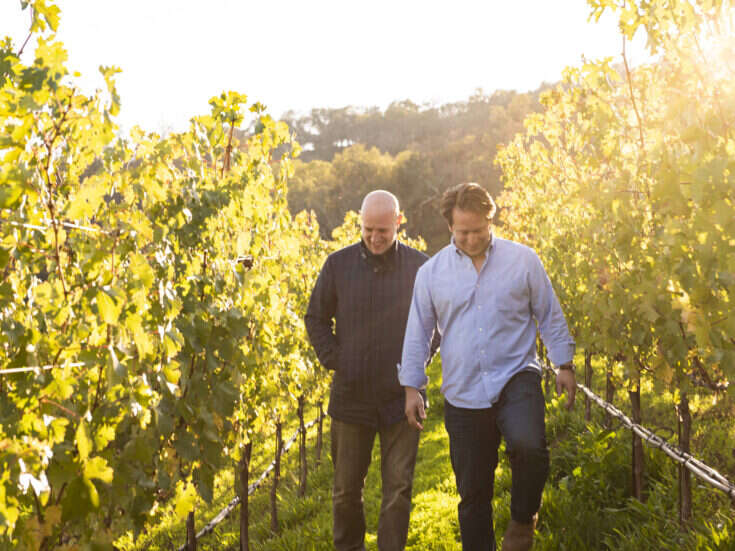

The garrafeira label needs to specify not only the harvest year but also the year the wine was transferred from wood to glass, as well as the bottling year. So, a garrafeira label will usually have three dates on it. The harvest year is in the largest print; followed by the year after decanting, which refers to the transfer from wooden casks to large glass containers; and smallest is the year of the final bottling. Niepoort garrafeiras do not usually spend much time in wooden casks—sometimes even less in the past than the now-statutory four years. The company’s current garrafeira Vintages 1983 and 1987 have been held back for another three decades. One of Dirk’s sons, Daniel Niepoort, thinks that this aging in larger glass and then bottle gives their garrafeiras the balance and finesse required to justify the rather high price within the Port world: Niepoort garrafeira prices start from around £500 a bottle.
Niepoort is very transparent with the information on the bottle. The labels always depict exactly these three years—the harvest year; the year when the Port is “bottled,” in the sense of being transferred to glass (in their case, 12-liter demijohns); and finally the year the wine is “decanted” into the 75cl bottle). There are no large or half-bottle formats of Niepoort garrafeiras on the market.
One could argue that the Niepoorts have established the garrafeira category as we know it today: Dirk can take most of the credit for persuading the Port Wine Institute to include a more specific definition in the 2022 regulations. Looking at the full list of garrafeiras that he has bottled, Niepoort sometimes uses years that are generally considered to be Vintage Port years, such as 1948 or 1977, but most of them are from “lesser” years than those declared as Vintage Port. The full list includes the following: 1931, 1933, 1938, 1940, 1948, 1950, 1952, 1967, 1977, 1983, and 1987—with many more to come, happily.
Content from our partners
Tasting

Quevedo Garrafeira 2000
Barely transparent in its deep red color, with intense reflections. Fresh herbaceous, fruity bouquet, with raspberry, cherry, coffee, and white pepper. Still quite tannic on the palate, with slightly dusty red-berry fruit, coffee, and cherry. Medium-length finish. | 89
Quevedo Garrafeira 1994
Transparent red-black color, with a noticeable rim. Fresh, very well-matured nose, with initial nutty notes, as well as spicy tobacco leaves, coffee, and eucalyptus. Still quite closed on the palate, with very good supporting acidity, a hint of acetone, and fresh coffee notes. Long, acid-supported finish. | 91
Niepoort Garrafeira 1987
(bottled 1991, decanted 2019)
Dark red color, with intense reflections and a narrow rim. Malt and caramel on the nose, fine and precise, with a hint of nut mix and tobacco. Fresh floral notes on the palate, lots of noticeable acidity, malt, tobacco, honey. Still has plenty of bite. Fantastic length on the finish. A bright future ahead! | 95
Niepoort Garrafeira 1983
(bottled 1993, decanted 2018)
Transparent, dark red color. Elegant freshness in the bouquet, with malt, coffee, chocolate, and a broad fruit structure (mainly raspberry and cherry). Firm fruit on the palate, lots of intensity, chocolate, and malt. Long, cherry-accented finish. With only 600 bottles, much scarcer than the ’87 and also with many years to go! | 95+
Niepoort Garrafeira 1977
(bottled 1982, decanted 2007)
Brilliant reflections in the fully transparent, dark red color. Fresh chocolate, malt, and coffee in the slightly reduced nose, with ethereal notes in the background. Perfectly structured, fresh palate with residual fruit. White pepper, coffee, and tobacco. Long, fresh finish. | 98
Niepoort Garrafeira 1967
(bottled 1972, decanted 1992)
Fully transparent, medium orange color. Powerful, complex nose, with fresh chocolate, coffee, and malt. Balanced herbal notes, chocolate, and malt. Perfectly supportive acidity, malt, and chocolate. Long, powerful finish. | 93
Niepoort Garrafeira 1965
(bottled 1992)
This garrafao (demijohn) was opened to celebrate the birthday of Nick Delaforce, Niepoort’s Port winemaker, some years ago. Surprisingly dark red color, with light brownish reflections. Balanced bouquet, with a mix of herbs, chocolate, and fresh floral notes. Perfectly integrated acidity on the palate, fine residual fruit structure, ethereal notes, and herbs. Moderate length, refined, and perfectly balanced on the finish. Off the record, because not “decanted” yet! | 94
Niepoort Garrafeira 1964 (bottled 1971, decanted 1979)
Completely transparent, fresh red color, with bright reflections. Very balanced and elegant nose, with floral and tea notes. Fresh and integrated on the palate, with very good supporting acidity, malt, and coffee. Complex, fresh length on the finish. | 95
Niepoort Garrafeira 1952
(bottled 1955, decanted 1984)
Fully transparent, medium orange color, with quite a broad, watery rim. Minimal oxidative notes on the nose: orange and white pepper. Complex, herbaceous palate, with chocolate, orange, tobacco, and white pepper. Long, complex finish. Perhaps the most Burgundian of the garrafeira wines. | 96
Niepoort Garrafeira 1950 (bottled 1955, decanted 1979)
Brilliant reflections in the fully transparent, dark red color (the darkest of the Niepoort garrafeiras between the years 1931 and 1967). Milk chocolate, coffee, and honey in the complex, powerful structure. Creamy, fresh, and herbal palate, with lots of dark chocolate, honey, and coffee. Long, very well-structured finish. | 94
Niepoort Garrafeira 1948 (bottled 1953, decanted 1973)
Bright reddish-orange color, with a thin, green rim. Elegant malty and nutty nose, structured and complex, with noticeable freshness and some coffee at the back. Complex, structured palate, with nutty notes, noticeable acidity, coffee, and white pepper. A long and precise finish. | 96
Niepoort Garrafeira 1940
(bottled 1945, decanted 1970)
Medium red color, with orange reflections and a distinctly lighter rim. Spicy bouquet, with honey, malt, chocolate, and white pepper, plus a little tobacco in the background. Racy palate, with broad coffee, chocolate, and toffee notes. Perfect acid support and a herbal finish. Long, balanced finish. The best bottle I ever had of the 1940 Garrafeira. | 97
Niepoort Garrafeira 1938 (bottled 1943, decanted 1977)
Fully transparent, orange-red color. Balanced, delicately spicy bouquet, with notes of coffee, malt, and honey. Creamy, multilayered texture on the palate, with rich, spicy notes, malt, smoke, and toffee. Long, complex finish. | 99
Niepoort Garrafeira 1933 (bottled 1936, decanted 1966)
Dark orange, but a fresh color, with bright reflections. Orange and chocolate on the nose. Also fresh on the palate, but with black cherry and chocolate. Long, fresh, balanced finish, with perfectly integrated acidity. There are medicinal and slightly metallic notes that become stronger with increasing exposure to air. | 97
Niepoort Garrafeira 1931 (bottled 1938, decanted 1979)
Fully transparent, bright red color, with orange reflections and a thin, yellow-green rim. Powerful, fresh, and complex bouquet, with milk chocolate and mint, and subtle hints of fresh tobacco. Expressive, perfectly balanced palate, with fresh floral notes, tobacco, and prominent very supportive acidity. Long finish. | 98
Niepoort Colheita/Garrafeira 1927 (bottled 1942, recorked 1987)
There were only ever 360 bottles of this very special wine, from the birth year of Dirk’s father, Rolf Niepoort (“Rolfinho”) and bottled in his honor. Medium red, fully transparent color, with intense reflections and a green-gold rim. Deep, complex coffee and malt notes, with an intense honeyed quality. White pepper, malt, coffee, and honey on the palate, with very good supporting acidity, complex and fresh. Incredibly long finish. | 100
Companhia Vinícola do Norte (Real Companhia Velha) Garrafeira 1921
Medium beige in color, with strong orange reflections. Malt and honey on the balanced bouquet, with tobacco and milk-chocolate following. Fantastic acidity on the palate, with strong chocolate and honey and hints of tea and tobacco. Long, powerful aftertaste—unbelievably fresh for its age. | 97
Companhia Agrícola e Commercial dos Vinhos do Porto (Real Companhia Velha) Garrafeira 1920
Some red in the predominantly dark orange color. The elegant and balanced nose reveals tobacco, tea, and a hint of mint. Chocolate and tobacco on the palate, with perfectly supporting acidity; hints of herbs at the back. Medium length. | 95
Ferreira Garrafeira 1863
Light beige color and a pronounced rim. Intense honey, toffee, and malt on the nose, but much more integrated and less individually recognizable than in younger versions. Balanced on the palate, fully integrated acidity, and lots of honey and aniseed notes. The freshness is noticeable even now. Long, minty finish. | 95
Niepoort Garrafeira 1863
Fully transparent medium red-orange color, with light green-olive reflections. An astonishingly fresh, balanced nose. Herbal mix, malt, coffee… breathtaking complexity. Equally awe-inspiring on the palate. Profound without seeming thick. Coffee, chocolate, and tea notes, then a long, herbal, multilayered finish. Historic in many ways, because this Port was the first to achieve more than US$100,000 at auction (in magnum). | 100
Ferreira Garrafeira 1847
Light beige color, with noticeable greenish reflections at the rim (barrel aging longer than the usual two years). Eucalyptus, beeswax, and honey on the nose. A velvety smooth palate, with intense caramel and subtle mint. Medium length on the toffee-driven finish. This might have been even better 20 years ago. | 96
Ferreira Garrafeira 1834
Light beige reflections to the light brown color, with a narrow rim. Balanced, elegant nose of acacia honey and mint. Round, velvety finish, with lots of toffee and malt and well-supported acidity. Medium-long finish. Drink up soon, if you’re lucky enough still to have a bottle. | 94


