PAUILLAC
Château d’Armailhac 5ème Cru
(67% CS, 21% M, 10% CF, 2% PV)
SF | A joyful D’Armailhac, honest of aroma and distinguished in pedigree; herbs (thyme and rosemary) lift the dark-fruit descriptors and alert the taster to the pleasures to come. There is to be no disappointment; polished tannins, a silky yet savory mouthfeel, and a magnificent, understated charm. It will put on weight perhaps, but only modestly, as modesty itself is part of the appeal of this very accomplished D’Armailhac, which has a little more Cabernet Sauvignon than sometimes and which is treated to 50% new barrels. | 93–94
Château Clerc Milon 5ème Cru
(62% CS, 28% M, 8% CF, 1% Carm, 1% PV)
SF | The Clerc Milon vines are located to the east of the appellation, close to the Gironde; they comprise clay and limestone, with a thin gravel topsoil. The clay and limestone, more prevalent as one gets closer to the Gironde, have facilitated water-retention when required and drainage when needed; the result is a succulent and elegant Clerc, with fine-grained tannins and a generous, dark-fruit character, dominated by cassis and sloe, with refined wood spice in support. Jean-Emmanuel Danjoy compares it to 2016, but feels the 2025 has more focus and depth. He celebrates the ripeness of the Cabernet Sauvignon and the restraint of the alcohol; together they forge a wine of distinction and beauty. A splendid Clerc Milon. | 94–95
Related

Château Duhart-Milon 4ème Cru
(73% CS, 27% M)
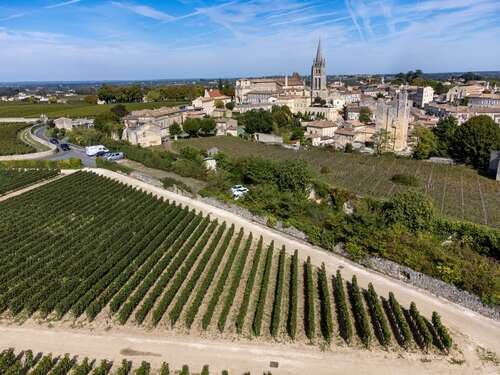
SF | Deep, gravelly soils galvanized by viticultural fine-tuning on rootstocks, row direction, and the like. A beautiful, jeweled hue, then pure aromas of juniper, blackberry, and the hedgerow. The palate is refined by fine-grained tannins and a discreetly measured sense of harmony, finely delineated and crystalline. Self-confidence abounds, enough to allow the taster to experience the nuances, gradually, and then the reward of a joyful, almost ethereal lift on the finish. | 93–94
Château Grand-Puy Ducasse 5ème Cru
(66% CS, 31% M, 3% CF)
Content from our partners
SF | The magnificent new winery on the quai at Pauillac is an aesthetic tour de force, its functionality chiming beautifully with the sense of history rightfully claimed by this rejuvenated property. With fruit sourced from diverse but impressive sites in Pauillac, the estate has forged a deeply impressive 2025, its energy and brightness of fruit complemented by finely etched tannins and clean, balancing acidity. It is most encouraging to see how imperiously a nearly forgotten name now reclaims a place at the Left Bank’s High Table. | 93–94
Château Grand-Puy-Lacoste 5ème Cru
(76% CS, 24% M)
SF | Described by winemaker Christel Spinner as a “ballerina,” the 2025 GPL is a wine of depth, precision, and elegance, perhaps leaning more toward the template of Pauillac “power” but without forsaking signature, fruit-forward succulence. The fine-grained tannins hold the key here; there is real precision and it comes as no surprise to learn that each parcel was vinified separately. Co-owner Emeline Borie compares the structure to the magnificent 2016; the juxtaposition of spicy wood tannins and honest, forward fruit is a winning combination. Emeline’s conclusion is best left untranslated, as she describes the wine’s “éclat de luminosité.” | 95–96
Lacoste-Borie
(68% CS, 24% M, 8% CF)
SF | A new gravity-flow winery and a magnificent, bucolic tasting room, looking down on the trees; a very special meso-climate for the slightly sandier vines that host Lacoste-Borie, its 2025 accomplished and generous, with raspberry fruit and violet aromatics; a supple, silky palate, immediately approachable and described by Emeline Borie as “gourmand.” Very apposite; a seductive Borie, with the soubriquet “vin du parc” now etched onto the label. | 93–94
Château Haut-Bages Libéral 5ème Cru
(83% CS, 15% M, 1% CF, 1% PV)
SF | A gloriously atypical Pauillac, Haut-Bages Libéral continues to grow in stature and continues to defy its illustrious neighbors, which include Pichon Baron, Lynch-Bages, and Latour. Not a bad set. Haut-Bages Libéral, for its part, is the only 1855 classified property with soils comprising as much as 50% limestone—an obvious benefit in such a warm year. Attractive, dark-fruit aromas find support with figs and spice; the palate is succulent and juicy, yet with firm support from fine-grained yet firm tannins, which are ripe but not overbearing, and certainly neither astringent nor green. Another side of Pauillac, well worth investigating. | 94–95
Château Haut-Batailley 5ème Cru
(58% CS, 37% M, 5% PV)
SF | Progress continues apace at Haut-Batailley, now almost a decade into its ownership by the Cazes dynasty. They have not created another Lynch-Bages; instead they have harnessed the inherent elegance of these well-placed vines and added a little more Pauillac power. The elegance was never in question; this sturdier example does not lack for black-fruit charm, but there is now an additional dimension manifested by graphite and white tobacco on the nose and by extra tannic definition… Exciting indeed! | 94–95
Château Lafite Rothschild 1er Cru
(94% CS, 5% M, 1% PV)
SF | “The Strong Suit,” or so says Lafite’s accompanying documentation. The last card played with the old wooden vats, so a landmark in itself and a last hurrah for a classicism that has long been beyond reproach. Savior rains in both June and July were seen as the key to the style, with progress toward harvest calm and assured. The final benison was 2.4in (60mm) of rain during the last week of August. A pleasing deus ex machina to resolve an almost-overheated dramaturgy. Deep color, with luminous tints; supple, soft graphite, peat, incense, and nuanced blue and black fruit; very precise, softly herbal. Low alcohol (12.7 ABV) recalling the wines of three decades ago; finally, 90% new barriques, coopered in-house. Fate dealt a “lucky hand,” says Saskia de Rothschild, warming to the theme, with Cabernet Sauvignon clearly the ace in this particular pack. Aces high! | 97–98
Carruades de Lafite
(55% CS, 34% M, 9% CF, 2% PV)
SF | What technical director Eric Kohler describes as the “paradoxical freshness” of Cabernet Sauvignon manifests itself clearly as the young vines come of age. The blend, described as a “winning combination” (in weaker years the Cabernet Franc is sorely missed) has freshness, a eucalypt lift, and plenty of juicy, forward personality. Precise, chalky tannins, and a soft, smoky finish. Refined and elegant Pauillac. | 93–94
Château Latour 1er Cru
(93.6% CS, 6.4% M)
SF | Hélène Génin, Latour’s technical director, felt that the Petit Verdot that is sometimes included in the grand vin was too high in alcohol and might have jeopardized the cool, fragrant personality of the final blend. Cabernet Sauvignon has seldom been more hauntingly elegant—slate, oyster shell, and iodine on the one hand, ripe cassis, sloe, and blackberry on the other; a Janus-like complexity, displayed gracefully on a velvet sea of gently persistent tannins, obsidian still and smooth, yet dynamic and energized. Latour power and Latour length, Latour tension and Latour grace; a monumental wine in more than one sense, biding its time, yet already beguiling. | 98–99
Les Forts de Latour
(67.6% CS, 31.6% M, 0.8% PV)
SF | Powerful aromas of suede, soot, and cigar wrapper, iodine and embers, too; behind that, signature dark fruit and a hint of eucalypt. Complicated, in other words… complex rather, as there is nothing out of balance or out of position, although the Merlot adds a “fleshiness” that is not evidenced in the grand vin. Precise, bright, and lifted on the finish. | 96–97
Château Lynch-Bages 5ème Cru
(66% CS, 28% M, 3% CF, 3% PV)
SF | Compared by Jean-Charles Cazes to both the neo-classical 2016 and the upstanding 2019, the 2025 boasts a deep, obsidian color and impressive aromas of coffee bean, chocolate, crushed berries, and soot; behind that, fig and tobacco leaf. Very Pauillac, very seductive. A wine not lacking for a muscular physique, this is nonetheless a relatively elegant Lynch, the adverb not used in anything approaching a pejorative sense. Indeed, it is this intimation of elegance that marks it out and marks it up. A gravelly, stentorian finish, wood spice running down the palate, but at every turn there is a joyful and harmonious kiss of fruit to tame any inclination to overindulgence. | 96–97
Echo de Lynch-Bages
(65% CS, 34% M, 1% CF)
SF | A pleasingly resonant Echo in 2025, with the prospect of extensive reverberation. The source is not strictly parcellaire, although the Merlot quota is relatively constant and one half of the Cabernet Sauvignon is from young vines. The remaining third varies according to the vintage. In 2025, the tannins are fine-grained and the fruit is crunchy and accessible, not lacking for definition and purity, with a hint of mentholated herbs on the finish. Licorice, fig, and dark chocolate were other descriptors etched into my tasting booklet, all harmoniously rendered. | 92–93
Château Mouton Rothschild 1er Cru
(98% CS, 2% M)
SF | Mouton has never got beyond 94% Cabernet Sauvignon….until now. Cabernet Sauvignon rigor and Cabernet Sauvignon splendor, a poetic, velvety texture, aromas dominated by iris, smoke, cassis, and incense; a brooding, pulsating Mouton, immediately accessible (as all great wine must be) but infinitely reserved. Broad and expansive, with a pavonine finish, elegantly tapered, spicy tannins, and a broad, capacious mouthfeel. 100% new oak, but only 13.1 % ABV. A symphony of tension and intensity, its intentions a gloriously open secret. | 97–98
Le Petit Mouton de Mouton Rothschild
(58% CS, 36% M, 3% CF, 3% PV)
SF | Generally from lower-lying terroirs, perhaps with a little more sand interspersed amid the gravel, Petit Mouton is selected, according to Jean-Emmanuel, by “personality rather than by power.” A memorable line, which resonates as one indulges in the aromatic of violets and plum, cedar and coal embers, and then as one celebrates the intricacies of a wine that has been aged in 50% new oak. Velvety of texture, with cleanly delineated acidity and firm, almost sinewy tannins and a fresh finish, itself touched by bitterness (salinity if you prefer). Plenty of personality. | 94–95
Château Pédesclaux 5ème Cru
(69% CS, 21% M, 9% CF, 1% PV)
SF | Christophe Congé swapped roles with Vincent Bache-Gabrielsen for the 2025 vintage and cites parcel selection as his priority in raising the bar yet further at Pédesclaux. He feels that the north of Pauillac and St-Estèphe benefited particularly from the pattern of 2025’s growing season, with enough humidity to prevent any blocage and to regularize the ripening, especially of the Cabernet Sauvignon. The result is an impressive Pédesclaux; its vines helped, no doubt, by biodynamic accreditation. Purity and power in equal measure, shiny dark fruit, but a serious tannic backdrop. The wine is cerebral, floral, and complex, with hints of juniper and mimosa adding a degree of fascination. 50% aged in new barrique, the rest in oval Stockinger barrels. | 95–96
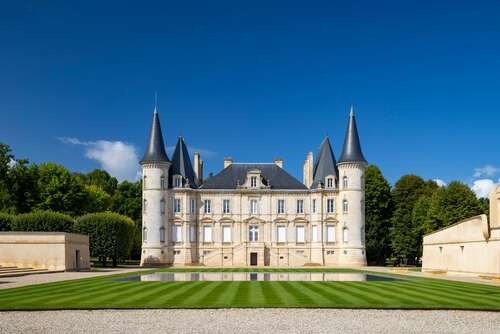
Château Pichon Baron 2ème Cru
(84% CS, 16% M)
SF | Technical director Pierre Montégut describes the 84/16 blend as “classic for Pichon.” No frost or ripening problems with the Cabernet, which has excelled. He detects aromatics of peony and even late-season roses behind the dark, brooding fruit. An elegant Pichon then, a paradoxical Pichon maybe, its imperious Cabernet strutting without fret, its power tamed by a relatively low 13.2 ABV. AXA Millésimes managing director Christian Seely has no hesitation in heralding a “great vintage” for Pichon and we disincline to disagree. | 96–97
Les Griffons de Pichon Baron
(62% M, 34% CS, 4% CF)
SF | The fruit for Les Griffons is mainly sourced from the gravelly, therefore fast-draining, soils that run parallel to the Gironde. Creamy, complex, and aromatically harmonious, this is a frisky Stubbs thoroughbred indeed, strutting aromatically (cassis and boysenberry) but then diligent and mannered on the palate, poised and complete, latent Pauillac power harnessed by refreshing acidity and a finely tapered finish. | 93–94
Les Griffons de Pichon Baron Médoc Blanc
(100% Sm)
SF | Although the Griffons Blanc has been made since 2023, 2025 is its first outing as a Médoc Blanc—an exciting development. The Sémillon is sourced from the modest southern slope, its soil dominated by limestone. Élevage in barrel (one third new) and wine-globe. A distinctive aroma of grapefruit and flowers, chalk and white peach; the delicate palate awaits an awakening from the Sémillon. The pH of 3.2, Pierre Montégut muses, is the same as for many a Riesling. | 92–93
Les Tourelles de Longueville
(55% M, 42% CS, 3% CF)
SF | There is no Château Pibran this year, sadly, but there is, happily, a very accomplished Tourelles, its vineyards aligned to the west of the château itself. Aromatics of plum and dark chocolate but then a more measured, even lifted, palate, courtesy, according to Pierre Montégut, the gentle extraction and the fact that the 12% of press wine is now even more minutely selected. Ripe but not overbearing tannins and a hint of black pepper. Aromatically persistent. | 92–93
Château Pichon Longueville Comtesse de Lalande 2ème Cru
(81% CS, 15% M, 4% CF)
SF | The grand vin is selected after a “blind” tasting of competing parcels; this year favoring cool Cabernet Sauvignon a little more than usual, and so perhaps displaying a little more austerity than of old. Perhaps. Precision is evidenced, for sure, with dark fruit, herbal notes, and hints of mocha and tobacco pouch; a classic Pichon Lalande nose, with elegance interwoven with Pauillac power. The environmental primacy of the vineyards has lent depth by allowing the roots to dig deep and thereby to avoid significant stress in the high summer. Composed and complete, with elegant tannins in support; the wine builds like Sibelius rather than Bruckner this time. | 95–96
Pichon Comtesse Réserve
(52% CS, 46% M, 2% PV)
SF | A deeply impressive Réserve for 2025. The tannic weave is magisterial, the palate broad and quietly challenging behind the fruit, a glossy symphony of bilberry, sloe, and crushed raspberry; croquant and accessible, but with a persuasive filigree of acidity eyeballing the firm tannins and ensuring a harmonious denouement; any tension in the air at the moment is an entirely constructive and ephemeral function of youth. | 93–94
Château Pontet-Canet 5ème Cru
(56% CS, 39% M, 4% CF, 1% PV)
SF | A fascinating decade of biodynamic viticulture—composts, tisanes, and numbered preparations, sometimes ideologically stark, sometimes inspired… often both. 2025 shares the aromatic intensity of the best of its forebears; sous-bois, lavender, blueberry, incense, and wild herbs, its revelation slow and measured, despite being served in a decanter. The palate is less savory/earthy than sometimes, more recognizably Pauillac (graphite and cassis), more reassuringly velvety. Technical director Mathieu Bessonnet has been subtly proactive in the vineyard (less deleafing than normal but one example) and the winery (an extended period of maceration, with only gentle punch-down) in the name of receptivity to this teasingly subtle vintage. The result is terrific, faithful to the now-established intellectual principles, but also to the tenor and rhythm of the vintage. Bravo! | 96–97