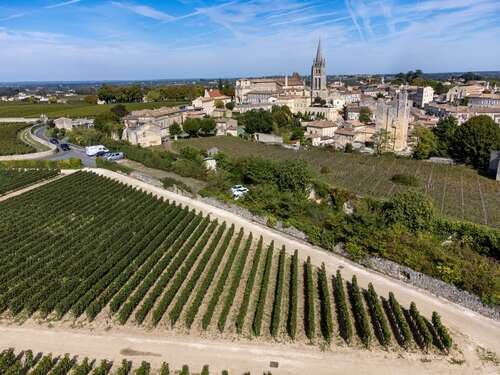
ST-EMILION
Château Angelus
(50% M, 50% CF)
SF | Aged half in foudre and half in new barrel, the must having been treated with great care in the winery, with fewer pump-overs than usual and a modest yield of 30hl/ha. The wine is a symposium on purity and restraint, which promises a great deal from its finely knit tannins and complex weave of fruit. A broad, caressing wine, alluring and quietly assertive, an exemplar of understated, softly spicy Cabernet Franc aromatics and mature Merlot benevolence. The natural environment, a feast of greenery, has, pace Stéphanie de Boüard-Rivoal, proved essential in the temperature regulation and the delineation of the seasons, both crucial to viticultural integrity. | 96–97
Le Carillon d’Angelus
(90% M, 10% CF)
SF | A distinctive and historic terroir, spread over three plots and dominated by clay, with a little sand in support. With the Merlot picked by September 10, and the Cabernet Franc only a week later, the parcels were vinified separately and assembled late, with 60% new oak now protecting the blend. Generous and fruity, silky and charming, the Carillon does not, for all that, lack restraint and a pleasingly refreshing finish, dominated by eucalypt and hints of black tea. | 93–94
Related


Château Ausone
(65% CF, 30% M, 5% CS)
SF | All seven fabled hectares (17 acres) of the Ausone limestone plateau have gone into the grand vin in 2025—quality cited over yield, naturally enough. And so it proves, the unprecedented inclusion of 5% Cabernet Sauvignon lending a cassis purity and smoky sapidity to the ensemble, without, for a moment, jeopardizing the eloquent precision of the blend, which marries limestone austerity, slate, and earth, with the most exquisite floral lift; irises and damask roses, ripe fruit and soft spice, then a finely tapered finish, built on a dextrous weave of nuanced tannin. | 97–98
Château Beau-Séjour Bécot 1er Grand Cru Classé
(80% M, 20% CF)
Content from our partners
SF | A pre-fermentation assemblage of specific plots, then an extended cold-maceration and cuvaison, bequeathing a wine that is aromatically lifted and pure and yet with generous layers of ripe, dark fruit; a happy encounter between the cool limestone and the warm days of July, each lending complexity to this impressive Beau-Séjour Bécot. Pixelated and focused, with dreamy but not overwhelming tannins from 55% new barriques and what Juliet Bécot describes, in positive terms, as “phenolic tension.” | 94–95
Château Bélair-Monange 1er Grand Cru Classé
(98% M, 2% CF)
SF | Owned by the blue-blooded Mouiex dynasty and with extensive vines benefiting from both pure limestone and blue clay, not to mention the reflected glory of immediate neighbors Ausone and Canon, Bélair-Monange is definitely one to watch, with the power and subtle glory of the 2025 a perfect harbinger of potential and a leitmotif of extant aspiration. Cool aromatics, with spearmint and dark fruit effortlessly entwined, then a richly textured palate with an unassailable quality of tannin and a magnificent crescendo of flavor. Delightful. | 94–95
Château Berliquet Grand Cru Classé
(61% M, 39% CF)
SF | Three different terroirs across 9ha (22 acres) on the plateau and slopes of St-Emilion, farmed organically since 2024. Bright and precise, with attractive damson fruit and floral aromatics; a supple and succulent palate, with fine-grained tannins and hints of aniseed and spice bolstering the structure. | 92–93
Château Canon 1er Grand Cru Classé
(76% M, 24% CF)
SF | A deep, luminous purple and then pure aromatics of damask rose, crushed raspberry, and cherry. Beautifully elegant and refined on the palate, with a silky texture dominated by blackberry and sloe, the limestone terroir lending a verticality through a filigree of bright acidity, all buttressed by carefully manicured tannins (the barrels, only 24% new, and foudres sourced from five coopers). A signature finish, which is ethereal and inspiring. | 95–96
Château Canon-la-Gaffelière 1er Grand Cru Classé
(45% CF, 40% M, 15% CS)
SF | A delightful blend, assembled with great care and vinified with minimum intervention, its 30% new oak worn lightly and adding a creamy, billowing texture to the dark-fruit core. Damson and plum intercede with cassis and blueberry; then tobacco leaf and gunflint, a hint of sage and lavender, and a refreshing seam of acidity. Signature elegance, with the Cabernet Franc both assertive and compliant; on the finish, all is harmony, with measured tannic potential quietly underscoring the ensemble. | 94–95
Château Cheval Blanc
(51% M, 45% CF, 4% CS)
SF | Several things jump out, most but not all prompted by managing director Pierre-Olivier Clouet. First, the modest 12.7% ABV (the same as in 1961!); second, the fact that 46 of the vineyard’s nominated 47 plots were brought to bear; and third, the fact that the overall yield was only 15hl/ha, not far from Sauternes territory. The result? A small production of a truly excellent wine, deeply pigmented, aromatically encyclopedic (the encyclopedia falls open first and second on the words cassis and plum), and supremely harmonious, the tannic backdrop dignified and restrained but quietly persuasive, the vertebral column firm of purpose and upstanding. Linearity, indeed, is a feature that Pierre-Olivier is keen to stress; the shape of today’s great wines must not succumb too much to the dimensions of breadth or density; length is key, and can only be achieved by the strict organic approach. Resilience in the vineyard is all down to agronomic choice. | 97–98
Clos Fourtet 1er Grand Cru Classé
(84% M, 10% CF, 6% CS)
SF | Plantings of Cabernet Franc continue (“replantings,” rather, as owner Matthieu Cuvelier reminds us that the estate used to have more than 60% of the variety), mostly on top of the slope, adjacent to the medieval village itself. Aromatics of lavender and iris are allied to the usual fruit descriptors (cassis and mulberry to the fore), then seamlessly integrated tannins and impressive balancing acidity. The wine has an ethereal elegance and a satisfying, pavonine finish. | 95–96
Château Figeac 1er Grand Cru Classé A
(37% M, 32% CF, 31% CS)
SF | Technical director Jean-Pierre Romain describes the state of the grapes in mid- to late August at the end of the heat spikes as “locked but not blocked,” meaning that the natural processes were not put out of balance by the drought, merely put into a period of deferral, with rain, relatively late, serving to guarantee the latent balance and ensure overall harmony. A fortuitous chronology, in other words, underwritten in the winery by gentle extraction, with eight days of cold soak as its harbinger. Some 8% of press wine and 100% new oak, worn with characteristic charm by the ensemble, itself, as is traditional, an evenly divided triptych of varieties. The aromatic is dominated by iris, cassis, and heather, subtle but infinitely appealing; the palate marked by the glide of seamlessly integrated, effortlessly authoritative tannins, and a sappy finish. Notes of blood orange and white flowers mark out the palate, nuanced yet vital, finely scented and resonant. There is no doubt that the property is worthy of its position at the top of the St-Emilion hierarchy. | 97–98
Château de Fonbel Grand Cru
(60% M, 30% CS, 5% CF, 5% Carm)
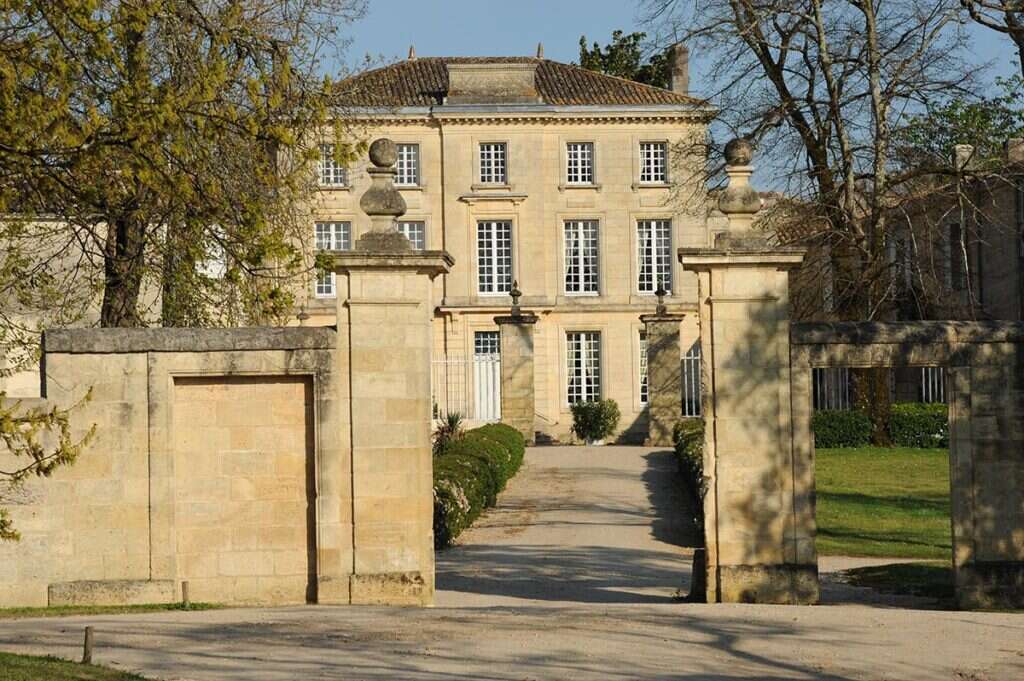
SF | An attractive, slightly savory wine from vines on the southern slopes owned by the Vauthier family since 1971. A small amount of oak (30%, none new), juxtaposed with the (increasingly rare) Carmenère adds spice and intrigue; a hint of woodsmoke and sous-bois rejoins the black cherry and ripe plum. All very agreeable. | 93–94
Château Haut-Simard Grand Cru
(80% CF, 20% M)
SF | Haut-Simard is mid-way through organic conversion; its primacy as the Vauthier flagship for Cabernet Franc is long-established and has been refreshed by massal-selection plantings at high density. A pleasing nose of black tea, truffle, damson, and graphite; evocations of fine Bourgueil, which are only partially dispelled by the rich, ripe fruit and the lifted, floral finish, which M Vauthier describes as “ethereal.” And so it proves. | 93–94
L’If Grand Cru
(75% M, 25% CF)
SF | Clay-limestone soils, mainly on the plateau, may host young grapes, but they are yielding (modestly) a high quality of fruit, which is then handled with care in the winery, with a relatively short cuvaison (20 days) at lower temperatures than some and then an élevage in barrels, half of which are new, but also in foudres. The small berries have given us a concentrated, richly fruity wine, vibrant and energetic, with composed, powdery tannins and fine balancing acidity. Elegant and graceful, this has a silky texture and an uplifting finish. The Yew Tree has come of age! | 94–95
Château Larcis Ducasse 1er Grand Cru Classé
(90% M, 10% CF)
SF | The juxtaposition of a shallow, clay-loam topsoil and then the solid limestone table has conspired to forge a wine of great aromatic purity; peppery spice, dark fruit; density and depth. Floral top notes. Generously textured dark fruit and then an authoritative tannic grip. An impressive achievement. | 94–95
La Mondotte Grand Cru Classé
(70% M, 30% CF)
SF | A bijou plot of 4ha (10 acres), organically certified. Inky of color and aromatic, with herbal notes defying a hegemony of dark fruit, the latter dominated by loganberry, sloe, and blueberry. Then there are spices, black tea, and summer flowers, a fine tannic weave, and a refreshing and harmonious peroration of flavor. | 93–94
Château Moulin St-Georges Grand Cru
(85% M, 15% CF)
SF | Comprising 7ha (17 acres) of west- and northwest-facing clay and limestone, Moulin St-Georges is planted at relatively high densities (up to 12,600 plants per hectare) and is matured for 18 months in 100% new oak. Not lacking in ambition, then; which proves to be entirely justified on tasting the wine itself. A characteristically intriguing nose of garrigue, blood orange, mint tea, and iris teases toward an equally beguiling palate, which manages to be both chiseled and silky, buttressed by an expressive seam of acidity. A gentle kiss of tobacco leaf touches the back-palate. | 94–95
Château Pavie 1er Grand Cru Classé A
(60% CF, 30% M, 10% CS)
SF | Pavie seems to get closer and closer to the golden mean, both with its use of oak and, most significantly in 2025, with its blend, where Cabernet Franc (sourced from the oldest plots on the plateau and on the côtes) has taken the place of Merlot as the majority shareholder. Stylistic differences ensue, somewhat inevitably. The nose betrays the Cabernets, with cassis, cigar box, and juniper to the fore; behind that, dark chocolate and cherry, licorice and graphite. The palate is beautifully balanced, the tannins from 65% new oak tight but not overwhelming. A highly successful iteration from this great terroir… Will the real Pavie please step forward and take a bow! | 96–97
Les Arômes de Pavie Grand Cru
(50% M, 50% CF)
SF | From parsimonious yields of 18hl/ha, this is a highly successful and well-named cuvée, its haunting aromatic dominated by wild plums and graphite, its vines averaging 53 years of age, itself incredible for a so-called second wine. An attractive, crushed raspberry, rosemary, and sous-bois aromatic, almost Médocain, but then a sweeter, faintly creamy mid-palate, which reminds some that the malolactic fermentation has taken place in barrel, and that 50% new oak is in play. The sapidity, almost leafy on the finish, provides a pleasingly unexpected denouement and can be attributed mainly to the Cabernet Franc. | 94–95
Château Pavie Macquin 1er Grand Cru Classé
(78% M, 20% CF, 2% CS)
SF | A 15ha (37-acre) tricolore of clay (red, brown, and white) over solid asteriated limestone, the cooler variant hosting the Merlot, the Cabernet relishing increasingly warm foundations. The tryptych of soil and its differing properties proved to be well-suited to the conditions in 2025; both the warmth of the high summer and the ensuing serendipitous rain encouraging growth patterns that did not succumb to a shutdown, nor did they fall prey to the excesses of overbearing heat and a surfeit of ripeness. From the darkly saturated color, through to the floral, crushed rock aromatic, the wine finally lands on a harmonious yet complex style, the vigor of its attack perfectly complemented by the finely tapered tannins, the balustrade of refreshing acidity, and the gentle crescendo of the finish. | 94–95
Château Quinault l’Enclos Grand Cru
(62% M, 19% CF, 19% CS)
SF | Allusive and energetic; the child of low yields (23hl/ha) and a resultingly high concentration, the wine allows each variety to offer a distinctive contribution, from the velvety plum fruit of the Melot, to the cassis and leafy, sapid elgance of the Cabernets. Edgy and promising, an exciting and loquacious Quinault. | 95–96
Château Simard Grand Cru
(60% M, 22% CF, 14% CS, 4% PV)
SF | A fascinating blend; its progeny tightly wound and intriguing, with dark chocolate, ripe damson, and spice all beautifully integrated, and robust tannic support. This despite the fact that only 20% of the wine has been aged in barriques, none of which is new. This is but one of several (positive) surprises about this very accomplished Simard. The vines are located at the foot of the hill on the south side of the village and the owning Vauthiers therefore incline to describe the vineyard (or is it the wine?) as “the gateway to the soul of St-Emilion.” | 92–93
Château Tertre Roteboeuf Grand Cru
(80% M, 20% CF)
SF | The south- and southeast-facing vineyards surround the ancient farmhouse and were trained low in 2025, with minimal deleafing. François, never shy when it comes to grandiloquence, describes the vintage in terms of “grace” (from the rain), “benediction” (ditto), and “recuperation”; the vines clearly redeemed by the timely pluvious intervention. It appears to have worked; there is a deep color, a heady, slate and damson aromatic, then a gloriously controlled weave on the palate with finely balanced fruit, robust acidity, and a filigree of tannin effortlessly entwined. | 95–96
Château La Tour Figeac Grand Cru Classé
(70% M, 30% CF)
SF | Owner Otto Rettenmaier names his 50hl fermentation vats after composers, and although he is sufficiently honest to admit that they are not precisely parcel by parcel, he does make an effort to maintain the stylistic palette for as long as possible; the style of the sandy-clay Merlot differs appreciably, as one would expect, from the increasing plantations of Cabernet Franc on the croupe de Figeac. One may add that Otto ultimately hopes to increase his Cabernet Franc to make up 50% of the estate (it is currently approaching 45%), thereby restoring the historical parity. He decided against launching an en primeur wine in the rainy 2024, and so we are very happy to see this return with a strong 2025. A bright, dense hue, immediately attractive aromas of kitchen herbs, dark fruit (damson and plum), and hints of cardamom. Velvety tannins wrap the ensemble in an exciting tapestry of potential, with licorice and cocoa in support, carefully manicured wood tannins, and a gently sappy finish. | 93–94
Château Troplong Mondot 1er Grand Cru Classé
(85% M, 13% CS, 2% CF)
SF | Harvested over a month from the end of August—such are the differences in aspect of the vines—then aged in both barrel and foudre, the combination gradually approaching parity, the 2025 Troplong is conspicuously successful, with all the plush and flesh of yesteryear discernible but not overweening, and beyond that, spice, lavender, peony, and iodine; symphonic, in other words, the deft weave of the fine-grained tannins forgiving and enhancing. An exceptionally pleasing and balanced wine, described by Aymeric, with customary wit, as “dangerous.” Why? I’m not really sure; but it is extremely seductive. | 96–97
Château Trottevieille 1er Grand Cru Classé
(51% CF, 46% M, 3% CS)
SF | The renovations are complete and the mood is optimistic; the treasury of decently aged Cabernet Franc now paying dividends in an epoch when this is clearly the cépage du moment. The new-oak regime has not changed, but every aspect of the maceration has been “toned down” and refined in deference to this most particular of vintages. The results are impressive, with more silk to adorn the sinew and a pure aromatic of violets and summer flowers. The picture is completed by finely “reverberating” tannins, to use the phrase of the clearly satisfied régisseur Christophe Dussutour. They echo down the memory… | 93–94
Château Valandraud 1er Grand Cru Classé
(84% M, 9% CS, 7% CF)
SF | The earliest-ever Cabernet Sauvignon here, with the Merlot not far behind. Jean-Luc Thunevin makes more thoughtful wines these days, with trademark oak beautifully integrated and a dense and generous mid-palate, the blue and black fruit elegantly infused with summer herbs and finely grained tannins. The 14% ABV compares favorably with the 15.5% of 2022. | 94–95